Dental Care During Pregnancy Dubai — What Is Safe, What to Avoid, and When to Go
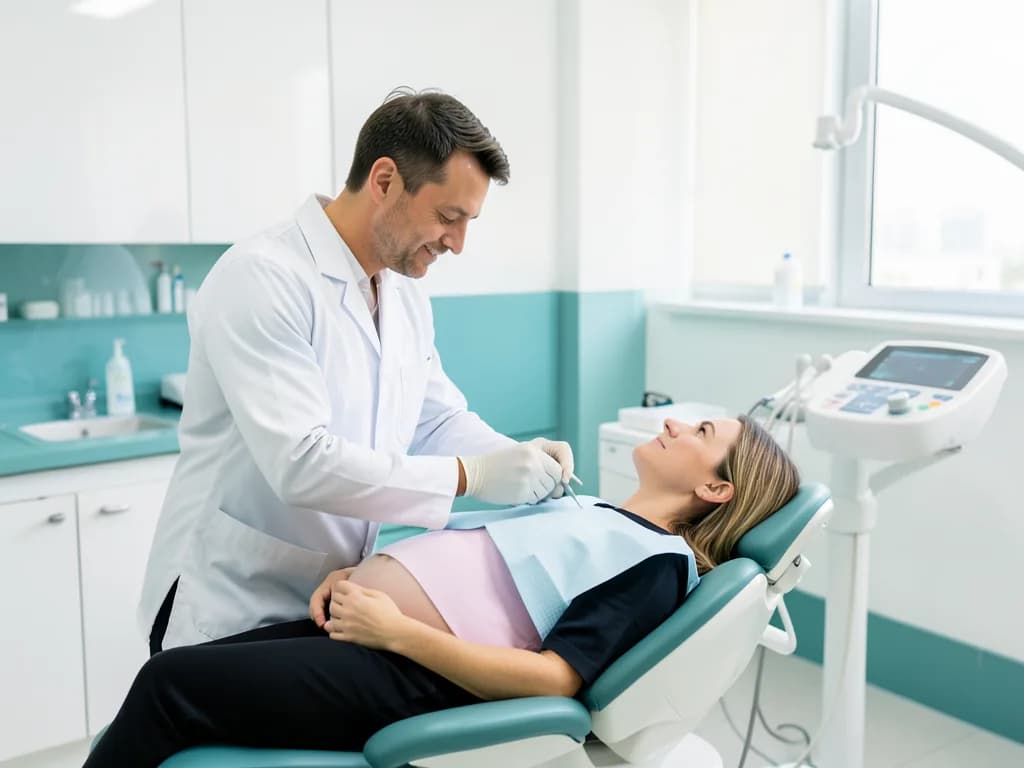
Many pregnant women in Dubai avoid the dentist out of fear — but this is one of the most common dental myths. Dental care during pregnancy is not only safe, it is actively recommended by the Dubai Health Authority (DHA) and the World Health Organization. Untreated dental infection during pregnancy carries significantly greater risks than routine dental treatment.
Key fact: Pregnancy gingivitis affects 60–75% of pregnant women. Hormonal changes make gums more sensitive to plaque bacteria — making a professional cleaning during pregnancy especially important.
Why Oral Health Matters More During Pregnancy
Pregnancy triggers significant hormonal changes — elevated levels of progesterone and oestrogen alter the way gum tissue responds to dental plaque bacteria. The result is pregnancy gingivitis: inflamed, tender, and easily bleeding gums that affect the majority of pregnant women to some degree. Without professional cleaning and good home care, gingivitis can progress to periodontitis (bone-affecting gum disease), which research has linked to adverse pregnancy outcomes including preterm birth and low birth weight.
Dietary changes during pregnancy — increased fruit intake, sugar cravings, and frequent snacking — combined with morning sickness (which exposes teeth to stomach acid) significantly raise the risk of tooth decay. Many women who had healthy teeth before pregnancy develop new cavities during it. Early treatment of a small cavity is far simpler, cheaper, and safer than managing a dental abscess or needing an extraction during pregnancy.
The DHA recommends that pregnant women maintain their regular dental check-up schedule throughout pregnancy and inform their dentist of their stage of pregnancy at each visit. For more general guidance on choosing the right dentist in Dubai, see our how to choose a dentist guide.
What Is Safe — and What to Postpone
Safe During Pregnancy
- Routine scale and polish (any trimester)
- Dental X-rays with lead apron and thyroid collar
- Composite or white fillings
- Local anaesthetic — lidocaine Category B safe
- Tooth extraction when clinically necessary
- Root canal treatment for urgent infection
- Antibiotics — penicillin, amoxicillin, paracetamol
- Emergency dental treatment at any stage
Postpone Until After Delivery
- Elective teeth whitening (no proven safety data)
- Porcelain veneers — purely cosmetic, reschedule
- Extensive elective smile makeovers
- Nitrous oxide (laughing gas) — avoid in 1st trimester
- Tetracycline antibiotics — affects foetal teeth/bone
- High-dose ibuprofen — risky in 3rd trimester
- Long elective appointments in the 3rd trimester
- Non-urgent implant placement — reschedule post-partum
Dental Care by Trimester
1st Trimester (Weeks 1–13)
A critical period for foetal organ development. Elective treatment should be postponed but urgent or necessary dental care should not be delayed. Many women experience significant nausea during this phase, which can make dental appointments uncomfortable. Inform your dentist of your pregnancy immediately — even at this early stage. Focus on preventive home care: brush gently twice daily, rinse with water after vomiting to neutralise stomach acid before brushing.
2nd Trimester (Weeks 14–28) — Ideal Window
The safest and most comfortable window for routine and necessary dental treatment. Morning sickness typically resolves, the uterus has not yet grown large enough to cause significant discomfort when lying back, and the risk of premature labour from dental stress is lowest. Schedule your routine cleaning, any overdue fillings, and a full dental assessment during this trimester. The 2nd trimester is the preferred time for any procedure that could have been postponed from the 1st trimester.
3rd Trimester (Weeks 29–40)
Routine and urgent dental treatment remains safe in the 3rd trimester. However, lying flat for extended periods may cause discomfort and can reduce blood pressure (aortocaval compression from the uterus pressing on major blood vessels). Ask your dentist to tilt the chair slightly to the left, and take breaks to sit up if needed. Longer appointments should be split into shorter sessions. Elective and non-urgent treatment is better rescheduled for after delivery when possible.
Dental Treatment Costs During Pregnancy
Indicative AED price ranges at mid-range Dubai clinics. Costs vary by clinic tier and treatment complexity.
For a complete Dubai-wide price overview, see our dental cost guide 2026.
| Treatment | Price Range (AED) | Notes |
|---|---|---|
| Initial consultation | 150–400 | Inform dentist of pregnancy stage |
| Scale and polish (cleaning) | 300–600 | Recommended every trimester |
| Composite filling | 300–800 | Safe in 2nd trimester; lidocaine used |
| Tooth extraction (simple) | 300–600 | Safe when clinically needed |
| Root canal treatment | 800–2,500 | Preferred over extraction for urgent cases |
| Dental X-ray (periapical) | 80–200 | With lead apron; safe when necessary |
| Antibiotics (if prescribed) | 30–100 | Penicillin or amoxicillin only |
| Temporary filling/dressing | 150–300 | When definitive treatment deferred |
Prices are indicative ranges at mid-range Dubai clinics. Confirm fees before treatment. All amounts in AED.
Check your insurance coverage or find an affordable dentist in Dubai.
Pregnancy Gingivitis — What It Is and How to Manage It
Pregnancy gingivitis is among the most common oral health complications of pregnancy, affecting an estimated 60–75% of pregnant women worldwide. Elevated hormones — particularly progesterone — cause gum tissue to become hyper-reactive to dental plaque bacteria. Even small amounts of plaque that would not normally trigger visible gum inflammation can cause significant redness, swelling, and bleeding during pregnancy.
Symptoms typically begin in the first trimester and peak around the second and third trimesters. The condition resolves naturally after delivery in most cases, provided underlying plaque and tartar are removed. Left untreated, pregnancy gingivitis can progress to periodontitis — a more serious form of gum disease that damages the bone and connective tissue supporting teeth.
Brush gently twice daily
Soft-bristle brush; be thorough but gentle at the gumline
Floss daily
Crucial for removing plaque between teeth where gum disease begins
Professional cleaning every trimester
Removes calculus that brushing alone cannot reach
Avoid sugary snacks and drinks between meals
Reduces acid attack frequency on enamel
Rinse after vomiting — do NOT brush immediately
Wait 30 min; stomach acid softens enamel temporarily
Use fluoride toothpaste
Strengthens enamel; safe and recommended during pregnancy
Safe Treatments by Trimester at a Glance
Use this table as a quick guide. Always confirm with your dentist and inform them of your exact week of pregnancy.
| Treatment | 1st Trimester | 2nd Trimester | 3rd Trimester |
|---|---|---|---|
| Scale and polish (cleaning) | Safe | Safe — recommended | Safe |
| Dental X-ray (with shield) | Urgent only | Safe when needed | Safe when needed |
| Composite filling | Urgent only | Safe — ideal window | Safe |
| Local anaesthetic (lidocaine) | Safe | Safe | Safe |
| Tooth extraction | Urgent only | Safe when necessary | Safe — avoid long sessions |
| Root canal treatment | Urgent only | Safe — preferred option | Safe |
| Nitrous oxide (laughing gas) | Avoid | Caution — consult OB | Caution |
| Teeth whitening | Postpone | Postpone | Postpone |
| Dental implants (elective) | Postpone | Postpone | Postpone |
| Porcelain veneers | Postpone | Postpone | Postpone |
Based on ADA, DHA, and WHO prenatal dental guidelines. Consult your dentist and obstetrician for individual clinical decisions.
Emergency Dental Care During Pregnancy
Dental emergencies during pregnancy — toothache, abscess, broken tooth, or knocked-out tooth — should be treated promptly. Delaying treatment for an infection is more dangerous to your baby than receiving local anaesthetic or antibiotics. Systemic infection from an untreated dental abscess raises cortisol and inflammatory markers, which can trigger preterm labour.
Severe toothache
Visit a dentist the same day. Do not take ibuprofen — use paracetamol. The dentist will take an X-ray with a lead apron and treat the cause.
Dental abscess (facial swelling)
Go to hospital dental emergency immediately. IV antibiotics may be required. This is a medical emergency whether pregnant or not.
Broken or cracked tooth
See a dentist within 24–48 hours if painful. A temporary dressing can protect the tooth until a definitive plan is made.
Knocked-out tooth
Place tooth in milk or saliva; see a dentist within 30 minutes. Replantation is attempted regardless of pregnancy status.
Medications to avoid during pregnancy dental emergencies
- — Ibuprofen (especially in the 3rd trimester — risk of premature ductus arteriosus closure)
- — Aspirin at anti-inflammatory doses
- — Tetracycline antibiotics (permanent staining of foetal teeth)
- — Metronidazole in the 1st trimester (limited safety data)
- — Codeine-based pain relief (neonatal respiratory risk if near term)
Safe alternatives: paracetamol for pain, penicillin or amoxicillin for infection.
DHA Guidelines and Gestational Diabetes Oral Health
The Dubai Health Authority recommends that all pregnant women maintain regular dental check-ups throughout pregnancy and report any gum changes — including bleeding, swelling, or mobility — to their dentist promptly. DHA-licensed clinics are required to use full shielding for any radiographs during pregnancy and to document the clinical justification.
Gestational diabetes introduces an additional oral health risk. Women diagnosed with gestational diabetes have a significantly elevated risk of periodontitis due to high blood glucose creating a more favourable environment for bacterial growth in the gum pockets. Research published in the Journal of Clinical Periodontology found that women with gestational diabetes had a 3-fold higher rate of significant periodontal disease compared to normoglycaemic pregnant women.
If you have been diagnosed with gestational diabetes, inform your dentist immediately. More frequent professional cleanings — every 6–8 weeks rather than once per trimester — may be advisable. Periodontal infection worsens insulin resistance, creating a similar feedback loop to that seen in Type 2 diabetes. For more background on the diabetes and oral health relationship, see our diabetic dental care guide.
For the full range of dental treatments available in Dubai, see our dental treatments guide or browse dental specialists in Dubai.
Worried about treatment costs during pregnancy? Our 2026 dental cost guide covers check-ups, fillings, and emergency procedures in AED. If your child will also need dental care after birth, see our children's dental care Dubai guide and explore top-rated dental clinics in the UAE for family-friendly practices.
Insurance Coverage for Dental Treatment During Pregnancy
Pregnancy is not an exclusion for dental insurance claims under standard UAE employer plans.
Maternity Dental Benefits
Some enhanced maternity plans — including Daman Enhanced and certain AXA maternity riders — include additional dental coverage beyond the standard benefit limit. Cosmetic treatment (whitening, veneers, elective procedures) is excluded under all plans. Always call your insurer to confirm your benefit limits and whether your chosen clinic offers direct billing. See our complete dental insurance guide for full coverage details.
Frequently Asked Questions
Is it safe to get a filling during pregnancy?
Yes — composite and amalgam fillings are considered safe during pregnancy. Local anaesthetic using lidocaine (with or without epinephrine) is classified as Category B by the FDA, meaning animal studies show no foetal risk. Delaying a filling that is causing pain or infection is actually more risky for your pregnancy than treating it. The ideal window is the second trimester (weeks 14–28) when nausea has typically settled and you can lie back comfortably. If you have a toothache or visible decay, always inform your dentist of your pregnancy and they will tailor the treatment accordingly.
Can I have a dental X-ray when pregnant?
Yes, dental X-rays during pregnancy are considered safe when medically necessary, especially with a lead apron and thyroid collar. Modern digital dental X-rays emit extremely low levels of radiation — far below the threshold known to cause foetal harm. Dubai's DHA-licensed clinics follow international radiograph guidelines and will use full protective shielding. Avoiding a necessary X-ray (for example, to diagnose an abscess or check root canal progress) may lead to undertreated infection, which carries significantly greater risk than the X-ray itself. If you are concerned, discuss the clinical need with your dentist before the procedure.
Why do my gums bleed more during pregnancy?
Pregnancy gingivitis is caused by hormonal changes — specifically elevated progesterone and oestrogen levels — which increase the sensitivity of gum tissue to the bacteria in dental plaque. This affects an estimated 60–75% of pregnant women and typically begins in the first trimester, peaks in the third trimester, and resolves after delivery. Symptoms include red, swollen, and easily bleeding gums. The best management is thorough but gentle brushing twice daily, daily flossing, and a professional cleaning during pregnancy to remove plaque and tartar that home care cannot reach. Untreated gingivitis during pregnancy has been associated in research with preterm birth and low birth weight.
Which trimester is the safest for dental treatment?
The second trimester (weeks 14–28) is generally considered the safest and most comfortable window for routine and necessary dental treatment. Morning sickness and early pregnancy fatigue typically ease by week 14, and the uterus is not yet large enough to make lying in the dental chair uncomfortable. The first trimester is a critical period of foetal organ development — elective procedures are best avoided, though urgent treatment should not be delayed. In the third trimester, treatment is still safe but the patient may find lying flat uncomfortable, and very long appointments should be split into shorter sessions.
What medications are safe for dental treatment during pregnancy?
Lidocaine local anaesthetic (with or without epinephrine) is considered safe throughout pregnancy. For pain relief, paracetamol is the recommended option and is safe at standard doses. Ibuprofen should be avoided, especially in the third trimester, as it is associated with premature closure of the ductus arteriosus. For antibiotics, penicillin and amoxicillin are considered safe; tetracycline antibiotics must be avoided as they are known to affect foetal bone and tooth development. Metronidazole (for gum infection) is generally used with caution and only when essential. Always tell your dentist your exact stage of pregnancy and all current medications before any prescription is issued.
Will my dental insurance cover treatment during pregnancy?
Standard UAE employer-issued dental insurance covers routine dental treatment regardless of pregnancy status — the pregnancy itself is not an exclusion for dental claims. Some maternity-enhanced plans such as Daman Enhanced and AXA maternity riders may include additional dental benefits. Cosmetic treatment (whitening, veneers, elective procedures) is typically excluded under all dental plans. Always call your insurer to confirm your benefit limits and whether the specific clinic you are attending bills directly. Our full dental insurance guide covers major UAE insurers in detail.
Should I tell my dentist I am pregnant?
Always inform your dentist that you are pregnant, along with your exact stage of pregnancy (number of weeks). This is essential for several reasons: your dentist will avoid prescribing medications contraindicated in pregnancy, will position the dental chair appropriately to avoid aortocaval compression in the third trimester, will ensure X-rays are clinically justified and fully shielded, and will time procedures to the safest trimester where possible. There is absolutely no reason to avoid the dentist during pregnancy — in fact, DHA and SEHA guidelines actively recommend maintaining dental care throughout pregnancy.
Find a Pregnancy Friendly Dentist in Dubai
Browse DHA-licensed clinics that routinely treat pregnant patients. Many offer flexible appointment times, gentle care, and direct billing with UAE insurers.
Start your dentist search in Dubai to find a pregnancy-friendly clinic near you.