Dental Implants vs Dental Bridge in Dubai
If you are missing a tooth, you have two main options for a permanent, fixed replacement — a dental implant or a dental bridge. Both restore your smile and chewing function, but they differ fundamentally in how they work, what they cost, and the long-term impact on your surrounding teeth and jawbone.
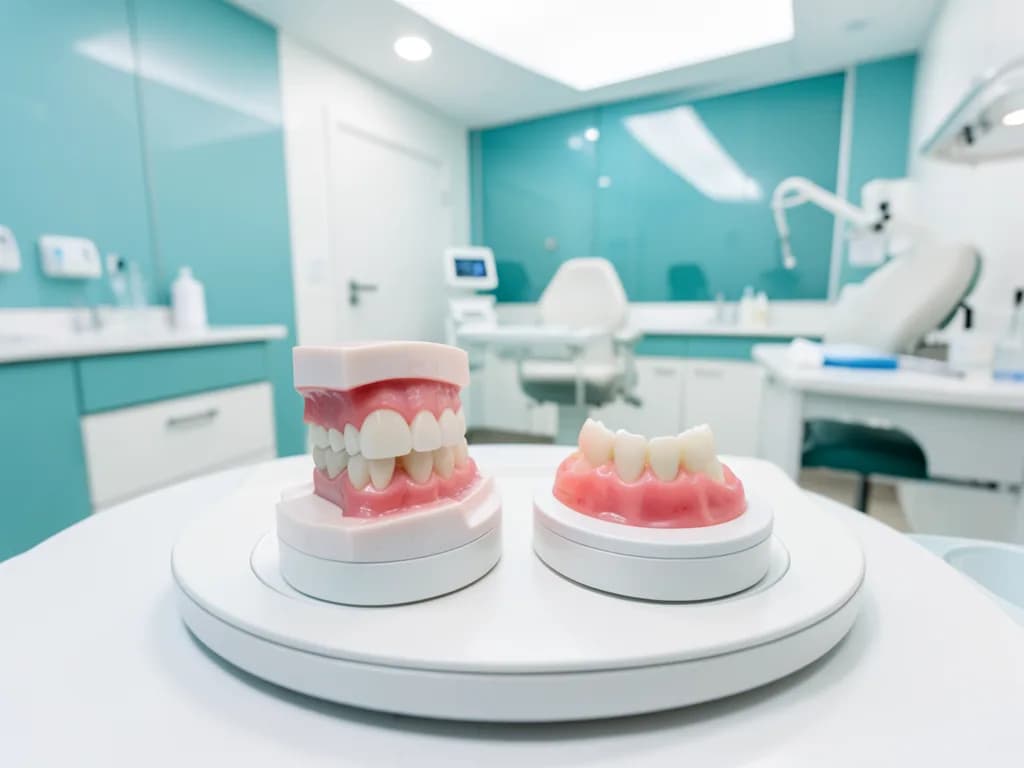
At a Glance Comparison
Key differences between dental implants and dental bridges for single tooth replacement in Dubai.
| Factor | Implant | Bridge |
|---|---|---|
| Cost (AED) | 6,000 – 12,000 (single tooth) | 3,000 – 7,000 (3-unit bridge) |
| Treatment time | 3 – 6 months (includes healing) | 2 – 3 weeks |
| Surgery required | Yes — implant placed into jawbone | No surgery — dental preparation only |
| Bone preservation | Yes — stimulates bone like natural root | No — bone loss continues beneath gap |
| Adjacent teeth | Not affected — implant is self-supporting | Must be permanently ground down |
| Lifespan | 20 or more years | 10 – 15 years |
| Feel | Identical to a natural tooth | Good — but slightly different feel |
| Cleaning | Brush and floss normally | Requires floss threader under the bridge |
Everything You Need to Know About Dental Implants in Dubai
A dental implant is a titanium screw surgically placed into the jawbone to act as an artificial tooth root. After a healing period of 3–6 months — during which the implant fuses with the bone through a process called osseointegration — a custom ceramic crown is attached. The result is a replacement tooth that looks, feels, and functions identically to a natural tooth.
In Dubai, a single-tooth implant including the titanium post, abutment, and porcelain crown typically costs AED 6,000–12,000. Premium implant brands such as Straumann, Nobel Biocare, and Osstem are widely available at top-tier clinics. Some clinics charge more for bone grafting (AED 1,500–4,000) if the patient has insufficient bone density at the implant site due to prolonged tooth loss.
The most significant clinical advantage of implants over bridges is bone preservation. When a tooth root is lost, the surrounding jawbone begins to resorb because it is no longer stimulated by chewing forces. Within one year of tooth loss, measurable bone volume can be lost. An implant replicates the root function and transmits chewing forces into the bone — halting this resorption entirely. A bridge does not.
Implants also leave the adjacent healthy teeth completely untouched. This is a major long-term advantage: the neighbouring teeth do not need to be permanently altered to support the restoration. Over the lifespan of a patient, this protects the structural integrity of the entire dentition. For a detailed cost breakdown, see our implant cost guide, or if you are weighing up travel options, compare dental implant destinations including Dubai and Turkey.
Implant pros
- ✓ Preserves jawbone — prevents bone loss
- ✓ Does not affect adjacent healthy teeth
- ✓ Lasts 20 or more years
- ✓ Feels exactly like a natural tooth
- ✓ Cleaned like natural teeth — no special tools
- ✓ Gold standard tooth replacement option
Implant cons
- ✗ Higher upfront cost than a bridge
- ✗ Requires surgery and local anaesthetic
- ✗ 3–6 months treatment timeline
- ✗ Not suitable for all patients
- ✗ Bone graft needed if bone loss has occurred
- ✗ Rarely covered by UAE insurance
Everything You Need to Know About Dental Bridges in Dubai
A dental bridge literally bridges the gap left by a missing tooth. The two teeth on either side of the gap — called abutment teeth — are permanently prepared (ground down) to act as anchors. Three crowns are then fused together: two fit over the abutment teeth and one (the pontic) fills the gap. The bridge is permanently cemented in place and is not removable.
In Dubai, a standard three-unit porcelain-fused-to-metal bridge costs AED 3,000–7,000. All-ceramic or zirconia bridges — which offer superior aesthetics and are increasingly popular at Dubai clinics — cost AED 4,500–9,000 for three units. The treatment is completed in two appointments over 2–3 weeks: tooth preparation and temporaries at the first, and final cementation at the second.
The main clinical disadvantage of a bridge is what it requires of the adjacent teeth. To place the bridge, healthy enamel is permanently removed from the abutment teeth. Even if those teeth were perfectly healthy, they are irreversibly altered — and will always need to be covered by crowns. Studies show that abutment teeth have a higher incidence of nerve damage, decay, and eventual failure over a 15-year period compared to teeth that are left untouched.
That said, a bridge has genuine advantages. It requires no surgery, no healing period, and is completed in weeks rather than months. For patients who are not suitable for implants due to bone loss, systemic health conditions, or smoking, a bridge remains an excellent and proven tooth replacement method with a long clinical track record. Patients also considering full-arch replacement should read our implants vs dentures comparison, or our dental tourism savings guide if travelling to Dubai for the procedure.
Bridge pros
- ✓ Lower cost than an implant
- ✓ No surgery or bone integration required
- ✓ Completed in 2–3 weeks
- ✓ Suitable when bone density is insufficient
- ✓ Long clinical track record
- ✓ Sometimes partially covered by insurance
Bridge cons
- ✗ Adjacent teeth permanently ground down
- ✗ Bone loss continues beneath gap
- ✗ Shorter lifespan of 10–15 years
- ✗ Harder to clean — requires floss threader
- ✗ Abutment teeth may eventually fail
- ✗ Does not feel exactly like a natural tooth
Which Should You Choose
The right choice depends on your bone density, the health of neighbouring teeth, your budget, and how quickly you need the treatment completed. A general dentist in Dubai can assess both options during a standard consultation and refer you to a specialist if implant surgery is the better path.
When the adjacent teeth are healthy and intact, there is no clinical reason to permanently alter them for a bridge. An implant preserves the entire dentition and is the better long-term solution.
If the neighbouring teeth already require crowns due to decay or large fillings, a bridge is clinically logical. The crowning of those teeth serves a dual purpose and the total cost is lower.
Patients who smoke heavily, have uncontrolled diabetes, or have significant bone loss due to prolonged tooth loss may not be suitable implant candidates. A bridge provides a reliable fixed replacement without requiring osseointegration.
A bridge is completed in 2–3 weeks. An implant requires 3–6 months for osseointegration before the final crown can be fitted. If time is critical, a bridge is the only fixed same-timeline solution.
Over a 30–40 year horizon, an implant that lasts a lifetime without affecting surrounding teeth offers far superior value and clinical outcomes than multiple bridge replacements.
Cost Comparison in Dubai
All prices are in AED and reflect the typical range across Dubai clinics as of 2026. No VAT applies to dental treatments in the UAE.
Dental Implants
Dental Bridges
For full pricing context across all dental treatments, see our complete Dubai dental cost guide.
Need help deciding based on cost alone? See the full dental implants cost breakdown or compare bridge costs in Dubai for a side-by-side price analysis.
Insurance Coverage in Dubai
Implant coverage
Dental implants are almost universally excluded from UAE health insurance plans. Most insurers classify implants as cosmetic or elective restorative work. Confirm with your insurer, but do not expect coverage. Many Dubai clinics offer instalment payment plans through Tabby or Tamara for implant treatments.
Bridge coverage
Dental bridges are sometimes partially covered under major restorative benefits in mid-to-high-tier UAE insurance plans such as Daman Enhanced or Bupa dental plans. Coverage is typically subject to a waiting period, co-payment of 20–30%, and an annual restorative limit. Always check your policy document before booking.
Long Term Cost Analysis — 5, 10 and 20 Years
The upfront cost of an implant is higher, but the total cost of ownership over 20 years tells a different story. Implant vs bridge longevity is a critical factor often overlooked at the point of decision.
| Scenario | Dental Implant (AED) | 3-Unit Bridge (AED) |
|---|---|---|
| Year 0 — initial treatment | 6,000 – 12,000 | 3,000 – 7,000 |
| Year 0 — bone graft (if needed) | +1,500 – 4,000 | — |
| Year 5 — maintenance/check-ups | AED 400–700/yr standard care | AED 400–700/yr + possible re-cementation (AED 300–600) |
| Year 10 — first replacement event | Crown replacement unlikely needed yet | Bridge likely needs replacement: AED 3,000 – 7,000 |
| Year 10 — abutment tooth complications | Not applicable (no abutment teeth) | Potential root canal/crown on abutment: AED 1,500–4,000 |
| Year 20 — second replacement event | Crown may need replacement: AED 1,500–3,000 | Second bridge + abutment treatment: AED 5,000–12,000 |
| Estimated total cost over 20 years | AED 9,000 – 20,000 | AED 12,000 – 35,000+ |
The table above illustrates why most Dubai implant specialists present a 20-year perspective to patients. A single implant — while more expensive upfront — frequently costs less over two decades than a bridge that requires replacement along with potential treatment of damaged abutment teeth. Adjacent tooth damage is the hidden long-term cost of bridges that rarely features in initial price comparisons. For full pricing, see our dental treatments cost guide 2026.
Recovery and Treatment Timeline Comparison
Dental Implant Recovery
Dental Bridge Recovery
Risks of Each Option — What Patients Should Know
Dental Implant Risks
The most feared risk — the implant fails to osseointegrate. Most common in heavy smokers, diabetics with poor control, and patients with severe bone loss. Premium brands such as Straumann and Nobel Biocare have the lowest published failure rates.
Gum disease around the implant, similar to periodontitis. Preventable with good oral hygiene. Can lead to bone loss around the implant if untreated. Estimated to affect 10–20% of implants over a 10-year period without proper maintenance.
Infection, nerve sensitivity (rare), sinus complications for upper back implants. All manageable with experienced implant placement by a specialist. A cantilever bridge on compromised bone may be safer for high-risk surgical patients.
Dental Bridge Risks
The single-tooth replacement becomes a three-tooth problem. Studies show abutment teeth fail at a significantly higher rate than untreated teeth over a 15-year follow-up period — contributing to root canal treatment and eventual tooth loss in some cases.
Bone resorption beneath the bridge gap is silent but progressive. Over 10–20 years this can change the way the bridge sits, affect facial appearance, and limit future implant options in the area if the bridge eventually fails.
Bridge cement can wash out over time — usually not painful but food and bacteria can enter the gap. Porcelain facings on PFM bridges can chip, particularly on the pontic. An implant-supported bridge using implants as both abutments eliminates the adjacent tooth damage risk entirely.
Technology Used for Implants and Bridges in Dubai
Implant Technology at Dubai Clinics
- ✓ 3D CBCT cone beam scanning for precise implant placement planning
- ✓ Guided implant surgery using surgical stents for accuracy within 0.5mm
- ✓ Premium implant brands: Straumann, Nobel Biocare, Osstem, Zimmer
- ✓ Digital impression scanning — no messy dental putty required
- ✓ CAD/CAM milled zirconia or porcelain crowns from in-house labs
- ✓ Immediate loading implants (same-day crown placement) at select clinics
- ✓ IV sedation available for anxious patients — see our sedation guide
Bridge Technology at Dubai Clinics
- ✓ Full-contour zirconia bridges milled by CAD/CAM for superior accuracy
- ✓ E.max (lithium disilicate) 3-unit bridges for anterior aesthetics
- ✓ Porcelain-fused-to-metal (PFM) — established track record, lower cost
- ✓ Digital impressions replacing traditional putty in modern Dubai clinics
- ✓ Implant-supported bridges — uses two implants as abutments, no adjacent tooth damage
- ✓ Maryland bridge (resin-bonded) — minimal-prep option for young patients
- ✓ Temporary PMMA bridges placed same-day while final bridge is fabricated
Browse our dental treatments Dubai directory to find implant and bridge specialists, or visit find a dentist near you to compare clinics by area.
Related Guides
Frequently Asked Questions
Is a dental implant better than a bridge for replacing one tooth in Dubai?
For most patients replacing a single missing tooth with healthy adjacent teeth, a dental implant is clinically superior in the long run. An implant preserves the jawbone beneath the gap (bone resorption begins within months of tooth loss), does not involve grinding down the neighbouring teeth, and lasts 20 or more years. A bridge is faster, less invasive overall (no surgery), and costs AED 3,000–7,000 versus AED 6,000–12,000 for an implant — making it the better option when budget or timeline is a priority.
How long does a dental bridge last in Dubai compared to an implant?
A well-maintained dental bridge typically lasts 10–15 years before needing replacement. The abutment teeth (the natural teeth ground down to support the bridge) are permanently altered and may eventually require crowns or other treatment. Dental implants, by contrast, have a lifespan of 20 or more years — and in many cases last a lifetime. The crown portion of an implant may need replacement after 15–20 years, but the titanium implant post itself rarely fails if properly integrated.
Does a dental bridge damage the surrounding teeth?
Yes — this is the most significant drawback of a traditional fixed bridge. The two teeth on either side of the gap (called abutment teeth) must be permanently shaved down to allow the bridge crowns to fit over them. Even if these teeth are healthy and intact, they are irreversibly altered. Over time, the abutments bear the biting load of three crowns rather than one, which can weaken them. Implants avoid this entirely — they are self-supporting and leave adjacent teeth untouched.
What happens to the bone under a dental bridge?
When a tooth is lost, the jawbone beneath the empty socket begins to resorb because it no longer receives stimulation from a tooth root. A dental bridge replaces the visible crown but not the root — so bone loss beneath the gap continues silently over years. This can eventually affect the fit of the bridge and change facial contour. A dental implant replicates the tooth root function and stimulates the bone through chewing forces, halting the resorption process entirely.
Can I get a dental bridge if I am not suitable for an implant in Dubai?
Yes. Patients with insufficient bone density, uncontrolled systemic conditions, active gum disease, or who are heavy smokers may not be suitable implant candidates without additional treatment. A dental bridge does not require surgery or bone integration, making it accessible to a broader patient group. Some patients also choose bridges when time is a critical factor — a bridge can be completed in 2–3 weeks, whereas an implant requires 3–6 months for full osseointegration before the final crown is placed.
Find an Implant or Bridge Specialist in Dubai
Browse verified Dubai clinics for dental implants and bridges. Compare patient reviews, check insurance acceptance, and book a consultation today.
Use our search for dental care nearby to compare clinics, read reviews, and book appointments.
Related guides:
Free to browse — no registration required