Wisdom Teeth Removal in Dubai — The Complete Guide
Wisdom teeth (third molars) are the most commonly extracted teeth in Dubai. This guide covers every impaction type, the step-by-step surgical procedure, AED cost ranges, and when you need an oral surgeon rather than a general dentist. For urgent tooth pain, see our emergency dentist Dubai guide. Browse our full dental treatments directory.
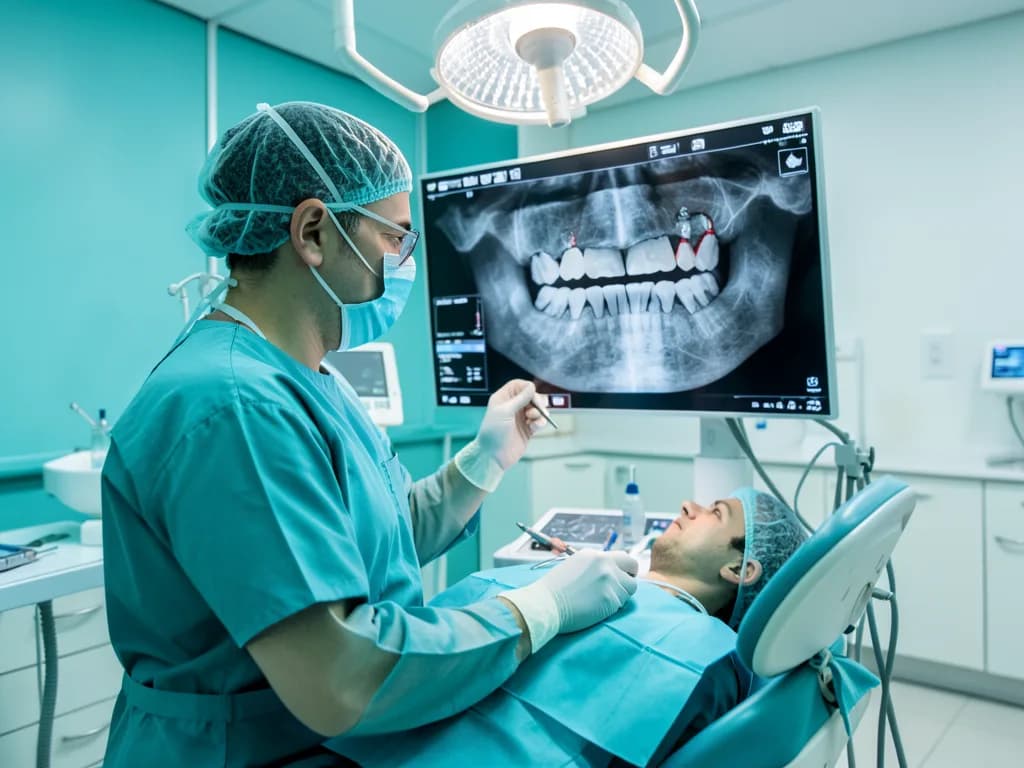
About Wisdom Teeth and When They Are Removed
Wisdom teeth are the third set of molars, one in each quadrant of the mouth, that typically begin erupting between the ages of 17 and 25. Modern human jaws are often too small to accommodate these late-erupting teeth, resulting in impaction — where the tooth cannot fully emerge into the correct position. Impaction leads to pain, infection, damage to adjacent teeth, and cyst formation if left untreated.
Not all wisdom teeth need to be removed. Fully erupted, correctly positioned wisdom teeth that can be adequately cleaned are worth keeping. The decision to extract is based on symptoms, impaction type, the health of adjacent teeth, and the patient's age — younger patients recover faster and complications are rarer when roots are not fully formed. For a full cost breakdown, see our wisdom tooth removal cost guide.
If you are experiencing wisdom tooth pain right now, our wisdom tooth pain guide explains immediate pain relief options and when to visit a dentist urgently. For specialist referrals, see our oral surgeon Dubai directory.
Wisdom Tooth Impaction Types
The type of impaction determines the complexity of removal, the risk level, and whether a general dentist or oral surgeon should perform the procedure.
The tooth has fully erupted through the bone but remains partially or fully covered by gum tissue (operculum). Bacteria collect beneath the gum flap, causing recurring infections (pericoronitis). Often managed first with antibiotics and irrigation, but extraction is ultimately required when infections recur.
Part of the crown is visible above the bone but part remains embedded in bone. The tooth is angled and cannot fully erupt. Surgical removal requires raising a gum flap and removing some bone around the tooth. Most common type seen in young adults and the most frequently extracted by oral surgeons.
The entire tooth is buried within the jawbone with no visible crown. Requires extensive bone removal and sometimes tooth sectioning. This is the most surgically complex scenario and should always be performed by an oral and maxillofacial surgeon. Longer recovery expected.
The tooth is angled forwards (mesially) towards the second molar. This is the most common angulation of impaction in lower wisdom teeth. The crown presses against the root of the second molar and can cause cavity formation on both teeth if left untreated. Often requires sectioning.
The tooth lies completely on its side within the bone, pressing directly into the root of the second molar. This is the most damaging impaction type for the adjacent tooth. Almost always requires surgical extraction, frequently by a specialist. Risk of damage to the inferior alveolar nerve (lower wisdom teeth) is highest in this group.
The Wisdom Tooth Removal Procedure Step by Step
From initial panoramic X-ray to suture removal, here is what to expect at every stage.
Panoramic X-ray and Consultation
A full panoramic radiograph (OPG) is taken to see all four wisdom teeth, their root angulation, proximity to the inferior alveolar nerve (for lower teeth) and relationship to the second molars. The dentist or oral surgeon reviews the film and classifies the impaction type. They will advise on whether a general dentist can proceed or whether referral to an oral and maxillofacial surgeon is appropriate. A CBCT scan is ordered when the roots appear very close to the mandibular canal on the OPG.
Pre-extraction Assessment
Medical history is reviewed — anticoagulant medication, bisphosphonate use, clotting disorders and recent illness are all important. Blood pressure is checked. For patients choosing IV sedation, pre-operative fasting instructions are given (typically 6 hours for food, 2 hours for clear fluids). Antibiotics may be prescribed beforehand for patients who are immunocompromised or have a heart valve condition.
Local Anaesthesia (and Sedation if Chosen)
Inferior alveolar nerve block anaesthetic is administered for lower wisdom teeth; buccal and palatal infiltrations for upper teeth. Most patients are surprised by how comfortable the procedure is once anaesthesia has taken effect — you will feel pressure and movement but not pain. IV sedation (conscious sedation) is available at many Dubai private hospitals and specialist oral surgery clinics for anxious patients and is recommended for all-four-teeth procedures.
Gum Flap Elevation
For surgical extractions, the gum tissue overlying the tooth is incised and gently reflected back to expose the underlying bone and the crown of the impacted tooth. This flap is held back during the procedure with a retractor and sutured closed at the end. Simple erupted extractions do not require this step.
Bone Removal and Tooth Sectioning
Where bone covers the tooth crown or roots, a high-speed surgical handpiece removes the minimum bone necessary to access the tooth. For complex cases, the tooth is sectioned into two or three pieces using a surgical bur — this reduces the force required and minimises trauma to surrounding structures. Each piece is individually removed with elevators and forceps.
Socket Irrigation and Suturing
The socket is thoroughly irrigated with saline to remove debris and bone chips. The gum flap is repositioned and sutured closed with resorbable or non-resorbable sutures (typically 3-0 or 4-0). Gauze is placed over the socket and the patient bites down for 30–45 minutes to achieve haemostasis. Written aftercare instructions are provided.
Wisdom Tooth Removal Prices in Dubai 2026
All prices in AED. Costs vary significantly by impaction complexity, clinic tier, and whether sedation is used. X-rays are usually charged separately.
| Treatment | AED Range | Provider | Notes |
|---|---|---|---|
| Simple extraction (fully erupted wisdom tooth) | AED 300 – 600 | General dentist | No impaction; forceps only |
| Surgical extraction (partially impacted) | AED 800 – 1,800 | General dentist or oral surgeon | Flap, some bone removal; may need sutures |
| Surgical extraction (fully impacted / complex) | AED 1,500 – 2,500 | Oral and maxillofacial surgeon | Bone removal + tooth sectioning |
| All 4 wisdom teeth (package) | AED 2,000 – 6,000 | Oral surgeon / hospital | Under IV sedation or GA; hospital setting |
| Panoramic X-ray (OPG) | AED 150 – 300 | Diagnostic | Required before extraction; shows all 4 teeth |
| CBCT scan (complex cases) | AED 400 – 800 | Diagnostic | For nerve proximity assessment |
Prices from Dubai clinic surveys, February 2026. Sedation fees, hospital facility charges and post-operative medication are additional costs.
Recovery Timeline and Aftercare
Following post-operative instructions carefully is the single most important factor in preventing complications such as dry socket and infection.
Rest. Keep gauze in place and bite firmly. Avoid rinsing, spitting or using straws — this dislodges the blood clot. Apply ice packs 20 min on / 20 min off.
Peak swelling and bruising. Take prescribed analgesics regularly. Begin gentle salt-water rinses after 24 hours. Soft food only — soup, yoghurt, scrambled eggs, mashed potato.
Swelling begins to resolve. Continue gentle rinsing. Avoid smoking absolutely — nicotine prevents clot formation and causes dry socket. Sutures (if non-resorbable) removed at 7–10 days.
Most patients return to work. Avoid hard or crunchy foods. Gentle brushing around the socket.
Gum tissue fully closes over the socket. Resume normal diet gradually. Bone remodelling continues for 3–6 months.
Warning Signs — Contact Your Clinic Immediately
- ✗ Severe worsening pain starting on day 3–4 (possible dry socket)
- ✗ Fever above 38°C with swelling that is spreading
- ✗ Numbness or tingling in the lip or chin that does not resolve
- ✗ Difficulty opening your mouth that is getting worse after 3 days
- ✗ Heavy bleeding that does not stop with biting on gauze for 30 minutes
General Dentist vs Oral Surgeon in Dubai
General Dentist — Appropriate for
- ✓ Fully erupted wisdom teeth (simple extraction)
- ✓ Soft tissue impaction
- ✓ Partial bony impaction with favourable angulation
- ✓ Healthy patients with no complicating medical history
Oral Surgeon — Recommended for
- → Complete bony or horizontal impaction
- → Roots close to the inferior alveolar nerve
- → All four wisdom teeth under IV sedation
- → Medically complex patients (anticoagulants, bisphosphonates)
- → Patients with failed or complicated previous extractions
Find a specialist via our oral surgeon Dubai directory or see our overview of all dental specialists in Dubai.
Does UAE Health Insurance Cover Wisdom Tooth Removal?
Usually covered when medically necessary
Simple and surgical wisdom tooth extraction is typically covered by UAE health insurance plans when it is deemed medically necessary. Your dentist will need to provide clinical documentation including the impaction classification and supporting radiograph. Most insurers (Daman, AXA, Bupa, MetLife, NextCare) require pre-authorisation for surgical procedures. IV sedation may or may not be covered depending on your plan level.
See our dental insurance Dubai guide for full details on what each major insurer covers.
Wisdom Tooth Extraction in Dubai
Wisdom tooth extraction is one of the most frequently performed dental procedures in Dubai, with thousands of extractions carried out across the emirate each year. The term wisdom tooth extraction refers to the surgical or non-surgical removal of one or more third molars — the last teeth to erupt, typically appearing between ages 17 and 25. While some patients require wisdom tooth extraction due to active symptoms such as pain, swelling, or infection, others undergo the procedure as a preventive measure when imaging reveals that impaction is likely to cause problems in the future.
The decision to proceed with wisdom tooth extraction in Dubai should be based on a thorough clinical and radiographic assessment. A panoramic X-ray (OPG) is the standard diagnostic tool, providing a view of all four wisdom teeth, their angulation, root development, and relationship to surrounding structures. For lower wisdom teeth where the roots appear close to the inferior alveolar nerve on the OPG, a CBCT (3D) scan is recommended to assess the exact nerve-to-root relationship and reduce the risk of nerve injury during extraction. The cost of imaging ranges from AED 150 for a standard OPG to AED 800 for a CBCT scan at specialist centres.
Wisdom tooth extraction in Dubai is performed by both general dentists and oral and maxillofacial surgeons, depending on the complexity of the case. Simple extractions of fully erupted teeth are within the scope of most general dentists. Surgical extractions of impacted teeth — particularly those involving complete bony impaction, horizontal impaction, or nerve proximity — should be managed by an oral surgeon. If you are unsure whether your case requires a specialist, ask your dentist for a referral or consult our oral surgeon Dubai guide for help finding the right practitioner. For comprehensive treatment pricing, see our wisdom tooth removal cost breakdown.
| Extraction Type | Typical Duration | Recovery | AED Cost |
|---|---|---|---|
| Simple (erupted) | 10 – 15 min | 1 – 2 days | AED 300 – 600 |
| Surgical (partial bony) | 20 – 30 min | 3 – 5 days | AED 800 – 1,800 |
| Surgical (full bony) | 30 – 45 min | 5 – 7 days | AED 1,500 – 2,500 |
| All 4 under sedation | 45 – 90 min | 5 – 7 days | AED 2,000 – 6,000 |
Prices from Dubai clinic surveys, February 2026. Sedation, hospital facility fees and medications charged separately.
Best Doctor for Wisdom Teeth Removal in Dubai
Finding the best doctor for wisdom teeth removal in Dubai depends on the complexity of your specific case. For simple extractions of fully erupted wisdom teeth, an experienced general dentist with a strong track record in extractions is usually the right choice — these are routine procedures that do not require specialist training. However, for impacted wisdom teeth, particularly those involving bone removal, nerve proximity, or the need for IV sedation, the best doctor for wisdom teeth removal is an oral and maxillofacial surgeon (OMFS) with DHA specialist registration.
When searching for the best doctor for wisdom teeth removal, consider these factors: the practitioner's DHA licence status and specialty registration (verifiable at dha.gov.ae), the volume of wisdom tooth extractions they perform each month, whether they have hospital privileges for sedation cases, their approach to managing complications such as dry socket or nerve injury, and patient reviews specifically mentioning wisdom tooth procedures. An oral surgeon who focuses primarily on dentoalveolar surgery (extractions, implants, bone grafts) will typically have more relevant experience than one whose practice is dominated by maxillofacial trauma or orthognathic surgery.
Dubai has a large number of highly qualified oral surgeons trained across different systems — UK, European, American, Indian, and Middle Eastern postgraduate programmes. The training background does not inherently determine quality, but it does influence surgical philosophy. UK-trained surgeons tend to follow conservative protocols (extract only symptomatic teeth), while American-trained surgeons may recommend earlier prophylactic removal. Regardless of training, the best doctor for your wisdom teeth removal will take time to review your imaging, explain the procedure and risks clearly, and provide a written treatment plan with AED pricing before you commit. Browse and compare practitioners via our oral surgeon Dubai directory or search by location using our clinic finder.
Checklist for Choosing a Wisdom Tooth Specialist
- • Verify DHA licence and specialty registration at dha.gov.ae
- • Ask about their annual wisdom tooth extraction volume
- • Confirm they can perform the procedure under your preferred anaesthesia (local, sedation, GA)
- • Check whether they have hospital privileges if sedation is needed
- • Request a written treatment plan with full AED cost breakdown
- • Ask about their dry socket and nerve injury rates
- • Read patient reviews specifically mentioning wisdom tooth extractions
Frequently Asked Questions
Does wisdom tooth removal hurt in Dubai?
The procedure itself should be painless — local anaesthesia fully numbs the area before any cutting begins. Most patients report that the anticipation is worse than the reality. The pressure and movement you feel during extraction are not painful with adequate anaesthesia. Post-operative pain is managed with prescribed analgesics (typically ibuprofen and paracetamol alternating every 4 hours, or a stronger prescribed painkiller for complex surgical cases). Severe pain after day 3 that is worsening rather than improving may indicate dry socket — contact your clinic promptly if this occurs.
When do I need an oral surgeon rather than a general dentist for wisdom tooth removal in Dubai?
You should seek an oral and maxillofacial surgeon rather than a general dentist when your wisdom tooth is fully bony impacted (completely buried in bone), when the roots are close to the inferior alveolar nerve (risk of numbness), when the tooth is horizontally impacted, when all four teeth need removal under sedation, or when you have medical conditions that increase surgical risk. General dentists in Dubai are qualified to perform simple and many surgical extractions, but complex cases — particularly involving nerve proximity or complete impaction — are best managed by a specialist. Your dentist will refer you if appropriate.
What is dry socket and how do I prevent it?
Dry socket (alveolar osteitis) occurs when the blood clot that normally forms in the extraction socket is dislodged or dissolves before the wound heals, exposing bare bone to the oral environment. It causes severe, radiating pain beginning around day 3–4 after extraction. Prevention is straightforward: do not smoke for at least 72 hours (ideally longer), do not use straws or spit forcefully for 24 hours, avoid alcohol, and do not rinse vigorously on the first day. If dry socket does develop, your dentist will pack the socket with a medicated dressing (Alvogyl) that provides immediate pain relief and protects the bone while the socket granulates.
Does UAE health insurance cover wisdom tooth removal in Dubai?
Simple wisdom tooth extraction (non-surgical) is generally covered by standard UAE health insurance plans from Daman, AXA, Bupa and similar providers, subject to the dental sublimit and co-pay on your policy. Surgical extraction of impacted wisdom teeth is usually covered when deemed medically necessary — your dentist will need to provide the impaction classification and supporting X-ray. IV sedation for anxiety alone is typically not covered but IV sedation for surgical reasons (multiple extractions, patient management) may be covered under some enhanced plans. Always obtain pre-authorisation from your insurer before proceeding with surgical extraction to avoid unexpected out-of-pocket costs.
How long does it take to recover from wisdom tooth removal in Dubai?
For a simple erupted tooth, most patients return to work and a soft diet within 2–3 days. Surgical removal of an impacted tooth typically involves 3–5 days of rest, with swelling and bruising peaking at day 2–3 and resolving by day 5–7. Removing all four wisdom teeth at once extends recovery to about 5–7 days. The socket fully closes with gum tissue within 3–4 weeks, but complete bone remodelling takes 3–6 months. You should avoid vigorous exercise, smoking, and hard foods for at least one week regardless of the extraction type.
Is it better to remove wisdom teeth before they cause problems?
Prophylactic (preventive) removal of asymptomatic impacted wisdom teeth is a topic of active debate in dentistry. Current evidence suggests that fully impacted wisdom teeth that are symptom-free and not causing pathology do not automatically need removal. However, many dentists and oral surgeons recommend extraction in younger patients (late teens to mid-twenties) because root formation is incomplete, bone is less dense, and healing is faster at this age — making the procedure less complex and recovery shorter. Teeth that are partially erupted but difficult to clean (prone to recurring pericoronitis) are almost universally recommended for extraction regardless of symptoms, as the risk of decay and infection accumulates over time.
How much does a wisdom tooth extraction cost in Dubai in 2026?
A wisdom tooth extraction in Dubai costs between AED 300 and AED 2,500 depending on the complexity of the case. A simple wisdom tooth extraction where the tooth is fully erupted and can be removed with forceps alone costs AED 300 to AED 600 at most Dubai dental clinics. Surgical wisdom tooth extraction for partially impacted teeth requiring a gum flap and some bone removal costs AED 800 to AED 1,800. Fully impacted or complex cases requiring extensive bone removal and tooth sectioning by an oral surgeon range from AED 1,500 to AED 2,500. If all four wisdom teeth are removed in a single session under IV sedation at a hospital or specialist centre, the package price typically ranges from AED 2,000 to AED 6,000 plus sedation and facility fees. Panoramic X-rays (AED 150 to AED 300) and CBCT scans (AED 400 to AED 800) are usually charged separately.
Who is the best doctor for wisdom teeth removal in Dubai?
The best doctor for wisdom teeth removal in Dubai depends on the complexity of your case. For simple extractions of fully erupted wisdom teeth, a skilled general dentist with extraction experience is perfectly adequate. For surgical cases involving impaction — particularly complete bony impaction, horizontal impaction, or teeth with roots close to the inferior alveolar nerve — an oral and maxillofacial surgeon (OMFS) is the best doctor for wisdom teeth removal. Oral surgeons hold a postgraduate specialty qualification in surgical dentistry and are DHA-registered specialists. When choosing the best doctor for your case, check their DHA licence, ask about their annual wisdom tooth extraction volume, enquire whether they have hospital privileges for sedation cases, and review patient feedback. You can find oral surgeons through our oral surgeon Dubai directory.
Can all four wisdom teeth be extracted at once in Dubai?
Yes, removing all four wisdom teeth in a single session is commonly performed in Dubai and is often the recommended approach when multiple teeth need extraction. This approach means one recovery period instead of four, one round of anaesthesia or sedation, and one set of post-operative medications. When all four are removed together, the procedure is typically done under IV sedation (conscious sedation) or general anaesthesia at a private hospital or specialist oral surgery centre. The total procedure time is usually 45 to 90 minutes depending on the impaction complexity. Recovery from all-four extraction takes slightly longer — typically 5 to 7 days rather than 3 to 5 for a single tooth. The all-four package at Dubai clinics ranges from AED 2,000 to AED 6,000 plus sedation fees.
What is the difference between simple extraction and surgical wisdom tooth extraction?
A simple wisdom tooth extraction is performed when the tooth has fully erupted through the bone and gum and can be removed using dental forceps alone — no cutting of the gum or bone removal is necessary. This type of extraction is quick (10 to 15 minutes), causes minimal trauma, and has a fast recovery. A surgical wisdom tooth extraction is required when the tooth is partially or fully impacted. The procedure involves making an incision in the gum to create a flap, removing bone that covers the tooth using a surgical handpiece, and potentially sectioning the tooth into pieces for removal. Surgical extraction takes 20 to 45 minutes per tooth, causes more post-operative swelling, and requires 3 to 7 days of recovery. The distinction between the two determines the cost (AED 300 to AED 600 for simple versus AED 800 to AED 2,500 for surgical), the provider who should perform it, and whether insurance pre-authorisation is needed.
Wisdom Tooth Angulation and Impaction Direction
Beyond whether the tooth is bony or soft-tissue impacted, the direction the tooth is angled significantly affects surgical complexity. Understanding the angulation helps explain why identical-looking wisdom teeth may require very different approaches.
Mesioangular Impaction (most common)
Risk: Moderate to highThe wisdom tooth leans forward toward the second molar — the most frequently seen angulation in lower third molars (around 44% of cases). The crown presses against the root of the adjacent second molar, which can cause decay on both teeth. Mesioangular impaction usually requires tooth sectioning because the tooth cannot be delivered in one piece.
Distoangular Impaction
Risk: HighThe tooth angles backward (distally) toward the back of the jaw. This is one of the more difficult angulations because the tooth tends to lock itself in the jaw. The distal crown has limited space for elevation. Experienced oral surgeons sometimes prefer a different bone-removal approach for this angulation.
Vertical Impaction
Risk: ModerateThe tooth points in the correct vertical direction but lacks space to fully erupt through the gum and bone. The most straightforward impaction angulation surgically — bone removal allows the tooth to be lifted straight out. However, complete bony vertical impaction still requires surgical technique.
Horizontal Impaction (most damaging)
Risk: Very highThe tooth lies on its side at approximately 90 degrees within the bone, pressing directly into the root of the second molar. This causes significant risk of root resorption on the adjacent tooth if left untreated. Horizontal impaction has the highest risk of inferior alveolar nerve proximity and almost always requires an oral and maxillofacial surgeon.
Pericoronitis — infection of the gum flap covering a partially erupted wisdom tooth — is one of the most common reasons Dubai patients seek urgent wisdom tooth advice. The operculum (gum flap) traps food and bacteria, causing pain, swelling and sometimes difficulty opening the mouth (trismus). If you have these symptoms, see our emergency dentist Dubai guide for same-day options.
Risks and Potential Complications of Wisdom Tooth Removal
Wisdom tooth removal is routine and safe when performed by a qualified practitioner, but patients should understand the real risks before consenting to surgery. The complication rates quoted below are from published clinical literature for surgical extractions.
Dry Socket (Alveolar Osteitis)
Dry socket is the most common complication of wisdom tooth removal. It occurs when the blood clot that forms in the socket is dislodged or dissolves before the wound heals, leaving the bone exposed. Severe radiating pain begins around day 3–4 after extraction. Risk is significantly higher in smokers (up to 3x), patients on oral contraceptives, and those who do not follow post-operative instructions. Treatment: medicated socket dressing (Alvogyl) placed by the dentist provides rapid pain relief and protection while the bone granulates.
Inferior Alveolar Nerve Damage (Lower Teeth)
The inferior alveolar nerve runs through the mandibular canal immediately below the roots of the lower wisdom teeth. Pressure, stretching or inadvertent contact during surgery can cause temporary numbness or tingling in the lower lip, chin and tongue (paraesthesia). The vast majority of cases (95%+) resolve fully within weeks to months. Permanent numbness is rare (<1%) and is most likely with horizontally impacted teeth whose roots wrap around the nerve canal. CBCT imaging before surgery identifies high-risk cases and allows the surgeon to modify their approach.
Post-operative Infection
Bacterial contamination of the extraction socket can cause localised infection (abscess) or spreading cellulitis in severe cases. Signs include increasing pain, swelling, fever and pus from the socket after day 3. Treated with antibiotics and socket irrigation. Patients who are immunocompromised, diabetic or on steroid therapy are at higher risk. Pre-operative antibiotics are prescribed in these groups.
Prolonged Bleeding
Excessive bleeding beyond 30–45 minutes of biting on gauze may indicate inadequate clot formation. More common in patients on blood thinners (aspirin, warfarin, clopidogrel) or those with clotting disorders. Managed by applying firm pressure, suturing the socket, or placing haemostatic agents (Surgicel, oxidised cellulose). Patients on anticoagulants should inform their dentist before any extraction so the protocol can be adjusted.
Sinus Communication (Upper Wisdom Teeth)
The roots of upper wisdom teeth can extend very close to — or occasionally into — the maxillary sinus. Extraction may open a connection (oro-antral communication) between the mouth and sinus cavity. Small communications often heal spontaneously; larger ones require surgical closure. Signs include air or fluid passing through the nose after extraction. If you notice this, contact your dentist promptly — do not blow your nose or sneeze forcefully.
If you experience severe pain from day 3 onward that is getting worse (not better), spreading facial swelling, fever, or numbness persisting beyond 2 weeks, contact your dental clinic immediately or visit our emergency dentist guide for 24-hour options. For patients choosing sedation dentistry in Dubai, your anaesthetist will discuss additional sedation-specific risks during the pre-operative assessment.
Should You Remove Wisdom Teeth or Keep Them
The decision to extract wisdom teeth is not always straightforward. Evidence-based guidelines have evolved over the past decade — routine prophylactic extraction of all wisdom teeth is no longer universally recommended. Here is how dental specialists weigh the decision.
Extraction is Recommended When
- ✓Recurring pericoronitis (infection under the gum flap) — two or more episodes
- ✓Tooth is partially erupted and impossible to keep clean (permanent decay risk)
- ✓Horizontal or mesioangular impaction pressing on adjacent tooth root
- ✓Pathology detected — dentigerous cyst, tumour or root resorption of the second molar
- ✓Pain, abscess or spreading infection from the wisdom tooth area
- ✓Orthodontic treatment requiring space in the jaw
- ✓Patient is aged 17–25 and roots are not fully formed (easier surgery, faster healing)
Monitoring May Be Appropriate When
- →Tooth is fully erupted, erupting correctly and can be adequately cleaned
- →Complete bony impaction with no signs of pathology and patient aged 35+
- →Asymptomatic impacted tooth with no evidence of cyst, decay or adjacent root damage
- →Patient has significant medical risks (anticoagulants, immunosuppression, heart valve issues)
- →Nerve proximity so close that the risk of permanent nerve damage outweighs the benefits
Age matters. Wisdom tooth removal at 17–25 is significantly easier than at 30+ because root formation is incomplete, bone is less dense and the inferior alveolar nerve is further from the root tips on average. Healing is also faster. If imaging shows that your wisdom teeth are likely to cause problems in the future, most oral surgeons recommend extraction in your early twenties to minimise surgical complexity and recovery time. For complete cost guidance, see our wisdom tooth removal cost Dubai guide.
Advanced Technology for Wisdom Tooth Removal in Dubai
Leading oral surgery clinics in Dubai use advanced diagnostic and surgical technology that improves safety, reduces post-operative discomfort and speeds healing. If you are considering wisdom tooth removal, ask which of these technologies your clinic offers.
Panoramic X-ray (OPG — Orthopantomogram)
StandardThe panoramic X-ray (OPG) is the standard pre-operative imaging tool for wisdom teeth. It shows all four wisdom teeth simultaneously, their angulation, root development, relationship to the inferior alveolar nerve canal, and the proximity to adjacent teeth. An OPG is mandatory before any surgical wisdom tooth extraction and typically costs AED 150–300 at Dubai dental clinics and radiography centres. The image is taken in under 90 seconds with the patient standing still — no film is placed inside the mouth.
CBCT Cone Beam CT Scan (3D Imaging)
For Complex CasesWhen the OPG shows that wisdom tooth roots appear very close to the mandibular canal (inferior alveolar nerve), a CBCT scan provides a precise 3D view of the exact nerve-to-root relationship. This allows the oral surgeon to plan a nerve-sparing approach and accurately inform the patient of nerve injury risk before surgery. CBCT scans cost AED 400–800 at specialist centres in Dubai and reduce the risk of unexpected intraoperative nerve complications. Required for complex horizontally impacted lower wisdom teeth.
Piezosurgery (Ultrasonic Bone Surgery)
Nerve-SparingPiezosurgery uses high-frequency ultrasonic vibrations to cut bone with extraordinary precision while leaving soft tissue (including nerves and blood vessels) completely unharmed — because soft tissue does not resonate at the same frequency. This selective cutting makes piezosurgery particularly valuable for wisdom teeth whose roots are close to the inferior alveolar nerve. Post-operative swelling and bone healing are improved compared to conventional rotary instruments. Cost is typically AED 200–500 additional per extraction site.
IV Sedation and Conscious Sedation
Anxiety-FreeFor anxious patients and for all-four-teeth procedures, IV sedation (conscious sedation) provides deep relaxation without full general anaesthesia. The patient remains conscious and responsive but has no memory of the procedure. IV sedation requires a qualified anaesthetist and appropriate monitoring equipment. It is available at many Dubai specialist oral surgery centres and private hospitals. Costs range from AED 800 to AED 2,000 for the sedation component, in addition to the extraction fee. See our full guide to sedation dentistry in Dubai.
Platelet-Rich Fibrin (PRF) Socket Healing
PreventiveAfter wisdom tooth removal, PRF membranes prepared from the patient's own blood can be placed in the extraction socket to dramatically accelerate healing, reduce dry socket risk and promote bone regeneration. PRF releases concentrated growth factors directly into the socket, stimulating faster clot organisation and tissue closure. Particularly beneficial for patients who have had dry socket before or are at high risk (smokers, patients on oral contraceptives). Cost approximately AED 200–400 per socket.
UAE Health Insurance Coverage for Wisdom Tooth Removal
What Is Typically Covered
Simple extraction (erupted tooth)
Covered at 50–80% on most plans
Surgical extraction (partial bony impaction)
Covered when medically necessary; pre-auth required
Surgical extraction (full bony impaction)
Covered on enhanced plans; pre-auth essential
Panoramic X-ray (OPG)
Usually covered under diagnostics
CBCT scan
Covered on some plans when clinically justified
IV sedation (surgical reason)
Covered on enhanced plans; not for anxiety alone
All 4 wisdom teeth under GA
May require hospital pre-authorisation
Post-operative medication
Usually covered under prescription benefit
Most UAE insurers — Daman National Health Insurance, AXA, Bupa Global, MetLife, NextCare and Sukoon — cover medically necessary wisdom tooth extraction up to your annual dental sublimit (typically AED 3,000–7,000 per year). Surgical extractions of impacted teeth almost always require pre-authorisation with supporting X-rays and a clinical justification from your dentist or oral surgeon. Always obtain pre-authorisation before proceeding to avoid claim rejection. For full details, see our dental insurance Dubai guide.
Tips to Maximise Your Insurance Benefit
- • Always obtain written pre-authorisation before surgical extraction — verbal approval is not sufficient
- • Ask your dentist to submit the OPG and impaction classification with the pre-authorisation request
- • If your annual dental limit resets mid-year, consider staging removal of multiple teeth across two benefit years
- • Check whether your plan has a specific dental network — out-of-network extractions may not be covered
- • Daman Enhanced and AXA Platinum plans typically offer the most comprehensive dental surgery coverage in the UAE
- • IV sedation for anxiety alone is rarely covered — ensure the sedation is documented as clinically necessary for surgical reasons
Finding Top Rated Oral Surgeons in Dubai
For complex wisdom tooth removal — particularly complete bony impaction, horizontal impaction, or teeth with nerve proximity — an oral and maxillofacial surgeon (OMFS) is the right choice. Here is how to identify and evaluate a top-rated oral surgeon in Dubai for your third molar removal.
Qualifications to Look For
- •DHA specialist registration in Oral and Maxillofacial Surgery (verifiable at dha.gov.ae)
- •BDS + MDS (Oral Surgery) or BDS + FRCS (Oral and Maxillofacial Surgery) or equivalent
- •Fellowship training in dentoalveolar surgery from an accredited programme
- •Hospital privileges for general anaesthesia cases at a DHA-licensed facility
- •Member of the UAE Dental Association or international OMFS societies
Questions to Ask Before Booking
- •How many impacted wisdom teeth do you extract per month?
- •Do you use CBCT scanning for nerve-proximity cases?
- •Is piezosurgery available for complex horizontal impactions?
- •What is your dry socket rate and how do you manage it?
- •Can I have all four teeth removed in one session under IV sedation?
- •What is the full AED cost breakdown including sedation and imaging?
Dubai hosts a large community of internationally trained oral surgeons — graduates of UK (FRCS), American (ABOMS board), Indian (MDS) and European postgraduate programmes. Many specialist oral surgery centres are located in DIFC, Jumeirah, Dubai Marina, JLT, Al Barsha and Business Bay. For urgent cases, several hospitals in Deira and Bur Dubai also offer same-day or next-day oral surgery appointments. Browse verified oral surgeons, compare patient reviews and check insurance acceptance through our directory. You can also explore all dental treatments available in Dubai or find the right dental specialist in Dubai for your needs.
Find a Wisdom Tooth Specialist in Dubai
Browse verified oral surgeons and dental clinics, check insurance acceptance and book a consultation — free, no registration required.
Use our browse Dubai dental providers tool to compare clinics, read reviews, and book appointments.