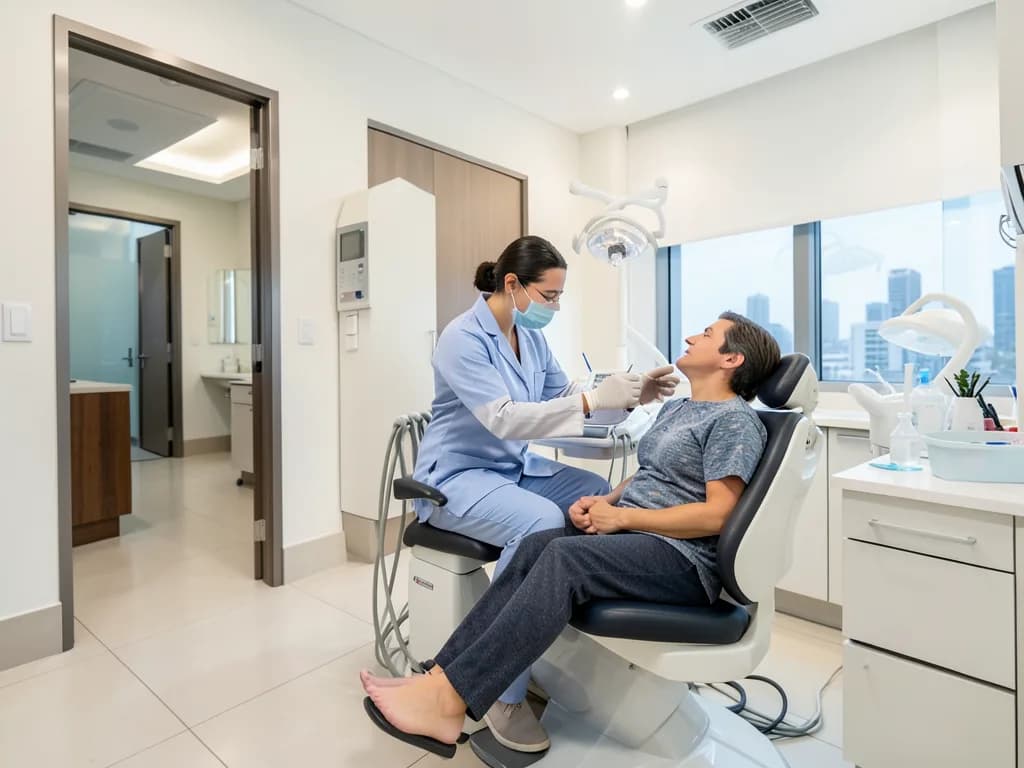
Comprehensive guide to finding inclusive dental care in Dubai for patients with autism, physical disabilities, Down syndrome, intellectual disabilities, and medically complex conditions.
Every patient deserves access to dental care. Yet for individuals with autism spectrum disorder, Down syndrome, cerebral palsy, physical disabilities, intellectual disabilities, or severe medical complexity, accessing routine dental treatment can involve significant additional challenges — for patients, carers, and clinicians alike.
Dubai's dental landscape includes clinics and hospital dental departments equipped to manage complex cases. Understanding what to look for, what questions to ask, and what options exist — including different forms of sedation and the desensitisation process — can make the difference between a patient who avoids dental care for years and one who receives the care they need safely and with dignity.
This page is designed for carers, parents, and patients themselves. It explains who is covered by this guide, what the challenges are, and what the full range of solutions looks like in Dubai's DHA-regulated healthcare system.
Dental Challenges
Sensory sensitivities, communication barriers, rigid routines, aversion to touch
Adapted Approach
Tell-show-do, visual schedules, sensory accommodations, multiple familiarisation visits, sedation if needed
Dental Challenges
Gum disease susceptibility, delayed tooth eruption, mouth breathing, potential cardiac conditions
Adapted Approach
Detailed medical history review; gentle periodontal care; cardiac clearance for sedation; smaller clinic spaces preferred
Dental Challenges
Involuntary movements, spasticity, positioning challenges, limited mouth opening
Adapted Approach
Adapted dental chairs or floor positioning; stabilisation devices; shorter appointments; oral motor assessment
Dental Challenges
Wheelchair access, transfer to dental chair, limited upper body mobility
Adapted Approach
Accessible facilities (ramp, wide doors, height-adjustable chair); treatment possible in wheelchair if needed
Dental Challenges
Avoidance behaviour, panic attacks, faint or freeze responses
Adapted Approach
Pre-visit tours, cognitive behavioural techniques, nitrous oxide, oral or IV sedation; no rushed appointments
Dental Challenges
Medication interactions, communication difficulties, reduced cooperation
Adapted Approach
Full medication review; liaison with treating physician; hospital dental setting for complex cases
Not every Dubai dental clinic is equipped to treat patients with complex needs. When searching for an appropriate provider, the following criteria are the most important to assess.
Ask directly: how many special needs patients does the clinic see per month? Experience matters more than self-description.
Confirm which sedation types the clinic can provide in-house (nitrous oxide, oral, IV) and which require hospital referral.
Wheelchair ramp, wide doorways, height-adjustable dental chair, accessible toilet, step-free access throughout.
Special needs patients often require longer appointment slots with built-in breaks. Confirm this flexibility before booking.
Dentists with paediatric or hospital dentistry training are typically better equipped for behavioural management and complex medical histories.
The best clinics for special needs patients offer a non-treatment introductory visit — meeting the team, seeing the equipment, sitting in the chair — before any procedure is attempted.
Four levels of sedation are used in Dubai for dental procedures, from the lightest (nitrous oxide) to complete general anaesthesia. The appropriate level depends on the patient's condition, the extent of dental treatment needed, and clinical judgement.
Laughing gas
Best for: Mild anxiety, mild autism, phobia
Inhaled through nose mask; wears off in minutes; patient remains fully conscious and responsive
Sedative tablet (Midazolam, Temazepam)
Best for: Moderate anxiety, cooperative but nervous patients
Taken 1 hour before procedure; patient drowsy but awake; escort required; no driving
Intravenous sedation
Best for: Severe anxiety, significant special needs
Administered via vein; deep relaxation; patient may have limited memory of procedure; escort required
GA
Best for: Most complex cases — severe autism, profound intellectual disability, uncooperative patients
Hospital only; anaesthesiologist required; covers all dental work in one session
Hospital setting required for GA
General anaesthesia for dental treatment can only be administered in an approved hospital dental department or day surgery setting with a qualified anaesthesiologist. Dubai facilities equipped for this include Mediclinic City Hospital, American Hospital Dubai, and Rashid Hospital. A referral from a dental clinic can be arranged.
| Service | Cost Range (AED) |
|---|---|
| Special needs dental consultation | AED 200–400 |
| Nitrous oxide sedation (per visit) | AED 300–700 |
| Oral conscious sedation | AED 200–500 |
| IV sedation | AED 800–2,000 |
| General anaesthesia dental procedure (hospital) | AED 3,000–8,000 |
| Full dental exam under sedation | AED 500–1,500 |
| Desensitisation programme (multiple visits) | AED 500–2,000 total |
Costs are indicative for 2026. Hospital-based dental treatment includes facility fees separate from clinical fees. Obtain an itemised quote before confirming any procedure.
Desensitisation is a structured, gradual approach to dental treatment for patients who cannot tolerate conventional dental care. It involves multiple short visits designed to build familiarity and trust before any clinical treatment is attempted. This approach is particularly effective for patients with autism, intellectual disability, and severe dental anxiety.
Tour the clinic, meet the team, no clinical assessment. Building rapport and familiarity.
Patient sits in dental chair, chair reclined slowly. No instruments used.
Instruments introduced one at a time. Mirror touch on hand first, then lip, then teeth.
First clinical examination. Counting teeth only. No scaling or drilling.
Treatment starts only when patient is comfortable at every previous stage.
The desensitisation process may take 3–8 visits before active treatment begins. While this requires patience, it dramatically increases the chance of long-term successful dental care without the risks and costs of sedation.
The DHA mandates coverage for medically necessary sedation under most UAE health insurance plans. This means that if sedation is clinically required — because a patient cannot safely or practically receive dental treatment without it due to a diagnosed medical or developmental condition — insurers are required to cover it subject to pre-authorisation.
Check your specific plan's mental health and disability clauses. Not all plans interpret this mandate identically, and pre-authorisation documentation from your dentist is essential.
Federal Law No. 29 of 2006 on the Rights of Persons with Disabilities establishes the right of people of determination to access healthcare services without discrimination. Dental clinics in Dubai cannot refuse treatment solely on the basis of disability.
DHA-regulated facilities must also meet physical accessibility standards. If you or a family member is refused care, file a complaint with the DHA Health Regulation Department or contact the Community Development Authority (CDA) in Dubai.
Consent for adults with cognitive impairment
For adult patients who lack capacity to give informed consent (due to intellectual disability, dementia, or acquired brain injury), a legal guardian or authorised next of kin must give consent. The DHA requires clinics to document this consent process. Formalising legal guardianship through the Dubai courts before major procedures are required is strongly advisable for carers in this situation.
The range of accommodations a clinic can provide directly determines whether a special needs patient can be treated there or requires hospital referral. When calling to enquire, ask specifically about each of the following.
Use our clinic directory to browse Dubai dental practices and call ahead to verify specific accommodations. Also see our full overview of dental treatments in Dubai and specialist dentists.
The UAE has invested significantly in services and legal protections for people of determination (the UAE's official term for people with disabilities). The following DHA and government resources are relevant to families seeking dental care for special needs patients in Dubai.
DHA Health Regulation Department
If a DHA-regulated clinic refuses to treat a patient on the basis of disability, or fails to meet accessibility standards, complaints can be filed with the DHA Health Regulation Department. All DHA-licensed facilities are required to comply with Federal Law No. 29 of 2006 on the Rights of Persons with Disabilities.
Community Development Authority (CDA) Dubai
The CDA coordinates disability services in Dubai including the People of Determination strategy. The CDA can provide guidance on legal guardianship for adults with cognitive impairment, which is required for dental consent purposes. Contact the CDA early — before major dental procedures are needed.
Rashid Hospital Dental Department
As a major government hospital, Rashid Hospital dental department is among the best-resourced in Dubai for complex and special needs dental cases. It has hospital anaesthesia facilities, Arabic-speaking staff, and experience with the full range of physical and developmental conditions. Referrals can be arranged through primary care.
Dubai Autism Center (DAC)
The DAC provides support, training, and referral resources for families of autistic individuals in Dubai. Their network includes healthcare providers with experience managing patients with ASD, and staff can assist families in identifying appropriate dental providers.
Insurance pre-authorisation for special needs dental care
For sedation dentistry to be covered by UAE health insurance, the dentist must submit a pre-authorisation request to the insurer before treatment. This must include a clinical justification letter, the patient's diagnosis, and confirmation that dental treatment cannot safely be provided without sedation. Submit this 7–14 days before the procedure is scheduled. See our dental insurance guide for insurer contact details and pre-authorisation tips.
Several Dubai dental clinics have experience treating patients with autism spectrum disorder (ASD), though they do not always advertise this openly. The most reliable approach is to call ahead and ask specifically: Does the clinic have experience with ASD patients? Do they offer pre-visit familiarisation appointments? Can they accommodate sensory sensitivities (lighting, noise levels, the texture of dental instruments)? Hospital dental departments — including those at Mediclinic City Hospital, American Hospital Dubai, and Rashid Hospital — have the broadest capability for complex and challenging cases, including sedation and general anaesthesia if required.
Yes. General anaesthesia (GA) for dental procedures is available in Dubai but is restricted to hospital dental departments and specialist day surgery centres. It cannot be administered in a standard dental clinic setting. The procedure is conducted with a qualified anaesthesiologist present. GA is typically reserved for patients who cannot cooperate with dental treatment under lighter forms of sedation, including patients with severe autism, significant intellectual disability, or those requiring extensive dental rehabilitation. Cost ranges from AED 3,000 to AED 8,000 for the GA component of the visit, excluding dental treatment fees.
Tell-show-do (TSD) is a behavioural management technique widely used in paediatric and special needs dentistry. The dentist first tells the patient what will happen in simple language, then shows the instrument or action (e.g., demonstrating a mirror on the hand), and then does the procedure. This gradual exposure approach is particularly effective for patients with autism spectrum disorder, intellectual disabilities, and severe dental anxiety. It reduces the element of surprise, builds trust over multiple visits, and can make it possible to complete dental treatment without sedation in many cases. Multiple shorter familiarisation visits are scheduled before any active treatment begins.
Sedation for medically necessary dental treatment can be covered by UAE health insurance, but coverage is not automatic. The DHA mandates that insurers cover medically necessary sedation — meaning sedation that is required because the patient cannot safely or practically receive dental treatment without it, due to a diagnosed medical or developmental condition. Your dentist must submit pre-authorisation documentation to your insurer, including a clinical justification letter and the relevant diagnosis. Routine sedation for dental anxiety without a diagnosed condition is typically not covered. Contact your insurer's pre-authorisation team before scheduling any sedation procedure.
Federal Law No. 29 of 2006 on the Rights of Persons with Disabilities establishes legal protections for people of determination (the UAE's preferred term) across all public and private service sectors, including healthcare. Under this law, clinics cannot refuse treatment to a patient solely on the basis of disability. Additionally, DHA-regulated healthcare facilities are required to meet accessibility standards including wheelchair access, accessible toilets, and non-discrimination in service provision. If you or a family member is refused dental care due to a disability or special needs, you can file a complaint with the DHA Health Regulation Department.
For an adult patient who lacks the cognitive capacity to give informed consent (due to intellectual disability, dementia, or acquired brain injury), consent must be given by a legal guardian or authorised next of kin. In Dubai, legal guardianship for adults with intellectual disability is established through the courts. The DHA requires clinics to document the consent process, including the relationship of the consenting person to the patient and evidence that the patient lacks capacity. For family members caring for a loved one with cognitive impairment, it is advisable to formalise legal guardianship before major dental procedures are required, rather than trying to arrange this urgently when care is needed.
Yes. Dubai's dental community is highly multilingual. Arabic-speaking dentists and dental nurses are available across most major clinics and in all hospital dental departments. For special needs patients where communication is a key challenge, having a dentist or nurse who can communicate in the patient's or carer's primary language is a significant advantage. When searching for a clinic, specifically ask whether Arabic-speaking staff are available for special needs consultations. Government hospital dental departments (Rashid Hospital, Dubai Hospital) are particularly well-staffed with Arabic-speaking clinicians.
Search clinics that accommodate special needs patients, wheelchair access, sedation, and hospital-grade dental care.
Use our dental search directory to compare clinics, read reviews, and book appointments.