Best Pediatric Dentist Dubai — Children's Dental Clinic
Choosing the right dentist for your child in Dubai makes the difference between a child who grows up comfortable with dental care and one who develops lasting anxiety. This guide covers what paediatric specialists do, when to book your child's first appointment, treatment costs, and what to look for in a child-friendly clinic.
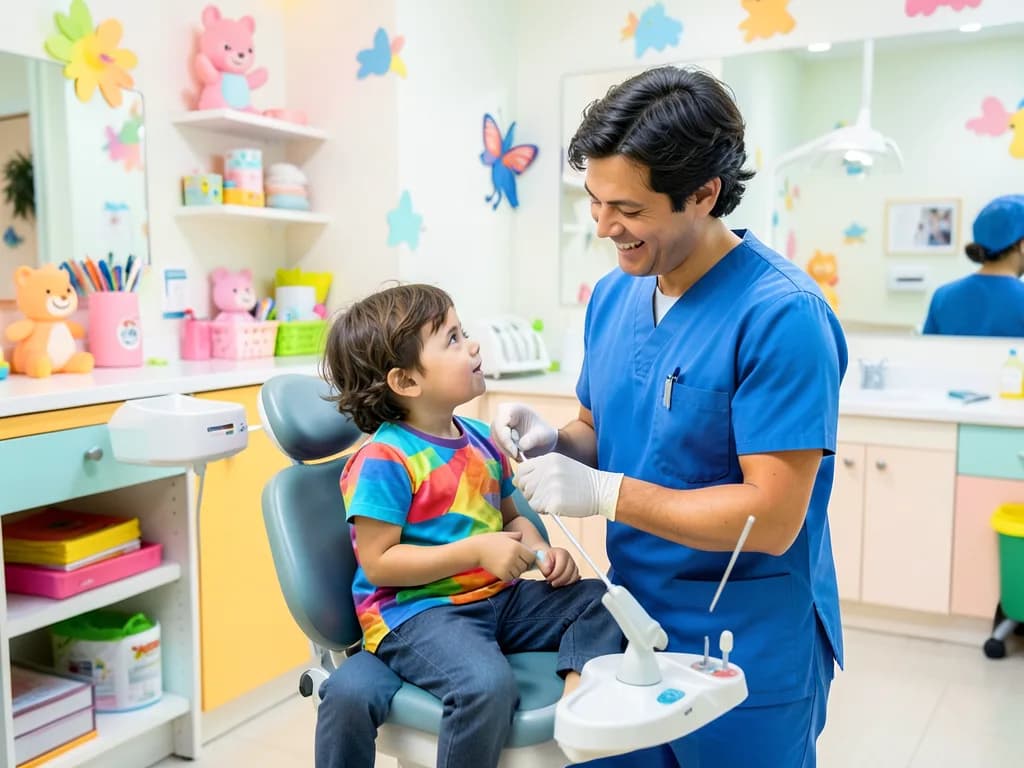
Why Paediatric Dentistry Requires Specialist Training
Children are not simply small adults. Their dental anatomy, psychological development, and response to treatment require a fundamentally different approach to adult dentistry. Paediatric dental specialists — called paedodontists — complete a 2–3 year post-graduate residency beyond dental school. Always confirm your dentist holds a DHA specialist licence in Paediatric Dentistry. Compare all dental specialists in Dubai in our dental specialists Dubai guide. Their residency covers:
- Primary (baby) tooth anatomy and disease patterns
- Behaviour management and communication with children of all ages
- Growth monitoring and early intervention for jaw development
- Pharmacological sedation including nitrous oxide
- Management of dental trauma in children and adolescents
- Special needs dentistry for children with disabilities or medical conditions
DHA paediatric dental specialist
In Dubai, only dentists with a DHA specialist licence in Paediatric Dentistry are legally authorised to call themselves paediatric dental specialists. You can verify any dentist's licence category at dha.gov.ae. Many Dubai clinics have general dentists who see children — which is fine for straightforward cases — but a DHA specialist is preferable for young children, anxious patients, or complex needs.
Tip: Search "Paediatric Dentistry" as the specialty when using the DHA licence verification portal to confirm specialist status.
When Should Your Child First See a Dentist in Dubai
The first visit should happen within 6 months of the first tooth erupting or by the first birthday — whichever comes first.
After the first visit, DHA guidelines recommend check-ups every 6 months to monitor eruption, decay, and growth.
Do not wait for the scheduled visit if your child has pain, swelling, or dental trauma. See our emergency dentist guide.
What happens at the first visit
The first appointment is low-key and typically lasts 30–45 minutes. The dentist examines the mouth, checks erupting teeth and jaw development, and advises on brushing technique, diet, and fluoride use. Most first visits involve no treatment — the goal is familiarisation. A cleaning and fluoride varnish may be applied if the child is comfortable. Cost: AED 150–350.
Common Paediatric Dental Treatments in Dubai
All prices are market ranges as of February 2026. Insurance co-pays and network discounts may reduce your out-of-pocket cost.
| Treatment | Price (AED) | Notes |
|---|---|---|
| First visit / check-up | AED 150 – 350 | Includes examination and parental guidance; may be free at some insurance-linked clinics |
| Professional cleaning | AED 120 – 300 | Scale and polish; recommended every 6 months |
| Fluoride application | AED 80 – 200 | Topical fluoride varnish to strengthen enamel |
| Fissure sealant | AED 100 – 250 / tooth | Protective coating on back molar surfaces; highly recommended age 6–12 |
| Filling (composite resin) | AED 150 – 400 | Per tooth; tooth-coloured material used for baby and permanent teeth |
| Stainless steel crown | AED 500 – 1,200 | Pre-formed crown for severely decayed baby teeth; durable and long-lasting |
| Extraction (baby tooth) | AED 150 – 400 | Simple extraction of baby teeth; local anaesthetic |
| Space maintainer | AED 600 – 1,500 | Holds space after early baby tooth loss pending permanent tooth eruption |
| Nitrous oxide sedation | AED 300 – 800 | Per session; safe, reversible anxiety management |
| X-rays (bitewing pair) | AED 100 – 250 | Routine 12–18 month check for cavities between teeth |
* Market ranges February 2026. See our full dental treatment cost guide for adult treatment prices.
Browse all dental specialists in our specialist directory, or find an affordable option near you.
Dental Anxiety in Children — How Dubai Clinics Handle It
Dental anxiety is extremely common in children. A good paediatric dentist has a toolkit of evidence-based techniques to manage it effectively.
Tell-Show-Do
The dentist explains what will happen in simple language, demonstrates using models or a mirror, and then gently proceeds. This removes the fear of the unknown — the primary source of dental anxiety in children.
Positive reinforcement
Stickers, stamps, praise, and small rewards are used to associate the dental visit with positive experiences. Many Dubai paediatric clinics have prizes and a reward box that children choose from after a successful appointment.
Child-friendly environments
Dedicated paediatric dental suites in Dubai often feature bright murals, TV screens on ceilings above the chair, themed waiting areas, and toys. Reducing the clinical feel of the environment significantly lowers child anxiety.
Nitrous oxide sedation
Laughing gas is the most common pharmacological aid. Inhaled through a small nosepiece, it takes effect in 2–3 minutes, making children feel calm and slightly detached. It wears off completely within 5 minutes of removing the mask. Cost: AED 300–800 per session.
Baby Teeth vs Permanent Teeth — What Parents Need to Know
Why baby teeth matter
Baby teeth are not disposable. They hold space in the jaw for permanent teeth and guide their eruption into the correct position. A decayed or prematurely lost baby molar can cause permanent teeth to erupt crowded or misaligned, increasing the need for orthodontic treatment later. Baby teeth also allow normal eating, speech development, and facial structure growth.
- Back baby molars stay until age 10–12
- Premature loss often requires space maintainers
- Untreated decay can spread to permanent tooth buds
Tooth eruption timeline
| Teeth | Eruption Age |
|---|---|
| Lower central incisors | 6–10 months (baby) / 6–7 years (permanent) |
| Upper central incisors | 8–12 months (baby) / 7–8 years (permanent) |
| First molars | 13–19 months (baby) / 6–7 years (permanent) |
| Canines | 16–23 months (baby) / 9–12 years (permanent) |
| Second molars | 25–33 months (baby) / 11–13 years (permanent) |
| Second premolars | N/A (baby) / 10–12 years (permanent) |
| Third molars (wisdom) | 17–25 years (if they erupt at all) |
Orthodontic Assessment for Children in Dubai
Most paediatric dental clinics in Dubai perform a routine orthodontic screening at the age 7–8 check-up. At this age, the first permanent molars and incisors have erupted, allowing the dentist to identify crowding, crossbites, overbites, and jaw width issues that can benefit from early treatment.
Early interceptive orthodontic treatment typically uses removable or fixed appliances (like palate expanders) to guide jaw development before it is complete. This can significantly simplify — or sometimes eliminate — the need for full orthodontic treatment in the teenage years.
Full orthodontic treatment with braces or clear aligners typically begins between ages 11 and 14 once most permanent teeth have erupted. See our braces cost guide and Invisalign vs braces comparison for teenage orthodontic options.
Early orthodontic treatment costs
Insurance Coverage for Children's Dental Care in UAE
What is typically covered
- Routine check-ups and X-rays (at in-network clinics)
- Scale and polish (professional cleaning)
- Fluoride varnish applications
- Composite fillings for decay
- Baby tooth extractions
- Emergency pain relief consultations
What is typically excluded
- Orthodontic braces and Invisalign (most plans)
- Fissure sealants (check your policy — some cover it)
- Nitrous oxide sedation (often excluded or limited)
- Stainless steel crowns (exclusion varies by plan)
- Cosmetic dental treatments
- General anaesthesia for dentistry (hospital pre-authorisation needed)
Coverage varies significantly by insurer and plan tier. Check with Daman, AXA, Bupa, or your provider directly to confirm children's dental benefits and network clinics.
What Is a Pedodontist
A pedodontist is a dental specialist who focuses exclusively on the oral health of infants, children, adolescents, and patients with special needs. The term pedodontist comes from the Greek words "paido" (child) and "odous" (tooth). In everyday language, a pedodontist is the same as a pediatric dentist or paediatric dentist — all three terms refer to the identical specialist qualification. In Dubai, the DHA registers these specialists under the licence category "Paediatric Dentistry."
To become a pedodontist, a dentist must complete a 2 to 3 year full-time postgraduate residency programme after graduating from dental school. This advanced training covers child psychology and behaviour management, dental growth and development, pharmacological sedation (including nitrous oxide and oral sedation), management of dental trauma in children, and treatment planning for patients with medical complexities such as congenital heart disease, bleeding disorders, or developmental disabilities. A pedodontist in Dubai is qualified to treat patients from birth through to 18 years.
If you are searching for a pediatric dentist in Dubai, you may also see the term pedodontist used interchangeably by clinics. Both terms describe exactly the same specialist. What matters is that the dentist holds a DHA specialist licence in Paediatric Dentistry — this confirms they have completed the required residency training and are authorised to practise as a specialist in Dubai. You can verify this on the DHA licence verification portal.
Pedodontist vs General Dentist for Children
| Factor | Pedodontist | General Dentist |
|---|---|---|
| Postgraduate training | 2–3 year specialist residency | None in paediatrics |
| DHA licence category | Paediatric Dentistry Specialist | General Dental Practitioner |
| Behaviour management | Formal training in child psychology | Experience-based only |
| Sedation (nitrous oxide) | Trained and authorised | May not offer |
| Special needs patients | Residency-level training | Limited or none |
| Clinic environment | Dedicated kids dental clinic setup | Mixed adult and child |
Best Pediatric Dental Clinics in Dubai
Dubai is home to many excellent pediatric dental clinics staffed by DHA-licensed pedodontists. The best pediatric dentist in Dubai will combine specialist qualifications with a genuinely child-friendly clinical environment. When choosing a pediatric dental clinic in Dubai, parents should look for dedicated kids dental clinics rather than general practices that also accept child patients. A dedicated kids dental clinic invests in child-sized equipment, ceiling-mounted entertainment screens, themed treatment rooms, and staff trained specifically in paediatric patient communication.
Pediatric dental clinics in Dubai are concentrated in Jumeirah, Dubai Healthcare City, JBR, Dubai Marina, Al Barsha, and Downtown Dubai. Many of these clinics offer Saturday and evening appointments to work around school schedules. Several also provide home visits or mobile dental services for very young children or patients with special needs. Whether you search for a pediatric dentist, a paediatric dentist, or a child dentist in Dubai, you are looking for the same specialist — use our clinic search tool to filter by specialist category and location.
What the Best Pediatric Dental Clinics Offer
- DHA-licensed pedodontist on staff (not just a general dentist)
- Dedicated children's waiting area with toys and entertainment
- Child-sized dental chairs and instruments
- Nitrous oxide sedation for anxious children
- Digital X-rays with lower radiation dose
- Preventive programmes (fluoride, sealants, oral hygiene coaching)
- Weekend and after-school appointment slots
- Parent-friendly policies (parents welcome in treatment room)
Popular Areas for Kids Dental Clinics
- Dubai Healthcare City — Highest concentration of specialist clinics
- Jumeirah — Family-focused clinics near schools
- Dubai Marina and JBR — Weekend-friendly clinics for expat families
- Al Barsha — Budget-friendly options with specialist staff
- Downtown Dubai — Premium clinics with latest technology
- Mirdif and Al Warqa — Neighbourhood clinics with Arabic-speaking pedodontists
Browse top rated dental clinics in the UAE or search by area: Dubai Marina, Jumeirah, Al Barsha, Downtown Dubai.
Choosing the Right Pediatric Dentist in Dubai
Every child deserves a dental professional who understands the unique needs of growing mouths and developing minds. A pediatric dentist in Dubai does not simply scale down adult techniques — they use fundamentally different approaches to communication, behaviour management, and treatment planning. When selecting a child dentist in Dubai, parents should consider qualifications, clinic environment, insurance compatibility, and the dentist's ability to manage dental anxiety.
Parents searching for a paediatric dentist in Dubai should know that the terms pediatric dentist, paediatric dentist, and pedodontist all refer to the same specialist. The American spelling "pediatric" and the British spelling "paediatric" are used interchangeably by Dubai clinics. What matters is the DHA specialist licence — not the spelling. You can search for either "pediatric dentist dubai" or "paediatric dentist dubai" and find the same qualified professionals.
If your child has specific needs — such as dental phobia, a medical condition that requires special precautions, or early orthodontic concerns — look for a pediatric dental clinic in Dubai that advertises these services explicitly. Many kids dental clinics in Dubai also offer preventive programmes including fluoride varnish schedules, fissure sealant packages, and oral hygiene workshops for school-age children. These preventive programmes cost far less than treating cavities and are the best investment in your child's long-term dental health. See our children's dental care guide for a complete preventive care checklist.
Technology and Equipment Used in Pediatric Dentistry
Leading pediatric dental clinics in Dubai invest in child-specific technology that makes treatment faster, more comfortable, and less intimidating for young patients. Child-sized dental chairs, shorter handpieces, and colour-coded instruments sized for small mouths all reduce treatment time and discomfort compared to adapting adult equipment. DHA-licensed pedodontists working in dedicated kids dental clinics regularly upgrade their equipment to reflect current best practice in paediatric dental care.
Digital X-Rays with Low Radiation
Modern paediatric dental clinics in Dubai use digital radiography, which reduces radiation exposure by up to 80% compared to traditional film X-rays. Bitewing X-rays are taken every 12 to 18 months to detect decay between primary teeth and erupting permanent teeth before it becomes visible. The images appear instantly on a screen, allowing the pedodontist to explain findings to parents in real time. For children with complex eruption issues, some clinics offer cone-beam CT scanning — a three-dimensional view that gives a far more detailed picture of jaw development than a conventional panoramic X-ray.
Nitrous Oxide Delivery Systems
Nitrous oxide — commonly known as laughing gas — is delivered through a small, scented nosepiece that sits gently over the child's nose. Modern paediatric units use precise flow-control equipment that allows the pedodontist to adjust the concentration in real time, ensuring the child remains calm but fully conscious and responsive throughout treatment. The effect wears off within five minutes of removing the mask, so children can return to school or activities the same day. Nitrous oxide sedation at a kids dental clinic in Dubai costs AED 300 to 800 per session and is listed in the 2026 dental treatment cost guide.
Laser Dentistry for Kids
Dental lasers are increasingly available at advanced pediatric dental clinics in Dubai. A soft-tissue laser can remove decay, treat gum problems, and perform minor surgical procedures such as frenectomy (tongue-tie release) with minimal bleeding and no sutures. Some hard-tissue lasers can also prepare small cavities in primary teeth without a drill, which significantly reduces the noise, vibration, and anxiety associated with conventional cavity preparation. Laser treatment is typically not painful and often requires less local anaesthetic, making it ideal for nervous children or those with a needle phobia.
Intraoral Cameras and DIAGNOdent
Intraoral cameras are pen-sized devices with a tiny camera at the tip. The dentist guides the camera around the child's mouth and the image appears on a large screen that parents can see from the waiting area or alongside the chair. This transparency helps parents understand exactly what is happening and builds trust. Many children find the camera process fascinating rather than scary. DIAGNOdent laser cavity detection devices scan for early decay that is not yet visible on X-rays, allowing the pedodontist to apply fluoride varnish or a fissure sealant before a cavity develops rather than drilling later.
For the most technology-forward paediatric care in Dubai, look for clinics in Downtown Dubai and Dubai Marina that advertise digital radiography, laser dentistry, and intraoral camera examination.
Top Rated Pediatric Dental Specialists in Dubai
Dubai is home to a growing number of MOH approved and DHA-licensed pedodontists who hold international qualifications alongside their UAE specialist registration. A qualified pediatric dental specialist in Dubai typically holds a BDS (Bachelor of Dental Surgery) plus an MDS (Master of Dental Surgery) in Paediatric and Preventive Dentistry, or the equivalent postgraduate degree from a university accredited in the UK, USA, Canada, Australia, India, or Europe. The DHA evaluates each qualification individually and only awards a Paediatric Dentistry specialist licence to dentists who meet its standards — check our DHA licensed dentist guide for the full verification process.
Qualifications to Look For
- BDS + MDS in Paediatric and Preventive Dentistry
- DHA Specialist Licence — Paediatric Dentistry category
- Board certification from UK (FDS RCS), USA (ABPD), or equivalent
- Additional training in behaviour management and conscious sedation
- CPR certification and paediatric emergency training
- Experience with special needs patients including children with autism or congenital conditions
What Sets a Specialist Apart
A paediatric dental specialist in Dubai does not simply clean teeth and fill cavities. Their advanced residency training means they can manage complex behavioural situations without resorting to general anaesthesia, perform pulpotomy procedures (baby root canals) on primary teeth that general dentists may choose to extract, place dental sealants on deeply fissured molar surfaces before decay begins, prescribe and monitor interceptive orthodontics, and treat children with physical or intellectual disabilities whose care requires specialised positioning, communication strategies, and sometimes hospital-based sedation.
Browse the full directory of dental specialists in Dubai to compare paediatric specialists by area and patient reviews.
Tip: How to Verify a Pedodontist's DHA Licence
Visit dha.gov.ae and use the Healthcare Professional Search tool. Enter the dentist's name and select "Dental" as the profession. Under speciality, look for "Paediatric Dentistry" — this confirms the dentist holds a DHA specialist registration, not just a general dental practitioner licence. Any clinic advertising a "paediatric specialist" who only holds a general licence is misrepresenting their qualifications. Report concerns to the DHA Complaints department.
Age Considerations for Children's Dental Care
Different stages of childhood require different approaches from a pediatric dental specialist. Understanding what to expect at each age helps parents time appointments correctly and know when to seek specialist assessment rather than a general check-up. The American Academy of Pediatric Dentistry (AAPD) — whose guidelines DHA-licensed pedodontists in Dubai follow — sets clear age-based recommendations that reflect the biology of primary teeth (deciduous teeth) and permanent tooth development.
Birth to 12 Months — First Tooth, First Visit
The lower central incisors are typically the first primary teeth to erupt, appearing between 6 and 10 months. The AAPD recommendation — adopted by the DHA — is that a child's first dental visit should occur within 6 months of the first tooth erupting or by the first birthday, whichever comes sooner. At this visit, the pedodontist performs a "knee-to-knee" examination with the parent, checks for early signs of early childhood caries, assesses the frenulum for tongue-tie (which affects breastfeeding and later speech), and advises on bottle feeding habits that increase decay risk in baby teeth.
Ages 1 to 5 — Primary Dentition and Cavity Prevention
All 20 primary teeth (deciduous teeth) are typically in place by age 3. This period carries the highest risk of early childhood caries — severe decay caused by prolonged bottle feeding, high-sugar diets, or poor oral hygiene. A DHA-licensed pedodontist will apply topical fluoride varnish every 3 to 6 months starting from the first tooth and may recommend a fluoride supplement if the family uses non-fluoridated water. Pit and fissure sealants are not yet applicable at this age (molar anatomy is not fully developed), but preventive counselling is critical. The mixed dentition stage begins around age 6 when the first permanent molars erupt.
Ages 6 to 12 — Mixed Dentition and Fissure Sealants
The mixed dentition stage — when a child has both primary teeth and erupting permanent teeth — is the most important period for preventive treatment. The first permanent molars erupt around age 6 and are the teeth most likely to develop decay in childhood, because their deep fissures trap food and bacteria. A dental sealant (fissure sealant or pit and fissure sealant) applied to these molars immediately after eruption can reduce decay rates by up to 80%. In Dubai, fissure sealants cost AED 100 to 250 per tooth and are one of the best-value preventive treatments available at a kids dental clinic. An orthodontic screening is recommended at age 7 to identify jaw discrepancies that respond best to early interceptive orthodontics.
Ages 12 to 18 — Permanent Dentition and Orthodontic Treatment
By age 12 to 13, most children have a full set of permanent teeth except the wisdom teeth (third molars), which erupt between ages 17 and 25 — if they erupt at all. Full orthodontic treatment with braces or clear aligners typically begins at this stage, once enough permanent teeth are in place to anchor the appliance. Adolescents are also at high risk for enamel erosion from sports drinks and carbonated beverages, and should be fitted with a custom sports mouthguard if they play contact sports. Space maintainers fitted earlier should be checked and removed when the permanent tooth erupts into its intended position. See our braces cost guide for full orthodontic pricing in Dubai.
Pain and Comfort Management for Kids at the Dentist
Pain is the number one reason children develop dental fear, and dental fear is the number one reason adults avoid dentistry. Modern pediatric dental practice in Dubai places pain prevention at the centre of every visit, using a layered approach that combines psychological techniques, topical anaesthetics, gentle injection methods, and pharmacological sedation options. A DHA-licensed pedodontist is trained in all of these methods and selects the appropriate combination based on each child's age, anxiety level, and the procedure being performed.
Tell-Show-Do Technique
Tell-Show-Do is the foundational behaviour management technique used by all paediatric dental specialists. The dentist first explains what will happen in simple, age-appropriate language (Tell), then demonstrates the procedure using a model or by performing it on the dentist's own finger (Show), and finally performs the procedure on the child (Do). This systematic approach removes the fear of the unknown — the primary driver of dental anxiety in children — and is highly effective for children aged 3 and older. Combined with positive reinforcement (praise, stickers, prize boxes), it creates a framework for confident dental behaviour that lasts into adulthood.
Topical and Local Anaesthetic
Before any injection, a strawberry- or bubblegum-flavoured topical anaesthetic gel is applied to the gum for 60 to 90 seconds. This numbs the tissue so that the subsequent local anaesthetic injection is either painless or causes only a mild pressure sensation. Paediatric-specific injection techniques — slow delivery, warm anaesthetic cartridges, and distraction tools — further minimise discomfort. For children who remain anxious despite topical anaesthetic and Tell-Show-Do, nitrous oxide sedation is the next step. For very young children or those requiring extensive treatment, oral sedation or general anaesthesia at a hospital-based dental unit may be recommended by the paediatric specialist.
Nitrous Oxide (Laughing Gas) Sedation
Nitrous oxide sedation — also called conscious sedation or laughing gas — is the safest and most widely used pharmacological method in paediatric dentistry. A flavoured nosepiece is placed over the child's nose and a 30 to 70% nitrous oxide/oxygen mixture is inhaled. Within 2 to 3 minutes, the child feels relaxed, slightly detached, and often tingling in the hands and feet. They remain fully conscious, can hear and respond to the dentist, and can breathe normally on their own. The effect reverses completely within 5 minutes of breathing pure oxygen through the mask. There are no lasting side effects and children can eat before the appointment (unlike general anaesthesia). Cost: AED 300 to 800 per session. Find sedation dentistry options in Dubai for anxious patients of all ages.
Child-Friendly Clinic Environments
The physical environment of a paediatric dental clinic is itself a pain management and anxiety reduction tool. Evidence shows that neutral waiting areas with white walls, adult-scale chairs, and clinical equipment visible from the waiting room increase child dental anxiety, while themed rooms, bright colours, fish tanks, play areas, and ceiling murals reduce it. The best kids dental clinics in Dubai install ceiling-mounted TV screens above the dental chairs so children can watch cartoons or movies during treatment, reducing awareness of clinical sounds and sensations. Staff at dedicated paediatric clinics are also trained in child-friendly communication styles, using positive framing ("the sleepy juice will make your tooth take a nap") rather than words like "needle," "drill," or "injection."
If your child has extreme dental anxiety or requires extensive treatment, ask your pedodontist about referral to a hospital-based paediatric dental unit in Dubai. Facilities such as Mediclinic and Aster Hospital offer dental treatment under general anaesthesia for children who cannot be managed with in-clinic sedation. See our dental anxiety guide for adults and children.
Risks and Potential Complications of Neglecting Children's Dental Health
Paediatric dental treatment itself carries very minimal risk when performed by a DHA-licensed pedodontist using appropriate materials and techniques. The real risks lie in neglecting children's dental health — a pattern that leads to compounding problems throughout childhood and into adult life. Understanding these risks helps parents make informed decisions about preventive care investment vs. the cost of treatment after problems develop.
Consequences of Untreated Baby Tooth Decay
- Infection can spread from primary teeth to the permanent tooth buds developing in the jaw, permanently damaging the adult tooth before it erupts
- Premature loss of a primary molar causes adjacent teeth to drift into the gap, reducing space for the permanent successor tooth
- Misaligned permanent teeth require more complex and expensive orthodontic treatment to correct
- Chronic dental pain in childhood disrupts sleep, learning, and social development
- Children who experience untreated dental pain are 3x more likely to develop dental phobia as adults
- Severe early childhood caries may require general anaesthesia for treatment — a preventable cost of AED 8,000 to 20,000
Minimal Risks of Preventive Treatment
By contrast, the risk profile of routine preventive paediatric dental treatment is very low. Topical fluoride varnish applied at a DHA-licensed clinic is safe even if the child swallows a small amount, as the dose applied to teeth is too small to cause fluorosis or systemic effects. Dental sealants (fissure sealants) placed on primary and first permanent molars have a safety record spanning over 50 years with no documented systemic risks. Nitrous oxide sedation, when delivered at licensed concentrations by a trained pedodontist, has no reported serious adverse events in otherwise healthy children.
Parents who have concerns about any treatment should ask the pedodontist to explain the evidence base, the material safety data, and the alternative options before consenting. A good paediatric dental specialist will welcome these questions. For non-urgent preventive concerns, see our children's dental care guide.
The Cost-Benefit Case for Early Intervention
A dental check-up at age 1 costs AED 150 to 350. A fissure sealant on a first permanent molar at age 6 costs AED 100 to 250 and can last 5 to 10 years. A composite filling to repair a cavity that could have been prevented by that sealant costs AED 150 to 400. A pulpotomy (baby root canal) on a severely decayed primary molar costs AED 600 to 1,200. A stainless steel crown over that pulpotomised tooth costs an additional AED 500 to 1,200. General anaesthesia for a child requiring multiple restorations costs AED 8,000 to 20,000. The economic and emotional case for early intervention with a DHA-licensed pedodontist is clear. Find an affordable dentist in Dubai that accepts your insurance for children's preventive care.
People Also Search For
Parents looking for a pediatric dentist in Dubai also search for these related topics.
Frequently Asked Questions
At what age should a child first visit a dentist in Dubai?
The Dubai Health Authority (DHA) and the American Academy of Pediatric Dentistry both recommend a child's first dental visit when the first tooth appears — typically around 6 months — or no later than the child's first birthday. Early visits establish a dental home, allow the dentist to check eruption patterns, and introduce children to the clinic environment before any treatment is needed. This helps prevent dental anxiety in later years.
Is paediatric dentistry covered by UAE health insurance?
Basic dental check-ups and treatments for children are covered under many UAE health insurance plans, including Daman Essential and Enhanced packages, AXA family plans, and Bupa plans with dental riders. Coverage typically includes check-ups, X-rays, fillings, and extractions at in-network paediatric dental clinics. Cosmetic or orthodontic treatments for children are usually excluded. Check your policy's dental schedule and network list, as coverage limits and co-pay amounts vary.
What is the difference between a general dentist and a paediatric specialist in Dubai?
A general dentist can see children but has no mandatory post-graduate training in paediatric dentistry. A DHA-licensed paediatric dental specialist has completed a 2–3 year specialist residency after dental school, covering child development, behaviour management techniques, growth and eruption patterns, and advanced anxiety management including nitrous oxide sedation. For young children, anxious patients, or complex cases, a certified paediatric specialist is strongly recommended.
How do Dubai clinics manage dental fear in young children?
Paediatric dental clinics in Dubai use evidence-based behaviour management techniques including Tell-Show-Do (explaining and demonstrating each instrument before use), positive reinforcement, distraction (TV screens, music), and child-friendly clinic environments with bright colours and toys. For more anxious children, many clinics offer nitrous oxide (laughing gas) sedation, which is safe, fast-acting, and wears off within minutes. General anaesthesia is available at hospital-based dental units in Dubai for children requiring extensive treatment who cannot tolerate standard techniques.
When should I consider orthodontic treatment for my child in Dubai?
The British Orthodontic Society and most paediatric dentists in Dubai recommend an orthodontic assessment at age 7–8, when the first adult molars and incisors have erupted. At this age, early interceptive treatment (such as palate expanders or space maintainers) can guide jaw development and reduce the complexity of later orthodontic treatment. Full orthodontic treatment with braces or Invisalign typically begins between ages 11 and 14, once most permanent teeth have erupted.
How much does a pediatric dentist cost in Dubai?
A pediatric dentist in Dubai typically charges AED 150 to 350 for a first consultation and examination. Routine procedures like fluoride application cost AED 80 to 200, while fissure sealants range from AED 100 to 250 per tooth. Composite fillings at a pediatric dental clinic in Dubai cost AED 150 to 400 per tooth, and stainless steel crowns for severely decayed baby teeth range from AED 500 to 1,200. Nitrous oxide sedation, commonly offered at kids dental clinics, adds AED 300 to 800 per session. Insurance may cover basic check-ups and fillings at in-network clinics, reducing out-of-pocket costs significantly. Always ask your pediatric dentist for an itemised quote before treatment begins.
What is a pedodontist and how is it different from a pediatric dentist?
A pedodontist and a pediatric dentist are the same specialist — pedodontist is simply the clinical term used in dental literature for a dentist who specialises exclusively in treating children. In Dubai, a pedodontist holds a DHA specialist licence in Paediatric Dentistry, which requires a 2 to 3 year postgraduate residency after completing dental school. This advanced training covers child psychology, behaviour management, growth and development of the teeth and jaws, sedation techniques, and treatment of dental trauma in children. Whether a clinic calls the specialist a pedodontist or a paediatric dentist, the qualifications and scope of practice are identical. The DHA registers these specialists under the category Paediatric Dentistry.
How do I find the best pediatric dentist in Dubai for my child?
Finding the best pediatric dentist in Dubai involves checking several factors. First, verify the dentist holds a DHA specialist licence in Paediatric Dentistry rather than just a general dental licence. Second, look for a dedicated pediatric dental clinic in Dubai rather than a general practice that also sees children — dedicated kids dental clinics have child-friendly environments, trained support staff, and equipment sized for smaller mouths. Third, read verified parent reviews on platforms like Google and DentistNearMeDubai to learn about other families' experiences. Fourth, visit the clinic before booking treatment to assess the waiting area, check if staff interact warmly with children, and confirm the clinic offers age-appropriate anxiety management such as Tell-Show-Do and nitrous oxide sedation. The best pediatric dentist in Dubai will take time to build rapport with your child before any clinical work.
Are there paediatric dentist clinics open on weekends in Dubai?
Yes, many pediatric dental clinics in Dubai operate on Saturdays and some also open on Sundays to accommodate school schedules. Weekend availability is especially common at larger multi-specialty clinics in areas like Jumeirah, Dubai Marina, and Downtown Dubai. Some kids dental clinics also offer extended weekday hours until 8 or 9 PM so parents can bring children after school. When searching for a paediatric dentist in Dubai, filter by weekend availability on DentistNearMeDubai to find clinics that fit your schedule. It is advisable to book weekend appointments well in advance as they tend to fill quickly, particularly for popular pedodontists.
What should I look for in a kids dental clinic in Dubai?
A good kids dental clinic in Dubai should have a child-friendly waiting area with age-appropriate toys, books, or entertainment screens to help children feel relaxed before their appointment. The treatment rooms should be equipped with child-sized dental chairs and ceiling-mounted TV screens or distraction tools. Look for clinics that employ DHA-licensed pedodontists rather than general dentists seeing children as a sideline. The best kids dental clinics in Dubai train their entire team — from receptionists to dental nurses — in child-friendly communication techniques. Ask whether the clinic offers nitrous oxide sedation for anxious children and whether they can handle dental emergencies for kids. Finally, confirm the clinic accepts your insurance plan and check whether they offer family packages that include discounted check-ups for siblings.
Can a child dentist in Dubai treat toddlers under age 2?
Yes, a child dentist in Dubai — specifically a DHA-licensed pedodontist — is trained to examine and treat patients from birth. The Dubai Health Authority follows international guidelines recommending a first dental visit by age 1 or within 6 months of the first tooth erupting. For toddlers under 2, the child dentist will perform a gentle knee-to-knee examination where the parent holds the child on their lap facing the dentist. The paediatric dentist checks for early signs of decay, assesses the eruption pattern, examines the frenulum (tongue-tie), and advises parents on cleaning techniques, diet, and fluoride use. Early visits to a pediatric dentist in Dubai establish a dental home and significantly reduce the likelihood of dental anxiety and cavities in later childhood.
Related Guides
Find a Paediatric Dentist in Dubai
Use our find dental professionals near you to compare clinics, read reviews, and book appointments.
Browse child-friendly dental clinics across Dubai. Compare specialist qualifications, read parent reviews and find a clinic near your home or school.
Ready to take the next step? compare dental services in Dubai and book your appointment today.
Other specialist pages: