E.max vs Zirconia Crowns in Dubai — Which to Choose?
You have already decided to get a crown. Now your dentist is asking whether you want e.max or zirconia. Both are excellent modern materials, but they excel in different situations. This guide gives you the precise information you need to make the right choice.
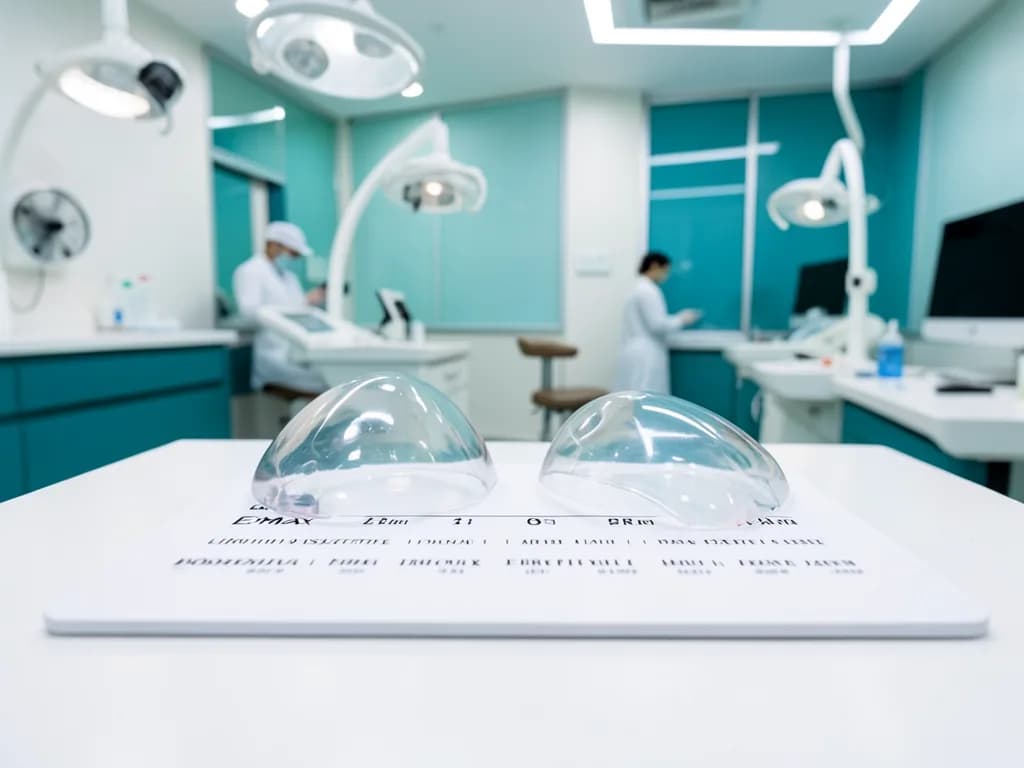
Understanding Each Crown Material
E.max — Lithium Disilicate
E.max is a glass-ceramic material made from lithium disilicate crystals. Developed by Ivoclar Vivadent, it has become the gold standard for aesthetic ceramic restorations because its optical properties — translucency, fluorescence, and light diffusion — most closely replicate natural tooth enamel.
It can be milled to extremely thin dimensions: as thin as 0.3mm for veneers and 1–1.5mm for full crowns. This conservative preparation preserves more natural tooth structure. Flexural strength is approximately 400 MPa.
- • Strength: ~400 MPa (very strong but not unbreakable)
- • Translucency: excellent — most natural-looking
- • Best for: front teeth, veneers, aesthetic cases
- • Not ideal for: bruxism, bridges, back molars
Zirconia — Zirconium Dioxide
Zirconia is a polycrystalline ceramic derived from zirconium dioxide. Often called "ceramic steel," it is the strongest dental crown material in clinical use. Traditional zirconia was opaque and white — unsuitable for aesthetic front teeth. Modern monolithic and ultra-translucent zirconia has transformed this limitation.
Flexural strength ranges from 900 to 1,200 MPa — more than twice that of e.max. This makes it the only material suitable for patients with bruxism, bridges, and implant crowns on molar teeth.
- • Strength: 900–1,200 MPa (virtually unbreakable)
- • Translucency: variable — depends on type
- • Best for: molars, bruxism, bridges, implants
- • Ultra-translucent grades: suitable for front teeth
Types of Zirconia Available in Dubai
Not all zirconia is the same — the type matters significantly for aesthetics and application.
Full-Contour Monolithic Zirconia
Milled from a single zirconia block. Strongest option (1,000–1,200 MPa). Less translucent — primarily for back teeth, bridges, and implant crowns where strength is paramount.
Layered Zirconia (PFZ)
Zirconia core with porcelain layered on top for superior aesthetics. Stronger than e.max overall, but porcelain layer can chip. Best balance of aesthetics and strength.
Ultra-Translucent Zirconia
High-translucency grades (e.g., Katana UTML, Vita Suprinity) that rival e.max aesthetically while retaining superior strength (~600–800 MPa). Ideal compromise for front teeth in bruxism patients.
E.max vs Zirconia — Full Comparison Table
Head-to-head across every factor that matters to patients choosing a crown in Dubai.
| Factor | E.max | Zirconia |
|---|---|---|
| Aesthetics | Excellent — most natural translucency | Good to excellent (depends on grade) |
| Strength (flexural) | ~400 MPa — very strong | 900–1,200 MPa — exceptionally strong |
| Minimum thickness | 0.3mm (veneers) / 1mm (crowns) | 0.5mm (monolithic full-contour) |
| Cost per crown (AED) | 1,500 – 2,800 | 1,800 – 4,500 (type-dependent) |
| Best tooth location | Front teeth (incisors, canines) | Back teeth (premolars, molars) |
| Bruxism suitability | Not recommended — fracture risk | Ideal — virtually unbreakable |
| Bridge suitability | 3-unit bridges only (with caution) | Excellent — preferred for bridges |
| CEREC same-day | Not available in most cases | Yes — widely available in Dubai |
| Wear on opposing teeth | Low — gentle on opposing enamel | Monolithic can wear opposing teeth — polish required |
| Typical warranty | 5–10 years at premium clinics | 5–15 years at premium clinics |
| Insurance (UAE) | 50–70% if clinically necessary | 50–70% if clinically necessary |
Pros and Cons of Each Material
E.max
Advantages
- Most natural-looking result for front teeth
- Thin preparation — preserves more tooth structure
- Gentle on opposing natural teeth
- Proven 15+ year track record in clinical use
- Suitable for both veneers and crowns
Limitations
- Can fracture under heavy biting forces or bruxism
- Not recommended for molar crowns in most cases
- Not suitable as bridge material for spans over 3 units
- No same-day (CEREC) option at most Dubai clinics
Zirconia
Advantages
- Exceptionally strong — virtually unbreakable clinically
- Only suitable material for bruxism patients
- Ideal for bridges, implants and molar crowns
- CEREC same-day crowns available in Dubai
- Ultra-translucent grades now rival e.max aesthetics
Limitations
- Traditional monolithic can look opaque or chalky
- Hard surface can wear opposing natural teeth if not polished
- Layered zirconia porcelain veneer layer can chip
- Generally costs more than e.max per crown
Which Material for Your Situation
E.max's superior translucency and light-diffusion make it the preferred choice for upper front teeth in non-grinders. The result is indistinguishable from natural enamel at a conversational distance.
Back teeth bear the full biting load. Monolithic zirconia's 900–1,200 MPa strength is specifically needed here. Aesthetics are secondary since these teeth are rarely visible when smiling.
E.max fractures under the extreme forces generated by grinding. Any dentist in Dubai treating a bruxism patient will insist on zirconia. A custom night guard (AED 800–2,000) should always be added.
Modern high-translucency zirconia grades (Katana UTML, Vita Suprinity) offer aesthetics very close to e.max with the fracture resistance needed for bruxism. This is the best of both worlds.
The standard protocol for full-arch cases in Dubai: e.max for the aesthetic zone (front 6–8 teeth) and zirconia for the posterior teeth. This combination delivers optimal aesthetics where visible and maximum durability where needed.
Bridges require the connector between crown units to withstand considerable bending forces. Zirconia is the only all-ceramic material consistently recommended for dental bridges by dental material science guidelines.
Dubai dentist protocol for full-arch cases: The most experienced cosmetic and restorative dentists in Dubai routinely use e.max for the upper front six to eight teeth and zirconia for all posterior teeth in full-arch rehabilitations. This "split protocol" is the evidence-based approach for patients who want the best of both materials.
AED Cost Comparison in Dubai
Prices per crown at Dubai clinics as of 2026. No VAT on dental treatments in the UAE.
| Crown Type | Budget Clinic (AED) | Mid-Range (AED) | Premium (AED) |
|---|---|---|---|
| E.max Crown | 1,500 | 2,000 – 2,400 | 2,800+ |
| Monolithic Zirconia | 1,800 | 2,200 – 2,800 | 3,500+ |
| Layered Zirconia (PFZ) | 2,500 | 3,000 – 3,800 | 4,500+ |
| Ultra-Translucent Zirconia | 2,200 | 2,800 – 3,500 | 4,000+ |
| CEREC Same-Day Zirconia | 2,500 | 3,000 – 3,800 | 4,500+ |
For a full dental crown cost guide, see our dental crown cost Dubai page.
Planning a wider smile makeover? Compare veneer prices in Dubai, explore Hollywood Smile costs, or see the full 2026 Dubai dental pricing guide.
Insurance Coverage for E.max and Zirconia in Dubai
How UAE insurance handles crown materials
UAE health insurance covers crowns at 50–70% when clinically necessary, regardless of material — the coverage applies to the procedure, not the specific ceramic used. Daman, AXA, Bupa, MetLife and Nextcare all cover clinically indicated crowns subject to pre-authorisation and annual limits.
Some insurers apply a standard cost allowance for crowns — for example, they may cover AED 1,800 per crown regardless of whether you choose e.max at AED 2,400 or layered zirconia at AED 3,500. The difference above the allowance becomes your out-of-pocket cost. Always ask your insurer for the exact schedule of benefits before treatment begins.
Cosmetic crowns on healthy teeth — regardless of material — are not covered. See our dental insurance guide or our full coverage guide for details on which Dubai insurers cover crowns.
Material Properties — Technical Comparison Table
Understanding the underlying material science helps explain why dentists choose lithium disilicate vs zirconia for different clinical situations. This table compares monolithic zirconia against standard e.max (IPS e.max CAD).
| Property | E.max (IPS e.max CAD) | Monolithic Zirconia |
|---|---|---|
| Material class | Glass-ceramic (lithium disilicate) | Polycrystalline ceramic (zirconium dioxide) |
| Flexural strength | ~400 MPa | 900 – 1,200 MPa |
| Translucency | High — most natural optical properties | Variable: opaque (standard) to high (UTML) |
| Thermal expansion | 10.5 μm/m·K — matches tooth structure well | ~10.0 μm/m·K — excellent stability |
| Minimum thickness | 0.3mm veneers / 1.0mm crowns | 0.5mm full-contour / 0.3mm thin zirconia |
| Wear on opposing teeth | Low — gentle on natural enamel | Can cause wear if not polished smooth |
| Fracture resistance | Good — bruxism risk above ~400 MPa load | Excellent — resists up to 900–1,200 MPa |
| CAD/CAM machinability | Excellent — machinable in crystalline state then fired | Excellent — milled in pre-sintered state then sintered |
| CEREC compatibility | Limited — most labs prefer furnace-fired e.max | Full — widely available for same-day crowns |
| Shade matching | Superior — 16 standard shades + staining | Good — gradient-shaded blanks now available |
| Clinical track record | 20+ years, extensively documented | 15+ years, rapidly expanding clinical evidence |
Both materials are produced using CAD/CAM milling technology — compatible with CEREC chairside systems (primarily zirconia) and dental laboratory workflows. The choice between monolithic vs layered construction affects both aesthetics and fracture risk. See all treatment options at our dental treatments Dubai hub.
Strength and Durability — What the Data Shows
The strength comparison between e.max and zirconia is unambiguous: zirconia is dramatically stronger. However, strength alone does not determine which material is better for a given patient. Brittleness, wear properties, and how each material fails in clinical use matter equally. E.max, despite its lower flexural strength, has an excellent 20-year clinical track record on anterior teeth because those teeth are not subjected to the extreme occlusal loads of posterior teeth.
Monolithic zirconia's hardness — while protecting against fracture — means it can be abrasive against the opposing natural teeth if the surface is not polished to a high gloss. This is why Dubai dentists insist on high-polish finishing for all zirconia restorations and recommend a night guard for patients with bruxism regardless of which crown material is used.
| Durability Factor | E.max | Zirconia |
|---|---|---|
| Expected crown lifespan | 10 – 15 years (front teeth) | 15 – 25 years (all locations) |
| Fracture risk under normal use | Very low for anterior teeth | Extremely low — clinically negligible |
| Fracture risk with bruxism | High — not recommended for grinders | Very low — material of choice for bruxism |
| Chipping risk | E.max fractures (not chips) — monolithic only | Layered zirconia: porcelain layer may chip; monolithic: none |
| Wear on opposing natural enamel | Low — similar to natural enamel wear rate | Moderate if unpolished; low if polished smooth |
| Warranty (premium Dubai clinics) | 5 – 10 years | 5 – 15 years |
Aesthetic Comparison — Front Teeth and Shade Matching
For anterior (front) teeth, the translucency comparison is where e.max wins decisively in most clinical comparisons. Natural tooth enamel transmits light — it is not simply a white opaque structure. E.max lithium disilicate replicates this optical behaviour through a combination of internal translucency, fluorescence under UV light, and the way it diffracts and reflects visible light from multiple depths within the material.
Traditional zirconia appeared flat and opaque under natural light — the so-called "bathroom tile" appearance that led cosmetic dentists to avoid it for front teeth entirely. Modern ultra-translucent zirconia grades — including Kuraray Katana UTML, Vita Suprinity, and Ivoclar Vivadent IPS e.max ZirCAD Prime — have transformed this. These materials now approach e.max optical properties while retaining strength superiority, making them an excellent choice for patients who grind their teeth but want natural-looking front crowns.
Shade matching is also superior with e.max. Dental technicians can use a full suite of staining and glazing techniques to match the shade, incisal translucency, and characterisation of the adjacent natural teeth with extreme precision. The 16-shade IPS Empress system is the industry standard. With zirconia, gradient-shaded blanks now allow shade transitions to be built into the milling process — reducing the skill requirement but still slightly behind hand-characterised e.max from a master dental technician.
Dentist tip for Dubai patients: If you are having crowns on the upper front four to six teeth, ask to see the dental technician's laboratory portfolio before agreeing to any material. The skill of the lab technician influences the final aesthetic result as much as the material choice. Top-tier Dubai clinics use in-house or partnered specialist dental laboratories, not overseas budget labs.
Planning a full smile transformation? Compare options on our smile makeover Dubai page or explore full dental cost guide 2026.
Longevity Data — What Clinical Studies Show
E.max Longevity Evidence
- • 5-year survival rate: 95–98% for anterior crowns in clinical studies
- • 10-year survival rate: 85–95% depending on tooth position and patient habits
- • Primary failure mode: bulk fracture — most common on posterior teeth and bruxism cases
- • Veneer applications: 5-year survival 94–97% across multiple long-term studies
- • No evidence of degradation in oral environment over time — stable material
- • 15-year track record as an established restorative material in clinical use globally
Zirconia Longevity Evidence
- • 5-year survival rate: 97–99% for monolithic zirconia crowns in posterior positions
- • Layered zirconia: lower survival due to chipping of the porcelain veneer layer (5-year: 90–95%)
- • 10-year data increasingly available — monolithic shows excellent performance
- • Primary failure mode (layered): chipping of the porcelain veneer — not the zirconia core
- • Low-temperature degradation (ageing): standard zirconia can become brittle over time — modern Y-TZP grades largely eliminate this
- • Implant-supported zirconia crowns: excellent 10-year data — preferred material for implant restorations
For full pricing context across all crown types, see our dental crown cost Dubai guide or visit browse dental clinics in Dubai to find a specialist.
Related Guides
Frequently Asked Questions
Which is better — e.max or zirconia for front teeth in Dubai?
For front teeth, e.max (lithium disilicate) is generally the preferred choice because its translucency and light-diffusion properties most closely replicate natural tooth enamel. E.max transmits light in the same way natural teeth do, creating a depth and vitality that traditional zirconia cannot match. However, modern ultra-translucent zirconia (such as Ivoclar Vivadent VITA Suprinity or Kuraray Katana UTML) has dramatically closed this gap and is now considered aesthetically excellent for front teeth — particularly for patients who grind their teeth or have a heavy bite.
Which is stronger — e.max or zirconia?
Zirconia is significantly stronger. Full-contour monolithic zirconia has a flexural strength of 900–1,200 MPa, making it virtually unbreakable in clinical use. E.max (lithium disilicate) has a flexural strength of approximately 400 MPa — still excellent and considerably stronger than traditional porcelain, but substantially less than zirconia. For molar teeth, bridges, implant crowns, and patients with bruxism, zirconia is the strongly preferred material due to its superior fracture resistance.
How much do e.max and zirconia crowns cost in Dubai?
E.max crowns cost AED 1,500–2,800 per crown at Dubai clinics, depending on the clinic tier and whether the crown is for a front or back tooth. Monolithic (full-contour) zirconia crowns cost AED 1,800–3,500, while layered zirconia — where porcelain is baked over a zirconia core for enhanced aesthetics — costs AED 2,500–4,500 per crown. Ultra-translucent zirconia, which mimics e.max aesthetics, sits in the AED 2,200–4,000 range. CEREC same-day crowns (usually zirconia) are available at select Dubai clinics for AED 2,500–4,500.
Can I get an e.max or zirconia crown in one day in Dubai?
Same-day crowns using CEREC (Chairside Economical Restoration of Esthetic Ceramics) technology are available at selected Dubai clinics. CEREC mills the crown from a single block of material while you wait, eliminating the need for a temporary crown and a second appointment. CEREC restorations are almost always milled in zirconia rather than e.max because zirconia is easier to mill at chairside. E.max crowns are typically fabricated by a dental laboratory over 3–10 working days. If same-day service is a priority, discuss CEREC zirconia with your dentist.
Which crown material do Dubai dentists recommend for patients with bruxism?
For patients with bruxism (teeth grinding), zirconia is the only clinically appropriate choice. The clenching and grinding forces generated by bruxism can reach 600–900 MPa — close to or exceeding the fracture threshold of e.max. Zirconia, with its 900–1,200 MPa strength, withstands these forces reliably. A night guard (AED 800–2,000) should always be worn alongside any ceramic crown to protect the restoration and the opposing natural teeth. If you grind and need e.max aesthetics, discuss ultra-translucent zirconia as a compromise.
Does UAE insurance cover e.max or zirconia crowns?
Both e.max and zirconia crowns are covered by UAE health insurance at 50–70% when the crown is clinically necessary — for example, after a root canal, on a cracked tooth, or replacing a failing restoration. Insurance does not specify which material must be used; the coverage applies to the procedure (crown placement) rather than the material type. However, some insurers may impose a standard allowance and bill you the difference if you choose a premium material. Always verify with your insurer whether there is a material cap on crown coverage before your treatment begins.
Find a Crown Specialist in Dubai
Browse verified Dubai clinics offering e.max and zirconia crowns. Compare patient reviews, check insurance acceptance and request a treatment quote.
Use our explore dental options near you to compare clinics, read reviews, and book appointments.