Smile Makeover in Dubai — The Complete 2026 Guide
A smile makeover combines multiple cosmetic dental procedures — veneers, whitening, bonding, gum contouring and more — into one personalised treatment plan designed around your unique facial proportions and aesthetic goals. This guide explains every procedure involved, the 5-tier package system used by Dubai clinics, exact AED pricing, and what to expect at every stage. For the veneer-focused approach, see our Hollywood Smile Dubai guide.
What Is a Smile Makeover?
A smile makeover is a personalised, multi-procedure treatment plan that transforms the appearance of your smile by addressing colour, shape, alignment, proportions and gum symmetry together. Unlike a single cosmetic procedure — such as whitening alone or a single veneer — a smile makeover takes a holistic approach, combining whichever procedures are needed to achieve the best possible result for your unique starting point and aesthetic goals. It is one of the most popular cosmetic dentistry treatments in Dubai, sought by residents and dental tourists alike.
The procedures included in a smile makeover vary from patient to patient. For someone with well-aligned teeth that are simply stained, a smile makeover might involve professional teeth whitening combined with composite bonding to reshape a few irregular edges. For someone with chips, gaps, gum irregularities and discolouration, the makeover might include porcelain veneers, gum contouring, crowns and whitening — all sequenced and coordinated through Digital Smile Design technology.
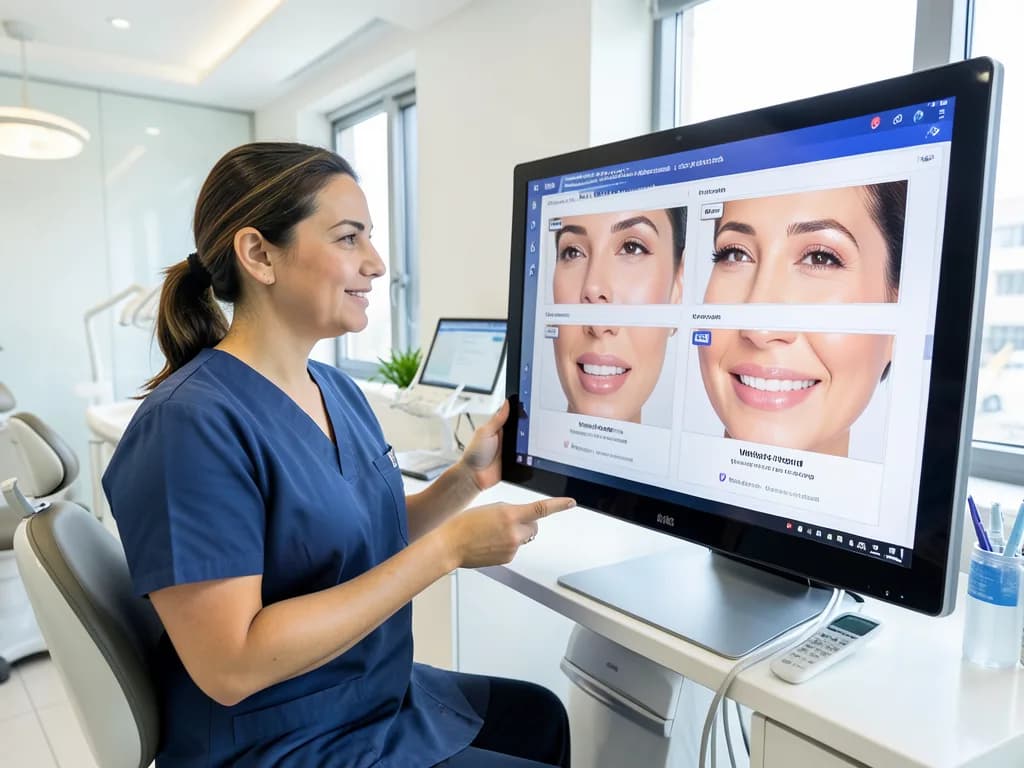
What distinguishes a smile makeover from individual treatments is the integrated planning process. A skilled cosmetic dentist in Dubai uses Digital Smile Design software to analyse your facial proportions, lip line, midline and jaw width, then designs a result that is harmonious with your unique anatomy — not a one-size-fits-all template. For patients who need comprehensive restoration of both arches, see our full mouth rehabilitation guide.
Personalised vs Template
The key difference between a good smile makeover and a poor one is personalisation. A skilled cosmetic dentist designs your smile around your face — your lip line, facial midline, gum-to-tooth ratio and skin tone. A cookie-cutter approach applies the same veneer template to everyone. Always ask for a Digital Smile Design preview and a physical mock-up (trial smile) before committing to any treatment.
Procedures Included in a Smile Makeover
Not every smile makeover includes all of these. Your treatment plan is customised to your specific needs.
Ultra-thin porcelain shells (E.max or zirconia) bonded to the front surface of teeth, changing their shape, colour, size and alignment in one treatment cycle. Veneers are the cornerstone of most smile makeovers and can transform stained, chipped, uneven or gapped teeth into a uniform, natural appearance. Most patients need 6 to 12 veneers on the upper arch, with lower veneers added if full symmetry is desired.
In-clinic whitening using Zoom, laser or advanced bleaching systems to lift tooth shade by 4 to 8 levels in a single session. Whitening is often performed before veneer placement so the ceramist can shade-match the porcelain to your brightest natural shade. As a standalone treatment, it can be the only procedure needed for patients whose teeth are well-aligned but discoloured from coffee, tea, smoking or ageing.
Composite resin applied directly to teeth to repair minor chips, close small gaps, or reshape irregular tooth edges. Bonding is the most conservative and affordable cosmetic procedure because it requires no tooth reduction. Results are immediate and can last 5 to 7 years with proper care. It is ideal for patients who want subtle improvements without the commitment of veneers.
Laser reshaping of the gumline to correct a gummy smile, uneven gum levels or asymmetric tooth exposure. Using a diode laser, the cosmetic dentist precisely sculpts the gum margin to create even, symmetrical framing around each tooth. This procedure is critical for patients whose smile aesthetics are compromised by excessive gum display or uneven gum heights across the upper arch.
Full-coverage porcelain or zirconia crowns are used when a tooth is too damaged, decayed or structurally compromised for a veneer. In a smile makeover, crowns replace old metal fillings, restore broken teeth, or cover root-canal-treated teeth. They are shade-matched to veneers on adjacent teeth for a seamless appearance across the full arch.
For patients with significant crowding, spacing or bite issues, short-course orthodontic treatment with Invisalign or clear aligners (6 to 18 months) may be recommended before cosmetic procedures. Aligning teeth first reduces the amount of tooth reduction needed for veneers and produces a more conservative, healthier outcome. Some smile makeovers combine orthodontic and cosmetic phases sequentially.
Wondering whether composite or porcelain veneers are better for your makeover? Our comparison guide breaks down the differences in durability, aesthetics and cost.
Smile Makeover vs Hollywood Smile
Many patients use these terms interchangeably, but they represent different approaches. Here is how they compare.
| Feature | Smile Makeover | Hollywood Smile |
|---|---|---|
| Scope | Customised combination of 2 to 6 procedures based on individual needs | Primarily veneers on 6 to 20 teeth for maximum uniformity |
| Approach | Tailored plan addressing specific concerns (gaps, stains, chips, gums) | Template-driven approach aiming for ultra-white, perfectly aligned teeth |
| Natural vs Dramatic | Can range from subtle enhancement to dramatic transformation | Typically dramatic — very white, very uniform, very symmetrical |
| Cost Range | AED 5,000 – 80,000 depending on procedures selected | AED 9,000 – 70,000 (veneer-focused) |
| Tooth Reduction | Minimal to moderate — depends on procedures chosen | Moderate — all teeth receiving veneers are prepared |
| Reversibility | Partially reversible if only whitening and bonding are used | Irreversible — veneered teeth always need coverage |
| Timeline | 2 to 6 visits over 2 to 12 weeks | 3 to 6 visits over 3 to 6 weeks |
For a deep dive into the veneer-focused approach, read our Hollywood Smile Dubai guide or check Hollywood Smile costs in Dubai.
Smile Makeover Costs in Dubai 2026 — 5 Tier Packages
Prices below are per complete treatment package at mid-range Dubai cosmetic clinics. Premium clinics in DIFC, Dubai Marina and Downtown typically charge 30 to 50 percent above these ranges.
| Package Tier | What Is Included | AED Price Range | Ideal For | Visits |
|---|---|---|---|---|
| Essential Refresh | Whitening + bonding on 2 to 4 teeth | AED 5,000 – 8,000 | Minor staining and small chips | 1 – 2 visits |
| Targeted Enhancement | Whitening + 4 to 6 composite or porcelain veneers | AED 8,000 – 18,000 | Front teeth with noticeable gaps, chips or discolouration | 2 – 3 visits |
| Signature Smile Makeover | 8 porcelain veneers + whitening + minor bonding | AED 15,000 – 30,000 | Comprehensive upper arch transformation | 3 – 4 visits |
| Premium Smile Makeover | 10 to 12 veneers + gum contouring + whitening | AED 25,000 – 50,000 | Gummy smile correction with full veneer coverage | 4 – 5 visits |
| Full Mouth Smile Makeover | 16 to 20 veneers/crowns + gum contouring + whitening + orthodontics | AED 45,000 – 80,000 | Complete upper and lower arch transformation with bite correction | 5 – 6+ visits |
Prices from Dubai clinic surveys, March 2026. Premium clinics in DIFC, Dubai Marina and Downtown may charge 30–50% above mid-range.
For individual procedure pricing, compare veneer prices in Dubai, teeth whitening costs and dental bonding costs. Most Dubai cosmetic clinics offer 0% interest payment plans over 6 to 24 months.
The Smile Makeover Process Step by Step
From initial consultation to final bonding, a typical smile makeover takes 2 to 12 weeks depending on the procedures involved.
Comprehensive Smile Assessment
Your smile makeover begins with a thorough assessment of your teeth, gums, bite and facial proportions. The cosmetic dentist will photograph your face from multiple angles, take digital scans or impressions, and use X-rays to evaluate the structural health of every tooth. This initial consultation identifies all the issues that need addressing — discolouration, chips, gaps, gum irregularities, bite misalignment, old restorations — and determines which combination of procedures will produce the best result for your specific starting point.
Digital Smile Design Preview
Using Digital Smile Design (DSD) software, the cosmetic dentist creates a digital simulation of your new smile mapped to your facial proportions, lip line, midline and jaw width. You can see exactly what the proposed result will look like on screen — including tooth shape, size, colour and gum position — before any treatment begins. This technology allows you to request adjustments (rounder or squarer teeth, more or less gum showing, whiter or more natural shade) and approve the final design with full confidence.
Treatment Sequencing and Planning
Based on the approved digital design, the dentist creates a sequenced treatment plan. Procedures are ordered strategically: orthodontic preparation first (if needed), followed by gum contouring (to establish the correct framing), then whitening (to establish the baseline shade), and finally veneers, bonding or crowns. Each step builds on the previous one. The dentist will explain the timeline, number of visits, and cost for each phase so you can plan accordingly.
Preparatory Procedures
If your smile makeover includes gum contouring or orthodontic alignment, these are completed first to create the foundation for cosmetic work. Gum contouring with a diode laser requires 1 to 2 weeks of healing time. Orthodontic preparation with Invisalign may take 6 to 18 months depending on the severity of misalignment. Professional whitening is typically performed 1 to 2 weeks before veneer placement so the ceramist can shade-match the porcelain to your whitened teeth.
Veneer or Crown Preparation and Temporaries
If veneers or crowns are part of your plan, teeth are prepared by reducing a thin layer of enamel (0.3 to 0.7 mm for veneers, more for crowns) under local anaesthesia. Digital scans or impressions are taken and sent to the ceramist with a detailed shade and shape prescription based on your approved digital design. Temporary veneers or crowns are fitted to protect your prepared teeth during the 7 to 14 day fabrication period and allow you to test-drive the new shape.
Trial Fitting and Adjustments
Before permanent bonding, the final porcelain veneers or crowns are placed without cement for a trial fitting. You and the dentist assess the fit, colour, shape and symmetry in natural daylight. Any adjustments are communicated to the ceramist if refinements are needed. Bonding procedures (composite bonding on specific teeth) may also be completed during this appointment to fine-tune the overall result before everything is permanently cemented.
Final Bonding and Completion
Once you approve the trial fitting, each veneer or crown is permanently bonded using light-cured resin cement after the tooth surface is etched and primed. Excess cement is removed with precision instruments and your bite is carefully checked and adjusted. Dental bonding on remaining teeth is polished to blend seamlessly. You leave with your completed smile makeover. A follow-up appointment is scheduled for 1 to 2 weeks later to check the bite, gum health and bonding integrity.
Who Needs a Smile Makeover?
A smile makeover is appropriate for patients with one or more of these aesthetic concerns. During consultation, your cosmetic dentist will determine which procedures address each issue.
Stained or Discoloured Teeth
If your teeth are significantly yellowed, grey or stained from coffee, tea, smoking, tetracycline antibiotics or ageing, and professional whitening alone is not enough, a smile makeover combining whitening with veneers or bonding can restore a bright, even appearance. Intrinsic staining that does not respond to bleaching is best treated with porcelain veneers.
Chipped, Cracked or Worn Teeth
Teeth that are visibly chipped, fractured at the edges or worn down from grinding (bruxism) benefit from a combination of bonding (for minor chips) and veneers or crowns (for more significant damage). A smile makeover restores both the aesthetics and the structural integrity of compromised teeth.
Gaps Between Teeth (Diastema)
Small to medium gaps between front teeth — particularly a central diastema — can be closed with composite bonding or porcelain veneers. Larger spacing issues may require orthodontic alignment first, followed by veneers for final shaping. A smile makeover addresses both the spacing and any associated aesthetic concerns.
Uneven, Crooked or Misaligned Teeth
Mildly uneven teeth can be visually corrected with veneers that create the illusion of perfect alignment. More significant misalignment benefits from short-course orthodontics (Invisalign) before veneer placement. A smile makeover combines both approaches when needed, achieving alignment and aesthetics in a single treatment plan.
Gummy Smile or Uneven Gum Line
Excessive gum display (gummy smile) or asymmetric gum heights across the upper arch are corrected with laser gum contouring as part of a smile makeover. Reshaping the gums creates a balanced frame for the teeth, dramatically improving overall smile aesthetics even before any tooth-level treatment is performed.
Old Dental Work That Needs Replacing
Ageing amalgam fillings, discoloured composite restorations, failing crowns or bridges that no longer match surrounding teeth are common reasons for a smile makeover. Replacing old dental work with modern porcelain restorations improves both appearance and function, creating a cohesive, natural result across the entire smile.
Why Dubai Is a Leading Smile Makeover Destination
Dubai has established itself as the leading destination for cosmetic dental makeovers across the Middle East, South Asia and increasingly Europe. The city combines world-class cosmetic dentistry talent with competitive pricing, premium ceramics technology and a cultural environment that values aesthetic investment. Patients travel from Saudi Arabia, Kuwait, Bahrain, India and the UK specifically for smile makeovers, combining treatment with a short holiday. The city offers access to dentists trained in the UK, USA, Germany, Brazil and across the GCC who specialise in cosmetic transformations. Browse our top-rated dental clinics in the UAE to find verified cosmetic specialists.
Competitive pricing
AED 15,000–30,000 for a signature 8-veneer makeover — significantly lower than comparable quality in the UK, USA or Western Europe
Advanced technology
Digital Smile Design, CEREC same-day ceramics, 3D scanning and in-house labs at leading clinics across Dubai
Fast turnaround
Complete smile makeover in 2 to 6 visits — ideal for dental tourists who want to combine treatment with a Dubai visit
Maintaining Your Smile Makeover Results
To protect your investment
- ✓ Wear a custom night guard if you grind your teeth
- ✓ Brush with a soft bristle brush and non-abrasive toothpaste
- ✓ Floss daily to prevent gum recession at restoration margins
- ✓ Attend six-monthly dental check-ups and professional cleans
- ✓ Touch up whitening every 12 to 18 months to maintain shade
- ✓ Avoid biting hard foods (ice, nuts, bones) with front teeth
What to avoid
- ✗ Smoking (stains bonding margins and reduces gum health)
- ✗ Excessive coffee, red wine, turmeric and dark tea without rinsing
- ✗ Using teeth as tools to open bottles or tear packaging
- ✗ Abrasive whitening toothpastes that damage bonding margins
- ✗ Grinding without a night guard — leading cause of veneer failure
- ✗ Skipping dental check-ups — problems caught early are cheaper to fix
Longevity reality check: Porcelain veneers last 10 to 20 years, composite bonding lasts 5 to 7 years, and whitening results fade in 6 to 18 months. Budget for touch-up whitening treatments and eventual bonding or veneer replacements. A smile makeover is a long-term investment that requires ongoing maintenance — not a one-time fix.
Digital Smile Design — The Technology Behind Modern Makeovers
Digital Smile Design (DSD) has transformed how cosmetic dentists in Dubai plan smile makeovers. Using specialised software, the dentist analyses photographs and video of your face from multiple angles and digitally designs your new smile to be proportional to your unique facial anatomy — your midline, lip line, inter-pupillary line, jawline and the golden ratio of tooth-to-gum proportions.
The result is a precise digital preview that shows you exactly what your new smile will look like before treatment begins. You can request specific modifications — squarer or rounder teeth, more or less gum visibility, a warmer or cooler shade of white — and approve the final design with full confidence. The approved design is then sent to the ceramist as a blueprint for fabricating your veneers or crowns.
Leading cosmetic dentists in Dubai consider DSD non-negotiable for any smile makeover involving four or more restorations. If a clinic does not offer Digital Smile Design, or does not show you a preview before treatment begins, consider it a significant red flag. The technology eliminates guesswork and gives both you and the dentist a clear, agreed-upon target for the final result.
Facial mapping
Analyses your facial proportions, midline, lip dynamics and jaw structure to design smile proportions that are unique to you
Digital preview
See your new smile on screen before any treatment begins — adjust shape, size, shade and gum line to your preference
Ceramist blueprint
The approved design becomes a precise fabrication guide for the lab, ensuring the final veneers match the approved preview exactly
Does UAE Insurance Cover Smile Makeovers?
Cosmetic procedures are generally excluded
Smile makeover treatments — veneers placed for cosmetic reasons, professional whitening, dental bonding for aesthetic enhancement, and cosmetic gum contouring — are classified as elective cosmetic procedures and are not covered by standard UAE health insurance. Insurance in the UAE covers dental treatments that are medically necessary (restorative, functional), not elective aesthetic improvement.
However, certain components of a smile makeover may qualify for partial coverage if they serve a functional purpose. Crowns on teeth with structural damage or decay, restorations on root-canal-treated teeth, and treatment for gum disease may be partially covered by dental insurance plans that include basic or major restorative benefits. Ask your clinic to code each procedure separately so that functionally necessary treatments can be submitted to your insurer.
See our dental insurance Dubai guide for details on what UAE insurers cover and which plans include dental benefits. Most Dubai cosmetic clinics offer 0% interest payment plans over 6 to 24 months to make comprehensive makeovers financially accessible.
Questions to Ask Your Cosmetic Dentist Before a Smile Makeover
The quality of smile makeover results varies significantly between clinics in Dubai. These questions will help you identify whether a clinic takes a personalised, evidence-based approach or a generic one.
What specific procedures does my treatment plan include? Can I see an itemised breakdown?
Do you offer Digital Smile Design? Can I see a digital preview before committing?
Will I have a physical mock-up (trial smile) before any permanent tooth preparation?
What materials do you use for veneers — E.max, zirconia or composite? Why?
How much natural tooth structure will need to be removed for veneers?
Can I see before-and-after photos of patients with a similar starting point to mine?
What is the warranty on veneers and crowns? What happens if something chips or fails?
Do you offer 0% payment plans? What are the terms and total cost?
Risks and Potential Complications
Smile makeover procedures are among the most technically predictable in dentistry when performed correctly, but patients should understand the potential risks before committing to any irreversible treatment.
Tooth Sensitivity
Veneer preparation removes a thin layer of enamel (0.3 – 0.7 mm), which may cause temporary sensitivity to hot, cold and sweet stimuli for 1 to 3 days after preparation. Temporary veneers protect the teeth during the fabrication period. Sensitivity generally resolves completely once permanent veneers are bonded and the margins are sealed.
Adjustment Period
New veneers or crowns can feel different in the bite for 1 to 2 weeks as you adapt to the new tooth shapes and thicknesses. Most patients adjust naturally. If bite discomfort persists beyond two weeks, a follow-up appointment to adjust occlusion is needed. This is normal and easily corrected.
Veneer Chipping or Debonding
Porcelain veneers are strong but not indestructible. Chipping can occur from biting extremely hard foods, trauma, or unprotected bruxism (tooth grinding). Most chips are repairable. Debonding — where a veneer detaches — is rare with proper bonding technique but can occur if the bonding protocol was rushed or the tooth surface was contaminated.
Colour Mismatch
Achieving a perfect shade match between porcelain veneers and adjacent natural teeth requires precise dental photography, spectrophotometer shade matching, and an experienced ceramist. In rare cases, the final shade may appear slightly different in varying light conditions. Digital Smile Design preview and a trial fitting before final bonding significantly reduce this risk.
Gum Irritation
Gum tissue may experience mild inflammation during the temporary veneer phase if margins are not perfectly contoured. Permanent, well-fitted veneers with subgingival margins should integrate harmoniously with healthy gums. Patients with active gum disease before treatment face a higher risk of persistent gum irritation.
Reversibility Considerations
Porcelain veneer placement is irreversible — once enamel is removed, teeth always require coverage. Composite veneers and bonding are reversible (no tooth reduction required) and are a lower-commitment starting point for patients uncertain about permanent changes. All candidates should understand this distinction before consenting to porcelain preparations.
Minimising risks: The best way to reduce all of the above risks is to choose a DHA-licensed cosmetic dental specialist with a proven track record, insist on Digital Smile Design planning and a physical mock-up, and ensure all pre-existing oral health issues are resolved before cosmetic work begins. Rushing to save cost by skipping preparatory steps is the most common cause of poor outcomes.
Duration and Timeline
A smile makeover involving porcelain veneers typically takes 2 to 6 months from consultation to final bonding, depending on whether preparatory procedures (gum contouring, orthodontics) are needed. Simpler makeovers involving whitening and composite bonding can be completed in a single week. Here is a typical phased treatment timeline.
Consultation and Digital Smile Design
Week 1Initial smile analysis, facial photography, intraoral scans and Digital Smile Design simulation. You review and approve the proposed smile design. A diagnostic wax-up may be prepared. Restorative needs (cavities, gum issues) are identified and sequenced. Duration: 60 – 90 minute appointment.
Preparatory Procedures
Weeks 2 – 8 (if needed)Gum contouring, periodontal treatment or Invisalign preparation if required. Gum contouring healing takes 1 – 2 weeks. Orthodontic preparation takes 6 – 18 months depending on complexity. Whitening is performed 1 – 2 weeks before veneer preparation to establish the baseline shade for shade matching.
Veneer or Crown Preparation
Week 2 – 10 (1 appointment)Tooth preparation under local anaesthesia, intraoral scanning or impressions, shade photography, and fitting of temporary veneers. The approved digital design is communicated to the ceramist as a detailed prescription. Temporary veneers allow you to test-drive tooth shapes and provide feedback before fabrication is finalised.
Laboratory Fabrication
1 – 3 weeksThe ceramist fabricates your porcelain veneers or crowns using the approved DSD blueprint, digital scan and shade prescription. Premium E.max porcelain and zirconia require 10 – 14 working days. In-house CEREC milling can reduce this to same-day turnaround at equipped clinics.
Trial Fitting and Final Bonding
Week 4 – 12 (1 – 2 appointments)Trial fitting without cement to assess colour, shape, fit and symmetry in natural light. Any adjustments are communicated to the ceramist. Final bonding appointment: teeth are etched, primed and the veneers bonded with light-cured resin cement. Bite is checked and adjusted. Composite bonding on remaining teeth may be completed at this stage.
Follow-Up and Review
1 – 2 weeks after bondingFollow-up appointment to check bite alignment, gum health, bonding margin integrity and patient comfort. Any refinements are made. Six-monthly maintenance check-ups are then recommended to monitor veneer condition, gum health and bite over time.
Dental tourist timeline: Patients visiting Dubai specifically for a smile makeover without preparatory needs can complete consultation, preparation and temporary veneer fitting in one 5 – 7 day visit, then return 2 – 3 weeks later for final bonding. Some clinics offer accelerated 5-day completion using in-house CEREC milling — ask specifically about this when booking. Browse top-rated clinics in the UAE that accommodate dental tourists.
Pain and Comfort During a Smile Makeover
Most smile makeover procedures are minimally invasive and performed under local anaesthesia. Patients with dental anxiety should discuss sedation options at the initial consultation — most Dubai cosmetic clinics offer nitrous oxide (laughing gas) or IV sedation to ensure a comfortable experience throughout the treatment journey. Here is what to expect at each stage.
During whitening
Professional whitening is painless during treatment. Some patients experience mild sensitivity during or shortly after the session — managed with sensitivity toothpaste in the days following. This resolves within 24 to 48 hours.
During composite bonding
Composite bonding requires no tooth reduction, no injections and no anaesthesia. The procedure is completely comfortable. The resin is applied, shaped and light-cured in a single session. No recovery time is needed.
During veneer preparation
Local anaesthesia is administered before tooth preparation. The procedure itself is painless. After the anaesthetic wears off, mild sensitivity on prepared teeth may be present for 1 to 3 days — managed with over-the-counter analgesics. Temporary veneers protect the prepared teeth.
During gum contouring
Laser gum contouring is performed under local anaesthesia and is painless during treatment. After the procedure, expect 3 to 5 days of mild gum soreness — similar to a minor graze — managed with ibuprofen and chlorhexidine rinse. Healing is rapid.
After final bonding
The final bonding appointment is typically comfortable. Mild bite sensitivity may occur for 1 to 2 weeks as the new restoration thicknesses are adjusted by the muscles of mastication. A follow-up bite adjustment appointment resolves any persistent discomfort.
Sedation options available
Patients with significant dental anxiety or who need extensive multi-procedure appointments can request nitrous oxide sedation (conscious, relaxed, fully communicative) or IV sedation (deeper relaxation, no memory of the procedure) at most premium Dubai cosmetic clinics.
For more detail on sedation options available at Dubai cosmetic clinics, see our IV sedation dentistry guide. If tooth preparation is minimal, ask about no-prep veneers as a more conservative alternative for suitable cases.
Top Rated Smile Makeover Specialists in Dubai
A smile makeover is a complex, multi-disciplinary treatment plan. The best outcomes are achieved when a prosthodontist and cosmetic specialist collaborate — the prosthodontist managing the functional, bite and restorative aspects while the cosmetic specialist oversees the aesthetic design. Here is how to find and evaluate the right specialist for your full mouth rehabilitation or smile transformation in Dubai.
DHA-Licensed Prosthodontist
A prosthodontist holds a recognised postgraduate specialist degree in prosthodontics — the discipline covering crowns, veneers, bridges and full-arch restorations. For smile makeovers involving crowns, implants, or extensive tooth preparation, a DHA Specialist in Prosthodontics is the preferred lead clinician. Verify licence status at dha.gov.ae.
Cosmetic Dental Specialist
Many of Dubai's most respected smile makeover specialists hold a DHA General Dentist licence with advanced postgraduate cosmetic training (AACD fellowship, DSD certification, or equivalent). Their cosmetic design skills and experience with veneer aesthetics complement the prosthodontist's technical expertise.
Comprehensive Planning Approach
The best smile makeover specialists use a multi-disciplinary approach — involving an orthodontist if alignment correction is needed, a periodontist if gum disease is present, and an oral surgeon if implants or bone work is required. A treatment plan that addresses only cosmetics while ignoring underlying issues is a red flag.
Phased Treatment Capability
For patients who cannot complete a full smile makeover in one treatment cycle, the best specialists design phased treatment plans — addressing the highest-priority concerns first and sequencing remaining procedures over time. This approach manages cost, recovery and patient comfort at each stage.
Not sure whether you need a smile makeover or a full mouth rehabilitation? See our cosmetic dentist Dubai guide which explains the distinction, or compare dental veneers vs composite bonding to understand which approach suits your specific concerns and budget.
Frequently Asked Questions
What exactly is a smile makeover?
A smile makeover is a customised treatment plan that combines two or more cosmetic dental procedures to transform the overall appearance of your smile. Unlike a single treatment such as whitening or bonding, a smile makeover takes a holistic approach — addressing colour, shape, alignment, gum symmetry and tooth proportions together. The specific combination of procedures is tailored to your individual concerns and goals. For some patients, a smile makeover might involve only professional whitening and composite bonding. For others, it may include porcelain veneers, gum contouring, crowns and orthodontic preparation. The unifying principle is that multiple aspects of smile aesthetics are improved together according to a cohesive digital design plan rather than treating individual teeth in isolation. This integrated approach produces results that are more harmonious and natural-looking than piecemeal treatments.
How much does a smile makeover cost in Dubai?
Smile makeover costs in Dubai range from AED 5,000 for a basic refresh (whitening plus bonding on a few teeth) to AED 80,000 or more for a comprehensive full-mouth transformation including upper and lower veneers, gum contouring, whitening and orthodontic preparation. The most popular package — 8 upper porcelain veneers with professional whitening — costs AED 15,000 to 30,000 at mid-range Dubai clinics. The cost depends on the number and type of procedures, the materials used (composite bonding is much cheaper than E.max porcelain veneers), the number of teeth treated, and the clinic tier. Premium clinics in Dubai Marina, DIFC and Downtown typically charge 30 to 50 percent more than average. Most Dubai cosmetic clinics offer 0% interest payment plans over 6 to 24 months, making comprehensive makeovers accessible to a wider range of patients. Always request an itemised treatment plan so you understand exactly what each procedure costs.
What is the difference between a smile makeover and a Hollywood Smile?
A Hollywood Smile is a specific type of smile makeover that focuses primarily on porcelain veneers — typically 6 to 20 teeth — to create a uniformly white, perfectly symmetrical result inspired by celebrity aesthetics. A smile makeover is a broader term that encompasses any customised combination of cosmetic procedures tailored to your individual needs. While a Hollywood Smile is almost always veneer-centric and aims for a dramatic, ultra-white result, a smile makeover can range from subtle (whitening plus minor bonding) to comprehensive (veneers, crowns, gum contouring, orthodontics). A smile makeover also tends to prioritise natural-looking results that enhance your unique facial features, whereas a Hollywood Smile often follows a more standardised template. Many patients in Dubai request a smile makeover thinking they want a Hollywood Smile, but after consultation with Digital Smile Design, they choose a more natural result that still transforms their appearance without looking artificial.
How long does a smile makeover take from start to finish?
The timeline for a smile makeover depends entirely on the procedures involved. A basic makeover with whitening and bonding can be completed in 1 to 2 visits over a single week. A standard veneer-based makeover with 8 porcelain veneers typically requires 3 to 4 visits over 3 to 4 weeks — one for consultation and digital design, one for tooth preparation and temporaries, and one or two for final fitting and bonding. More complex makeovers that include gum contouring add 1 to 2 weeks of healing time before veneer work begins. If orthodontic preparation is needed, the overall timeline extends to 6 to 18 months for alignment followed by the cosmetic phase. Some Dubai clinics offer accelerated timelines for dental tourists using same-day digital workflows, though rushing complex treatment is never advisable. Your cosmetic dentist will provide a realistic timeline during the Digital Smile Design consultation so you can plan accordingly.
Is a smile makeover painful?
Most smile makeover procedures are performed under local anaesthesia and are completely painless during treatment. After anaesthetic wears off, you may experience mild sensitivity or soreness depending on the procedures performed. Professional whitening can cause temporary tooth sensitivity for 24 to 48 hours, managed with sensitivity toothpaste. Dental bonding involves no discomfort at all since no tooth reduction is required. Veneer preparation may cause sensitivity on prepared teeth for 1 to 3 days, managed with over-the-counter analgesics — temporary veneers protect the teeth during the fabrication period. Gum contouring with a diode laser causes mild gum soreness for 3 to 5 days, similar to minor sunburn. Crown preparation is comparable to veneer preparation in terms of post-treatment sensitivity. None of these procedures should cause significant pain, and any discomfort is temporary and well-controlled. If you experience anxiety about dental treatment, most Dubai clinics offer sedation options including nitrous oxide or IV sedation.
How long do smile makeover results last?
The longevity of smile makeover results depends on which procedures were performed and how well you maintain them. Professional whitening results last 6 to 18 months before touch-up treatments are needed, depending on dietary habits and oral hygiene. Composite bonding lasts 5 to 7 years before it may need repair or replacement due to staining or wear. Porcelain veneers — the most durable cosmetic option — last 10 to 20 years with proper care, with premium E.max veneers at the higher end of that range. Dental crowns last 10 to 15 years on average. Gum contouring results are permanent, though gum recession from ageing or periodontal disease can alter the gumline over time. To maximise the lifespan of every component, wear a custom night guard if you grind your teeth, attend six-monthly dental check-ups, brush with a soft bristle brush and non-abrasive toothpaste, floss daily, and avoid using your teeth as tools.
Can I get a smile makeover if I have existing dental problems?
Yes, but existing dental problems must be treated before cosmetic work begins. Cavities must be filled, gum disease must be stabilised, root canal infections must be resolved, and failing restorations must be addressed first. A responsible cosmetic dentist will never place veneers or perform whitening on teeth with untreated decay or active periodontal disease — doing so would trap bacteria underneath cosmetic restorations and lead to far worse problems. The restorative phase is built into the overall smile makeover treatment plan and timeline. In some cases, restorative work (such as crowns on badly damaged teeth) becomes part of the cosmetic outcome — for example, a zirconia crown on a root-canal-treated tooth is both functional and aesthetic. This integrated approach is one of the advantages of a comprehensive smile makeover over individual cosmetic treatments. Your cosmetic dentist will identify all necessary restorative work during the initial assessment and sequence it appropriately.
What is Digital Smile Design and why does it matter?
Digital Smile Design (DSD) is a digital planning protocol that uses photographs, video and digital scans of your face and teeth to create a precise, personalised simulation of your new smile before any treatment begins. The software maps your facial proportions — midline, lip line, tooth-to-gum ratio, jaw width, inter-pupillary line — and designs veneer shapes, sizes and positions that are harmonious with your unique anatomy. DSD matters because it eliminates guesswork. Without it, the cosmetic dentist and ceramist are essentially estimating the final result. With DSD, you can see exactly what your smile will look like, request specific changes (rounder teeth, squarer teeth, more or less gum exposure, warmer or cooler white shade), and approve the design with full confidence before a single tooth is touched. Leading cosmetic dentists in Dubai consider DSD non-negotiable for smile makeovers involving four or more veneers. If a clinic does not offer Digital Smile Design, it is a significant red flag for comprehensive cosmetic work.
Find a Smile Makeover Specialist in Dubai
Compare verified cosmetic dental clinics across Dubai, view before and after galleries, check patient reviews and book your Digital Smile Design consultation.
Use our dentist finder for Dubai to compare clinics, read verified reviews and book appointments online.