Gum Recession Treatment in Dubai — The Complete 2026 Guide
Receding gums expose sensitive root surfaces, cause teeth to look elongated and can eventually lead to tooth loss if left untreated. This guide covers every gum recession treatment available in Dubai — from deep scaling for early cases through to connective tissue grafting, the pinhole surgical technique and Alloderm matrix grafts for advanced recession — with 2026 AED costs, recovery timelines and insurance coverage. If your recession is caused by gum disease, treating the underlying infection is essential before any grafting procedure.
What Causes Gum Recession
Understanding the cause of your recession is critical because effective treatment must address the root cause to prevent recurrence after surgery. Your periodontist in Dubai will identify which factors apply to your case during the initial assessment.
Periodontal Disease
Chronic gum disease (periodontitis) is the most common cause of gum recession. Bacterial infection destroys the gum tissue and underlying bone that supports your teeth, causing the gumline to pull away progressively. Without treatment, periodontitis leads to pocket formation, bone loss and eventually tooth loss.
Aggressive Tooth Brushing
Brushing too hard or using a hard-bristled toothbrush wears away the enamel at the gumline and physically pushes the gum tissue back. This is one of the most common causes in younger patients who otherwise have healthy gums. Switching to a soft brush and gentle circular motions can prevent further damage.
Genetics and Thin Gum Tissue
Some people inherit naturally thin, fragile gum tissue (thin biotype) that is more susceptible to recession. Studies show that up to 30% of the population may be predisposed to gum recession regardless of how well they care for their teeth. If your parents had receding gums, you are at higher risk.
Teeth Grinding and Clenching (Bruxism)
Chronic grinding or clenching places excessive force on the teeth, which can cause the gum tissue and supporting bone to recede over time. Bruxism is particularly common in Dubai due to high-stress lifestyles. A night guard can protect both teeth and gums from further damage.
Misaligned Teeth or Bite Problems
When teeth are crowded, rotated or misaligned, the bone covering the root may be thinner on one side, making those areas vulnerable to recession. Similarly, an uneven bite distributes chewing forces unevenly, which can accelerate gum and bone loss at specific teeth.
Tobacco Use and Smoking
Smoking reduces blood flow to the gum tissues, impairs healing and increases plaque accumulation. Smokers are significantly more likely to develop gum recession than non-smokers. Smokeless tobacco (shisha and chewing tobacco) also causes localised recession at the site of use.
Hormonal Changes
Fluctuations in hormones during puberty, pregnancy and menopause make gum tissue more sensitive and vulnerable to recession. Pregnancy gingivitis, if left untreated, can progress to recession. Women going through menopause may experience dry mouth, which further increases recession risk.
Lip or Tongue Piercings
Oral piercings — particularly lower lip studs and tongue bars — physically rub against the gum tissue on the inside of the lower front teeth. Over months and years, this constant friction wears away the gum, sometimes exposing the root surface and causing sensitivity and aesthetic concerns.
Multiple causes often combine. A patient with thin gum biotype who also brushes aggressively and grinds their teeth is at much higher risk than someone with only one risk factor. Your periodontist will develop a treatment plan that addresses all contributing factors. If you are also experiencing bleeding gums alongside recession, gum disease is likely a contributing factor and must be treated first.
Stages of Gum Recession and Treatment Options
Gum recession is classified using the Miller Classification System, which predicts how much root coverage can be achieved with grafting surgery. The stage of your recession determines which treatment approach will be most effective.
The gum has receded slightly but has not extended beyond the mucogingival junction (the line where firm, attached gum meets loose, mobile mucosa). There is no bone or tissue loss between the teeth. The root surface may be slightly exposed, causing mild sensitivity to cold drinks or air. At this stage, non-surgical treatment is often sufficient.
Recommended Treatments
- ✓ Professional scaling and root planing (AED 500–1,200 per quadrant)
- ✓ Desensitising agents and fluoride varnish application
- ✓ Oral hygiene instruction with soft brush technique
- ✓ Monitoring at 3-month intervals
Excellent. Non-surgical management can halt progression. Grafting optional for aesthetics.
Recession extends to or beyond the mucogingival junction, but there is still no loss of bone or soft tissue between the teeth (interdental papillae are intact). More root surface is exposed, causing noticeable sensitivity and aesthetic concerns especially on front teeth. The tooth may appear longer than its neighbours. Gum grafting is recommended at this stage to restore coverage and prevent further loss.
Recommended Treatments
- ✓ Connective tissue graft (AED 3,000–6,000 per tooth)
- ✓ Pinhole Surgical Technique (AED 2,500–5,000 per arch)
- ✓ Alloderm acellular dermal matrix graft (AED 3,500–7,000 per tooth)
- ✓ Free gingival graft for keratinised tissue augmentation
Good to excellent. Full root coverage is achievable in most cases with grafting.
Significant recession with bone loss and tissue loss between the teeth. In Class III, interdental bone loss is partial and some root coverage may be achievable. In Class IV, bone loss between the teeth is severe and complete root coverage is not possible. The tooth may be mobile and at risk of loss. These cases require comprehensive periodontal treatment, often combining surgery with restorative dentistry.
Recommended Treatments
- ✓ Comprehensive periodontal assessment and treatment planning
- ✓ Connective tissue graft with coronally advanced flap
- ✓ Guided tissue regeneration with bone graft material
- ✓ Porcelain veneers or composite bonding to restore aesthetics
- ✓ Extraction and implant if tooth is non-restorable
Guarded. Full root coverage is unlikely. Goal is to stabilise and improve appearance.
Not sure which stage applies to you? A dental specialist in Dubai can classify your recession and explain the expected outcome of treatment during a consultation.
Gum Recession Treatment Options Available in Dubai
Dubai periodontist clinics offer the full range of gum recession treatments, from conservative non-surgical approaches to advanced microsurgical grafting. The right option depends on the severity of recession, number of teeth affected and your personal preferences. For related gum disease treatment options, see our dedicated guide.
Scaling and Root Planing
AED 500 – 1,200 per quadrantDeep cleaning below the gumline removes bacterial plaque and calculus from root surfaces, allowing the gum tissue to reattach and tighten around the tooth. This is the first-line treatment for recession caused by periodontal disease. Performed under local anaesthesia, usually over 2–4 visits. Effective for mild recession where pockets are 4–5 mm deep.
Connective Tissue Graft (CTG)
AED 3,000 – 6,000 per toothThe gold standard for gum recession treatment. A small flap is created in the palate (roof of the mouth) to harvest a piece of connective tissue, which is then sutured over the exposed root surface. The tissue integrates with the existing gum, creating new keratinised tissue and covering the root. Success rates for root coverage exceed 85% in Miller Class I and II cases.
Pinhole Surgical Technique (PST)
AED 2,500 – 5,000 per archA minimally invasive alternative to traditional grafting developed by Dr. John Chao. Instead of cutting and suturing, a tiny pinhole is made in the gum tissue above the recession. Special instruments are used to loosen and slide the gum tissue down over the exposed root. Collagen strips are placed through the pinhole to stabilise the new gum position. No scalpel, no sutures, minimal post-operative discomfort.
Alloderm Acellular Dermal Matrix
AED 3,500 – 7,000 per toothInstead of harvesting tissue from the palate, Alloderm uses processed donated human tissue (acellular dermal matrix) as the graft material. This eliminates the donor site wound in the palate, reducing pain and recovery time. Alloderm acts as a scaffold that your own cells repopulate over time. Results are comparable to connective tissue grafts in many studies, though some periodontists prefer autogenous tissue.
Free Gingival Graft (FGG)
AED 2,000 – 4,000 per toothA strip of tissue is taken directly from the surface of the palate and sutured to the area of recession. Unlike a connective tissue graft, the tissue is taken from the surface rather than beneath a flap. Free gingival grafts are primarily used to increase the width of keratinised (firm, attached) gum tissue rather than for aesthetic root coverage. The colour match may be less ideal than CTG.
Guided Tissue Regeneration (GTR)
AED 4,000 – 8,000 per siteFor recession accompanied by bone defects, guided tissue regeneration uses a biocompatible membrane placed between the gum tissue and bone to direct the growth of new bone and tissue. Often combined with bone graft material (autograft, allograft or xenograft). This technique is particularly useful in severe recession cases where bone reconstruction is needed before or alongside soft tissue grafting.
The Gum Recession Treatment Process Step by Step
Whether your treatment involves scaling, grafting or the pinhole technique, this is the typical pathway at a Dubai periodontal specialist clinic.
Comprehensive Periodontal Examination
Your periodontist measures gum recession at every tooth using a calibrated periodontal probe, recording the distance from the cemento-enamel junction (where enamel meets root) to the gum margin. Pocket depths, bleeding points, tooth mobility and the width of keratinised (firm) gum tissue are all documented. Full-mouth periapical and panoramic X-rays assess bone levels. This baseline charting takes 30–45 minutes and determines the Miller classification of your recession, which guides the treatment plan. The periodontist will also identify the underlying cause — whether it is periodontal disease, aggressive brushing, grinding, or thin biotype — because treating the cause is essential to prevent recurrence after surgery.
Nonsurgical Preparation Phase
Before any grafting surgery, the gum environment must be optimised. If periodontal disease is present, scaling and root planing is performed to eliminate infection and reduce pocket depths. Your oral hygiene technique is assessed and corrected — you will be shown the modified Stillman brushing technique (designed specifically for patients with recession), instructed on interdental cleaning, and prescribed a desensitising toothpaste. If bruxism is a contributing factor, impressions are taken for a custom night guard. This preparation phase typically takes 4–8 weeks and ensures that the surgical site is as clean and healthy as possible before grafting.
Treatment Planning and Option Selection
Based on the severity of recession, number of teeth affected, tissue biotype (thick vs thin), and patient preference, the periodontist recommends the most appropriate grafting technique. Connective tissue grafts are preferred for single-tooth recession requiring root coverage. The pinhole technique is ideal for multiple adjacent teeth in one arch. Alloderm is chosen when patients wish to avoid palate surgery. Guided tissue regeneration is added when bone defects are present. The periodontist explains expected outcomes, recovery timeline and costs. Pre-authorisation from your insurance provider is obtained if applicable.
Surgical Gum Grafting Procedure
The grafting procedure is performed under local anaesthesia. For a connective tissue graft, a small trap-door flap is created in the palate to harvest a strip of sub-epithelial connective tissue. The recipient site is prepared by creating a split-thickness flap at the recession area. The harvested tissue is placed over the exposed root and secured with fine resorbable sutures. For the pinhole technique, a small hole is made in the gum above the recession, the tissue is loosened and repositioned downward, and collagen strips are inserted for stabilisation. The procedure takes 60–90 minutes per area treated. Most patients report only mild to moderate discomfort.
Postoperative Recovery and Healing
After surgery, a periodontal dressing (pack) may be placed over the graft to protect it during initial healing. You will receive detailed post-operative instructions including a soft diet for 7–14 days, chlorhexidine mouthwash twice daily instead of brushing the surgical area, prescribed analgesics, and avoidance of physical exertion for 48–72 hours. The graft site heals progressively over 2–6 weeks. The palate donor site (if applicable) heals within 10–14 days. Suture removal (if non-resorbable sutures were used) occurs at 10–14 days. Full tissue maturation and final aesthetic result takes 3–6 months. Your periodontist will see you for review appointments at 1 week, 2 weeks, 1 month and 3 months post-surgery.
Ongoing Maintenance and Prevention
Once the graft has healed and matured, you enter a structured maintenance programme to protect your investment. Professional cleaning and gum assessment every 3–4 months for the first year, then every 4–6 months long-term. You will use a soft or ultra-soft toothbrush with the modified Stillman technique for the rest of your life. Electric toothbrushes with pressure sensors are recommended. If bruxism contributed to the recession, your night guard must be worn consistently. Any new recession is caught early at maintenance visits before it becomes severe. The success and longevity of gum grafting depends heavily on ongoing maintenance and modified brushing technique.
Gum Recession Treatment Costs in Dubai 2026
All prices in AED. Costs vary by recession severity, number of teeth treated, grafting technique and clinic tier. Budget clinics are typically located in Deira, Bur Dubai and Al Qusais, while premium clinics operate in Jumeirah, DIFC and Dubai Marina.
| Treatment | Budget | Mid-Range | Premium | Notes |
|---|---|---|---|---|
| Initial periodontal assessment | AED 200 | AED 350 | AED 500 | Full-mouth probing, X-rays, diagnosis |
| Scaling and root planing (per quadrant) | AED 500 | AED 800 | AED 1,200 | Deep cleaning below the gumline |
| Full mouth scaling (4 quadrants) | AED 2,000 | AED 3,200 | AED 4,800 | Non-surgical treatment for all teeth |
| Connective tissue graft (per tooth) | AED 3,000 | AED 4,500 | AED 6,000 | Gold standard for root coverage |
| Pinhole Surgical Technique (per arch) | AED 2,500 | AED 3,500 | AED 5,000 | Minimally invasive, no sutures |
| Alloderm graft (per tooth) | AED 3,500 | AED 5,000 | AED 7,000 | No palate donor site needed |
| Free gingival graft (per tooth) | AED 2,000 | AED 3,000 | AED 4,000 | Increases keratinised tissue width |
| Guided tissue regeneration (per site) | AED 4,000 | AED 6,000 | AED 8,000 | Bone graft and membrane included |
| Desensitising treatment | AED 150 | AED 250 | AED 400 | Fluoride varnish or bonding agent |
| Maintenance visit (every 3 months) | AED 300 | AED 400 | AED 600 | Professional cleaning and monitoring |
Prices from Dubai clinic surveys, March 2026. Specialist periodontist clinics may charge 15–30% above general dentist rates.
For a complete cost breakdown of all gum treatments, see our gum treatment cost guide. Looking for an affordable clinic? Use our clinic finder to compare prices and read verified patient reviews.
Recovery Timeline After Gum Grafting Surgery
Days 1 to 3
Moderate discomfort managed with prescribed analgesics. Swelling peaks at 48 hours. Soft or liquid diet only. No brushing at the surgical site — use chlorhexidine mouthwash twice daily. Apply ice packs to the outside of the face for 20 minutes on, 20 minutes off. Rest and avoid physical exertion.
Days 4 to 7
Swelling subsides. Pain reduces to mild discomfort. Transition to soft foods (scrambled eggs, yogurt, pasta). Continue chlorhexidine rinse. Most patients return to desk work during this period. Avoid hot, spicy or crunchy foods that could irritate the graft site.
Weeks 2 to 4
Suture removal at 10–14 days (if non-resorbable sutures were used). Graft site appears pink and healing well. Gentle brushing with an ultra-soft brush can resume at the surgical site after periodontist approval. Resume normal diet gradually. Palate donor site fully healed.
Months 3 to 6
Full tissue maturation. The graft blends in colour and texture with surrounding gum tissue. Final root coverage result is visible. Sensitivity should be significantly reduced or eliminated. Periodontist confirms successful integration and transitions you to maintenance programme.
Pinhole Technique recovery is faster. With PST, most patients experience only mild discomfort for 24–48 hours and can resume normal activities the next day. There is no palate donor site wound to heal. However, you still need to follow dietary restrictions and avoid the surgical area with your toothbrush for 7–14 days to allow the repositioned tissue to stabilise.
How to Prevent Gum Recession From Getting Worse
Whether you have already been treated for recession or want to prevent it, these evidence-based strategies protect your gum tissue. Prevention is always more effective and less expensive than surgical treatment. If you are also dealing with sensitive teeth, addressing recession is often the key to long-term relief.
Use a Soft or Ultrasoft Toothbrush
Hard bristles physically abrade the gum tissue and push it back. Switch to a soft-bristled manual brush or an electric toothbrush with a pressure sensor that alerts you when you are pressing too hard. Replace your brush head every 3 months.
Brush With the Modified Stillman Technique
Place the brush at a 45-degree angle at the gumline and use gentle vibrating or circular strokes. Never use a back-and-forth sawing motion, which is the most common cause of toothbrush abrasion. Ask your hygienist to demonstrate the technique at your next cleaning appointment.
Wear a Night Guard If You Grind
Bruxism creates excessive lateral forces on teeth that accelerate both bone loss and gum recession. A custom-made night guard from your dentist distributes these forces evenly and protects both your teeth and gums while you sleep.
Attend Professional Cleanings Every 6 Months
Regular professional cleaning removes calculus (tarite) that you cannot remove at home, reducing the bacterial load that drives periodontal disease and associated recession. Patients with a history of recession may benefit from cleanings every 3–4 months.
Stop Smoking and Tobacco Use
Tobacco reduces blood flow to the gums, impairs healing and dramatically increases the risk of both gum disease and recession. Quitting smoking is one of the single most impactful changes you can make for your gum health.
Address Misalignment With Orthodontics
Crowded or rotated teeth are harder to clean and may have thin bone on one side, making them vulnerable to recession. Orthodontic correction improves both aesthetics and long-term gum health. Your periodontist may recommend grafting before or after orthodontic treatment.
Who Needs Gum Recession Treatment
Not everyone with minor recession needs surgery. Here is a triage guide to help you understand when professional intervention is recommended. If any of these situations apply to you, schedule an assessment with a periodontist in Dubai.
Visible Root Exposure on Front Teeth
Urgency: ModerateIf you can see yellow root surface below the gum margin on your front teeth, you have gum recession that should be evaluated by a periodontist. Front tooth recession affects smile aesthetics and causes sensitivity. Grafting can restore the natural gumline and improve appearance.
Persistent Tooth Sensitivity to Cold or Air
Urgency: ModerateRoot surfaces are not protected by enamel like the crown of the tooth. When gums recede and expose the root, the dentinal tubules are open to external stimuli, causing sharp sensitivity to cold drinks, cold air, sweet foods or touch. Desensitising treatments provide temporary relief, but grafting addresses the root cause.
Teeth That Appear Longer Than Normal
Urgency: Low to ModerateIf your teeth look elongated compared to how they used to look, or compared to adjacent teeth, gum recession is the likely cause. This is a common aesthetic complaint that brings patients to seek treatment. The earlier you act, the better the chance of achieving full root coverage with grafting.
Notching or Grooves at the Gumline
Urgency: Moderate to HighAbrasion from aggressive brushing combined with recession creates V-shaped notches (abfraction lesions) at the neck of the tooth where enamel meets root. These notches weaken the tooth structure, trap plaque and accelerate further recession. Treatment involves composite filling of the notch combined with gum grafting if tissue loss is significant.
Progressive Recession Despite Good Oral Hygiene
Urgency: HighSome patients maintain excellent brushing and flossing habits yet still experience recession due to thin gum biotype, tooth position or occlusal forces. If your recession is advancing despite your best efforts at home care, a periodontist can identify the underlying mechanical or genetic cause and recommend intervention before more tissue is lost.
Recession Before or After Orthodontic Treatment
Urgency: PreventiveOrthodontic tooth movement can cause or worsen recession, particularly when teeth are moved through thin bone. Many orthodontists refer patients for gum grafting before or after braces or Invisalign treatment to reinforce the gum tissue and prevent future problems. This is especially important for lower front teeth where bone is naturally thin.
When to See a Periodontist for Receding Gums
While general dentists can diagnose and monitor gum recession, surgical treatment should be performed by a board-certified periodontist — a dental specialist with 3+ years of additional training in gum and bone surgery. Book a periodontist consultation if you notice any of the following warning signs.
Teeth that appear longer than they used to
Visible yellow or dark root surface below the gum margin
Sensitivity to cold drinks, cold air or sweet foods that is getting worse
A notch or groove you can feel at the gumline with your fingernail
Gums that bleed when brushing or flossing
Recession that is visibly worsening over months
Bad breath that persists despite good brushing and flossing
Loose teeth or a change in how your bite feels
Persistent bad breath combined with recession often indicates underlying gum disease that needs treatment before grafting can succeed. Early referral leads to better outcomes — do not wait until recession becomes severe.
UAE Insurance Coverage for Gum Recession Treatment
What UAE Dental Plans Typically Cover
Scaling and root planing
Covered at 50–80% on most plans
Periodontal assessment and X-rays
Usually covered under diagnostics
Connective tissue graft
Covered on enhanced plans with pre-auth
Pinhole Surgical Technique
Limited coverage — check your plan
Alloderm graft material
Rarely covered — considered premium
Guided tissue regeneration
Variable — pre-authorisation required
Free gingival graft
Covered on most surgical dental plans
Periodontal maintenance visits
Partially covered on some plans
Tips for Maximising Your Insurance Coverage
- • Always obtain pre-authorisation before any surgical procedure — submitting without pre-auth is the most common reason for claim denial
- • Ask your periodontist to submit clinical photographs and X-rays showing the medical necessity of treatment
- • If your plan has an annual dental limit of AED 5,000–7,000, consider staging treatment across two benefit years to maximise coverage
- • Daman Enhanced, AXA Platinum and Bupa Gold plans generally offer the best periodontal surgery coverage in the UAE
- • Cosmetic-only recession treatment (where there is no functional impairment) may not be covered — your periodontist can frame the clinical justification
For a full breakdown of dental insurance coverage by UAE provider, visit our dental insurance Dubai guide. You can also compare top-rated clinics across the UAE that accept your specific insurance plan.
Frequently Asked Questions
What causes gum recession and can it be reversed
Gum recession is caused by a combination of factors including periodontal disease, aggressive brushing with a hard toothbrush, genetic predisposition to thin gum tissue (thin biotype), teeth grinding or clenching (bruxism), misaligned teeth, smoking, hormonal changes and even oral piercings. Once gum tissue has receded, it does not grow back on its own — the tissue loss is permanent without surgical intervention. However, gum grafting procedures can effectively restore the gumline by placing new tissue over the exposed root surface. The connective tissue graft achieves full or partial root coverage in over 85% of Miller Class I and II cases. Prevention is critical — switching to a soft toothbrush, treating gum disease early and wearing a night guard if you grind your teeth can all prevent further recession. If you notice your gums pulling back, consult a periodontist in Dubai promptly rather than waiting for the problem to worsen. Early treatment produces significantly better outcomes than treating advanced recession.
How much does gum recession treatment cost in Dubai
Gum recession treatment costs in Dubai range from AED 500 for non-surgical scaling and root planing per quadrant to AED 8,000 per site for guided tissue regeneration with bone grafting. A connective tissue graft, which is the gold standard for root coverage, costs AED 3,000 to AED 6,000 per tooth depending on the clinic and complexity. The Pinhole Surgical Technique, which treats multiple teeth in one arch without traditional incisions, ranges from AED 2,500 to AED 5,000 per arch. Alloderm grafts, which eliminate the need for a palate donor site, cost AED 3,500 to AED 7,000 per tooth — the premium reflects the cost of the processed donor material. Budget clinics in areas like Deira and Bur Dubai tend to be at the lower end, while specialist periodontist clinics in DIFC, Jumeirah and Dubai Marina command premium fees. Most patients need treatment on 1–4 teeth, putting the total investment between AED 3,000 and AED 20,000 for a typical case. Always request an itemised treatment plan before proceeding.
What is the Pinhole Surgical Technique and how does it compare to traditional grafting
The Pinhole Surgical Technique (PST) is a minimally invasive approach to treating gum recession, developed and patented by Dr. John Chao. Instead of cutting a flap, harvesting tissue from the palate and suturing it into place, PST involves making a small pinhole (about 2 mm) in the gum tissue above the area of recession. Specialised instruments are inserted through the pinhole to gently loosen the gum tissue and guide it down over the exposed root surfaces. Collagen strips are then placed through the pinhole to hold the tissue in its new position while it heals. The advantages over traditional grafting include no scalpel incisions, no sutures, no palate donor site wound, minimal bleeding, significantly less post-operative pain and faster recovery — most patients return to normal activities within 24 to 48 hours compared to 7 to 14 days for traditional grafting. PST is particularly effective when multiple adjacent teeth in the same arch need treatment. However, not all cases are suitable for PST — severe recession with bone loss may still require traditional connective tissue grafting for the best outcome.
Does dental insurance in the UAE cover gum recession surgery
Coverage for gum recession treatment varies significantly between UAE insurance plans. Most basic DHA-compliant plans cover non-surgical periodontal treatment including scaling and root planing, typically at 50% to 80% of the cost after deductible, up to the annual dental benefit limit (usually AED 3,000 to AED 7,000 per year). Gum grafting surgery is classified as a major periodontal procedure and is covered by enhanced dental plans from insurers including Daman (National Health Insurance Company), AXA, Bupa Global and MetLife. Pre-authorisation is almost always required before surgical procedures. The insurer may request clinical photographs, X-rays and a detailed treatment justification from the periodontist. Some plans cover grafting only when deemed medically necessary (for example, progressive recession threatening tooth loss) rather than for cosmetic reasons alone. Alloderm and the Pinhole Surgical Technique may not be covered by all plans as some insurers consider them premium options. Always verify your specific coverage, obtain pre-authorisation, and ask your periodontist to submit the claim directly. For a detailed breakdown of UAE dental insurance by provider, visit our dental insurance guide.
How long does recovery take after gum grafting surgery
Recovery time after gum grafting depends on the technique used and the number of teeth treated. For a connective tissue graft, expect 7 to 14 days of restricted activity — a soft or liquid diet for the first week, no brushing or flossing at the surgical site for 14 days (chlorhexidine mouthwash is used instead), and avoidance of strenuous exercise for 3 to 5 days. Pain is typically moderate and well-managed with prescribed analgesics and ibuprofen. The palate donor site heals within 10 to 14 days and may feel sore or sensitive during this period. Swelling peaks at 48 hours and resolves within a week. Most patients return to desk work within 2 to 3 days. For the Pinhole Surgical Technique, recovery is significantly faster — most patients experience only mild discomfort for 24 to 48 hours and can resume normal activities the next day. There is no palate wound to heal. Full tissue maturation and the final aesthetic result takes 3 to 6 months regardless of technique, as the grafted tissue gradually blends in colour and texture with the surrounding gum. Your periodontist will schedule review appointments at 1 week, 2 weeks, 1 month and 3 months to monitor healing.
Can gum recession get worse if left untreated
Yes, gum recession is a progressive condition that worsens over time if the underlying cause is not addressed. Without treatment, the exposed root surface becomes vulnerable to root caries (decay), which progresses faster than enamel decay because the root surface is softer. Continued recession deepens the gap between tooth and gum, creating pockets where bacteria accumulate and cause further bone and tissue destruction. As more root is exposed, sensitivity increases and the tooth appears longer, affecting your smile. In advanced cases, so much supporting bone and tissue is lost that the tooth becomes mobile and may eventually need extraction. The progression rate varies — some patients experience slow recession over decades, while others with aggressive periodontal disease or heavy bruxism can lose several millimetres of tissue within a few years. Early intervention produces far better results than waiting. A Miller Class I recession treated early has an excellent prognosis with near-complete root coverage, whereas a Miller Class IV recession has limited treatment options. If you notice any root exposure, sensitivity or gum margin changes, book an assessment with a periodontist promptly.
What is the difference between gum recession and gum disease
Gum recession and gum disease are related but distinct conditions. Gum disease (periodontal disease) is a bacterial infection of the gums and supporting structures of the teeth. It begins as gingivitis (inflamed, bleeding gums) and progresses to periodontitis (destruction of bone and connective tissue fibres). Gum recession is the physical retreat of the gum margin away from the crown of the tooth, exposing the root surface. While gum disease is one of the most common causes of recession, recession can also occur in the complete absence of gum disease — for example, from aggressive brushing, thin gum biotype or orthodontic tooth movement. The key distinction is that gum disease always involves bacterial infection and inflammation, while recession is a physical tissue position change that may or may not involve infection. Treatment approaches differ accordingly. Gum disease requires infection control through scaling and root planing, sometimes antibiotics and potentially surgery to reduce pockets. Recession treatment focuses on restoring tissue coverage over the root through grafting techniques. Many patients have both conditions simultaneously, requiring a combined treatment approach. Your periodontist will diagnose both conditions during a comprehensive periodontal examination. For more information on gum disease specifically, read our complete gum disease guide.
Gum Recession Treatment Options Compared
Use this side-by-side comparison to understand how each treatment approach differs in invasiveness, recovery and cost. Discuss with your periodontist in Dubai which option suits your recession severity and lifestyle.
| Treatment | Invasiveness | Recovery | Cost (AED) | Best For |
|---|---|---|---|---|
| Scaling and Root Planing (SRP) | Non-surgical | 1–2 days | 500 – 1,200 / quadrant | Mild recession from gum disease |
| Connective Tissue Graft (CTG) | Moderate (palate donor site) | 7–14 days | 3,000 – 6,000 / tooth | Single or few teeth, root coverage |
| Pinhole Surgical Technique (PST) | Minimally invasive | 1–2 days | 2,500 – 5,000 / arch | Multiple adjacent teeth, no palate wound |
| Alloderm / Acellular Dermal Matrix | Moderate (no palate wound) | 7–10 days | 3,500 – 7,000 / tooth | Patients avoiding donor site surgery |
| LANAP Laser Gum Treatment | Minimally invasive | 1–3 days | 2,000 – 5,000 / arch | Recession with periodontal pockets, bacteria control |
| Guided Tissue Regeneration (GTR) | Surgical | 10–14 days | 4,000 – 8,000 / site | Severe recession with bone defects |
SRP = scaling and root planing (deep cleaning); PST = pinhole surgical technique; LANAP = laser-assisted new attachment procedure. All costs in AED, Dubai clinics March 2026.
Risks and Potential Complications of Gum Grafting
Gum grafting by a trained periodontal specialist in Dubai is a well-established procedure with high success rates — over 85% root coverage in Miller Class I and II cases. However, as with any surgical procedure, it carries risks that patients should understand before consenting to treatment.
Graft Failure or Partial Loss
UncommonRare (5–10% of cases). The graft does not vascularise fully and may shrink or fail to cover the root surface. Risk factors include smoking, poor blood supply and infection. A second graft procedure can be attempted after healing.
Post-operative Infection
UncommonBacterial contamination at the graft site or palate donor site can delay healing. Prevented with prescribed chlorhexidine mouthwash, antibiotics when indicated, and strict oral hygiene away from the surgical area.
Swelling, Bruising and Pain
CommonExpected after grafting surgery — swelling peaks at 48 hours and resolves within 5–7 days. Managed with prescribed analgesics, ice packs and elevation of the head during sleep. Most patients find this manageable.
Sensitivity Persistence
OccasionalSome patients continue to experience sensitivity to cold even after successful root coverage, as the dentinal tubules on the root surface may remain open for months. This typically resolves with desensitising treatments and time.
Colour Mismatch of the Graft
OccasionalHarvested palatal tissue is sometimes a slightly different colour or texture from the surrounding gum, particularly in patients with pigmented gum tissue. This difference usually diminishes over 3–6 months as the graft matures and blends in.
Gingival Recession Recurrence
PreventableIf the underlying cause — aggressive brushing, bruxism, or periodontal disease — is not corrected, recession can recur even at a previously grafted site. Ongoing maintenance and modified brushing technique are essential to protect the graft long-term.
Contact your periodontist immediately if you experience severe worsening pain after day 3, spreading swelling or fever above 38°C, heavy bleeding that does not stop with pressure, or significant changes in gum colour (very white or black) at the graft site. These are early warning signs that require prompt clinical assessment. For urgent dental problems, our emergency dentist Dubai guide lists after-hours clinics across the emirate.
Advanced Technology Used in Gum Recession Treatment
Dubai periodontist clinics increasingly use advanced technology to improve outcomes, reduce recovery time and enhance precision in gum recession surgery. If you are researching gum treatment options, understanding these technologies helps you ask the right questions when choosing a specialist.
LANAP Laser Protocol (Laser-Assisted New Attachment Procedure)
Minimally InvasiveThe LANAP protocol uses a pulsed Nd:YAG laser to selectively eliminate diseased tissue and bacteria from periodontal pockets and recession areas without cutting healthy tissue. The laser wavelength targets pigmented bacteria and diseased cells while stimulating the remaining healthy tissue to regenerate. Studies show LANAP produces equivalent results to conventional surgery for moderate periodontitis with significantly less post-operative discomfort and faster healing. Suitable for recession associated with active gum disease. Look for clinics with DHA-approved LANAP certification.
Platelet-Rich Fibrin (PRF) for Accelerated Healing
RegenerativePlatelet-rich fibrin is prepared from a small blood sample taken from the patient immediately before surgery. The blood is centrifuged to concentrate growth factors and fibrin, which are then used to create a membrane or gel placed at the graft site or socket. PRF accelerates tissue regeneration, reduces inflammation, and improves graft integration. Increasingly used alongside connective tissue grafts and guided tissue regeneration. The additional cost is typically AED 200–500, representing excellent value given its regenerative benefits.
Pinhole Surgical Technique (PST) Instruments
No-ScalpelPST requires specialised instruments — a needle to create the 2 mm pinhole entry, and unique angular instruments to loosen the tissue and guide it into position. The collagen strips placed through the pinhole (Collagen Matrix Strips, Alloderm or similar) act as a scaffold to maintain the new gum position while healing occurs. Periodontists offering PST typically hold specific certification in the technique. Ask if your prospective clinic has performed more than 50 PST cases before proceeding.
Emdogain (Enamel Matrix Derivative) and Growth Factors
RegenerativeEmdogain is a gel derived from porcine enamel matrix proteins that stimulates regeneration of the periodontal attachment apparatus — the fibres, bone and cementum that anchor the tooth. When applied to the exposed root surface during gum grafting, Emdogain promotes new connective tissue attachment rather than just covering the root with scar tissue. Clinical studies show improved root coverage and attachment gain compared to grafting alone. It is typically used alongside connective tissue grafts in cases where attachment regeneration (not just coverage) is the goal.
Microscope-Assisted Periodontal Surgery
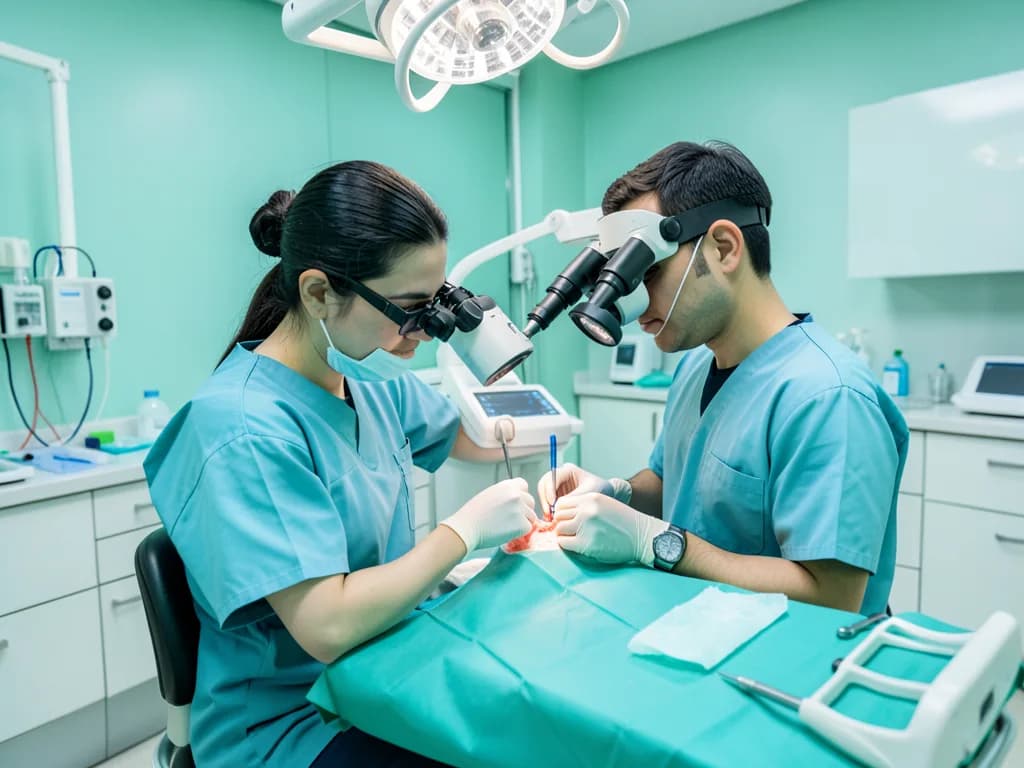
PrecisionSome specialist periodontist clinics in Dubai use surgical microscopes or loupes (magnifying glasses worn by the surgeon) for enhanced visualisation during grafting procedures. Magnification allows the periodontist to make smaller, more precise incisions, place sutures more accurately and handle graft tissue more gently — all of which improve healing and final outcomes. Microscopic gum surgery is particularly beneficial for anterior (front) teeth where aesthetic results matter most.
When consulting a periodontist, ask which of these technologies they routinely use. You can compare clinics offering advanced periodontal technology through our dental specialists directory.
Top Rated Periodontists in Dubai
A periodontist is a dental specialist with 3 years of additional postgraduate training exclusively in gum, bone and supporting tooth structure disorders. For gum recession treatment — especially surgical grafting — always choose a DHA-registered periodontist rather than a general dentist. Periodontists hold titles such as MPerio (Master of Periodontics), MSD in Periodontics, or Fellowship in Periodontology from accredited institutions. Verify specialist registration at dha.gov.ae before booking.
What Credentials to Look For
- DHA-registered specialist in Periodontics (verify at dha.gov.ae)
- Postgraduate qualification: MPerio, MSD, MSc Periodontics or equivalent
- Fellowship training in the pinhole surgical technique or LANAP (if relevant)
- Hospital privileges for IV sedation cases
- Member of the Emirates Dental Association or international periodontal societies
Questions to Ask at Your Consultation
- How many gum grafting procedures do you perform each month?
- What is your root coverage success rate for Miller Class I and II cases?
- Do you use PRF, Emdogain or LANAP in your grafting procedures?
- Can I see before-and-after photographs from real patients?
- What is the total AED cost including follow-up appointments and maintenance?
Dubai has a large community of internationally trained periodontists — graduates of UK, American, European and Indian MPerio programmes — many practising in specialist clinics in Jumeirah, DIFC, Dubai Marina, JLT and Business Bay. For front teeth recession affecting your smile, choose a periodontist who emphasises microsurgical technique and aesthetic outcomes. Use our platform to browse verified periodontist clinics in Dubai with real patient reviews, insurance acceptance and transparent pricing. For a full overview of dental specialties, see our dental specialists guide.
Find a Periodontist for Gum Recession Treatment
Compare verified periodontal specialists across Dubai, check which insurers they accept, read real patient reviews and book your consultation today.
Use our platform to explore dental clinics near you and find the right periodontist for your gum recession treatment.