Gum Disease Treatment in Dubai — The Complete 2026 Guide
Periodontal disease (gum disease) is the leading cause of tooth loss in adults. This guide covers every treatment option available in Dubai — from a simple scale and polish for gingivitis through to laser therapy and surgical bone regeneration for advanced periodontitis — with AED costs, process detail, and insurance guidance. For symptoms and warning signs, see our gum disease guide.
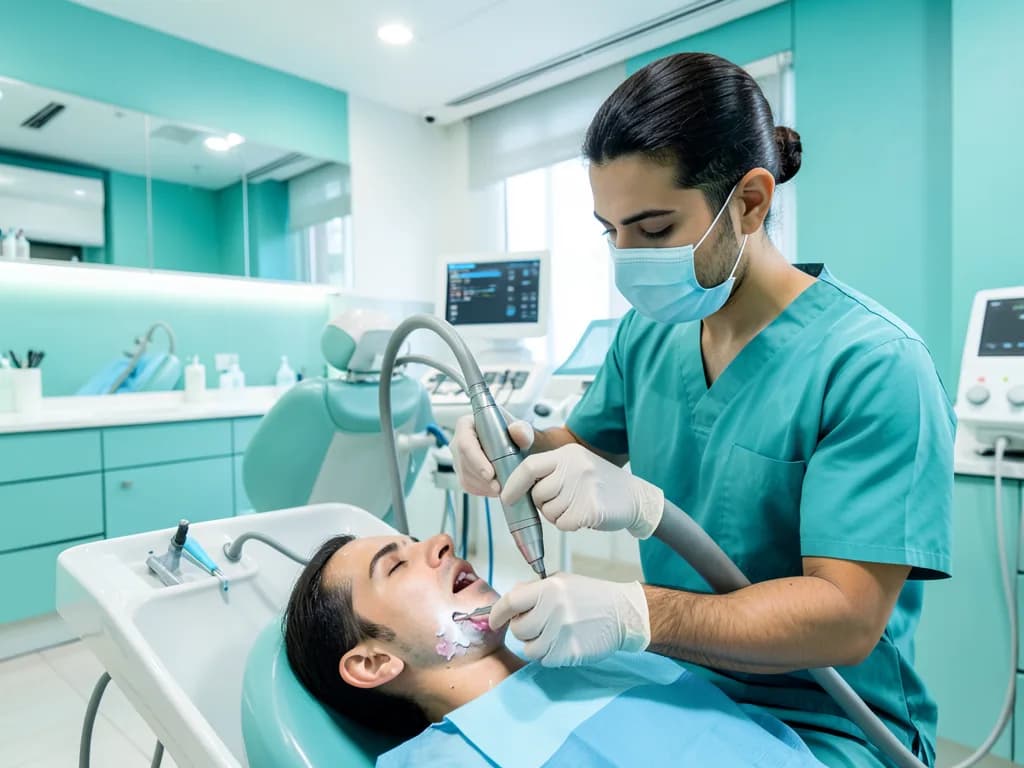
Treatment by Disease Stage
The right treatment depends on the stage of gum disease. The 2017 World Workshop classification (adopted globally) defines four stages of periodontitis.
The earliest and fully reversible stage. Inflammation is confined to the gum tissue only — the bone and attachment fibres have not been damaged. Gums appear red, swollen and bleed on brushing or flossing. No pocketing beyond 3 mm.
Recommended Treatments
- ✓ Professional scale and polish (AED 300–600)
- ✓ Oral hygiene instruction and technique demonstration
- ✓ Antiseptic mouthwash prescription (chlorhexidine 0.12%)
- ✓ Review appointment at 6 weeks
Fully reversible with professional treatment and improved home care.
Bone loss has begun. Probing pocket depths of 4–5 mm are present. Gums may still appear fairly normal visually, making this stage easy to miss without professional probing. This is why six-monthly dental check-ups are critical.
Recommended Treatments
- ✓ Scaling and root planing (SRP) per quadrant: AED 600–1,200
- ✓ Full mouth SRP (4 quadrants): AED 2,400–4,800
- ✓ Oral hygiene reinforcement
- ✓ Reassessment at 6–8 weeks
Arrestable with thorough SRP and consistent home care. Some bone loss is permanent.
Significant bone loss (33–66% or greater). Pocket depths of 5–7 mm or more. Teeth may be mobile. Pockets this deep cannot be adequately cleaned by SRP alone — surgical access is often needed to debride root surfaces under direct vision.
Recommended Treatments
- ✓ Scaling and root planing (initial phase): AED 2,400–4,800
- ✓ Reassessment; surgery if pockets remain above 5 mm
- ✓ Flap surgery or osseous surgery: AED 2,000–5,000 per sextant
- ✓ Bone grafts and guided tissue regeneration if bone defects present
Controllable but not fully reversible. Lifetime periodontal maintenance required.
Severe bone loss, deep pockets (7 mm+), significant tooth mobility, possible tooth loss. Complex cases may also involve bite problems from tooth drifting and flaring. Interdisciplinary treatment involving both a periodontist and prosthodontist is often required.
Recommended Treatments
- ✓ Full periodontal assessment and treatment planning
- ✓ Non-surgical and surgical periodontal therapy
- ✓ Tooth extractions where teeth cannot be saved
- ✓ Implants, bridges or dentures for replaced teeth
Some teeth may not be salvageable. Focus shifts to stabilising remaining teeth and planning replacements.
Untreated gum disease at any stage can lead to gum recession, where the tissue pulls away from the tooth and exposes the root. Learn about gum recession treatment options in Dubai, including soft tissue grafts and pinhole techniques.
The Periodontal Treatment Process Step by Step
Whether your treatment is non-surgical or surgical, this is the typical pathway at a Dubai periodontal specialist clinic.
Full Periodontal Assessment
A periodontist measures six points around every tooth using a calibrated probe — recording pocket depth, bleeding on probing, recession, and mobility. Full-mouth periapical X-rays are taken to assess bone levels. This charting provides a baseline 'map' of disease severity and is essential for diagnosing the stage of periodontitis. The assessment typically takes 30–60 minutes at a specialist clinic.
Active Treatment Phase — Scaling and Root Planing
Scaling and root planing (SRP), also called root surface debridement, is the cornerstone of periodontal treatment. Using hand instruments and ultrasonic scalers, the clinician removes bacterial plaque, calculus (tartar) and biofilm from tooth surfaces and root surfaces deep within the pockets — down to the base of the pocket. Each quadrant is treated under local anaesthesia. Full-mouth SRP is usually completed over 2–4 appointments.
Oral Hygiene Reinforcement
Periodontal treatment without effective daily plaque removal will fail. The hygienist or periodontist provides personalised instruction on the modified Bass brushing technique, interdental cleaning (floss, interdental brushes, or water flosser depending on pocket depth), and mouthwash use. Patients with uncontrolled periodontitis are seen for repeated oral hygiene coaching sessions until home care reaches an adequate standard.
Reassessment at 6 to 8 Weeks
Six to eight weeks after SRP, the periodontist re-probes all sites. Pockets that have resolved to 3–4 mm with no bleeding are considered stable. Pockets that remain at 5 mm or above with continued bleeding are candidates for surgical intervention. This reassessment determines whether the non-surgical phase has been sufficient or whether surgery is required.
Surgical Phase (If Required)
For pockets that do not respond to SRP, flap surgery provides direct access to root surfaces and bone defects. The gum is reflected back under local anaesthesia, root surfaces are meticulously debrided under direct vision, and any bone defects are addressed (reshaped, grafted, or treated with guided tissue regeneration membranes). The flap is then sutured back. Healing takes 2–4 weeks. Patients with dental anxiety may benefit from IV sedation dentistry during surgical procedures.
Periodontal Maintenance Programme
Once active disease is controlled, patients enter a lifelong maintenance programme with visits every 3 months (for active disease) or 4–6 months (for stable cases). Each maintenance visit includes full-mouth probing, professional supragingival and subgingival cleaning, and reassessment of bleeding sites. Periodontal disease cannot be cured — only controlled. Missing maintenance appointments allows bacteria to re-colonise pockets.
Laser Gum Therapy in Dubai — LANAP and Diode Laser Options
LANAP Protocol
The only FDA-cleared laser protocol for true periodontal regeneration. Uses the PerioLase MVP-7 neodymium:YAG laser to selectively target diseased tissue while leaving healthy tissue intact. Evidence shows potential for bone regeneration — not just cleaning. Available at select Dubai clinics.
AED 800 – 2,000 per quadrant
Diode Laser Adjunct
A diode laser used as an adjunct to conventional SRP — decontaminates pockets, reduces bacteria and promotes faster healing. More widely available than LANAP, less expensive, but does not carry the same bone regeneration evidence base. Often included within standard SRP fees at some Dubai clinics.
Often included in SRP price or AED 200–500 extra per quadrant
New Technologies: PRF (Platelet Rich Fibrin) — derived from your own blood — can be used during periodontal surgery to accelerate healing and promote bone regeneration. Guided tissue regeneration (GTR) membranes combined with bone graft material can partially regrow lost bone in angular bony defects. Ask your periodontist whether you are a candidate. See our periodontist Dubai guide.
Gum Disease Treatment Costs in Dubai 2026
All prices in AED. Costs vary significantly by disease severity, number of teeth and quadrants treated, and whether laser or surgical techniques are required.
| Treatment | AED Range | Notes |
|---|---|---|
| Scale and polish (gingivitis) | AED 300 – 600 | Removes plaque and calculus above gumline |
| Scaling and root planing per quadrant | AED 600 – 1,200 | Below-gumline deep cleaning |
| Full mouth SRP (4 quadrants) | AED 2,400 – 4,800 | Stage 1–2 periodontitis treatment |
| Laser gum therapy (LANAP) per quadrant | AED 800 – 2,000 | Premium; not at all clinics |
| Osseous (bone) surgery per sextant | AED 2,000 – 5,000 | Stage 3 periodontitis, pockets over 6 mm |
| Guided tissue regeneration | AED 3,000 – 7,000 | Per defect; bone graft membrane included |
| Periodontal maintenance visit | AED 300 – 500 | Every 3 months after active disease |
| Full early-disease treatment | AED 2,000 – 5,000 | Gingivitis to Stage 1, full mouth |
| Full advanced-disease treatment | AED 8,000 – 20,000+ | Stage 3–4, surgical + non-surgical |
Prices from Dubai clinic surveys, February 2026. Specialist periodontist clinics may charge 15–30% above general dentist rates.
For a detailed cost breakdown by severity, see our gum treatment cost guide. Many UAE insurance plans cover periodontal treatment — check our dental insurance guide for coverage details. Regular dental checkups catch gum disease early and reduce long-term treatment costs.
Periodontal Maintenance — Why It Never Ends
Active periodontal treatment stabilises the disease. Maintenance keeps it stable. Research consistently shows that patients who attend periodontal maintenance every 3–4 months retain their teeth for decades, while those who skip maintenance experience progressive disease relapse. The maintenance interval is determined by your periodontist based on your response to treatment and residual pocket depths.
Active disease patients
Every 3 months — AED 300–500 per visit. Includes full probing, professional cleaning and reassessment.
Stable patients
Every 4–6 months — AED 300–500 per visit. Frequency may be reduced as stability is maintained over years.
Bleeding gums are not normal. Many people believe that bleeding gums are caused by brushing too hard. This is rarely true. Healthy gums do not bleed when brushed. Bleeding is the hallmark of gum inflammation and should prompt a dental visit without delay. See also: bleeding gums Dubai guide.
Technology and Equipment Used in Periodontal Treatment
Dubai periodontal specialist clinics use some of the most advanced equipment available globally. The instruments and technologies used directly affect treatment precision, comfort, and long-term outcomes.
Biolase Waterlase Laser
Laser-assisted periodontal therapy. The Waterlase Er,Cr:YSGG laser cuts soft tissue with water-cooled laser energy, decontaminates periodontal pockets, and removes diseased tissue without a scalpel. Faster healing and less post-operative discomfort than conventional surgery.
Ultrasonic Piezo Scaler
Used during scaling and root planing. Ultrasonic vibrations at 25,000–50,000 Hz remove calculus from root surfaces efficiently. The Piezon (EMS) and Cavitron systems are widely used. Generates less heat than older magnetostrictive scalers and has thinner tips for subgingival access.
Digital Periapical X-Rays
Full-mouth series of 14–18 periapical radiographs mapped to the periodontal chart. Digital sensors reduce radiation dose by 70–90% versus film. Essential for assessing bone levels, root length, root morphology, and furcation involvement at every tooth.
Florida Probe Digital Periodontal Charting
Electronic probing system that records pocket depths, bleeding, furcation involvement, and recession at all six sites per tooth automatically. Eliminates transcription errors and generates digital comparison charts between visits to track disease progression objectively.
CBCT (Cone Beam CT) Scan
3D bone volume assessment for complex cases. Essential before bone grafting, guided tissue regeneration, or implant placement. Shows three-dimensional bone morphology, furcation anatomy, and proximity to anatomical structures that 2D X-rays cannot reveal.
PRF (Platelet Rich Fibrin) Centrifuge
Patient's own blood is centrifuged to produce PRF membranes packed with growth factors. Used during periodontal surgery to accelerate soft tissue healing, promote bone regeneration, and reduce infection risk. Available at specialist periodontal surgery centres in Dubai.
For complex surgical cases requiring bone grafts, implants or guided tissue regeneration, a maxillofacial surgeon in Dubai may collaborate with your periodontist. Patients with IV sedation needs should see our IV sedation dentistry guide.
Alternative and Adjunctive Treatments for Gum Disease
Subgingival Antibiotic Therapy
Locally delivered antibiotics (e.g., Arestin minocycline microspheres, PerioChip chlorhexidine chip) are placed directly into periodontal pockets after SRP. They provide sustained antibiotic concentration in the pocket for 7–21 days. Used as an adjunct to SRP in stubborn pockets, not as a replacement for mechanical treatment. Cost: AED 100–300 per pocket.
Ozone Therapy
Ozone gas or ozonated water irrigated into periodontal pockets kills anaerobic bacteria without antibiotic resistance risk. Available as an adjunct at some Dubai clinics. Evidence is still emerging but results are promising for patients wishing to avoid chemical antibiotics. Usually added to SRP fee.
Photodynamic Therapy (PDT)
A photosensitising dye is applied to the pocket and activated with a specific wavelength of light, generating reactive oxygen species that destroy bacterial cell membranes. Available as an adjunct to SRP at laser-equipped Dubai clinics. Adds AED 200–500 per quadrant.
Full-Arch Implant Treatment
For Stage 4 periodontitis where multiple teeth are unsalvageable, full-arch implant treatment (All-on-4 or All-on-6) may ultimately replace extracted teeth. See our All-on-6 implants guide for details. Periodontal treatment of remaining teeth is always completed before any implant placement.
Before and After Gum Disease Treatment — What to Expect
Before Treatment
- ✗ Bleeding gums during brushing or eating
- ✗ Swollen, red or purple gum tissue
- ✗ Persistent bad breath (halitosis) from bacteria
- ✗ Periodontal pockets 4 mm or deeper
- ✗ Bone loss visible on X-rays
- ✗ Possible tooth mobility and sensitivity
- ✗ Discomfort when chewing
After Successful Treatment
- ✓ Bleeding on probing eliminated or greatly reduced
- ✓ Pocket depths reduced to 3–4 mm or less
- ✓ Gum tissue firmer and healthier pink colour
- ✓ Halitosis resolved once bacterial load reduced
- ✓ Tooth mobility stabilised (where possible)
- ✓ Disease progression arrested — bone loss halted
- ✓ Greatly reduced risk of tooth loss long-term
Important: Some changes after treatment are expected and normal. Gums may appear to recede slightly after SRP as swelling resolves — this is not actual recession but shrinkage of inflamed tissue. Teeth may feel more sensitive initially as the root surfaces are exposed. These effects typically resolve within 2–4 weeks.
Treatment Duration and Timeline for Periodontal Therapy in Dubai
| Disease Stage | Appointments | Total Timeline |
|---|---|---|
| Gingivitis | 1–2 | 6–12 weeks to resolution |
| Stage 1 Periodontitis | 3–5 | 3–4 months (SRP + review) |
| Stage 2–3 (Non-surgical) | 5–7 | 4–6 months |
| Stage 2–3 (With surgery) | 8–12 | 6–9 months |
| Stage 4 (Complex) | 12+ | 9–18 months |
| Ongoing maintenance | 2–4 per year | Lifelong |
Pain Management and Comfort During Periodontal Treatment
Non-surgical SRP
- ✓ Local anaesthesia (lidocaine) — painless during procedure
- ✓ Topical anaesthetic gel applied before injection
- ✓ Post-op sensitivity for 24–72 hours — managed with ibuprofen
- ✓ Chlorhexidine mouthwash 0.12% prescribed post-treatment
- ✓ Return to work same day in most cases
Surgical Periodontal Procedures
- ✓ Local anaesthesia — painless during procedure
- ✓ IV sedation available at specialist centres — fully conscious but relaxed
- ✓ Moderate pain for 3–5 days post-surgery, managed with prescribed analgesics
- ✓ Swelling peaks at 48 hours, resolves in 5–7 days
- ✓ Most patients return to work within 3–5 days
Patients with dental anxiety can access IV sedation dentistry in Dubai for periodontal surgery. Nitrous oxide (happy gas) is also available at some clinics for non-surgical SRP appointments.
Who Performs Gum Disease Treatment in Dubai
Periodontist (Specialist)
A periodontist has completed a minimum of 3 additional years of specialty training in periodontics after dental school. In Dubai, periodontists must hold a DHA specialist licence in periodontology. They manage all stages of gum disease from gingivitis to complex Stage 4 periodontitis, and perform bone grafting, guided tissue regeneration, and implant placement.
Best for: Stage 2–4 periodontitis, surgical cases, implants, bone grafts
General Dentist or Hygienist
General dentists and dental hygienists at DHA-licensed clinics can manage gingivitis and early-stage periodontitis with scale and polish and SRP. They will refer complex or surgical cases to a periodontist. For routine maintenance after specialist treatment, general dentists often continue the care.
Best for: Gingivitis, Stage 1 periodontitis, ongoing maintenance
Use our periodontist Dubai directory to find DHA-licensed periodontal specialists. To compare all dental specialists, see our dental specialists Dubai guide.
Gum Disease Treatment Across Different Age Groups
Children and Adolescents
Gingivitis is common in teenagers due to hormonal changes and inconsistent oral hygiene. Aggressive periodontitis (now classified as Stage 3 Grade C) can occur in adolescents — even those without obvious risk factors. Children should have annual gum health assessments. SRP can be performed from adolescence; surgery is rarely needed before adulthood.
Pregnant Women
Pregnancy gingivitis affects up to 70% of pregnant women due to elevated progesterone levels enhancing the gum tissue's response to bacteria. Scale and polish is safe throughout pregnancy. SRP is safe in the second trimester. Elective surgical procedures are deferred until after delivery. Untreated periodontitis has been associated with pre-term birth and low birth weight — treatment is important.
Seniors (65+)
Older adults often have more advanced disease due to decades of accumulated bone loss, medications causing dry mouth (which accelerates disease), and systemic conditions like diabetes. Treatment planning in seniors must account for medications, medical history, and the strategic value of teeth to be treated. Periodontal maintenance remains essential regardless of age.
Recovery and Aftercare Following Periodontal Treatment
After Scaling and Root Planing
- ✓ Avoid hard or crunchy foods for 24–48 hours
- ✓ Use prescribed chlorhexidine mouthwash twice daily for 2 weeks
- ✓ Gentle brushing with soft toothbrush from day 1
- ✓ Avoid smoking — impairs healing significantly
- ✓ Take ibuprofen if needed for sensitivity (not aspirin)
- ✓ Return for reassessment at 6–8 weeks
After Periodontal Surgery
- ✓ Soft diet for 1–2 weeks — no chewing on treated side
- ✓ Cold compresses for 48 hours to reduce swelling
- ✓ Chlorhexidine mouthwash — DO NOT brush the surgical site for 2 weeks
- ✓ Suture removal at 7–10 days
- ✓ No strenuous exercise for 48–72 hours
- ✓ Full healing assessment at 4–6 weeks post-surgery
After completing active treatment, maintaining your regular dental checkups every 3–6 months is essential. Many patients also benefit from professional dental cleaning between periodontal maintenance visits.
Does UAE Insurance Cover Gum Disease Treatment?
Basic SRP is widely covered
Scale and polish
Usually covered 1–2x per year
Scaling and root planing
Usually covered 50–80% after deductible
Periodontal surgery
Covered on enhanced plans with pre-auth
Bone grafts and GTR
Variable — pre-auth required
LANAP laser treatment
Rarely covered — check plan details
Periodontal maintenance
Partially covered on some plans
For details on Daman, AXA, Bupa, MetLife, and NextCare periodontal coverage, see our dental insurance Dubai guide.
Frequently Asked Questions
What is the difference between gingivitis and periodontitis?
Gingivitis is inflammation of the gum tissue only — it affects only the soft tissue and has not damaged the bone or the fibres that attach the tooth to the bone. It is fully reversible with professional cleaning and improved home care. Periodontitis means the inflammation has spread deeper, destroying the bone and periodontal fibres that support the tooth. The damage from periodontitis is not reversible — lost bone does not grow back naturally, though guided tissue regeneration can partially regenerate some defects. This is why early treatment is so critical. Any adult with bleeding gums should have their periodontal health assessed by a dentist or periodontist without delay.
How many visits does periodontal treatment take in Dubai?
The number of visits depends on disease severity. For gingivitis, a single scale and polish appointment followed by a 6-week review is typically sufficient. For Stage 1 periodontitis, full-mouth SRP usually requires 2–4 appointments (one per quadrant, or upper and lower arches at separate visits) plus a reassessment. For Stage 2–3 periodontitis requiring surgery, expect 6–10 or more appointments in total including non-surgical phase, reassessment, surgical sessions, post-surgical reviews, and the start of maintenance visits. Allow 3–6 months for the full active treatment phase before entering maintenance.
What is LANAP laser gum treatment and is it better than conventional surgery?
LANAP (Laser Assisted New Attachment Procedure) uses a specific PerioLase MVP-7 neodymium:YAG laser to selectively remove diseased tissue and bacteria from periodontal pockets while leaving healthy tissue intact. Unlike conventional flap surgery, LANAP requires no incisions and no sutures, has less post-operative discomfort, and studies show it can stimulate some bone regeneration. In Dubai, LANAP is available at a premium — typically AED 800–2,000 per quadrant versus AED 600–1,200 for conventional SRP. LANAP is a validated protocol with FDA clearance, but conventional SRP and flap surgery also have decades of evidence behind them. The best approach for your case depends on pocket depth, anatomy, and whether full surgical access is needed.
Does UAE insurance cover gum disease treatment?
Most UAE health insurance plans cover basic periodontal treatment as part of their dental benefits. Scale and polish (professional cleaning) is typically covered 1–2 times per year. Scaling and root planing is usually covered as a major restorative benefit — typically at 50–80% after deductible, up to annual plan limits. Periodontal surgery and bone grafts may require pre-authorisation from insurers including Daman, AXA, Bupa, and MetLife. Purely maintenance visits may or may not be covered depending on your plan tier. Always confirm coverage and obtain pre-authorisation for surgical procedures before proceeding. See our dental insurance Dubai guide for insurer-by-insurer details.
Can gum disease be cured permanently?
Gum disease cannot be permanently cured — it can only be controlled. The bacteria that cause periodontal disease are always present in the mouth. Without professional maintenance every 3–6 months and rigorous daily home care, plaque and calculus will re-accumulate in pockets, re-infecting previously treated sites. Think of periodontal treatment like managing a chronic condition — similar to controlling diabetes or hypertension. The goal is to reduce pocket depths to levels that can be self-maintained, then to monitor and clean those sites professionally at regular intervals for the rest of your life. Patients who attend regular maintenance appointments maintain their teeth for decades; those who stop are at high risk of relapse.
Is gum treatment painful?
Scaling and root planing is performed under local anaesthesia, so the procedure itself should be painless. After the anaesthetic wears off, there may be sensitivity and soreness in the treated gums for 24–72 hours, managed with over-the-counter pain relief. Periodontal surgery involves more post-operative discomfort — moderate pain for 3–5 days managed with prescribed analgesics and a chlorhexidine mouthwash. Swelling is normal after flap surgery and typically peaks at 48 hours before subsiding. Most patients return to work within 1–3 days after non-surgical treatment and 3–5 days after surgery.
Find a Periodontist in Dubai
Compare verified periodontal specialists across Dubai, check insurance acceptance and read real patient reviews.
Use our explore dental options near you to compare clinics, read reviews, and book appointments.