Sleep Apnea Dental Treatment in Dubai — Oral Appliances and MAD Devices
Obstructive sleep apnea affects millions of people in the UAE and goes largely undiagnosed. If you have been diagnosed with mild to moderate OSA or cannot tolerate CPAP, a custom dental oral appliance fitted by a DHA-licensed dentist in Dubai offers an effective, comfortable alternative. Costs range from AED 1,500 to AED 4,500 for a custom mandibular advancement device.
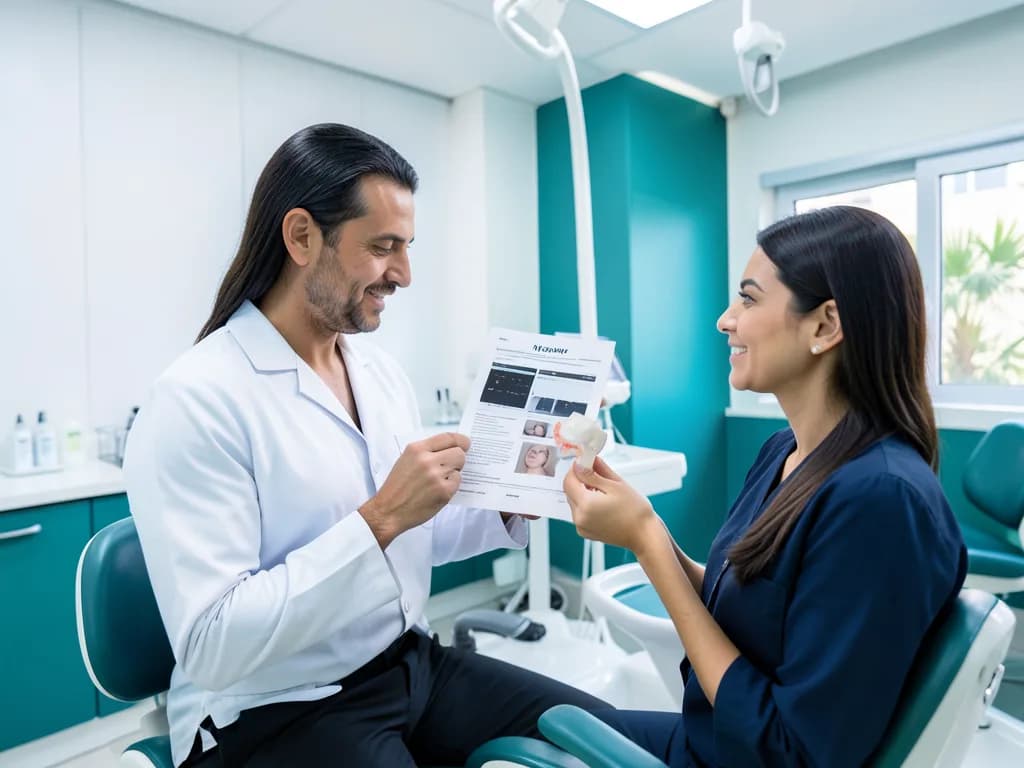
What Is Dental Treatment for Sleep Apnea?
Obstructive sleep apnea (OSA) occurs when the muscles at the back of the throat relax during sleep, causing the airway to narrow or collapse completely. This leads to repeated breathing pauses — called apnea events — that fragment sleep and reduce blood oxygen levels. Left untreated, OSA increases the risk of hypertension, heart disease, stroke, and type 2 diabetes.
Dental sleep medicine is the discipline in which dentists use custom-fitted oral appliances to keep the airway open during sleep. The most common type is the mandibular advancement device (MAD), which works by holding the lower jaw slightly forward and downward, preventing the throat tissues from collapsing.
Unlike CPAP — which delivers pressurised air through a mask — an oral appliance is silent, compact, and requires no electricity or machine. This makes it especially popular with travellers, CPAP-intolerant patients, and those with mild to moderate OSA.
How a Mandibular Advancement Device Works
- 1The dentist takes precise impressions of your upper and lower teeth
- 2A custom appliance is fabricated in a dental laboratory (2–3 weeks)
- 3The device clips over your upper and lower teeth at night
- 4It gently holds the lower jaw (mandible) in a forward position
- 5This tightens the soft tissues of the throat, keeping the airway open
- 6Apnea events decrease and oxygen levels stabilise during sleep
- 7Adjustments allow titration to the optimal jaw advancement position
Sleep Apnea Symptoms and Signs You Need Treatment
Sleep apnea is often undiagnosed because the most obvious symptoms happen while you are asleep. Partners and family members frequently notice the signs first.
- •Loud, habitual snoring
- •Witnessed episodes of stopped breathing during sleep
- •Gasping or choking sounds at night
- •Waking with a dry mouth or sore throat
- •Unrefreshing sleep despite adequate hours
See your GP or a sleep physician for evaluation. A sleep study (polysomnography) is needed to confirm diagnosis.
- •Excessive daytime sleepiness
- •Morning headaches
- •Difficulty concentrating or memory problems
- •Irritability or mood changes
- •Falling asleep at work or while driving
Daytime sleepiness from untreated sleep apnea is dangerous. Seek urgent medical evaluation — do not drive if severely sleepy.
- •Diagnosed mild to moderate OSA (AHI 5–30)
- •CPAP intolerant or refusing CPAP
- •Positional sleep apnea (worse when lying on back)
- •Travelling frequently (appliance is compact and silent)
- •Sufficient teeth to anchor the device
You are likely a good candidate for a custom dental oral appliance. Ask your sleep physician for a referral to a dentist trained in dental sleep medicine.
Types of Oral Appliances Available in Dubai
Not all oral appliances are equal. Always choose a custom device fabricated from your own dental impressions.
Custom Mandibular Advancement Device (MAD)
AED 1,500–4,500Suitable for: Mild to moderate OSA, CPAP intolerant
Fabricated from dental impressions. Advances the lower jaw forward to open the airway. Titratable designs allow gradual adjustment for comfort and effectiveness.
Prefabricated Boil-and-Bite MAD
AED 300–800Suitable for: Snoring only (not for diagnosed OSA)
Off-the-shelf device softened in hot water and moulded to teeth. Not recommended for treating diagnosed sleep apnea — limited adjustability and poor long-term fit.
Not recommended for diagnosed OSA
Tongue-Retaining Device (TRD)
AED 1,200–3,000Suitable for: Patients who cannot use MAD (tooth loss, jaw problems)
Holds the tongue forward using suction rather than advancing the jaw. An alternative for patients without sufficient teeth or with TMJ contraindications.
Combination Therapy (MAD + Low-Pressure CPAP)
AED 1,500–4,500 (appliance only)Suitable for: Moderate to severe OSA with partial CPAP tolerance
Using an oral appliance allows the CPAP pressure to be reduced significantly, improving CPAP comfort and adherence. Coordinated by sleep physician and dentist together.
Sleep Apnea Dental Treatment Cost in Dubai
| Item | AED Cost | Notes |
|---|---|---|
| Custom MAD (fixed design) | AED 1,500–2,500 | Non-adjustable; good for stable, mild OSA |
| Custom MAD (titratable) | AED 2,500–4,500 | Recommended — allows incremental jaw advancement |
| Tongue-retaining device | AED 1,200–3,000 | For patients who cannot wear a MAD |
| Follow-up adjustment visit | AED 200–500 | Per visit; 2–4 usually needed |
| Sleep study (polysomnography) | AED 800–2,000 | Required for diagnosis before appliance |
| Home sleep test | AED 400–800 | Follow-up monitoring after appliance fit |
| CBCT jaw scan (if needed) | AED 400–800 | Sometimes required before treatment |
Prices are indicative for DHA-licensed clinics in Dubai. Costs vary by clinic, device type, and specialist level.
Need urgent care? Visit our emergency dentist guide, or see all treatment costs.
What Affects the Cost of Your Oral Appliance in Dubai?
Device design and adjustability
Fixed MADs (non-adjustable) are cheaper at AED 1,500–2,500. Titratable devices that allow millimetre-by-millimetre adjustment of jaw advancement cost AED 2,500–4,500 and are preferred clinically as they can be fine-tuned without remaking the appliance.
Impressions and CBCT scan
Some clinics include the cost of dental impressions or digital scans in the appliance price. Others charge AED 200–500 separately. A CBCT scan of the jaw, if required, adds AED 400–800. A sleep study referral, if not already done, costs AED 800–2,000 at Dubai sleep centres.
Follow-up and adjustment visits
Most patients need 2–4 follow-up appointments for adjustment. Each visit costs AED 200–500. A follow-up home sleep test to verify treatment effectiveness adds AED 400–800. Budget for at least AED 500–1,500 in follow-up costs beyond the appliance fee.
Clinic location and specialist level
Dentists in JLT, DIFC, and Downtown Dubai charge premium rates. Clinics in Deira, Al Quoz, and Sharjah are typically 20–35% more affordable. A prosthodontist or dentist with a formal dental sleep medicine qualification may charge more than a general dentist but provides a higher level of expertise.
Who Is Suitable for a Dental Sleep Apnea Appliance?
Good candidates for oral appliance
- ✓ Mild to moderate OSA (AHI 5–30)
- ✓ CPAP intolerant or refusing CPAP
- ✓ Positional sleep apnea (worse when supine)
- ✓ Travelling frequently or irregular schedules
- ✓ Prefer a silent, compact device
- ✓ At least 8 healthy teeth per arch for anchorage
Not recommended for oral appliance
- ✗ Severe OSA (AHI above 30) — CPAP is required
- ✗ Active, painful TMJ disorder
- ✗ Severe bruxism that damages appliances
- ✗ Fewer than 8 teeth per arch
- ✗ Loose or heavily restored teeth not suitable for anchorage
- ✗ Central sleep apnea (not obstructive)
The Dubai Treatment Process Step by Step
GP or sleep physician referral
Your GP or an ENT specialist refers you for a sleep study (polysomnography) if sleep apnea is suspected. Sleep studies can be performed at home (home sleep test) or in a hospital sleep lab in Dubai.
Diagnosis confirmed by sleep study
The sleep study produces an Apnea-Hypopnea Index (AHI) score. Mild OSA is AHI 5–15, moderate is 15–30, and severe is above 30. Your physician confirms the diagnosis and discusses treatment options.
Dental assessment and impressions
The dentist examines your teeth, bite, jaw joints, and airway. Digital scans or traditional impressions are taken of both arches. A CBCT scan may be requested if jaw anatomy needs assessment.
Appliance fabricated in laboratory
Your custom oral appliance is fabricated in a dental laboratory in 2–3 weeks. High-quality titratable devices are manufactured to precise tolerances for a secure, comfortable fit.
Fitting and initial instruction
At your fitting appointment, the dentist inserts the appliance, checks the fit against every tooth, and makes initial adjustments. You receive detailed instructions for wearing, cleaning, and storing the device.
Titration and follow-up
Over the following weeks, the jaw advancement is gradually increased until apnea events are adequately controlled. A follow-up home sleep test or clinic monitoring confirms therapeutic effectiveness.
Technology and Devices Used in Dental Sleep Medicine in Dubai
Titratable MAD Devices (SomnoMed, ResMed, Narval)
Top-tier custom titratable MADs from brands like SomnoMed MAS, ResMed Narval CC, and EMA (Elastic Mandibular Advancement) are the clinical gold standard. They allow millimetre-by-millimetre adjustment of jaw advancement via a side screw or elastic straps without remaking the appliance. Available at specialist dental sleep centres in Dubai. AED 2,500–4,500 for a custom titratable device.
Digital Intraoral Scanning (iTero, TRIOS)
Digital impressions are taken with a handheld scanner rather than putty impressions, producing a precise 3D model of both dental arches. The MAD is fabricated from this digital model with superior fit accuracy. No impression tray discomfort or gagging. Standard at premium dental sleep clinics in Dubai.
Polysomnography (PSG) — In-Lab Sleep Study
The diagnostic gold standard for OSA. Performed at a hospital sleep lab in Dubai — monitors brain activity (EEG), eye movements, muscle activity, heart rate, breathing effort, airflow, and blood oxygen simultaneously during a full night of sleep. Produces the definitive AHI score for diagnosis. Cost: AED 1,500–2,000 at Dubai sleep centres.
Home Sleep Apnea Test (HSAT)
A portable simplified version of polysomnography for diagnosing moderate to severe OSA. A small device with nasal cannula, chest belt, and pulse oximeter is worn at home for 1–2 nights. Less sensitive than full PSG but sufficient for diagnosing uncomplicated OSA. Cost: AED 400–800 in Dubai. Used for both initial diagnosis and follow-up monitoring after appliance fitting.
CBCT Airway Analysis
Cone beam CT imaging of the upper airway in three dimensions reveals the narrowest airway segment, soft tissue volume, and relationship to the cervical spine. This information guides the dentist in setting the initial jaw advancement position for the MAD. Available at specialist CBCT centres and dental imaging clinics in Dubai. Cost: AED 400–800.
Mandibular Position Indicator (MPI)
A clinical device that records the habitual comfortable jaw position in three dimensions. Used to set the starting advancement position of the MAD at 50–60% of maximum protrusion — the evidence-based starting point that balances airway opening with side effect minimisation. Reduces the number of adjustment visits needed.
Before and After Oral Appliance Therapy for Sleep Apnea
Before Treatment
- ✗ Loud snoring disturbing partner and household
- ✗ Waking multiple times at night gasping
- ✗ Unrefreshing sleep regardless of duration
- ✗ Severe daytime sleepiness affecting work
- ✗ Morning headaches and dry mouth
- ✗ Elevated blood pressure and cardiovascular risk
- ✗ Partner sleeping in separate room due to noise
After Successful MAD Treatment
- ✓ Snoring significantly reduced or eliminated
- ✓ Apnea events reduced to within normal range (AHI below 5)
- ✓ Restorative, uninterrupted sleep
- ✓ Daytime energy and concentration improved
- ✓ Morning headaches and dry mouth resolved
- ✓ Blood pressure may improve as OSA is treated
- ✓ Silent, compact — no CPAP mask or machine required
Alternatives to Oral Appliance Therapy for Sleep Apnea
CPAP (Continuous Positive Airway Pressure)
The gold standard for moderate to severe OSA. Delivers pressurised air through a mask to keep the airway open. Highly effective when used correctly but compliance is low — studies show 30–50% of patients stop using CPAP within a year due to mask discomfort, noise, claustrophobia, or travel inconvenience. MAD is recommended for patients who are CPAP intolerant. CPAP machines available in Dubai from AED 1,500–5,000.
Surgical Treatment (UPPP, MMA Surgery)
Uvulopalatopharyngoplasty (UPPP) removes excess soft palate tissue and tonsils to widen the airway. Maxillomandibular advancement (MMA) surgery moves the jaw forward to permanently enlarge the airway. Reserved for patients who fail CPAP and oral appliance therapy. Performed by ENT surgeons or oral and maxillofacial surgeons at Dubai hospitals. Success rates variable. Available at American Hospital, Mediclinic, and major hospital groups.
Positional Therapy
For positional OSA (significantly worse when lying on the back), position-based interventions can help: special position-alarm devices, positional pillows, or the 'tennis ball technique'. Effective as monotherapy for purely positional OSA with AHI below 15 when supine but below 5 when sleeping on the side. Often used as an adjunct to oral appliance therapy.
Weight Loss and Lifestyle Changes
Obesity is the single largest modifiable risk factor for OSA — a 10% weight loss can reduce AHI by 26%. Regular aerobic exercise, alcohol avoidance (alcohol relaxes throat muscles), smoking cessation, and management of nasal congestion all reduce OSA severity. Lifestyle changes alone are rarely sufficient to eliminate moderate or severe OSA but significantly enhance the effectiveness of MAD therapy.
Specialist Qualifications and Age Considerations for Oral Appliance Therapy
Recommended Specialist Qualifications
Look for a DHA-licensed dentist with specific training in dental sleep medicine. Ideal credentials include: fellowship with the American Academy of Dental Sleep Medicine (AADSM), Australasian Sleep Association dental sleep medicine training, or a certificate course in oral appliance therapy from a recognised institution. A prosthodontist with bite and occlusion expertise is advantageous for cases where TMJ management is also needed.
Treatment must always be coordinated with the patient's sleep physician — do not accept MAD fabrication from a dentist who does not request your sleep study report.
Age Suitability
- ✓ Adults 18–65: Ideal candidates if jaw is skeletally mature and dentition is adequate for anchorage.
- ✓ Seniors 65+: Can benefit but dental status (number and condition of remaining teeth) must be carefully assessed. Removable partial dentures may complicate MAD anchorage.
- — Children and adolescents: MADs are not recommended before jaw growth is complete. Paediatric OSA is managed by ENT specialists and paediatricians, not dentists.
- ✓ Pregnant women: Safe to continue using a MAD during pregnancy. Snoring often worsens during pregnancy due to increased nasal congestion and weight gain.
Adapting to Your Oral Appliance and Long-Term Care
Increased saliva production and mild jaw muscle tenderness are expected as the jaw adapts to the forward position. Minor bite changes in the morning (teeth not meeting normally) are normal and resolve within 10–15 minutes. Wear the appliance every night even if uncomfortable — the adaptation process requires consistent use.
Return visits for jaw advancement adjustments. The dentist increases forward jaw positioning by 0.5–1 mm increments until snoring reduces and sleep quality improves. Partner feedback is valuable. Some patients require 4–6 visits to reach the optimal titration position.
Jaw soreness resolves. Sleep quality improvements become consistent. A follow-up home sleep test or clinic monitoring confirms whether the AHI has dropped to the target range (below 5–10 events per hour). If not adequately effective, further advancement or alternative therapy is considered.
Annual dental review includes: bite assessment for any occlusal changes, appliance inspection for wear or cracks, and review of OSA symptoms. Most patients continue using MAD for many years. Replacement is typically needed every 3–5 years. Do not stop using the appliance without consulting your sleep physician.
Related treatments for jaw and sleep health: night guard cost Dubai (bruxism splints), TMJ treatment Dubai, and dental night guard Dubai directory.
Insurance Coverage for Sleep Apnea Appliances in Dubai
May be covered (medical necessity)
- ✓ Custom oral appliance prescribed by a physician
- ✓ Sleep study (polysomnography) for diagnosis
- ✓ Follow-up home sleep monitoring test
- ✓ Dental impressions and fitting visits
- ✓ Daman Enhanced, AXA, BUPA with prior auth
Usually not covered
- — Prefabricated over-the-counter devices
- — Appliance for snoring only (no OSA diagnosis)
- — Daman Essential basic plan (limited dental benefits)
- — CBCT scan without prior authorisation
- — Appliance replacement due to loss or damage
Sleep Apnea in the UAE — Local Context and Statistics
Why OSA Is Prevalent in Dubai
- • Obesity rates in the UAE are among the highest globally — a primary risk factor for OSA
- • High rates of type 2 diabetes — strongly associated with sleep-disordered breathing
- • Sedentary lifestyle and late-night eating patterns common among UAE residents
- • Estimated 30–40% of OSA cases in Dubai remain undiagnosed
- • Cultural reluctance to discuss sleep problems delays diagnosis by years on average
UAE Health Risks of Untreated OSA
- ! 2–3x increased risk of road traffic accidents from daytime drowsiness
- ! 3x increased risk of hypertension — major cardiovascular burden
- ! Associated with atrial fibrillation, heart failure, and stroke
- ! Worsens blood sugar control in diabetic patients significantly
- ! Reduced work performance and productivity — significant in Dubai's economy
For bruxism associated with sleep apnea, see our night guard cost guide. For related jaw pain, see our TMJ treatment Dubai guide. Explore all treatment options at our dental treatments Dubai hub.
Related Treatment Guides
Oral Appliance vs CPAP — Head-to-Head Comparison
| Factor | Custom MAD (Dental) | CPAP Machine |
|---|---|---|
| Cost in Dubai | AED 1,500–4,500 (once) | AED 1,500–5,000 + consumables |
| Effectiveness (mild-moderate OSA) | Comparable to CPAP | Gold standard |
| Effectiveness (severe OSA) | Inferior | Significantly superior |
| Long-term adherence | High — silent, compact, comfortable | Low — 30–50% stop within 1 year |
| Noise | Silent | Noise from machine and mask |
| Travel portability | Excellent — pocket-sized | Requires power, carries in bag |
| Side effects | Jaw soreness (temporary), bite changes | Mask leaks, dry mouth, claustrophobia |
| Setup by | DHA-licensed dentist | Sleep physician or respiratory therapist |
Based on evidence from AASM (American Academy of Sleep Medicine) and clinical data from Dubai sleep medicine centres.
Frequently Asked Questions
How much does a dental sleep apnea appliance cost in Dubai?
A custom mandibular advancement device (MAD) from a DHA-licensed dental clinic in Dubai costs AED 1,500–4,500 depending on the design, materials, and whether adjustability is built in. Prefabricated over-the-counter devices cost AED 300–800 but are not recommended as they are not fitted to your specific anatomy and cannot be properly adjusted. Follow-up visits for appliance adjustment typically cost AED 200–500 each. A sleep study, if required before treatment, costs AED 800–2,000 at Dubai sleep centres.
Can a dentist treat sleep apnea or do I need a sleep specialist?
A diagnosis of sleep apnea must come from a physician or sleep specialist — dentists cannot diagnose sleep apnea on their own. Once a diagnosis is made through a sleep study (polysomnography), a DHA-licensed dentist trained in dental sleep medicine can fabricate and fit a custom oral appliance. For mild to moderate obstructive sleep apnea (OSA), an oral appliance fitted by a dentist is an evidence-based and widely accepted alternative to CPAP therapy. The dentist and sleep physician should communicate regularly during treatment.
Is a mandibular advancement device as effective as CPAP?
For mild to moderate obstructive sleep apnea, custom mandibular advancement devices achieve AHI (apnea-hypopnea index) reduction comparable to CPAP in most patients, and adherence is generally much higher because the device is silent and compact. CPAP remains the gold standard for severe OSA and is more effective at reducing AHI to near-zero levels in very severe cases. Patients who are CPAP intolerant due to claustrophobia, noise sensitivity, or travel are particularly good candidates for an oral appliance. Some patients use combination therapy — appliance plus low-pressure CPAP — for optimal results.
Who is not suitable for a dental sleep apnea appliance?
Oral appliances are not suitable for patients with severe obstructive sleep apnea (AHI above 30) who can tolerate CPAP, as CPAP is significantly more effective for that severity. Patients with active TMJ disorders or significant jaw pain should exercise caution, as advancing the jaw can worsen TMD symptoms. Severe bruxism (teeth grinding) can damage some appliance designs faster than expected. Patients with fewer than 8 healthy teeth on each arch may not have sufficient anchor points for a MAD. Your dentist will conduct a full dental and bite assessment before recommending an appliance.
Does health insurance in Dubai cover sleep apnea dental appliances?
Coverage depends heavily on whether the appliance is prescribed as medically necessary by a physician following a formal sleep study diagnosis. Daman Enhanced, AXA, and BUPA plans may cover a custom MAD under the medical portion of your policy (not the dental portion) when prescribed for documented OSA. Basic Daman Essential plans rarely cover oral appliances. A letter from your sleep physician and the sleep study report are usually required for pre-authorisation. Prefabricated devices are not covered. Always obtain pre-authorisation before ordering your appliance.
How long does it take to get a dental sleep apnea appliance in Dubai?
After your initial consultation, the dentist takes a detailed impression of your upper and lower teeth. The custom appliance is then fabricated in a dental laboratory, which typically takes 2–3 weeks in Dubai. Your fitting appointment involves inserting the device, checking the fit, and making initial adjustments to ensure comfort and effectiveness. You will then be asked to return for follow-up adjustments over the following weeks to achieve the optimal jaw advancement position. A follow-up sleep study or home monitoring test is often recommended after 4–6 weeks of use to confirm therapeutic effect.
What are the side effects of a mandibular advancement device?
Common initial side effects include increased saliva, mild jaw soreness, and temporary bite changes in the morning — usually resolving within a few months as you adapt. Some patients experience tooth discomfort or minor gum irritation that can be addressed by adjusting the appliance. Longer-term use may cause small changes in bite alignment in some patients, which is why regular dental monitoring is essential. Serious complications are rare when the appliance is properly fitted and followed up by a trained dentist. Your dentist should monitor your occlusion (bite) at each review appointment.
Find a Sleep Apnea Dentist in Dubai Today
Browse DHA-licensed dentists offering custom oral appliance therapy for sleep apnea. Compare reviews, check insurance compatibility, and book a consultation — free, no registration required.
Use our Dubai dental clinic comparison to compare clinics, read reviews, and book appointments.