Dental Night Guard Dubai — Bruxism 2026 Guide
A custom dental night guard (occlusal splint) is worn during sleep to protect your teeth from the damaging forces of teeth grinding and clenching (bruxism). Available in hard acrylic, soft, and dual-laminate designs, custom guards are fabricated from dental impressions for a precise fit that over-the-counter pharmacy guards cannot provide. This guide covers guard types, 2026 AED prices, the making process, maintenance, and insurance. For sensitive teeth caused by grinding, see our sensitive teeth Dubai guide.
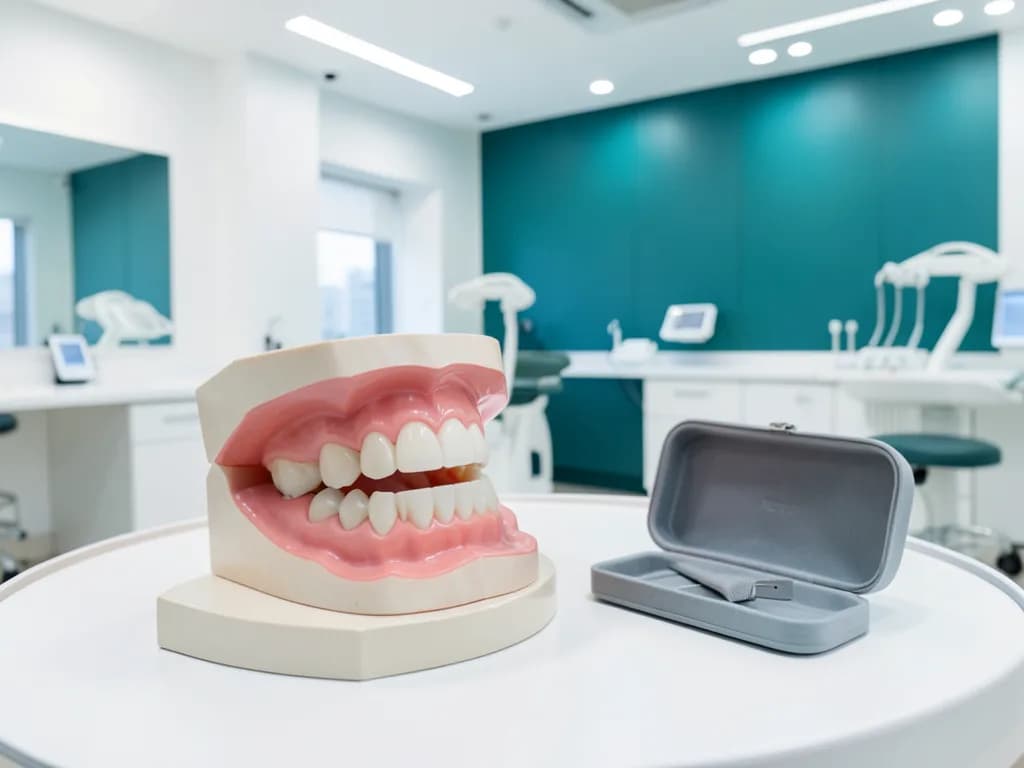
Types of Dental Night Guard
The right guard depends on how heavily you grind, your comfort preferences, and whether you are a first-time guard wearer.
The most durable and most recommended type for moderate to heavy grinders. Made from hard acrylic resin, this guard is rigid, flat on the biting surface, and fabricated from dental impressions or a 3D scan by a dental laboratory. The flat surface allows the teeth to slide freely, reducing grinding forces and protecting enamel. Lasts 3–5 years with proper care.
Advantages
- ✓ Most durable — handles heavy grinding forces
- ✓ Flat surface reduces clenching muscle activity
- ✓ Precise laboratory fit
- ✓ Easiest to clean
Limitations
- ✗ Can feel uncomfortable initially due to rigidity
- ✗ Takes 1–2 weeks to adjust to wearing
- ✗ Slightly more expensive than soft guards
Made from a flexible, rubbery thermoplastic material. More comfortable immediately and easier to tolerate for new guard wearers or mild grinders. However, soft material can actually encourage chewing or clenching behaviour in heavy grinders — the soft texture triggers an instinct to bite down harder. Not recommended for patients with severe bruxism.
Advantages
- ✓ More comfortable initially
- ✓ Easier to tolerate for new patients
- ✓ Lower cost
- ✓ Suitable for mild grinding and clenching
Limitations
- ✗ Not suitable for heavy grinders — may worsen clenching
- ✗ Shorter lifespan — degrades more quickly
- ✗ Less effective at reducing muscle activity
A hybrid design with a hard outer acrylic shell and a soft inner lining — combining the durability and bite-surface benefits of a hard guard with the comfort and soft inner fit of a soft guard. The most popular option at Dubai clinics for patients who want durability but find full-hard guards uncomfortable. Suitable for moderate grinders.
Advantages
- ✓ Combines comfort of soft guard with durability of hard guard
- ✓ Better long-term compliance than full-hard for some patients
- ✓ Effective for moderate grinding
- ✓ Good laboratory fit
Limitations
- ✗ Harder to clean between the two layers
- ✗ Not as durable as a full-hard acrylic guard
- ✗ Slightly higher cost than soft guards
Available from pharmacies in Dubai (AED 50–200), these are softened in hot water and moulded by biting into them. They are not custom-fitted and are generally not recommended by dentists. Poor fit can lead to jaw joint (TMJ) strain, an uneven bite surface, or displacement during sleep. They are occasionally acceptable as a very short-term temporary measure while waiting for a custom guard to be made.
Advantages
- ✓ Immediately available without an appointment
- ✓ Very low cost
- ✓ Can serve as a very short-term temporary
Limitations
- ✗ Poor fit — can cause TMJ strain
- ✗ Uneven bite surface — not protective
- ✗ May cause bite changes with prolonged use
- ✗ NOT recommended by dentists as a long-term solution
Signs You May Need a Night Guard
Many people grind their teeth without knowing. These are the most common warning signs to watch for.
Waking with jaw pain or muscle soreness
Morning headaches, especially temples
Partner reports hearing grinding during sleep
Teeth that appear flattened or shorter than before
Chipped or cracked teeth with no apparent cause
Tooth sensitivity to hot and cold (enamel erosion)
Clicking or popping jaw joint (TMJ symptoms)
Cheek biting or tongue indentations visible on waking
Night Guard Types Compared
A side-by-side comparison of custom and over-the-counter guard options across five key factors to help you choose the right guard.
| Factor | Hard Acrylic | Soft | Dual-Laminate | OTC |
|---|---|---|---|---|
| Material | Hard acrylic | Flexible thermoplastic | Hard outer / soft inner | Soft thermoplastic |
| Price (AED) | 600 – 1,500 | 300 – 600 | 500 – 1,200 | 50 – 200 |
| Durability | 3–5 years | 1–2 years | 2–4 years | 3–6 months |
| Best for | Heavy grinders, bruxism | Mild clenching, first-time wearers | Moderate grinding, comfort-sensitive | Short-term temporary only |
| Dentist recommended | Yes — first choice | Yes — mild cases only | Yes — moderate cases | No — not recommended long-term |
How a Custom Night Guard is Made in Dubai
Getting a custom night guard requires two short appointments — typically within 1–2 weeks — and results in a precisely fitted appliance that no pharmacy product can match.
Consultation and Bruxism Assessment
Your dentist examines your teeth for signs of wear, checks your jaw joints (TMJ) for clicking or tenderness, and reviews your bite. X-rays may be taken to assess the severity of wear on tooth surfaces. Based on the findings, the dentist recommends the most appropriate guard type (hard, soft, or dual-laminate) and whether upper or lower arch fabrication is preferred.
Impressions or Digital Scan
A precise impression of your teeth is taken using either traditional dental impression material (polyvinyl siloxane) or a 3D intraoral digital scanner. Many Dubai clinics now use digital scanning, which produces a highly accurate 3D model of your teeth without the discomfort of traditional impressions. This model is used by the laboratory to fabricate a guard that fits exactly to your tooth contours.
Laboratory Fabrication
The dental laboratory uses your impression or digital model to pour a stone model and fabricate the night guard. Hard acrylic guards are typically heat-pressed and trimmed by hand. Dual-laminate guards involve bonding the soft inner layer to a hard outer shell. Laboratory turnaround time is typically 3–7 working days at most Dubai clinics.
Fitting and Adjustment Appointment
When the guard returns from the laboratory, you attend a fitting appointment. The dentist checks that the guard seats firmly on all teeth, that it does not rock or tilt, and that the bite on the guard surface is even when you close your mouth. Any high points are adjusted with a laboratory handpiece and polishing wheel. You are instructed on insertion, removal, and care. Most patients need a brief follow-up after 1–2 weeks to fine-tune the fit.
Wondering whether your insurance plan covers a custom night guard? Check our dental insurance Dubai guide for coverage details. For a full overview of treatment costs, see the 2026 Dubai dental cost guide.
Night Guard Care and Maintenance
Daily care routine
- ✓ Rinse with cool water immediately after removing
- ✓ Brush gently with soft brush and mild soap (not toothpaste)
- ✓ Air-dry completely before storing in ventilated case
- ✓ Weekly soak in diluted denture cleaner tablet solution
- ✓ Keep protective case clean and rinsed
Signs your guard needs replacing
- ! Visible grooves or holes worn through the material
- ! Guard feels loose or no longer fits snugly
- ! Cracks or fractures visible in the acrylic
- ! Persistent jaw pain despite wearing guard
- ! Material worn thin in grinding areas
Dubai context: Bruxism rates in Dubai appear elevated relative to global averages, likely related to the high-stress work environment and large expatriate population dealing with relocation stress. Many Dubai dentists report that a significant proportion of their patients show signs of bruxism. Early diagnosis and a custom guard is by far the most cost-effective intervention — protecting expensive cosmetic and restorative work.
Does UAE Insurance Cover a Night Guard?
Coverage varies — pre-authorisation is essential
UAE insurance coverage for custom night guards depends on your plan and insurer. Daman enhanced plans, some AXA and Bupa plans, and corporate dental riders sometimes cover night guards when bruxism is formally diagnosed and pre-authorisation is obtained. Basic-tier plans typically exclude or cap coverage at a low appliance fee. Pre-authorisation is required — your dentist must submit a treatment note documenting the diagnosis and clinical indication.
Always confirm coverage with your insurer before the guard is made. For full insurer-by-insurer detail, see our dental insurance Dubai guide.
Custom Night Guard vs Over-the-Counter Guard
Pharmacy boil-and-bite guards are widely available in Dubai. Understanding why dentists universally recommend custom guards helps justify the investment.
Custom Dental Night Guard (Clinic)
- ✓ Fabricated from dental impressions or 3D scan — fits your exact tooth anatomy
- ✓ Hard acrylic (or dual-laminate) provides consistent bite surface across all teeth
- ✓ Dentist verifies even contact — no high points that strain the jaw joint
- ✓ Properly calibrated thickness for your grinding severity
- ✓ Lasts 3–5 years (hard) — cost-effective long-term protection
- ✓ Protects AED 2,000–8,000+ dental restorations (crowns, veneers, implants)
- ✓ Reduces masseter muscle activity — documented sleep improvement for many patients
AED 300 – 1,500 per arch
OTC Boil-and-Bite Guard (Pharmacy)
- ✗ Generic sizing — does not fit individual tooth anatomy
- ✗ Uneven bite surface — creates pressure spots on specific teeth
- ✗ Soft material triggers bite reflex — may increase grinding intensity in heavy grinders
- ✗ Can cause jaw joint (TMJ) strain with prolonged use
- ✗ Poor retention — may fall out during sleep
- ✗ Wears out in 3–6 months — more frequent replacement needed
- ✗ Does not reduce masseter muscle activity
AED 50 – 200 — short-term only
The maths: An OTC guard at AED 150 replaced every 4 months costs AED 450/year — more expensive over 3 years than a single hard acrylic custom guard (AED 600–1,000) that lasts the same period and provides significantly better protection. Add the cost of a fractured veneer (AED 1,500–3,500) or crown (AED 2,000–4,500) and the economics are even clearer.
Risks if Bruxism Is Left Untreated
Many patients underestimate the cumulative damage of untreated bruxism. The forces generated during grinding (up to 1,000 N — far exceeding normal chewing forces of 100–200 N) cause predictable, progressive dental damage.
Enamel attrition and tooth shortening
Ongoing from start of grinding
Enamel is the hardest substance in the human body but cannot regenerate. Grinding removes enamel progressively — flattening the biting surfaces of molars and shortening the upper front teeth. Once enamel is lost, the underlying dentine is exposed, causing sensitivity and accelerating wear.
Cracked and fractured teeth
Can occur suddenly under heavy grinding
Bruxism creates cyclic loading that causes craze lines and eventually cracks in tooth structure. A cracked tooth can split to the root, requiring extraction. Crowns and veneers on patients without night guards are at high risk of fracture.
TMJ (jaw joint) disorders
Develops over months to years
Chronic overloading of the temporomandibular joints causes disc displacement, clicking, locking, and pain. Advanced TMJ disorders can require specialist treatment — bite splint therapy, physiotherapy, or in severe cases, surgical intervention. Night guards significantly reduce TMJ loading.
Gum recession
Gradual, over years
Heavy clenching and grinding increases forces transmitted to the bone around teeth — contributing to bone loss and gum recession, particularly at the necks of premolars (abfraction lesions). This mimics periodontal disease even in patients with good oral hygiene.
Failure of dental restorations
Premature failure within 1–3 years
Crowns, veneers, bridges, and implant crowns are designed for normal biting forces. Bruxism forces can fracture porcelain restorations, debond veneers, loosen implant-retained crowns, or crack zirconia. Unprotected restorations in a bruxism patient have dramatically shortened lifespans.
Severe bruxism that has already caused significant tooth wear may require full mouth rehabilitation — a comprehensive treatment costing AED 20,000–100,000+. A custom night guard at AED 600–1,500 is the most cost-effective preventive investment available.
How Long Does a Night Guard Last
The lifespan of your night guard depends on your grinding intensity and how well you maintain it. Annual inspections help identify when replacement is approaching.
| Guard Type | Light Grinder | Moderate Grinder | Heavy Grinder |
|---|---|---|---|
| Hard Acrylic | 5 – 7 years | 3 – 5 years | 1 – 2 years |
| Dual-Laminate | 4 – 6 years | 2 – 4 years | 1 – 1.5 years |
| Soft Thermoplastic | 2 – 3 years | 1 – 2 years | 6 – 12 months |
| OTC Boil-and-Bite | 4 – 6 months | 3 – 4 months | 1 – 2 months |
Heavy bruxism patients who grind through guards quickly may benefit from Botox injections into the masseter muscles — reducing grinding force and extending guard lifespan while also reducing TMJ strain and jaw pain. Many Dubai clinics offer this combination. For treatment costs, see the 2026 dental cost guide.
Also related: all dental treatments, dental crown costs, veneers Dubai, full mouth rehab.
Frequently Asked Questions
How much does a custom dental night guard cost in Dubai?
Custom dental night guards in Dubai range from AED 300–600 for soft guards to AED 600–1,500 for hard acrylic guards and AED 500–1,200 for dual-laminate guards at mid-range clinics. Premium clinics in areas such as DIFC, JBR, or Downtown Dubai may charge AED 1,500–2,500 for a hard guard with a digital scan workflow. Over-the-counter pharmacy guards are available for AED 50–200 but are not recommended for long-term use. The investment in a properly custom-fitted guard protects restorations, veneers, and crowns that can each cost thousands of AED — making a guard extremely cost-effective preventive care.
Is a night guard better on the upper or lower teeth?
Both upper and lower night guards are clinically effective. Most dentists prefer to fabricate the guard on the upper arch because upper guards tend to fit more securely (the upper arch anatomy allows better retention), and some patients find upper guards more comfortable than lower. However, lower arch guards are sometimes preferred for patients who wear orthodontic retainers on the upper arch, have an unusual upper arch anatomy, or find the palatal coverage of an upper guard too bulky. The choice is ultimately based on your anatomy and personal comfort — discuss with your dentist which is most appropriate for you.
Does UAE insurance cover a dental night guard?
Some UAE health insurance plans cover custom night guards when bruxism is formally diagnosed by a dentist and the guard is medically necessary — typically under major restorative or preventive dental benefits. Coverage varies significantly: Daman enhanced plans sometimes cover 50–80% of the cost; some AXA and Bupa plans include night guards under their dental benefit; basic tier plans often exclude them or cover only a basic appliance fee (AED 200–500). Pre-authorisation is usually required — your dentist will submit a treatment note documenting the bruxism diagnosis. Without pre-auth, even covered plans may reject the claim. Contact your insurer before getting the guard made to confirm coverage.
How do I clean and maintain my night guard?
After removing your night guard each morning, rinse it immediately with cool water to remove saliva. Do not use hot water — this can warp the acrylic. Brush it gently with a soft toothbrush and mild non-abrasive soap (not toothpaste, which is too abrasive for acrylic). Allow it to air-dry completely before storing in its ventilated case — storing it wet encourages bacterial and fungal growth. Once a week, soak it for 15–30 minutes in a diluted dental appliance cleaner tablet solution (such as Polident or Efferdent). Keep the case itself clean by rinsing and air-drying regularly. When travelling, always keep the guard in its protective case — never wrap it in a tissue or leave it exposed on surfaces.
How long does a dental night guard last?
The lifespan of a dental night guard depends on how heavily you grind. For light to moderate grinders, a hard acrylic guard typically lasts 3–5 years. Heavy grinders may wear through a hard guard in 1–2 years. Signs that your guard needs replacement include: visible grooves or holes worn through the material, the guard feeling thinner or loose fitting (as it wears down), cracks or fractures, or persistent jaw pain suggesting the guard is no longer providing adequate protection. Annual check-ups allow your dentist to inspect the guard and identify when it needs replacement before protection is completely lost.
Will a night guard cure my teeth grinding?
A night guard does not cure or stop bruxism — it is a protective appliance that prevents the grinding forces from damaging your teeth. The underlying cause of bruxism is typically stress, anxiety, sleep disorders (especially sleep apnoea), or a combination of these factors. For long-term management, addressing these root causes is important: stress reduction techniques, cognitive behavioural therapy for sleep-related bruxism, treatment of sleep apnoea if present, and sometimes Botox injections into the masseter muscles to reduce grinding forces. Your Dubai dentist may refer you to a sleep specialist or GP if bruxism is severe. The guard is the immediate protective measure while these underlying factors are addressed.
Get a Custom Night Guard in Dubai
Find a verified Dubai clinic that offers custom night guards and bruxism treatment. Protect your teeth before the damage becomes expensive to reverse.
Use our dental care finder to compare clinics, read reviews, and book appointments.