TMJ Treatment in Dubai — Jaw Pain Relief, Splints & Specialist Care
Temporomandibular joint disorder (TMD) affects millions of people worldwide, causing jaw pain, clicking, headaches, and difficulty chewing. Dubai has DHA-licensed dentists, oral surgeons, and physiotherapists specialising in TMJ disorders, with treatment costs ranging from AED 500 for a night guard to AED 6,000 for arthrocentesis. This guide covers every treatment option with real AED prices.
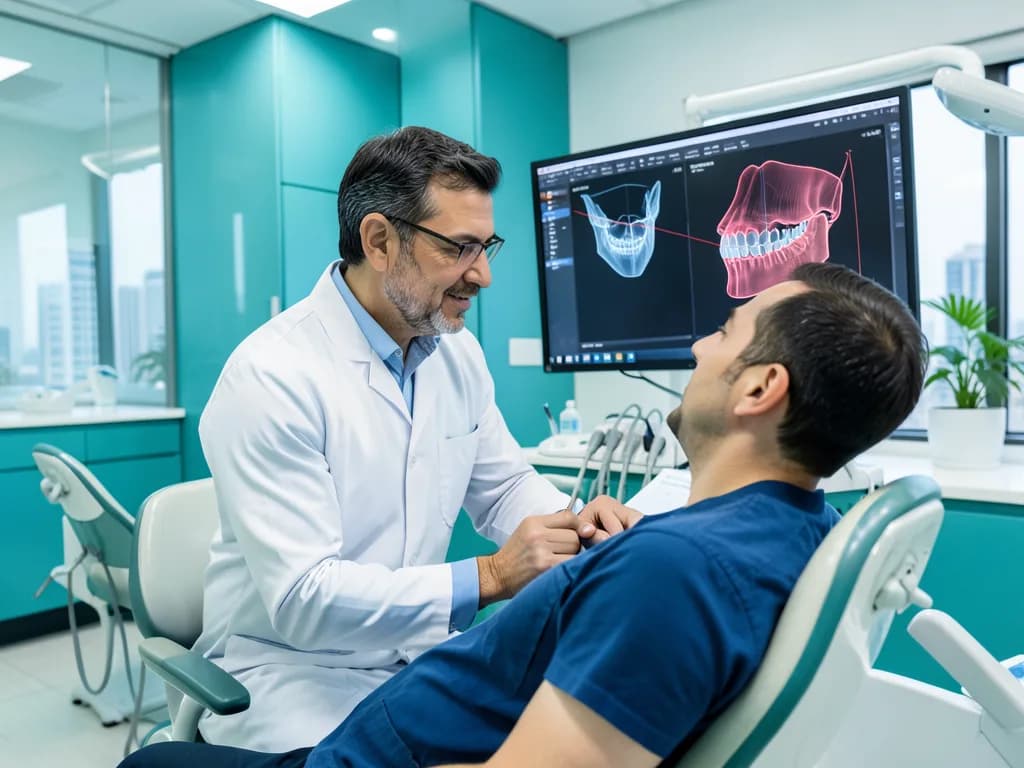
What Is TMJ Disorder and What Causes It?
The temporomandibular joint (TMJ) is the hinge joint on each side of your head that connects your lower jaw (mandible) to your skull. It is one of the most complex joints in the body, allowing the jaw to move up and down, side to side, and forward and backward.
Temporomandibular disorder (TMD) is any condition affecting this joint, its surrounding muscles, or the disc of cartilage that cushions movement. It is extremely common — estimates suggest up to 30% of adults experience some form of TMD at some point.
In Dubai, the high-stress urban lifestyle, long working hours, and prevalence of bruxism (teeth grinding during sleep) all contribute to a significant patient load for TMJ treatment at dental clinics.
Common Causes of TMD
- •Bruxism (teeth grinding or clenching, often during sleep)
- •Stress-related jaw muscle tension
- •Bite misalignment (malocclusion)
- •Direct trauma or injury to the jaw
- •Arthritis affecting the TMJ
- •Disc displacement within the joint
- •Hypermobility (jaw that opens too wide)
- •Poor posture (neck and shoulder tension transferring to jaw)
TMJ Symptoms — How Severe Is Your Case?
Use this triage guide to assess your symptoms and determine how urgently you need care.
- •Occasional jaw clicking or popping without pain
- •Slight jaw stiffness in the morning
- •Mild jaw fatigue when chewing hard foods
Monitor and reduce triggers (hard food, gum, stress). See a dentist if it persists beyond 4 weeks.
- •Jaw pain or facial ache lasting several days
- •Difficulty opening your mouth fully
- •Headaches or earache linked to jaw movement
- •Jaw clicking with pain
Book a TMJ assessment. Night guard, physiotherapy, or anti-inflammatories are likely needed.
- •Jaw locking open or closed
- •Chronic daily pain affecting eating or sleep
- •Significant deviation of the jaw on opening
- •Grinding severe enough to cause tooth wear
Seek urgent dental or oral surgery review. Arthrocentesis or specialist referral may be required.
TMJ Treatment Options Available in Dubai
Treatment is always staged from least to most invasive. Most patients improve with conservative care alone.
Night Guard / Occlusal Splint
AED 500–2,000Best for: Bruxism, mild to moderate TMD · 2–4 weeks to effect
Custom-fitted hard acrylic guard worn during sleep. Prevents tooth grinding and offloads joint pressure.
Physiotherapy
AED 200–600 per sessionBest for: Muscle-related TMD, limited opening · 6–12 sessions
Manual therapy, ultrasound, exercise, TENS. Most effective for muscle-origin TMD.
Botox for Jaw Clenching
AED 1,500–3,500Best for: Bruxism, masseter hypertrophy · Lasts 3–6 months
Botulinum toxin injected into masseter muscle. Reduces clenching force and pain. Repeat every 4–6 months.
Dental Adjustment / Equilibration
AED 500–2,000Best for: Bite-related TMD, high restorations · 1–3 visits
Reshaping tooth surfaces to correct bite imbalances. Only appropriate when specific occlusal interference is identified.
Arthrocentesis
AED 3,000–6,000Best for: Locked jaw, disc adhesion, failed conservative treatment · Same-day procedure
Minimally invasive joint irrigation under local anaesthetic. Flushes inflammatory mediators from the joint space.
Arthroscopy or Open Surgery
AED 10,000+Best for: Severe structural damage, disc perforation · 4–8 weeks recovery
Rarely needed. Reserved for cases that have failed all conservative and minimally invasive treatments.
TMJ Treatment Cost Comparison in Dubai
| Treatment | AED Cost | Duration / Frequency | Invasiveness |
|---|---|---|---|
| Night guard / occlusal splint | AED 500–2,000 | One-off (lasts 3–5 years) | Non-invasive |
| Physiotherapy (per session) | AED 200–600 | 6–12 sessions recommended | Non-invasive |
| Botox injections | AED 1,500–3,500 | Every 3–6 months | Minimally invasive |
| Dental equilibration | AED 500–2,000 | 1–3 visits | Non-invasive |
| Arthrocentesis | AED 3,000–6,000 | One-off (may repeat) | Minimally invasive |
| Arthroscopy / open surgery | AED 10,000+ | One-off | Surgical |
Prices are estimates for DHA-licensed clinics in Dubai. Costs may vary by clinic location, specialist level, and complexity of case.
Need urgent care? Visit our emergency dentist guide, or see treatment costs.
What Affects TMJ Treatment Cost in Dubai?
Severity and diagnosis
Mild bruxism may only need a night guard (AED 500–2,000). Disc displacement requiring arthrocentesis costs AED 3,000–6,000. An accurate diagnosis via clinical exam and possibly an MRI or CBCT guides the most cost-effective treatment plan.
Type of specialist
A general dentist charges less than an oral and maxillofacial surgeon or a prosthodontist specialising in occlusion. Physiotherapists with cranio-facial specialisation charge AED 300–600 per session. Botox by a trained dentist costs AED 1,500–3,500 depending on the number of units used.
Number of treatments needed
Most patients need a combination of treatments. A typical course of care might include a night guard plus 8 physiotherapy sessions — totalling AED 2,100–5,200. Botox alone, if repeated every 6 months, costs AED 3,000–7,000 per year.
Imaging and diagnostics
A panoramic X-ray (OPG) costs AED 100–300 and shows general joint structure. An MRI of the TMJ (gold standard for disc assessment) costs AED 1,000–2,000 at Dubai radiology centres. These costs are separate from treatment fees.
Who Should You See for TMJ in Dubai?
First port of call for most TMD cases
- ✓Diagnose TMD and assess bite
- ✓Fabricate night guards and splints
- ✓Prescribe anti-inflammatories
- ✓Refer to specialists as needed
Muscle-related pain, tension headaches
- ✓Manual therapy for jaw and neck
- ✓TMJ exercise programmes
- ✓Ultrasound and TENS therapy
- ✓Postural correction
Locking, structural damage, failed treatment
- ✓Arthrocentesis and arthroscopy
- ✓TMJ surgery
- ✓Complex diagnosis with MRI/CBCT
- ✓Disc repositioning procedures
Does Insurance Cover TMJ Treatment in Dubai?
May be covered (medical necessity)
- ✓ Diagnostic OPG X-ray and clinical examination
- ✓ Night guard when prescribed for documented bruxism
- ✓ Physiotherapy referral for jaw pain
- ✓ Arthrocentesis when conservative treatment fails
- ✓ Surgical treatment for structural TMJ disorders
Usually not covered
- — Botox for jaw clenching (classified as cosmetic by most insurers)
- — MRI of the TMJ without prior approval
- — Dental equilibration without documented necessity
- — Night guard at premium clinics above plan limits
Related Treatment Guides
Frequently Asked Questions
How much does TMJ treatment cost in Dubai?
TMJ treatment in Dubai ranges from AED 500 for a basic night guard to AED 6,000 or more for arthrocentesis. A custom occlusal splint typically costs AED 500–2,000 at DHA-licensed clinics. Botox injections for jaw clenching cost AED 1,500–3,500 per session. Physiotherapy sessions range from AED 200–600 each, with most patients needing 6–12 sessions. The total cost depends heavily on the severity of your condition and which treatments your dentist recommends.
What is the difference between TMJ and TMD?
TMJ stands for temporomandibular joint — the hinge connecting your jaw to your skull, just in front of each ear. TMD (temporomandibular disorder) is the umbrella term for all conditions affecting that joint and the surrounding muscles. When people say 'I have TMJ,' they usually mean they have a TMD. Causes include bruxism (teeth grinding), stress-related muscle tension, jaw misalignment, arthritis, and direct injury to the jaw. Both dentists and physiotherapists in Dubai treat TMD.
Can a dentist treat TMJ in Dubai or do I need a specialist?
Most mild to moderate TMD cases can be treated by a general DHA-licensed dentist in Dubai. They can fabricate night guards, prescribe anti-inflammatory medications, and refer you for physiotherapy. For complex cases involving joint locking, severe clicking, or failed conservative treatment, you may be referred to an oral and maxillofacial surgeon or a prosthodontist who specialises in occlusion. Botox for jaw clenching is typically performed by dentists or dermatologists with appropriate training.
Does health insurance cover TMJ treatment in Dubai?
Coverage varies significantly by plan. Daman, AXA, BUPA, and Nextcare plans may cover TMJ treatment when it is documented as medically necessary — for example, when jaw pain affects eating or causes chronic headaches. Night guards and splints are sometimes covered under restorative benefits. Botox for jaw clenching is usually classified as cosmetic and not covered. Arthrocentesis and surgery for medically indicated joint disorders may be covered under the medical (not dental) portion of your policy. Always obtain pre-authorisation and ask your dentist to include diagnostic codes in the claim.
How long does TMJ treatment take in Dubai?
Conservative TMJ treatment takes 4–12 weeks to show significant improvement. A night guard can begin reducing jaw pain within 2–4 weeks of consistent nightly use. A course of physiotherapy typically involves 8–12 sessions over 4–6 weeks. Botox injections for bruxism take effect within 7–14 days and last 3–6 months, requiring repeat treatment. Arthrocentesis is a same-day procedure with recovery of 3–7 days. Surgical options have longer recovery periods of 4–8 weeks.
Is jaw clicking always a sign of a serious TMJ problem?
Not necessarily. A painless click when you open or close your mouth is extremely common and often requires no treatment beyond monitoring. It typically indicates that the disc in the joint is slightly displaced but still functioning. Clicking becomes more concerning when it is accompanied by pain, limited mouth opening, jaw locking, or progressive worsening. If you experience any of these symptoms alongside the clicking, you should see a dentist or oral physician in Dubai for a proper diagnosis.
What is Botox for TMJ and how effective is it?
Botox injections for TMJ are used to relax the masseter muscle — the large chewing muscle responsible for jaw clenching. The dentist injects small amounts of botulinum toxin directly into the masseter on each side of the jaw, which reduces muscle activity and alleviates the tension that causes TMD pain. In Dubai, this costs AED 1,500–3,500 per session and lasts 3–6 months. Clinical studies show significant pain reduction in 70–85% of patients with muscle-related TMD. It does not treat disc displacement and is not effective for all TMD subtypes.
How do I find a TMJ specialist in Dubai?
To find a TMJ specialist in Dubai, look for a DHA-licensed dentist or oral surgeon with specific experience in temporomandibular joint disorders. The best TMJ specialists in Dubai typically hold additional qualifications in prosthodontics, oral and maxillofacial surgery, or orofacial pain. You can verify their DHA specialist licence on the DHA website under Health Professional Verification. A TMJ specialist will conduct a thorough clinical examination including palpation of the jaw muscles, assessment of jaw range of motion, and evaluation of bite alignment. They may order an MRI of the temporomandibular joint or a CBCT scan to visualise the disc position and bone structure. Many TMJ specialists in Dubai work alongside physiotherapists who specialise in cranio-facial therapy for a multidisciplinary approach to treatment.
What is a temporomandibular joint specialist?
A temporomandibular joint specialist is a dental professional who focuses specifically on diagnosing and treating disorders of the temporomandibular joint (TMJ) and the surrounding muscles. In Dubai, a temporomandibular joint specialist may be a prosthodontist with expertise in occlusion, an oral and maxillofacial surgeon, or a general dentist with advanced postgraduate training in orofacial pain. The temporomandibular joint is the complex hinge joint connecting your jaw to your skull just in front of each ear, and specialist training is needed to diagnose conditions like disc displacement, myofascial pain syndrome, and degenerative joint disease. A temporomandibular joint specialist uses tools like MRI imaging, electronic bite analysis, and jaw tracking devices to develop precise treatment plans. Treatment may include custom occlusal splints, Botox injections, physiotherapy referrals, or surgical intervention such as arthrocentesis.
When should I see a jaw doctor for TMJ pain?
You should see a jaw doctor when you experience persistent jaw pain lasting more than two weeks, difficulty opening or closing your mouth, frequent jaw locking, chronic headaches originating from the jaw area, or noticeable changes in your bite. A jaw doctor in Dubai can determine whether your symptoms are caused by muscle tension, disc displacement, arthritis, or a combination of factors. Early intervention with a jaw doctor is important because untreated TMJ disorders can worsen over time — leading to chronic pain, progressive disc damage, and arthritis of the temporomandibular joint. If you have sudden onset of jaw locking (unable to open or close your mouth), this is considered urgent and you should see a jaw doctor or visit an emergency dental clinic immediately. Most jaw doctors in Dubai offer same-day or next-day consultations for acute TMJ symptoms.
What does a TMJ dr do during the first consultation?
During your first visit, a TMJ dr will take a detailed medical and dental history, asking about your symptoms, pain patterns, stress levels, sleep habits, and any history of jaw injury or teeth grinding. The TMJ dr then performs a clinical examination that includes palpating (pressing on) the jaw muscles and temporomandibular joints, measuring your maximum mouth opening, listening for clicking or crepitus sounds, and assessing how your teeth come together. If imaging is needed, the TMJ dr may order a panoramic X-ray (AED 100–300) to see the overall joint structure, or an MRI of the TMJ (AED 1,000–2,000) which is the gold standard for visualising the disc and soft tissue. Based on the findings, your TMJ dr will classify your disorder and recommend a treatment plan — starting with conservative options like a night guard, physiotherapy, or medication before considering more invasive treatments.
Finding a TMJ Specialist in Dubai
If you are searching for a TMJ specialist in Dubai, there are several types of dental professionals who diagnose and treat temporomandibular joint disorders. A TMJ specialist is a dentist or doctor with specific training in orofacial pain, jaw biomechanics, and the complex anatomy of the temporomandibular joint. In Dubai, TMJ specialists include prosthodontists who focus on bite alignment and occlusal splints, oral and maxillofacial surgeons who perform arthrocentesis and TMJ surgery, and general dentists with postgraduate training in TMD management.
When choosing a TMJ specialist in Dubai, verify their DHA licence and ask about their experience with your specific type of TMJ disorder. The best TMJ specialists take a multidisciplinary approach — coordinating with physiotherapists, pain management physicians, and sometimes ENT doctors when symptoms involve the ear. A qualified TMJ specialist will avoid jumping straight to invasive treatments and will typically recommend 6–8 weeks of conservative care (night guard, physiotherapy, anti-inflammatories) before considering procedures like Botox or arthrocentesis.
Dubai has seen a significant increase in TMJ specialist clinics in recent years, with many offering advanced diagnostic tools including digital bite analysis, jaw tracking technology, and in-clinic CBCT scanning. Whether you need a TMJ specialist for chronic jaw pain, post-orthodontic bite issues, or stress-related teeth grinding, you can find qualified practitioners across all major Dubai areas including Jumeirah, Downtown, DIFC, and Dubai Marina.
What to Look for in a TMJ Specialist
- •DHA specialist licence in prosthodontics, oral surgery, or orofacial pain
- •Experience with both conservative and surgical TMJ treatments
- •Access to MRI and CBCT imaging for accurate TMJ diagnosis
- •Multidisciplinary approach with physiotherapy coordination
- •Transparent pricing with written treatment plans before starting care
- •Positive patient reviews specifically mentioning TMJ or jaw pain treatment
Browse our directory of dental specialists in Dubai to find a TMJ specialist, or use our clinic search tool to filter by location and insurance acceptance.
What Is a Temporomandibular Joint Specialist?
A temporomandibular joint specialist is a healthcare professional who has dedicated additional training and clinical experience to diagnosing and treating disorders of the temporomandibular joint. Unlike general dentists who see TMJ cases as part of a broader practice, a temporomandibular joint specialist focuses specifically on the mechanics, pathology, and rehabilitation of the jaw joint and its associated muscles.
In Dubai, temporomandibular joint specialists may come from different dental backgrounds. Some are prosthodontists who specialise in how teeth come together (occlusion) and how bite imbalances contribute to TMD. Others are oral and maxillofacial surgeons with expertise in the surgical management of joint pathology, including disc repositioning, arthrocentesis, and open joint surgery. A growing number of dentists in Dubai are also completing fellowship programmes in orofacial pain, which provides dedicated training in temporomandibular joint assessment and non-surgical management.
The key difference between a temporomandibular joint specialist and a general dentist managing TMJ is the depth of diagnostic capability. A temporomandibular joint specialist will often use electronic jaw tracking, bite force analysis, and correlate MRI findings with clinical symptoms to arrive at a precise diagnosis — distinguishing between muscle-origin pain, disc displacement with or without reduction, degenerative joint disease, and referred pain from other sources.
Finding a Jaw Doctor in Dubai
Many patients searching for a jaw doctor in Dubai are experiencing symptoms like jaw pain, clicking, locking, or difficulty chewing — and are unsure which type of doctor to see. A jaw doctor is a general term that can refer to several types of specialists, depending on the nature of your symptoms. For jaw pain caused by muscle tension, teeth grinding, or bite problems, the appropriate jaw doctor is a general dentist or prosthodontist. For structural joint problems requiring surgical intervention, the right jaw doctor is an oral and maxillofacial surgeon.
In Dubai, a jaw doctor will typically begin with a thorough assessment of your jaw function, including measuring how wide you can open your mouth, listening for joint sounds, and palpating the jaw muscles for tenderness. Based on this examination, your jaw doctor may recommend conservative treatments (night guard, medication, physiotherapy), minimally invasive procedures (Botox injections, arthrocentesis), or in rare cases, surgical intervention. The vast majority of patients who see a jaw doctor in Dubai improve with conservative treatment alone.
Cost to see a jaw doctor in Dubai varies by clinic and specialist level. An initial consultation with a jaw doctor typically costs AED 200–500, which usually includes a clinical examination and may include a panoramic X-ray. If the jaw doctor recommends an MRI for a detailed view of the disc and soft tissue, expect an additional AED 1,000–2,000 at a Dubai radiology centre. Treatment costs from your jaw doctor range from AED 500 for a basic night guard to AED 6,000 for arthrocentesis.
| Type of Jaw Doctor | Best For | Consultation Cost |
|---|---|---|
| General Dentist | First assessment, night guards, medication | AED 200–400 |
| Prosthodontist | Bite alignment, occlusal splints, complex TMD | AED 300–500 |
| Oral Surgeon | Arthrocentesis, TMJ surgery, locked jaw | AED 300–600 |
| Physiotherapist | Muscle-origin jaw pain, exercise therapy, TENS | AED 200–600 |
Need help choosing the right jaw doctor? Browse DHA-licensed clinics near you or read about oral surgeons in Dubai for surgical jaw treatment options.
TMJ Dr vs Other Dental Specialists
Patients often wonder whether they need a TMJ dr specifically or whether another dental specialist can help. A TMJ dr is not a formally recognised specialty title in the UAE — rather, it refers to any dental professional with significant experience treating temporomandibular joint disorders. Understanding the differences between specialists helps you find the right TMJ dr for your specific condition.
| Specialist | TMJ Focus | Treatment Approach |
|---|---|---|
| General Dentist (TMJ focus) | Mild to moderate TMD | Night guards, medication, referrals |
| Prosthodontist | Bite-related TMD | Occlusal splints, bite adjustment, rehabilitation |
| Oral Surgeon | Structural joint pathology | Arthrocentesis, arthroscopy, TMJ surgery |
| Orofacial Pain Specialist | Chronic TMD and facial pain | Multidisciplinary pain management |
When selecting a TMJ dr in Dubai, the most important factor is their clinical experience with TMJ cases rather than their specialty title alone. Ask your potential TMJ dr how many TMD patients they treat per month and what diagnostic equipment they have available. A well-equipped TMJ dr will have access to MRI imaging, electronic bite analysis tools, and established referral pathways to physiotherapists and pain specialists.
Who Is a Candidate for TMJ Treatment in Dubai?
Not every jaw ache requires specialist TMJ treatment. Understanding whether your symptoms match a temporomandibular disorder (TMD) helps you decide when to seek professional care and which route is appropriate. Below are the most common candidacy indicators, organised by urgency level.
- •Clicking or popping with every jaw movement
- •Jaw locking open or closed (even momentarily)
- •Chronic morning headaches caused by night-time grinding
- •Difficulty opening the mouth wider than 30 mm
- •Jaw pain on waking that eases through the day
- •Tenderness in the masseter or pterygoid muscles
- •Occasional jaw clicking without pain
- •Tinnitus or ear fullness with no ENT cause found
- •Mild teeth grinding noted by a partner
- •Tension headaches centred at the temples
- •Worn-down tooth surfaces (abrasion/attrition)
- •Post-orthodontic bite discomfort
- •Toothache with hot/cold sensitivity — possible cavity or pulpitis
- •Swelling around the jaw — possible dental abscess
- •Facial pain with fever — possible infection
- •Pure ear pain — refer to ENT first
- •Jaw pain after trauma — check for fracture (A&E)
- •Difficulty swallowing — ENT or medical referral needed
Age is not a barrier — TMD affects all age groups. Adolescents with bruxism, working professionals with stress-related jaw clenching, and elderly patients with osteoarthritic joint degeneration all benefit from tailored TMJ treatment. Children can develop TMD, but treatment is usually conservative and deferred until jaw growth is complete. Browse dental specialists in Dubai to find an experienced TMJ practitioner for your age group.
TMJ Treatment Process Step by Step
A structured, stepwise approach is central to good TMJ management. Responsible clinicians always start with conservative reversible treatments and escalate only when those fail. The following pathway is used by most DHA-licensed TMJ practitioners in Dubai.
Initial Consultation and History
Your TMJ specialist takes a full symptom history: duration, triggers, pain pattern, previous treatments, and stress levels. Jaw function is measured (opening range, lateral movement, joint sounds). A panoramic X-ray (OPG) is taken to rule out bony pathology.
Diagnostic Imaging if Required
If the clinical picture is unclear or disc displacement is suspected, an MRI of the temporomandibular joint is ordered. MRI is the gold standard for soft-tissue and disc evaluation — it distinguishes disc displacement with reduction, without reduction, and joint effusion. CBCT may be used alongside MRI to assess bony changes in the condyle.
Diagnosis and Treatment Planning
Your specialist correlates imaging findings with clinical signs to establish a working diagnosis — muscle-origin TMD, disc displacement, degenerative joint disease, or a combination. A written treatment plan with costs in AED is presented at this stage.
Conservative Phase (Weeks 1–8)
The vast majority of patients respond well to conservative care: a custom occlusal splint (night guard) worn nightly, anti-inflammatory medication, physiotherapy exercises for the pterygoid and masseter muscles, and dietary modification (soft foods, no chewing gum). TENS therapy and ultrasound may be added by the physiotherapist.
Review and Escalation Decision
At 6–8 weeks, response is reassessed. Patients who are improving continue conservative care. Partial responders may progress to Botox injections into the masseter or trigger point injections into affected muscles. Non-responders with confirmed disc displacement are evaluated for arthrocentesis.
Minimally Invasive Procedures (if required)
Arthrocentesis (joint lavage under local anaesthesia) flushes inflammatory mediators from the joint space and breaks down adhesions. Done under local anaesthesia as a day procedure, it takes 20–30 minutes. Most patients notice improved opening and reduced pain within 1–2 weeks.
Surgical Intervention (rare — under 5% of patients)
Joint arthroscopy allows direct visualisation and treatment of the joint interior. Open joint surgery (arthroplasty or total joint replacement) is reserved for end-stage degenerative joint disease, condylar fracture, or ankylosis. Surgery is performed by an oral and maxillofacial surgeon under general anaesthesia.
Long-Term Management and Maintenance
TMD is often a chronic condition requiring long-term self-management. Night-guard wear, stress-reduction techniques, physiotherapy maintenance, and regular dental review are the pillars of relapse prevention. Annual bite checks and splint adjustments are recommended.
TMJ Treatment Options Compared
The table below compares the four main TMJ treatment approaches side by side — night guard, Botox, physical therapy, and surgery — across cost, invasiveness, timeline, and success rate for standard TMD cases.
| Treatment | Cost (AED) | Invasiveness | Timeline | Best For |
|---|---|---|---|---|
| Night guard / occlusal splint | AED 500–2,000 | None | Fabricated in 1–2 weeks; worn nightly ongoing | Bruxism, mild–moderate TMD, disc displacement with reduction |
| Botox injections (masseter) | AED 1,500–3,500 | Minimal (injection) | Effect from 1–2 weeks; lasts 3–6 months | Jaw clenching, masseter hypertrophy, headache-associated TMD |
| Physical therapy | AED 200–600/session | None | 6–12 sessions over 6–12 weeks | Muscle-origin pain, limited opening, postural TMD |
| Trigger point injections | AED 300–700 | Minimal | Immediate relief; may need repeat | Localised muscle trigger points causing referred jaw pain |
| Arthrocentesis | AED 3,000–6,000 | Minor surgical | Day procedure; improvement within 1–2 weeks | Disc displacement without reduction, joint adhesion, effusion |
| Arthroscopy | AED 8,000–15,000 | Surgical | Day surgery; 2–4 weeks recovery | Failed arthrocentesis, fibrotic adhesions, early disc pathology |
| Open joint surgery | AED 15,000–25,000+ | Major surgical | 4–8 weeks recovery | End-stage disease, ankylosis, total joint replacement |
AED costs are indicative for DHA-licensed Dubai clinics. Surgical costs exclude anaesthetist, hospital facility, and post-operative follow-up fees.
Diagnostic Technology Used in TMJ Treatment
Advanced diagnostics allow Dubai TMJ specialists to distinguish between the different subtypes of temporomandibular joint disorder with far greater precision than clinical examination alone. The technology available at leading TMJ clinics in Dubai includes:
MRI of the Temporomandibular Joint
The definitive imaging modality for soft-tissue TMJ assessment. MRI visualises the articular disc position (displacement with or without reduction), joint effusion, and condylar bone marrow changes. Performed in open-mouth and closed-mouth positions at a Dubai radiology centre; results reported by a musculoskeletal radiologist. Cost: AED 1,000–2,000.
CBCT (Cone-Beam CT)
Three-dimensional X-ray technology providing sub-millimetre bony detail of the condylar head, mandibular fossa, and articular eminence. CBCT identifies condylar erosion, flattening, osteophytes, and subchondral bone cysts. Many modern Dubai dental clinics have in-house CBCT — reducing cost and wait time. Cost: AED 400–800.
Jaw Tracking and Electronic Bite Analysis
Digital jaw-tracking devices record the full three-dimensional movement arc of the mandible during opening, closing, and lateral excursion. Bite analysis measures occlusal forces and identifies high-load areas contributing to TMJ overloading. Used to guide splint design and bite equilibration.
Arthroscopy (Diagnostic and Therapeutic)
A 1.2 mm arthroscope inserted through a small incision in front of the ear provides direct visualisation of the upper joint compartment. Allows simultaneous diagnosis and treatment — adhesiolysis, disc mobilisation, and lavage — in a single procedure under local or general anaesthesia.
Ask your clinic which imaging is available on-site and which requires an external referral. Clinics with in-house CBCT and a working relationship with a local MRI provider will deliver faster diagnosis and lower total costs. See our guide to oral surgeons in Dubai for clinics with full surgical TMJ capability.
Risks and Complications of TMJ Treatment
The majority of TMJ treatments are safe and well-tolerated. Conservative options carry virtually no risk. Minimally invasive and surgical procedures carry a small risk of complications that patients should understand before consenting to treatment.
Night Guard and Splint Risks
- ! Tooth soreness for first 1–2 weeks (muscle re-education phase)
- ! Increased drooling in some patients initially
- ! Speech changes during the adjustment period
- ! Poorly fitted splint can worsen bite — always use a custom lab-fabricated device
- ! Rare: temporary tooth movement if worn inconsistently
Botox Injection Risks
- ! Temporary bruising or swelling at injection site
- ! Mild headache for 24–48 hours post-injection
- ! Asymmetric effect if dosage is not carefully calibrated
- ! Diffusion to adjacent muscles causing temporary weakness
- ! Effect wears off in 3–6 months — repeated treatment required
Arthrocentesis Risks
- ! Temporary swelling and bruising over the joint (resolves in 3–5 days)
- ! Post-procedure jaw stiffness lasting 24–72 hours
- ! Risk of infection (rare — sterile technique used)
- ! Facial nerve proximity — performed only by trained oral surgeons
- ! May need to be repeated if initial improvement is partial
Surgical TMJ Risks
- ! General anaesthesia carries standard anaesthetic risks
- ! Scar near the ear (preauricular incision)
- ! Temporary or permanent facial nerve weakness (rare)
- ! Malocclusion change following condylar resection
- ! Implant failure for total joint replacement prostheses
Pain, Comfort and Recovery Timeline
TMJ treatment is rarely painful — conservative options involve no discomfort, and even surgical procedures carry well-managed post-operative periods. Setting realistic expectations about the recovery timeline helps patients stay committed to their treatment plan.
| Treatment | Pain During | Recovery Period | Return to Normal |
|---|---|---|---|
| Night guard fitting | None | 1–2 weeks adaptation | Immediate (no downtime) |
| Physiotherapy | Mild during exercises | Ongoing programme | Immediate |
| Botox injections | Mild (needle injection) | 24–48 hrs mild soreness | Same day |
| Arthrocentesis | Local anaesthesia used | 3–5 days swelling | 3–5 days |
| Arthroscopy | General anaesthesia | 1–2 weeks | 2–4 weeks |
| Open joint surgery | General anaesthesia | 4–8 weeks | 6–12 weeks |
Most patients with muscle-origin TMD see significant improvement in pain scores within 4–6 weeks of starting conservative treatment. Joint-origin TMD (disc displacement, osteoarthritis) typically takes 3–6 months of managed care. Surgical cases require physiotherapy rehabilitation post-operatively to restore full jaw mobility. Find a TMJ-experienced clinic near you.
People Also Search For
Find a TMJ Specialist in Dubai Today
Browse DHA-licensed dentists and oral surgeons offering TMJ treatment. Compare reviews, check insurance compatibility, and book your consultation — free, no registration required.
Use our find a dental professional tool to compare clinics, read reviews, and book appointments.