Composite vs Porcelain Veneers in Dubai
Veneers are one of the most popular cosmetic dentistry treatments in Dubai. Whether you want to correct chipped teeth, close gaps, or achieve a uniform white smile, the key decision is composite resin versus porcelain ceramic. Both transform your smile — but they differ substantially in cost, lifespan, procedure time, and long-term aesthetics.
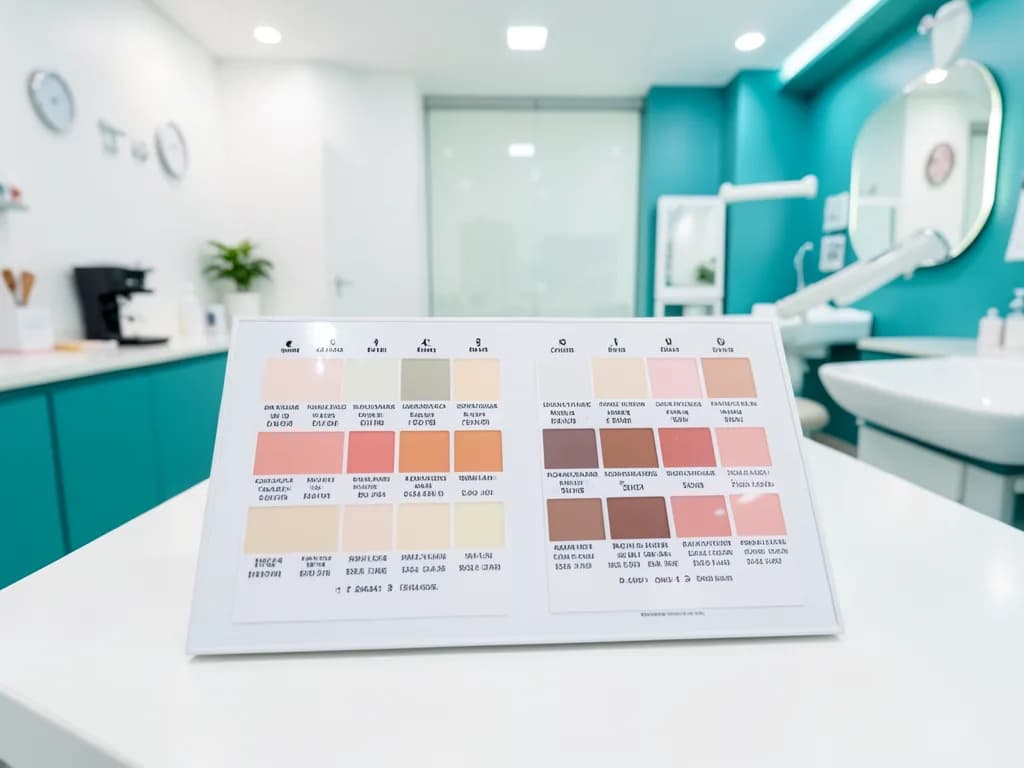
At a Glance Comparison
Key differences between composite and porcelain veneers across the factors that matter most to patients in Dubai.
| Factor | Composite | Porcelain |
|---|---|---|
| Cost per Tooth | AED 600 – 1,500 | AED 2,000 – 5,000 |
| Durability | 5 – 7 years | 15 – 20 years |
| Reversibility | Largely reversible (minimal enamel removal) | Permanent (enamel is removed) |
| Number of Visits | 1 visit (chairside sculpting) | 2 visits (lab fabrication required) |
| Stain Resistance | Moderate — stains over time | High — glazed ceramic surface |
| Appearance | Good — natural look in skilled hands | Excellent — superior translucency and depth |
| Repairability | Easy to repair chairside | Difficult — usually needs full replacement |
| Best for | Budget-conscious patients, trial before porcelain | Long-term aesthetic investment, complete smile makeovers |
Everything You Need to Know About Composite Veneers in Dubai
Composite veneers are made from tooth-coloured resin — the same material used for white fillings — applied directly to the tooth surface by the dentist in a single appointment. The dentist builds up thin layers of composite, sculpting the desired shape and shade freehand before curing each layer with an ultraviolet light. The entire process takes 1–3 hours per arch and requires no dental laboratory.
In Dubai, composite veneers cost AED 600–1,500 per tooth, making them one of the most affordable ways to achieve a transformed smile. A full set covering the upper front 8–10 teeth typically costs AED 5,000–15,000. Because no lab work is involved, the cost is lower and you leave the clinic with your new smile the same day.
The main limitation of composite is longevity and stain resistance. Resin is a porous material compared to glazed ceramic, meaning it gradually absorbs pigment from coffee, tea, red wine, and turmeric. Most patients need polishing every 6–12 months and replacement after 5–7 years. However, they can be repaired easily and inexpensively if they chip, which is a distinct advantage over porcelain.
Composite veneers are an excellent option for patients who want to trial the veneer look before committing to porcelain, for younger patients whose smiles are still developing, or for anyone who wants an immediate, affordable cosmetic improvement without the permanence of enamel removal. See our dedicated veneer costs in Dubai guide for a full per-tooth and full-arch price breakdown.
Composite veneers pros
- ✓ Significantly lower cost per tooth
- ✓ Completed in one visit — no waiting
- ✓ Minimal to no enamel removal
- ✓ Easily repaired if chipped
- ✓ Reversible in most cases
- ✓ Good immediate aesthetic result
Composite veneers cons
- ✗ Shorter lifespan of 5–7 years
- ✗ Prone to staining over time
- ✗ Less translucent than porcelain
- ✗ Requires regular polishing
- ✗ Needs replacement more frequently
- ✗ Result depends heavily on dentist skill
Everything You Need to Know About Porcelain Veneers in Dubai
Porcelain veneers are ultra-thin ceramic shells custom-fabricated in a dental laboratory to fit precisely over the front surface of each tooth. The dentist first removes a thin layer of enamel (typically 0.3–0.5mm) to create space, then takes digital impressions or physical moulds that are sent to the lab. Temporary veneers are placed while the final ceramics are made over 1–2 weeks. At the second appointment, the permanent veneers are bonded using dental cement.
In Dubai, porcelain veneers cost AED 2,000–5,000 per tooth. Premium clinics using brands like e.max (lithium disilicate) or Lumineers charge at the higher end, but these materials offer exceptional translucency and strength. A full upper-arch smile makeover of 10 porcelain veneers typically costs AED 20,000–50,000 at quality Dubai clinics. Packages are often available for full-arch treatments.
The aesthetic superiority of porcelain over composite is due to the ceramic material itself. Porcelain has a similar light-reflecting quality to natural tooth enamel, with depth and translucency that composite resin cannot fully replicate. For patients who want Hollywood-level results for a significant occasion or a permanent smile upgrade, porcelain veneers are the benchmark treatment.
Because enamel is permanently removed, porcelain veneers are a lifelong commitment. Once you have them, the teeth will always require coverage — either new veneers or crowns if they are eventually removed. This is why dentist selection is critical. Always view before-and-after photos, ask about digital smile design previews, and ensure your dentist is experienced in cosmetic work specifically. Patients considering a complete transformation may also explore Hollywood smile packages in Dubai, use our directory to find veneer clinics, or read our dental tourism savings guide if travelling to Dubai for treatment.
Porcelain veneers pros
- ✓ Lasts 15–20 years with proper care
- ✓ Highly stain-resistant glazed surface
- ✓ Superior translucency and natural appearance
- ✓ Custom-designed for each tooth in the lab
- ✓ Colour is stable long-term
- ✓ Strong and resistant to chipping
Porcelain veneers cons
- ✗ Higher upfront cost per tooth
- ✗ Requires enamel removal — irreversible
- ✗ Two appointments and a waiting period
- ✗ Cannot be repaired — full replacement if damaged
- ✗ Sensitivity possible after preparation
- ✗ Requires skilled cosmetic dentist
Which Should You Choose
The right veneer type depends on your budget, how long you want them to last, and how important immediate results or reversibility are to you. Many patients combine veneers with whitening and gum contouring in a complete smile makeover plan.
At AED 600–1,500 per tooth, composite veneers deliver a meaningful aesthetic improvement for a fraction of the cost. Ideal if you want to improve your smile without a major financial commitment.
If you want results that last 15–20 years with minimal maintenance and maximum aesthetic impact, porcelain is the clear choice. The higher upfront cost works out as better value over time.
If you are in your 20s or unsure about permanent enamel removal, composite veneers let you try the veneer look without committing. You can always upgrade to porcelain later.
For teeth with deep intrinsic staining (tetracycline, fluorosis) that whitening cannot fix, porcelain provides a permanent, stain-proof cover that composite cannot match over time.
Composite veneers are sculpted and finished chairside in one visit. If you have a wedding, event, or deadline and cannot wait for lab fabrication, composite is the only same-day option.
Cost Comparison in Dubai
All prices are in AED and reflect the typical range across Dubai clinics as of 2026. No VAT applies to dental treatments in the UAE.
Composite Veneers
Porcelain Veneers
For full pricing context across all dental treatments, see our complete Dubai dental cost guide.
Curious about other cosmetic options? Our no-prep veneers guide explains how ultra-thin veneers work without enamel removal, and our complete veneers guide covers types, aftercare, and more. For minor gap fixes, composite veneers are a popular choice for diastema closure in a single visit. See all cosmetic dentistry options available in Dubai.
Detailed Cost Comparison by Clinic Tier
Veneer prices in Dubai vary significantly depending on whether you visit a budget community clinic, a mid-range JLT or Jumeirah clinic, or a premium Downtown or DIFC practice. The cost per tooth comparison below shows the full cost range across all tiers for both veneer types in 2026. All prices in AED.
| Clinic Tier | Composite (per tooth) | Porcelain (per tooth) | Typical Location |
|---|---|---|---|
| Budget | AED 500 – 800 | AED 1,800 – 2,500 | Deira, Al Quoz, International City |
| Mid-Range | AED 800 – 1,200 | AED 2,500 – 3,500 | JLT, Jumeirah, Mirdif, Al Barsha |
| Premium | AED 1,200 – 1,500 | AED 3,500 – 5,000+ | DIFC, Downtown, Dubai Marina, Palm Jumeirah |
Full arch cost (8 teeth)
Cost includes
- ✓ Consultation and shade matching
- ✓ Tooth preparation (minimal or none for composite)
- ✓ Veneer placement and bonding
- ✓ Post-placement bite check
- ✗ Temporaries during lab phase (porcelain, extra)
- ✗ Digital smile design preview (often extra)
For a full per-tooth and full-arch price breakdown including Lumineers and ultra-thin no-prep options, see our complete veneers cost guide. For the full Hollywood smile package price (veneers + whitening + gum contouring), see Hollywood smile Dubai costs.
Longevity and Durability Comparison
Veneer lifespan is one of the most important factors in long-term value. A composite veneer at AED 800 replaced every 5–7 years costs more over 20 years than a porcelain veneer at AED 3,000 that lasts the same period. Understanding durability differences — including stain resistance and color stability — helps you make the right choice for your lifestyle.
| Durability Factor | Composite Veneers | Porcelain Veneers |
|---|---|---|
| Average lifespan | 5–7 years | 10–20 years |
| Stain resistance | Low to moderate — porous resin absorbs pigment | High — glazed ceramic surface repels stains |
| Color stability | Yellows and dulls over 2–4 years | Stable for 15+ years |
| Chip resistance | Moderate — more prone to chipping | High — but fracture is irreparable |
| Fracture consequence | Easy and cheap chairside repair | Full replacement required (AED 2,000–4,000) |
| Effect of night grinding | Gradual wear — quicker with bruxism | Fracture risk — nightguard essential |
| Polish maintenance | Every 6–12 months recommended | Standard dental check-up only |
| 20-year total cost (1 tooth) | AED 2,400–6,000 (3× replacement) | AED 2,000–5,000 + 1 crown replacement |
Factors affecting veneer lifespan in Dubai
Dubai's climate has little direct impact on veneer longevity, but lifestyle factors common among Dubai residents can shorten veneer life. Regular consumption of coffee, tea, and red wine accelerates staining of composite resin, while shisha smoking is particularly damaging to both veneer types. The high proportion of fluoride in Dubai tap water does not harm veneers but can affect bonding adhesives over many years.
The single biggest factor in composite veneer longevity is the quality of the nanohybrid or nanofilled composite resin used. Premium composites like Dentsply Ceram.x Spectra or Ivoclar Tetric contain nano-sized filler particles that give superior polish retention and lower water absorption. Budget clinics using generic composites may see staining within 12–18 months. Always ask what composite brand will be used before treatment.
Risks and Complications for Each Type
Both composite and porcelain veneers carry some risk of complications. Understanding what can go wrong — and the consequences — is essential before committing to either treatment. Veneer failure, chipping, and debonding all have different implications depending on the material chosen.
Composite veneer risks
Porcelain veneer risks
Who Should Choose Composite vs Porcelain
The right veneer type depends on your budget, timeline, aesthetic goals, and the condition of your existing teeth. This decision guide is based on the most common patient profiles seen at Dubai cosmetic dentistry clinics. Many patients combine composite veneers as a short-term option while planning a longer-term smile makeover.
Direct composite veneers deliver a meaningful aesthetic result at one-third of the porcelain price. A full upper arch of 8 teeth costs AED 4,000–9,600 at mid-range Dubai clinics. The result looks excellent immediately, even if longevity is shorter.
Composite is completed chairside in a single appointment of 2–4 hours. Porcelain requires two visits with a 1–2 week lab waiting period. For a wedding, graduation, or important event, composite is the only realistic same-day option.
Porcelain E.max or feldspathic veneers last 10–20 years with minimal maintenance. The stain-resistant, color-stable ceramic surface maintains its appearance far longer. Over a 20-year horizon, porcelain is often better value despite the higher upfront cost.
Deep intrinsic staining that cannot be removed by whitening — including tetracycline banding and fluorosis — requires the masking power of opaque porcelain. Composite resin is translucent and cannot adequately mask severe discolouration on its own.
Composite veneers require minimal to no tooth preparation, making them largely reversible. For younger patients whose smile goals may evolve, or for anyone unsure about permanently removing enamel, composite is the conservative reversible approach.
For comprehensive smile makeovers involving 6–10 teeth with significant shape corrections, porcelain provides superior uniformity and precision because each veneer is custom-fabricated in a dental laboratory by a master ceramist. Large composite cases require exceptional artistry to achieve consistency.
For a single chipped tooth, direct composite bonding may be sufficient and costs only AED 300–600. See our dental bonding Dubai guide for details before committing to a full veneer.
Recovery and Aftercare by Veneer Type
The recovery experience after veneers differs substantially between composite and porcelain. Understanding what to expect in the first days and weeks after treatment — and the ongoing maintenance requirements — helps you plan properly and protect your investment.
Composite veneers
Composite veneers are completed and polished in one appointment. You leave with the finished result. No anaesthesia is typically used, and there is no numbness or swelling. You can eat soft foods immediately.
Avoid intensely staining foods and drinks (coffee, red wine, turmeric) for the first 48 hours to allow the bonding agent to fully cure. Some patients notice a slightly grainy texture initially that smooths with polishing.
Professional polishing every 6–12 months restores surface shine and removes superficial staining. Use a non-abrasive toothpaste — abrasive whitening toothpastes scratch composite resin. Avoid biting hard foods with the veneer teeth.
Minimal to none. Because little or no enamel is removed, composite veneers typically cause no post-treatment sensitivity.
Porcelain veneers
After enamel reduction, temporary veneers are placed. Your teeth will be sensitive for 1–2 weeks. Avoid very hot, very cold, or acidic foods. The temporary veneers are fragile — avoid hard or sticky foods.
Sensitivity typically reduces significantly once the permanent veneers are bonded and seal the prepared enamel. Some residual sensitivity can last 1–4 weeks, especially to cold. Most patients feel normal within 2 weeks.
Avoid very hard foods (ice, nuts, hard bread crusts) with the front teeth for 2–4 weeks as the adhesive fully matures. After this period, porcelain veneers have no significant dietary restrictions.
If you grind or clench your teeth at night, a custom nightguard is essential. Bruxism is the most common cause of porcelain veneer fracture and costs AED 800–1,500 to prevent versus AED 2,000–4,000 per veneer to replace.
Insurance Coverage for Veneers in Dubai
Cosmetic dental veneers are almost universally excluded from health insurance coverage in Dubai and the UAE. Understanding when coverage may apply — and how to document your case — can help you recover some costs in specific circumstances.
Not covered by insurance
- ✗ Cosmetic composite veneers
- ✗ Porcelain veneers for aesthetics
- ✗ Smile makeover packages
- ✗ Hollywood smile treatments
- ✗ Colour improvement or whitening veneers
May be covered (medically necessary)
- ✓ Trauma-related tooth damage requiring restoration
- ✓ Veneers replacing lost enamel due to acid erosion (documented)
- ✓ Congenital enamel defects (amelogenesis imperfecta)
- ✓ Post-accident smile restoration with clinical documentation
- ✓ Crowns may be partly covered where veneers are indicated
Documentation requirements for medical necessity claims
If your veneers are driven by a genuine medical necessity (trauma, congenital defect, acid erosion), the following documentation significantly improves your chances of partial reimbursement:
- → Clinical photographs showing the damage or defect
- → CBCT or X-ray evidence of structural compromise
- → Written diagnosis from the treating dentist explaining medical necessity
- → Pre-authorisation request submitted before treatment begins (never after)
- → Police report or hospital record if trauma-related
- → Proof of previous conservative treatment attempts that failed
For help finding clinics that work with your insurer, see our dental insurance in Dubai guide.
Technology Advances Closing the Quality Gap
The gap in quality between composite and porcelain veneers has narrowed significantly over the past decade due to advances in both composite resin technology and digital porcelain fabrication. Understanding these advances helps you set realistic expectations for both options.
Modern nanohybrid and nanofilled composites
Today's high-end composites — including Ivoclar's Tetric range and Dentsply Ceram.x Spectra — incorporate nano-sized filler particles (20–70 nanometres) that are ten times smaller than previous micro-hybrid fillers. This produces a surface that can be polished to a mirror finish that retains its lustre longer and resists staining better than older composite materials. Premium nanohybrid or nanofilled composite veneers placed by a skilled cosmetic dentist can be visually indistinguishable from porcelain in clinical photographs — a significant advance over the technology available a decade ago. The gap in stain resistance and long-term colour stability remains, but it is narrower than it once was.
CAD/CAM porcelain and CEREC same-day veneers
Computer-aided design and manufacturing (CAD/CAM) systems like CEREC (Sirona) and E4D allow porcelain veneers to be designed, milled, and placed in a single appointment at equipped Dubai clinics. A digital scan is taken, the veneer is designed on-screen, and a milling machine fabricates the ceramic restoration in approximately 15–20 minutes. This eliminates the traditional 1–2 week laboratory wait and avoids the need for temporary veneers. CAD/CAM porcelain uses lithium disilicate (E.max) — the same material used for traditional lab-fabricated veneers — but the milling process produces slightly less aesthetic depth than a master ceramist hand-layering feldspathic porcelain. For most patients, the convenience and speed of CEREC outweighs this subtle difference.
Digital shade matching and smile design
Spectrophotometers provide objective digital shade measurements, eliminating the subjectivity of manual shade guide matching. Digital smile design (DSD) software allows the dentist and patient to preview the proposed veneer result on a photo of the actual teeth before any treatment begins. This technology reduces the risk of shade mismatch and helps patients visualise the expected outcome, reducing post-treatment disappointment. A digital smile design consultation at premium Dubai cosmetic clinics typically costs AED 300–800 but is often included in the overall veneer treatment fee. For complete smile transformations, see our guide to cosmetic dentistry in Dubai and explore all available treatments through our clinic finder.
Maintenance and Aftercare
Composite veneer care
Composite veneers benefit from professional polishing every 6–12 months to remove surface staining. Avoid excessive consumption of staining beverages or use a straw. Do not use whitening toothpaste with abrasives as it scratches the resin surface. Avoid biting hard objects (ice, pen caps, fingernails) as composite can chip.
Porcelain veneer care
Porcelain veneers require standard brushing and flossing. The ceramic surface is stain-resistant and does not need special polishing. Avoid biting very hard foods with the front veneer teeth. If you grind your teeth at night, a custom nightguard is essential — grinding is the most common cause of porcelain veneer failure.
Related Guides
Frequently Asked Questions
How much do veneers cost in Dubai in 2026?
Composite veneers in Dubai cost AED 600–1,500 per tooth, making a full smile (8–10 teeth) AED 5,000–15,000. Porcelain veneers cost AED 2,000–5,000 per tooth, so a full set typically runs AED 16,000–50,000. The difference reflects the superior materials, lab fabrication time, and longer lifespan of porcelain. Some clinics offer package pricing for multiple veneers that reduces the per-tooth cost.
Are composite veneers reversible?
Composite veneers are considered minimally invasive and largely reversible. In most cases, only a very thin layer of enamel is removed (or none at all) before the composite resin is bonded directly to the tooth surface. If you decide to remove them later, the tooth is left largely intact. Porcelain veneers require slightly more enamel removal to accommodate the ceramic shell, making them a more permanent commitment — though modern ultra-thin porcelain veneers (e-max) minimise this further.
How long do composite veneers last in Dubai compared to porcelain?
Composite veneers typically last 5–7 years with good maintenance. They are more susceptible to staining (from coffee, tea, red wine) and chipping than porcelain. Porcelain veneers last 15–20 years on average, are highly stain-resistant due to their glazed ceramic surface, and maintain their colour and translucency far longer. The longer lifespan of porcelain can make it the better long-term value despite the higher upfront cost.
Can I get veneers in one visit in Dubai?
Composite veneers are applied chairside in a single visit of 1–3 hours. The dentist sculpts the resin directly onto your teeth, which is cured (hardened) with a UV light — no dental lab is required. Porcelain veneers require at least two appointments: one to prepare the teeth and take impressions (or digital scans), and a second visit 1–2 weeks later to bond the lab-fabricated ceramic shells. Some clinics with in-house CAD/CAM technology can manufacture and fit porcelain veneers in one extended visit.
Do veneers damage your natural teeth?
Both types of veneers require some form of tooth preparation, but the extent varies. Composite veneers often require minimal to no enamel removal — the dentist simply roughens and etches the surface for bonding. Porcelain veneers require removing a thin layer of enamel (typically 0.3–0.5mm) to ensure the ceramic shell sits flush with the gum line and does not look bulky. Once enamel is removed it cannot grow back, so porcelain veneer placement is a permanent decision. Always consult a cosmetic dentist in Dubai who will assess your specific tooth structure before recommending either option.
Find a Veneers Specialist in Dubai
Browse verified cosmetic dentistry clinics offering composite and porcelain veneers in Dubai. Compare patient reviews, check insurance acceptance, and book a consultation. Or locate dentists in your area for all treatment options.