Dental Bonding Dubai — Composite 2026 Guide
Dental bonding uses tooth-coloured composite resin applied directly to your teeth to repair chips, close gaps, cover discolouration, and reshape misformed teeth — all in one appointment from AED 200 per tooth. This guide covers every type of bonding available at Dubai clinics with 2026 AED prices, a bonding vs veneers vs crowns comparison, and insurance guidance. For the cosmetic overview, see our cosmetic dentistry Dubai guide.
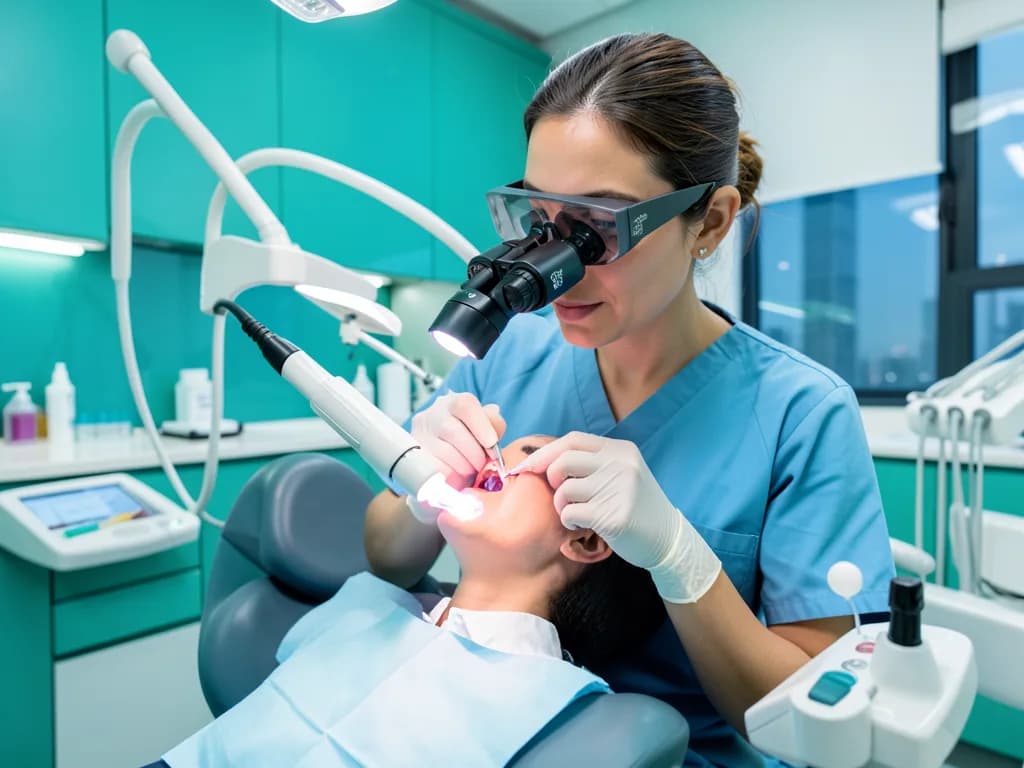
Types of Dental Bonding Available in Dubai
Composite resin can address a wide range of cosmetic concerns depending on where it is applied and how much of the tooth surface is covered. One of the most popular uses is closing gaps between front teeth, which can often be completed in a single visit.
The most common application for dental bonding — composite resin is applied directly to a chipped or cracked tooth edge, sculpted to restore the natural shape, and polished. Suitable for small to medium chips on front teeth. No anaesthesia is usually required. The procedure takes 30–60 minutes per tooth and is entirely chairside with no laboratory involved.
Advantages
- ✓ Same-day repair — no lab wait
- ✓ No anaesthesia required for most chips
- ✓ Minimal or no tooth reduction needed
- ✓ AED 200–500 per tooth
Limitations
- ✗ More prone to staining than porcelain
- ✗ Can chip again with hard foods
- ✗ Needs polishing every 1–2 years to maintain shine
Composite resin is built up on the sides of the teeth flanking a gap (diastema) to close the space without any orthodontic treatment. A popular alternative to braces for patients with a single midline gap or small spaces between teeth. The dentist adds material symmetrically and shapes it to maintain natural proportions. Results are immediate.
Advantages
- ✓ Immediate result — same appointment
- ✓ No orthodontic appliances needed
- ✓ Fully reversible if desired
- ✓ Can close gaps up to 2–3 mm effectively
Limitations
- ✗ Not suitable for large gaps (orthodontics preferred)
- ✗ May make teeth appear wider if gap is large
- ✗ Bonding material can stain over time
Composite resin is used to change the shape of a tooth — making it appear longer, more symmetrical, or more proportionate within the smile. This includes lengthening worn-down or naturally short teeth, rounding sharp edges, or correcting minor misalignment. Often combined with whitening beforehand so the bonding shade matches a brighter smile.
Advantages
- ✓ No tooth reduction required in most cases
- ✓ Fully reversible
- ✓ Same-day result
- ✓ Very affordable for minor shape corrections
Limitations
- ✗ Not as durable as porcelain for large shape changes
- ✗ Colour may not match perfectly long-term
- ✗ Technique-sensitive — result depends on dentist skill
When composite resin covers the entire visible front surface of a tooth it functions as a composite veneer — the most extensive form of dental bonding. Composite veneers are applied directly (chairside) without a laboratory, making them significantly cheaper than porcelain veneers. They can correct discolouration, minor misalignment, and shape issues across multiple front teeth.
Advantages
- ✓ AED 500–1,000 vs AED 1,500–3,500 for porcelain
- ✓ No lab fee — same-day result
- ✓ Minimal tooth preparation
- ✓ Repairable if chipped
Limitations
- ✗ Less durable — 5–7 years vs 10–15 for porcelain
- ✗ Stains more readily than porcelain
- ✗ Less translucent, less natural-looking
Teeth that are internally stained (from tetracycline, fluorosis, or old fillings) or that do not respond to whitening can be covered with composite bonding. The dentist applies an opaque base layer followed by more translucent composite to mimic natural tooth structure. This is a budget-friendly alternative to veneers for isolated discoloured teeth.
Advantages
- ✓ Covers internal stains that bleaching cannot fix
- ✓ Much cheaper than veneers
- ✓ No laboratory needed
- ✓ Can be matched to surrounding teeth
Limitations
- ✗ The bond may show a slight colour shift over time
- ✗ Surface polishing needed periodically
- ✗ Masking very dark stains requires more material which can look bulky
Dental Bonding Prices in Dubai 2026
All prices in AED per tooth unless noted. See the full 2026 dental cost guide for complete treatment pricing across all procedures.
| Procedure | AED Range | Time | Notes |
|---|---|---|---|
| Chip or crack repair | AED 200 – 500 | 30–45 min | Most affordable cosmetic fix |
| Gap closure (per tooth) | AED 400 – 800 | 45–60 min | Both flanking teeth usually treated |
| Tooth shape/length correction | AED 400 – 900 | 45–60 min | Worn or short teeth |
| Composite veneer (full surface) | AED 500 – 1,000 | 60–90 min | Chairside, no lab |
| Discolouration cover | AED 400 – 800 | 45–60 min | Fluorosis, tetracycline stains |
| 6-tooth smile package | AED 2,500 – 5,000 | Half day | Package discount at many Dubai clinics |
| 8-tooth smile package | AED 3,500 – 7,000 | Full day | Upper front 8 teeth |
| Re-polish / maintenance | AED 150 – 400 | 20–30 min | Recommended every 1–2 years |
Prices from Dubai clinic surveys, February 2026. Premium clinics in DIFC, JBR, and Downtown Dubai may charge 20–40% above mid-range figures.
Dental Bonding vs Veneers vs Crowns
Bonding is the most affordable and reversible option. Veneers and crowns are more durable but involve greater cost and irreversible tooth preparation. For a detailed veneer comparison, see our composite vs porcelain veneers Dubai guide.
| Factor | Bonding | Porcelain Veneer | Crown |
|---|---|---|---|
| Cost per tooth (AED) | 200 – 1,000 | 1,500 – 3,500 | 2,000 – 4,500 |
| Lab required | No (chairside) | Yes (1–2 weeks) | Yes (1–2 weeks) |
| Tooth reduction | None to minimal | 0.3–0.5 mm enamel | All surfaces reduced |
| Reversibility | Fully reversible | Partially reversible | Irreversible |
| Lifespan | 5–7 years | 10–15 years | 10–20 years |
| Stain resistance | Moderate | Excellent (porcelain) | Excellent (ceramic/zirconia) |
| Best for | Minor cosmetic fixes, budget | Major smile makeover, durable aesthetics | Damaged or root-treated tooth |
The Dental Bonding Procedure Step by Step
Bonding is completed chairside in a single appointment — no laboratory, no temporary, and usually no injections.
Consultation and Shade Selection
Your dentist assesses which teeth need bonding, discusses the goals (chip repair, gap closure, shade improvement), and selects the composite shade using a shade guide in natural light. If you plan to whiten your teeth, whitening should always be done first — composite resin does not bleach, so the bonding shade is matched to your new, brighter tooth colour.
Surface Preparation
For most chip repairs and small shape corrections, no anaesthesia is needed because no drilling into dentine is required. The tooth surface is lightly etched with a mild phosphoric acid gel for 15–30 seconds, then rinsed and dried. A bonding agent (primer) is then applied and light-cured for 10–20 seconds to create a strong molecular bond between the resin and the enamel.
Resin Application and Sculpting
The composite resin is applied in thin layers — usually 1–2 mm per layer — with each layer cured by a bright blue LED curing light for 20–40 seconds. The dentist sculpts each layer to build up the desired shape. For composite veneers covering the full tooth surface, this layering technique is critical to achieve realistic depth, colour variation, and translucency matching the surrounding teeth.
Shaping, Polishing and Bite Check
Once all composite layers are built up and light-cured, the dentist uses fine diamond burs and polishing discs to refine the shape, contour, and surface texture. The bite is checked with articulating paper, and any high points adjusted. Finally, polishing pastes bring the surface to a high gloss that closely resembles natural enamel. The result is immediately visible — no waiting.
Caring for Your Bonded Teeth
Daily care
- ✓ Brush twice daily with a non-abrasive toothpaste
- ✓ Floss gently — especially around bonded margins
- ✓ Use a non-alcohol mouthwash to prevent staining
- ✓ Avoid coffee and tea for 48 hours after bonding
- ✓ Schedule re-polish every 1–2 years to maintain shine
Habits to avoid
- ✗ Biting nails, pens, or ice — chips bonding easily
- ✗ Using teeth to open packaging or bottles
- ✗ Biting directly into very hard foods (hard crusts, raw carrots)
- ✗ Smoking — yellows composite resin significantly
- ✗ Excessive coffee, tea, and red wine without rinsing
Lifespan tip: With the right habits, composite bonding at a Dubai clinic can easily reach 7–10 years before replacement. Book a routine dental check-up every six months so your dentist can spot early chipping or staining and add a small amount of composite to repair before a full redo is needed — dramatically extending the investment.
For detailed pricing on dental bonding per tooth and multi-tooth packages, see our dental bonding cost Dubai guide. If you are comparing bonding with longer-lasting alternatives, our no-prep veneers Dubai page explains options that require zero tooth reduction. Browse top-rated dental clinics in the UAE to find a cosmetic dentist with verified patient reviews.
Who Is a Good Candidate for Dental Bonding
Dental bonding is a conservative, reversible aesthetic restoration — but it works best for specific situations. Patients considering smile makeover treatments should assess whether bonding or porcelain veneers better suit their goals.
Chipped or cracked front teeth
Small to medium chips on front teeth are the ideal application — composite resin restores the natural shape in a single chairside visit, often without anaesthesia.
Gaps between teeth (diastema)
Gaps up to 2–3 mm can be closed by building up composite on the sides of adjacent teeth. Larger gaps are better managed with orthodontics.
Mild to moderate discolouration
Internal staining from fluorosis, tetracycline, or trauma that does not respond to whitening can be masked with an opaque composite base and translucent layering technique.
Minor shape or length corrections
Short, worn, or asymmetric teeth can be lengthened or reshaped with composite. Tooth reshaping (dental contouring plus bonding) is a conservative and reversible procedure.
Good existing oral health
Active gum disease, extensive decay, or a heavy bite (bruxism) can shorten the bonding lifespan significantly. These issues must be treated first.
Heavy clenchers or grinders (bruxism)
Patients who clench or grind at night are at high risk of chipping composite bonding. A night guard is essential if bonding is placed, but porcelain or zirconia may be a more durable long-term investment.
Very large cosmetic changes (6+ teeth)
When the desired cosmetic change is significant across many teeth, composite direct veneers may not achieve the aesthetic depth and translucency that porcelain laboratory veneers can deliver.
Key rule: Dental bonding is most successful when the patient has good gum health, minimal bite issues, and realistic expectations about the 5–7 year lifespan. Patients with a heavy bite should discuss whether a dental crown or porcelain veneer would be a more durable investment for their situation.
Risks and Potential Complications
Dental bonding is one of the safest cosmetic procedures available — the risks are mainly related to longevity and aesthetics rather than medical harm. Understanding these helps you make a fully informed decision.
Chipping or fracture
ModerateComposite resin is less fracture-resistant than porcelain. Biting hard foods directly or habits such as nail biting can chip the bonded surface. Small chips can usually be repaired chairside without replacing the entire bond.
Staining over time
Moderate to HighNanohybrid and microhybrid composite resins are more porous than natural enamel and absorb pigment from coffee, tea, red wine, and curries. Surface staining becomes visible after 2–3 years and can be managed with professional re-polishing (AED 150–400).
Colour mismatch after whitening
High (if order is wrong)Composite does not bleach. If you whiten your teeth after bonding, the natural teeth will lighten but the bonding will remain the original shade, creating a visible mismatch. Always whiten first, then match the bonding shade to the brighter teeth.
Debonding (bond failure)
LowProper acid etching and bonding agent application creates a very strong adhesive layer between the composite resin and enamel. Debonding is uncommon when the procedure is performed correctly, but may occur if the tooth surface was contaminated with saliva during placement.
Secondary decay at bond margins
Low (with good hygiene)The margin between the composite and tooth is susceptible to plaque accumulation. Without thorough brushing and flossing, secondary decay can develop. Biannual check-ups allow early detection before significant damage occurs.
Overall safety: Direct composite bonding involves no drilling in most cases, no injections, and no irreversible tooth reduction. It is among the most conservative aesthetic treatments in dentistry. For patients unhappy with the result or whose bonding ages, removal and replacement is straightforward. This makes it a truly low-risk way to explore cosmetic dental improvements before committing to more permanent options like no-prep veneers.
Technology and Materials Used in Dental Bonding
Modern composite resins are a far cry from the materials used even a decade ago. Advances in nanohybrid and microhybrid formulations, bonding agents, and LED curing technology have significantly improved both the aesthetic results and longevity of direct composite restorations. Understanding the materials helps you evaluate quality when comparing clinics.
Nanohybrid Composite (e.g., 3M Filtek Supreme Ultra)
Primary restorative materialThe current gold standard for aesthetic direct composites. Contains nanofiller particles that produce an exceptionally smooth, polishable surface with excellent colour stability. Suitable for both anterior and posterior bonding applications.
Microhybrid Composite (e.g., Tokuyama Estelite Sigma Quick)
High-polish aesthetic compositeExtremely popular in Japan and widely available in Dubai premium clinics. The spherical filler particles allow polishing to a very high gloss that closely mimics natural enamel. Excellent for composite veneer work on front teeth where aesthetics are the priority.
Phosphoric Acid Etch (35–37%)
Surface preparation (acid etching)Applied to the enamel surface for 15–30 seconds to create a microscopically rough surface. Increases the surface area and creates a mechanical bonding substrate. The acid etching step is critical — without it, the bonding agent cannot form a durable adhesive layer.
Bonding Agent (Adhesive Layer)
Primer and adhesiveApplied after etching and before composite placement. Modern 7th and 8th generation self-etching adhesives eliminate the need for a separate acid etch step. The bonding agent penetrates into the etched enamel and creates a hybrid layer of resin and tooth structure that anchors the composite.
LED Curing Light (Blue Light Polymerization)
Composite hardeningA high-intensity LED dental curing light emitting blue light at 430–490 nm wavelength activates the camphorquinone photoinitiator in the composite resin, triggering polymerisation. Modern LED curing lights cure each 2 mm layer in 10–20 seconds. Proper curing is critical — under-cured composite is weaker and more prone to staining.
What to ask your clinic: Enquire whether they use a dedicated shade guide matched under natural light, whether composite is applied in incremental layers (the layering technique is essential for aesthetic depth), and which curing light they use. The quality of these decisions affects aesthetics and longevity far more than brand names. See our cosmetic dentistry Dubai guide for more on choosing a skilled aesthetic dentist.
Recovery and Aftercare After Dental Bonding
One of the major advantages of dental bonding is that there is no downtime — you can return to work and normal activities immediately after the appointment. However, the first 48 hours require some specific care.
First 48 hours
- •Avoid coffee, tea, red wine, and highly pigmented foods
- •Do not smoke — nicotine stains composite faster than natural enamel
- •Avoid very hot or very cold foods if sensitivity is present
- •Eat soft foods only if any soreness from the etching process
First 2 weeks
- •Brush gently twice daily with a non-abrasive toothpaste
- •Avoid biting directly into hard foods with bonded teeth
- •Floss gently around bonded margins — do not snap floss through contact
- •Report any rough edges or bite discomfort to your dentist promptly
Long term
- •Re-polish recommended every 1–2 years to restore surface gloss
- •Biannual dental check-ups to inspect bond margins for early chipping
- •Use a non-alcohol mouthwash to reduce staining
- •If bruxism is present, wear a night guard every night
Dental bonding requires no special medications after the procedure in most cases. If the bonding involved repair of a deep fracture near the pulp, mild sensitivity to temperature is normal for a few days. Consider our routine dental check-up guide to plan your aftercare visits and ensure your bonding lasts as long as possible.
Choosing a Top Rated Cosmetic Dentist for Dental Bonding in Dubai
The quality of dental bonding is highly technique-dependent. Unlike laboratory-made restorations where a ceramist controls the final aesthetics, direct composite bonding relies entirely on the dentist's sculpting skill, shade matching ability, and understanding of dental anatomy. Here is what to look for when choosing a dentist for your bonding treatment in Dubai.
Aesthetic focus and training
Look for dentists with postgraduate training in aesthetic or cosmetic dentistry — AACD (American Academy of Cosmetic Dentistry) membership, BACD (British Academy of Cosmetic Dentistry), or similar credentials indicate specialist aesthetic training beyond general dental school.
Portfolio of composite work
Ask to see before-and-after photos of actual composite bonding cases. Pay attention to natural-looking results — realistic incisal translucency, texture that matches adjacent teeth, and proportion that suits the patient's face. Avoid portfolios showing obviously bulky or flat-coloured bonding.
Material quality
Ask which composite brand they use. Premium practices use nanohybrid composites such as 3M Filtek Supreme Ultra or Tokuyama Estelite — these achieve a superior polish and colour stability compared to cheaper composite systems.
Shade matching process
A skilled cosmetic dentist takes photographs under standardised lighting, uses a calibrated shade guide, and assesses the shade before any rubber dam or isolation that could change tooth moisture content. This attention to shade matching detail is a strong indicator of aesthetic competence.
Does UAE Insurance Cover Dental Bonding?
Cosmetic bonding is NOT covered — restorative bonding may be
UAE health insurance universally excludes cosmetic dental treatment. Dental bonding used for cosmetic purposes — gap closure, composite veneers, shade improvement, and tooth reshaping — will not be reimbursed by Daman, AXA, Bupa, MetLife, or NextCare.
However, if bonding is used to repair a fractured tooth caused by an accident, or to restore a tooth with active decay (replacing a filling), it may be covered under basic or major restorative benefits. Always clarify the treatment reason on the insurance submission. Patients using employer health insurance should also check whether their plan includes basic restorative dental benefits — some enhanced plans cover tooth-coloured fillings and bonding on front teeth for functional indications. For full insurance details including Daman, AXA, Bupa, MetLife, and NextCare, see our dental insurance Dubai guide or visit dental insurance for expats in Dubai.
Cosmetic bonding (gap closure, veneers, reshaping)
Not covered by any UAE health insurance plan — purely cosmetic
Bonding to repair trauma fracture
May be covered under accident/emergency dental benefits — requires pre-auth
Bonding to restore decay (tooth-coloured filling)
Usually covered under basic restorative benefits on basic and enhanced plans
Composite veneer for discolouration
Classified as cosmetic — universally excluded
Frequently Asked Questions
How long does dental bonding last in Dubai?
Composite dental bonding in Dubai typically lasts 5–7 years with proper care. The lifespan depends on several factors: the size of the bonded area (small chip repairs last longer than full composite veneers), bite forces, eating habits, and how well you maintain the surface. Bonding on front teeth exposed to lighter bite forces lasts longer than bonding on teeth that endure heavy chewing. The surface will gradually lose its polish and may take on minor staining from coffee, tea, and wine — most Dubai clinics offer a re-polish service (AED 150–400 per tooth) that can restore the shine and significantly extend the functional life of bonded teeth.
Is dental bonding covered by insurance in Dubai?
Dental bonding for purely cosmetic purposes — gap closure, shade improvement, and composite veneers — is not covered by UAE health insurance, as cosmetic treatments are universally excluded from dental plans. However, bonding used to repair a fractured or chipped tooth resulting from an injury may be covered as a restorative procedure by some plans. If bonding replaces a lost filling, it may also be covered under basic restorative benefits. Always check your plan and obtain pre-authorisation before proceeding if you believe the bonding qualifies as restorative. See our dental insurance Dubai guide for plan-specific details.
What is the difference between composite bonding and porcelain veneers?
The fundamental difference is material and placement method. Composite bonding uses tooth-coloured resin applied directly to the tooth chairside in a single appointment, with no laboratory required — making it significantly cheaper (AED 500–1,000 vs AED 1,500–3,500 per tooth for porcelain veneers). Porcelain veneers are thin ceramic shells fabricated in a dental laboratory over 1–2 weeks and bonded to the tooth surface. Porcelain veneers are more durable (10–15 years), more stain-resistant, and can achieve superior aesthetics with greater translucency and colour stability. Composite bonding is fully reversible (no tooth reduction in most cases), whereas porcelain veneers require minimal but irreversible enamel removal. For a detailed comparison, see our composite vs porcelain veneers Dubai guide.
Does dental bonding hurt?
Dental bonding is one of the most comfortable dental procedures available. For simple chip repairs, gap closures, and most composite applications to enamel, no anaesthetic injection is needed because no drilling into the dentine (inner tooth layer) is required — the tooth surface is simply etched with a mild acid and a bonding agent applied. The only sensation most patients notice is the bright curing light. If the bonding involves repairing a deeper fracture that extends into dentine, or if adjacent decay needs removal first, a local anaesthetic may be used.
Can dental bonding stain or turn yellow?
Yes — composite resin is more porous than natural enamel and more susceptible to staining from highly pigmented foods and drinks such as coffee, tea, red wine, and turmeric-based foods. This is the main practical disadvantage compared to porcelain veneers. The surface staining is largely a surface phenomenon and can be reduced with regular professional polishing at your dental hygiene visit. Avoiding staining foods and drinks for the first 48 hours after bonding (before the composite fully sets its surface hardness) is particularly important. Patients who smoke should be aware that bonding can yellow with nicotine exposure over time.
What foods should I avoid after dental bonding?
In the first 48 hours after bonding, avoid highly pigmented foods and drinks (coffee, tea, red wine, curries, tomato-based sauces) as the composite surface is most susceptible to staining before it reaches full hardness. Long-term, you should avoid biting directly into very hard foods with the bonded teeth — ice cubes, hard sweets, crusty bread bitten end-on, or nut shells can chip the composite. Nail biting, pen chewing, and using teeth to open packaging should also be avoided. These habits are the leading causes of bonding fracture and significantly shorten its lifespan.
Find a Cosmetic Dentist in Dubai
Compare verified Dubai clinics offering dental bonding, composite veneers, and smile makeovers. Read real patient reviews and check insurance acceptance. Or find your ideal dentist to explore all treatment options.