Dental Veneers Dubai — Porcelain, Composite & E-Max
Dental veneers are thin shells bonded to the front of teeth to improve colour, shape, size or alignment. This guide covers every type available in Dubai — porcelain, E.max, zirconia, composite and Lumineers — with honest cost comparisons, procedure steps and longevity expectations. Explore the full range of cosmetic and restorative options in our dental treatments Dubai guide.
Guide updated March 2026 · Based on 620+ dental clinics in Dubai
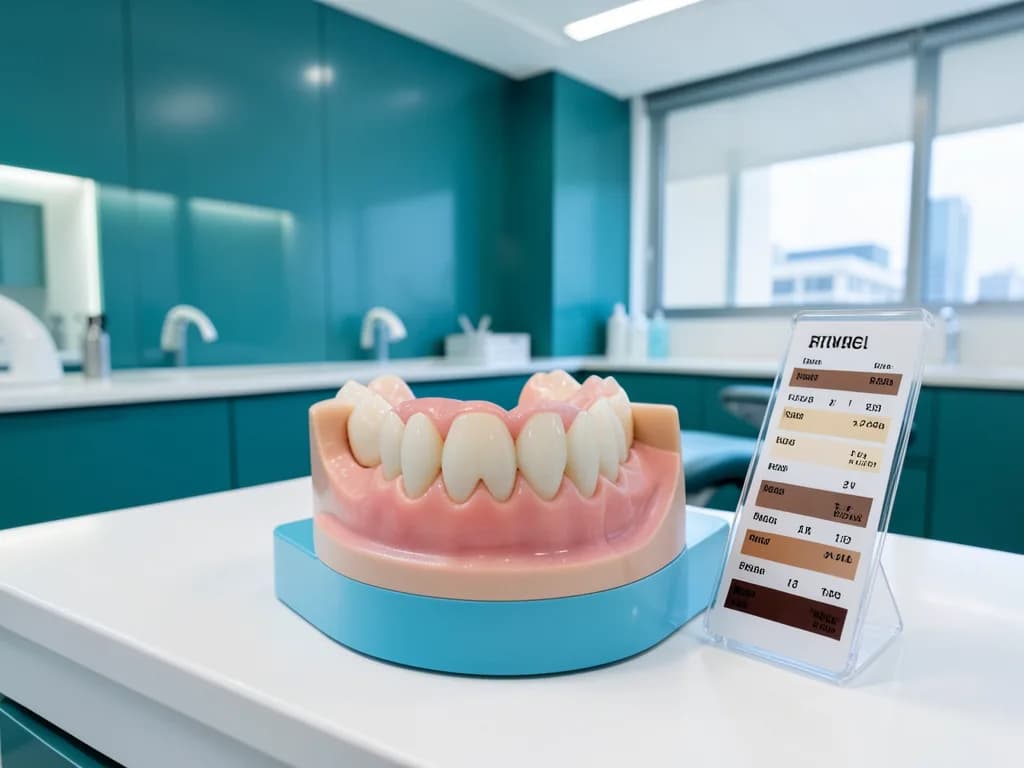
What Are Dental Veneers?
Dental veneers are thin shells bonded to the front surface of teeth to improve their shape, color, and alignment. Materials include porcelain, composite resin, and E-Max ceramic.
What Are Dental Veneers?
A dental veneer is a thin shell — typically 0.3–0.7 mm thick — bonded to the front (labial) surface of a tooth to change its colour, shape, size, or surface texture using dental cement and adhesive dentistry techniques. Veneers are most commonly placed on the upper and lower front teeth that are visible when you smile. They are entirely cosmetic — unlike crowns, which cover the full tooth — and are one of the most powerful tools in cosmetic dentistry. The veneer bonding process uses light-cured resin cement that locks the porcelain shell permanently to the prepared enamel surface.
Veneers can address: permanent staining that doesn't respond to whitening, chips and cracks, mild spacing between teeth, slight misalignment, teeth that are too small or short, and worn enamel. The shade matching process uses the Vita shade guide to select a porcelain colour that complements your skin tone and remaining natural teeth. For small gaps specifically, diastema closure with bonding or veneers is one of the most requested single-visit cosmetic fixes. Veneers are not a substitute for orthodontics in severe crowding cases, and they do not address underlying decay or gum disease.
Veneers vs Crowns vs Bonding — Key Distinction
Cover front surface only. Preserve most of the natural tooth. Used for cosmetic improvement of healthy teeth.
Cover the entire tooth. Used when a tooth is structurally compromised (large decay, fracture, after root canal).
Resin applied freehand in one visit. Less durable and lifelike than porcelain but affordable and reversible.
Types of Dental Veneers Available in Dubai
Dubai cosmetic dentistry clinics offer all major veneer types. Understanding the differences in material, preparation, cost and longevity is essential before committing to treatment.
Composite resin is applied directly onto the tooth in a single appointment and sculpted by the dentist freehand. No laboratory fabrication required. Ideal for minor shape corrections, chips, and mild discolouration. Reversible in many cases as minimal or no tooth reduction is needed.
Advantages
- ✓ Single appointment
- ✓ Most affordable option
- ✓ Reversible or minimal prep
- ✓ Easy to repair if chipped
Limitations
- ✗ Less lifelike than porcelain
- ✗ Stains over time (especially with coffee and red wine)
- ✗ Shorter lifespan (3–7 years)
- ✗ Less resistant to wear than ceramic
E.max (lithium disilicate ceramic) veneers are the most widely used porcelain veneers in Dubai. Pressed from a single block of feldspathic porcelain-grade ceramic using IPS e.max technology, they offer exceptional translucency and aesthetics that closely mimic natural tooth enamel. The tooth preparation removes 0.3–0.5 mm of enamel to create space for the veneer. Many Dubai clinics now use CAD/CAM or CEREC chairside milling for faster fabrication alongside traditional dental lab ceramist workflows.
Advantages
- ✓ Most natural-looking appearance
- ✓ Highly resistant to staining
- ✓ 10–15 year lifespan
- ✓ Excellent strength for front teeth
Limitations
- ✗ Irreversible — tooth preparation required
- ✗ Takes 2–3 appointments
- ✗ Higher cost than composite
- ✗ Can chip under very high biting force
Zirconia veneers are milled from solid zirconia, the strongest dental ceramic available. Preferred for patients with parafunctional habits (bruxism) or where maximum durability is needed. Modern monolithic zirconia has excellent translucency. Slightly thicker than E.max.
Advantages
- ✓ Exceptionally strong and durable
- ✓ 15–20 year lifespan
- ✓ Highly stain-resistant
- ✓ Ideal for bruxism patients
Limitations
- ✗ Historically less translucent than E.max (improving with modern grades)
- ✗ Higher cost
- ✗ Difficult to repair — usually must be replaced
- ✗ Tooth preparation required
Lumineers are a specific brand of ultra-thin veneer (0.2 mm) designed to be placed with minimal-prep or no tooth preparation at all — making them the leading no-prep veneer option in Dubai. Only certain cases are suitable — teeth must not be too dark and there must be space for the extra thickness. The digital smile design (DSD) process, including smile simulation and virtual mockup, is particularly useful for planning Lumineers cases to preview the result before committing. Not to be confused with all no-prep veneers, which can be any ultra-thin porcelain brand.
Advantages
- ✓ Minimal or no tooth preparation
- ✓ Theoretically reversible (though rarely removed)
- ✓ No temporary veneers needed in some cases
- ✓ Good for mildly spaced or chipped teeth
Limitations
- ✗ Not suitable for all cases
- ✗ Can look bulky if poorly selected
- ✗ May not adequately mask dark teeth
- ✗ Premium cost
Veneer Types at a Glance
Side-by-side comparison of all veneer types available in Dubai.
| Factor | Composite | E.max | Zirconia | Lumineers |
|---|---|---|---|---|
| Cost per tooth (AED) | 800 – 1,500 | 1,800 – 4,500 | 2,000 – 5,999 | 2,500 – 6,000 |
| Lifespan | 3–7 years | 10–15 years | 15–20 years | 10–15 years |
| Tooth prep required | None (direct) | 0.3–0.5 mm removed | 0.3–0.5 mm removed | Minimal or none |
| Reversibility | Fully reversible | Irreversible | Irreversible | Theoretically reversible |
| Stain resistance | Moderate (stains over time) | Excellent | Excellent | Excellent |
| Appearance | Good (less lifelike than ceramic) | Excellent — most natural | Very good (improving with monolithic) | Very good |
| Best for | Minor corrections; budget cases | Aesthetic front teeth | Bruxism; high-load cases | Mild spacing; no-prep preference |
The Veneer Procedure Step by Step
Porcelain veneers typically involve 2–3 appointments over 2–3 weeks. Composite veneers are completed in a single appointment.
Consultation and Smile Design
Your cosmetic dentist assesses your teeth, bite and overall facial proportions using digital smile design (DSD) — including facial analysis, smile arc evaluation, and golden proportion guidelines. Digital photographs and a 3D scan are taken and loaded into smile simulation software to create a virtual mockup you can approve before any treatment begins. Shade selection using the Vita shade guide is made at this stage — always whiten natural teeth first if whitening is part of your plan, as veneers will be shade-matched to your post-whitening colour.
Tooth Preparation
For porcelain and zirconia veneers, a thin layer of enamel (0.3–0.5 mm) is removed from the front surface of each tooth under local anaesthesia. This is irreversible and creates space for the veneer without the restored tooth looking bulkier than the original. For Lumineers and minimal-prep veneers, little or no reduction is performed.
Impressions or Digital Scan
A precise impression (or digital iTero scan) of your prepared teeth is taken and sent to the dental laboratory. The shade prescription and design specifications are communicated to the dental ceramist who will hand-fabricate your veneers using materials such as E.max lithium disilicate or feldspathic porcelain. Some clinics offer CAD/CAM or CEREC chairside milling for same-day or next-day turnaround; traditional dental lab fabrication takes 5–10 working days at most Dubai labs.
Temporary Veneers
While your permanent veneers are being made, temporary composite or resin veneers are bonded to your prepared teeth. These protect the exposed enamel and give you a preview of the shape and length — you can request adjustments before the final veneers are made.
Veneer Fitting and Bonding
Your final veneers are tried in without adhesive first ('try-in') to check colour, shape and fit. Adjustments are made before permanent bonding. The tooth surface is etched with phosphoric acid, a bonding agent is applied, and the veneer is cemented with a light-cured resin cement. Excess is cleaned away and the bite is checked carefully.
Final Review and Bite Check
Your dentist checks the occlusion (bite) carefully — even slight premature contacts on a veneer can cause fracture over time. A follow-up appointment at 1–2 weeks is typical. For patients who grind their teeth, a night guard is strongly recommended to protect the new veneers.
No-Prep and Minimal-Prep Veneers
No-prep veneers (Lumineers and similar ultra-thin brands) are appropriate only when teeth are already slightly smaller than ideal, well-shaped, and when the shade change needed is not too dramatic. If teeth are already the correct size and a veneer is placed without any reduction, the final result will appear bulky and unnatural. A skilled cosmetic dentist will advise honestly on whether minimal prep is clinically appropriate for your specific case — not simply offer it as a selling point.
Dental Veneer Prices in Dubai 2026
All prices in AED per tooth unless otherwise noted. For a full price guide, see our veneers cost guide the Hollywood Smile cost guide for full-smile makeover packages, and our smile makeover planning guide for combining veneers with whitening and gum contouring.
| Veneer Type | Price Range (AED) | ||
|---|---|---|---|
| Composite veneer (direct) | AED 800 – 1,500 | 3–7 years | Per tooth; single appointment |
| Porcelain E.max veneer | AED 1,800 – 4,500 | 10–15 years | Per tooth; lab-fabricated |
| Zirconia veneer | AED 2,000 – 5,999 | 15–20 years | Per tooth; strongest option |
| Lumineers | AED 2,500 – 6,000 | 10–15 years | Per tooth; minimal-prep brand |
| Hollywood Smile (10 veneers) | AED 18,000 – 45,000 | 10–20 years | Full smile makeover package |
Prices from Dubai clinic surveys, February 2026. Quotes vary by clinic, ceramist skill and material grade. Some clinics offer dental treatment packages that bundle veneers with whitening and aftercare at a discounted rate.
How Long Do Veneers Last in Dubai?
Lifespan by material
- Composite veneers3–7 years
- Porcelain E.max veneers10–15 years
- Zirconia veneers15–20 years
- Lumineers10–15 years
What extends or shortens lifespan
- ✓Wearing a night guard if you grind teeth (extends)
- ✓Good oral hygiene — no margin decay (extends)
- ✓Avoiding biting hard objects with veneered teeth (extends)
- ✓Regular dental check-ups and polishing (extends)
- ✗Bruxism without a night guard (shortens significantly)
- ✗Biting nails, pens or hard food with front teeth (shortens)
Do UAE Insurance Plans Cover Dental Veneers?
Veneers are not covered by UAE insurance
Dental veneers are classified as a cosmetic elective procedure and are excluded from all standard UAE health insurance plans — including those from Daman, AXA and Bupa. Even premium executive policies with dental riders exclude purely cosmetic treatments. There are no exceptions for any veneer type — composite, porcelain or Lumineers.
If a tooth has significant structural damage (fracture, large decay) and requires coverage for functional reasons, a crown may be partially covered by insurance — but a veneer in the same position will not be. Many Dubai veneer clinics offer 0% instalment plans via Tabby or Tamara for patients funding treatment independently.
All Veneer Types Compared at a Glance
A quick-reference comparison of every dental veneer type available in Dubai, including the newer E.max pressed veneers and no-prep Lumineers.
| Type | Material | Cost Per Tooth | Lifespan | Prep Required | Best For |
|---|---|---|---|---|---|
| Porcelain (E.max) | Lithium disilicate ceramic | AED 2,500 – 5,000 | 10 – 20 years | Yes (0.3 – 0.5 mm) | Major smile makeover |
| Composite (Direct) | Composite resin | AED 800 – 1,500 | 5 – 7 years | Minimal | Budget option and quick fixes |
| Lumineers | Cerinate porcelain | AED 3,000 – 5,000 | 10 – 15 years | No | Reversible, no-prep option |
| E.max (Pressed) | IPS e.max lithium disilicate | AED 3,000 – 6,000 | 15 – 20 years | Minimal | Durability with aesthetics |
| Zirconia | Solid zirconia ceramic | AED 2,500 – 4,500 | 15 – 25 years | Yes (0.3 – 0.5 mm) | Strength for back teeth and bruxism |
Prices from Dubai clinic surveys, 2026. For no-prep veneer brands specifically, see our no-prep veneers Dubai guide. Compare costs in our veneers cost guide.
Veneer Aftercare Guide
Proper aftercare is essential to maximise the lifespan of your veneers. Follow these guidelines to protect your investment and keep your smile looking its best for years to come.
Use non-abrasive toothpaste
Whitening toothpastes contain abrasive particles that can scratch and dull the porcelain surface over time. Use a gentle fluoride toothpaste and a soft-bristle brush.
Floss daily around veneer margins
Use waxed floss or a water flosser to clean the margins where the veneer meets the tooth. Plaque accumulation at margins can cause secondary decay underneath the veneer.
Wear a night guard if you grind
Bruxism is the number one cause of veneer fracture. A custom night guard from your dentist protects your investment and should be worn every night without exception.
Avoid biting hard objects with veneered teeth
Ice, hard nuts, pen caps, and nail biting are the most common causes of veneer chips. Use your back teeth for hard foods and break habits that risk your veneers.
Attend six-monthly dental check-ups
Your dentist will monitor the veneer margins, check for any early signs of debonding or secondary decay, and professional-clean areas that are difficult to reach at home.
Limit staining agents at the margins
While porcelain itself does not stain, the resin cement at the veneer margins can absorb colour from coffee, red wine, and turmeric over time. Rinse with water after consuming these.
Contact your dentist immediately if a veneer chips
If a veneer chips or debonds, keep the piece and see your dentist within 24 to 48 hours. Leaving exposed tooth structure unprotected increases sensitivity and the risk of further damage.
For a complete guide to maintaining your smile, see our cosmetic dentistry guide or explore dental insurance options that cover regular check-ups.
What to Expect During the Veneer Process
Understanding the complete timeline helps set realistic expectations and reduces anxiety about the process.
Consultation and Planning
Initial examination, digital photographs, X-rays, shade selection, and digital smile design preview. If whitening is planned, it should be completed 2 weeks before shade selection. Cost: AED 200 to 500 (often credited toward treatment).
Tooth Preparation and Temporaries
For porcelain and zirconia veneers, a thin layer of enamel is removed under local anaesthesia. Impressions or digital scans are taken and sent to the laboratory. Temporary veneers are placed to protect the prepared teeth.
Laboratory Fabrication
Your custom veneers are fabricated by a skilled ceramist over 5 to 10 working days. Premium European laboratories may take 2 to 3 weeks. This waiting period is normal and ensures the highest quality result.
Try-In and Final Bonding
Your permanent veneers are tried in without adhesive to check colour, shape, and fit. Adjustments are made before final bonding with light-cured resin cement. The appointment takes 2 to 4 hours for a full set.
Follow-Up and Adjustment
A review appointment at 1 to 2 weeks checks the bite and veneer margins. Any minor adjustments are made. A night guard impression is taken if needed. Your new maintenance routine begins.
Need affordable veneer options? See our affordable dentist guide or explore Hollywood Smile packages for full smile makeovers.
Best Veneers in Dubai
Choosing the best veneers in Dubai depends on your aesthetic goals, budget, and how long you want them to last. Dubai has become one of the world's leading destinations for cosmetic dentistry, attracting patients from across the Gulf, Europe and Asia specifically for veneer treatments. The best veneers in Dubai are placed by experienced cosmetic dentists who work closely with skilled dental ceramists to achieve results that look natural and last for decades.
For patients seeking the best veneers in Dubai with the most natural appearance, porcelain E.max veneers remain the top choice. These veneers offer unmatched translucency that mimics natural tooth enamel, and when fabricated by an expert ceramist, they are virtually indistinguishable from real teeth. For patients who grind their teeth or need maximum durability, zirconia veneers are the best option — they are the strongest dental ceramic available and can last 15 to 25 years. Composite veneers are the best budget-friendly option in Dubai, costing from AED 800 per tooth and completed in a single appointment.
The best dentist for veneers in Dubai will always offer a comprehensive consultation that includes digital smile design, shade matching under natural light, and a portfolio of completed cases for you to review. Finding the best dentist for veneers means looking beyond price alone — the skill of the dentist and the quality of the laboratory they work with are the two biggest factors that determine the final result. Use our cosmetic dentist directory to compare verified clinics offering the best veneers in Dubai, read real patient reviews, and request consultations.
E.max Porcelain Veneers
AED 1,800 – 4,500 per tooth
Unmatched translucency and lifelike aesthetics. The gold standard for front teeth veneers in Dubai.
Zirconia Veneers
AED 2,000 – 5,999 per tooth
Strongest dental ceramic. Ideal for bruxism patients and those wanting maximum longevity of 15 to 25 years.
Composite Veneers
AED 800 – 1,500 per tooth
Completed in one visit. Fully reversible and easy to repair. Best for minor corrections on a budget.
Looking for the best veneers in Dubai at competitive prices? Compare clinics in our veneers cost guide or explore Hollywood Smile packages for full smile transformations.
Porcelain Teeth Options in Dubai
Porcelain teeth is a broad term used to describe any dental restoration made from ceramic materials, including porcelain veneers, porcelain crowns, and porcelain bridges. In Dubai, porcelain teeth are among the most requested cosmetic dental treatments, with thousands of patients choosing porcelain restorations every year for their natural appearance and long-lasting durability.
The two main categories of porcelain teeth are veneers and crowns. Porcelain veneers cover only the front surface of the tooth and are used for cosmetic improvement — correcting colour, shape, size, or mild misalignment. Porcelain crowns cover the entire tooth and are used when a tooth is structurally weakened by decay, fracture, or root canal treatment. Both options use high-grade dental ceramics that resist staining and maintain their appearance for 10 to 25 years depending on the material.
For patients considering porcelain teeth in Dubai, the choice between veneers and crowns depends entirely on the clinical situation. Healthy teeth that need cosmetic improvement are best treated with porcelain veneers, which preserve more natural tooth structure. Teeth that are structurally compromised require porcelain crowns for full coverage and protection. In many Hollywood Smile cases, a combination of both veneers and crowns is used to achieve the ideal result.
| Porcelain Teeth Type | Coverage | Cost (AED) | Best For |
|---|---|---|---|
| Porcelain Veneer (E.max) | Front surface only | 1,800 – 4,500 | Cosmetic improvement of healthy teeth |
| Porcelain Crown (Zirconia) | Full tooth coverage | 1,500 – 3,500 | Structurally weakened or root-canalled teeth |
| Porcelain Bridge | Multiple teeth | 4,500 – 12,000 | Replacing one or more missing teeth |
| Porcelain Implant Crown | Full tooth on implant | 3,000 – 6,000 | Single tooth replacement on implant post |
Learn more about porcelain crowns in our dental crowns Dubai guide or compare the cost of porcelain bridges for multi-tooth replacements. For full pricing across all porcelain teeth options, see our 2026 dental cost guide.
How Veneers Create a Hollywood Smile
The term Hollywood Smile refers to a full smile makeover using dental veneers to create a uniform, bright, and symmetrical smile. In Dubai, the Hollywood Smile is one of the most requested cosmetic dental treatments, with thousands of patients travelling from across the Gulf, Europe, and Asia specifically for this procedure. The foundation of every Hollywood Smile is a set of precisely matched porcelain veneers covering the visible teeth in the smile zone.
A typical Hollywood Smile involves 8 to 12 porcelain veneers placed on the upper and lower front teeth. The cosmetic dentist uses digital smile design software to preview the final result before any tooth preparation begins, allowing you to see and approve the expected outcome. The veneer shade, shape, and length are customised to complement your facial proportions, skin tone, and lip line. While some patients choose a very bright white shade, the trend in Dubai has shifted toward natural-looking Hollywood Smiles that use layered shading to create depth and realism.
The Hollywood Smile process typically takes 2 to 4 weeks from consultation to final bonding. Many patients combine veneers with gum contouring (to correct a gummy smile) and professional whitening of any remaining natural teeth. For a detailed breakdown of the treatment stages and what to expect at each appointment, see our Hollywood Smile process guide.
Standard Hollywood Smile
8 to 10 veneers
AED 18,000 to 35,000
Covers the upper and lower front teeth visible in a normal smile. The most popular configuration for patients wanting a complete transformation.
Extended Hollywood Smile
12 to 14 veneers
AED 30,000 to 45,000
Extends coverage further back along the smile line for patients with a very wide smile or those who want complete uniformity.
Hollywood Smile with Gum Contouring
8 to 12 veneers + laser gum reshaping
AED 22,000 to 50,000
Combines veneers with gum contouring to correct a gummy smile and create ideal tooth-to-gum proportions.
For full Hollywood Smile pricing, see our Hollywood Smile cost guide. To explore all cosmetic options including teeth whitening, bonding, and gum contouring, visit our smile makeover planning guide.
Are Dental Veneers Right for You
Veneers are a powerful cosmetic tool, but they are not the right solution for every patient or every situation. Before committing to veneers, your cosmetic dentist should assess whether you are a good candidate and whether an alternative treatment might serve you better. Here is an honest breakdown of who benefits most from veneers, who should consider alternatives, and the situations where veneers are not recommended.
Good Candidates for Veneers
- ✓Teeth with permanent staining that does not respond to professional whitening
- ✓Chipped, cracked, or worn front teeth that are otherwise structurally sound
- ✓Small to moderate gaps between front teeth (up to 2 to 3 mm)
- ✓Teeth that are slightly misaligned but do not require orthodontic correction
- ✓Teeth that are disproportionately small, short, or irregularly shaped
- ✓Patients with healthy gums and sufficient enamel for bonding
- ✓Adults aged 18 and above whose teeth have finished developing
When Veneers Are Not Recommended
- ✗Active gum disease (periodontitis) that must be treated and stabilised first
- ✗Severe tooth decay that has not been treated and needs fillings or crowns before veneers
- ✗Severe crowding or major bite misalignment where orthodontics is the correct first step
- ✗Insufficient enamel remaining from previous wear, acid erosion, or large fillings
- ✗Uncontrolled bruxism without willingness to wear a night guard
- ✗Teeth with very large existing restorations that need full-coverage crowns instead
- ✗Children and teenagers whose teeth have not finished erupting
Alternatives to Dental Veneers
If veneers are not the right fit, your cosmetic dentist may recommend one of these alternatives depending on your specific situation.
Professional Teeth Whitening
Teeth are well-shaped but too dark
AED 1,200 to 2,500
Composite Bonding
Minor chips, small gaps, or subtle reshaping needed
AED 500 to 1,200 per tooth
Clear Aligners
Teeth need straightening rather than cosmetic coverage
AED 8,000 to 18,000
Dental Crowns
Teeth with large fillings, fractures, or after root canal
AED 1,500 to 3,500
Not sure which treatment is right for your situation? A cosmetic dentist consultation will include a full assessment of your teeth, gums, and bite to determine whether veneers, whitening, bonding, or orthodontics will produce the best outcome for your specific case.
Veneer Cost by Material in Dubai 2026
The material you choose is the single biggest factor affecting veneer cost. Here is a detailed breakdown of what each material costs per tooth in Dubai, along with the total cost for common treatment configurations. All prices are in AED and based on clinic surveys conducted in early 2026.
| Material | Per Tooth (AED) | 4 Veneers | 8 Veneers | 10 Veneers |
|---|---|---|---|---|
| Composite (Direct) | 500 to 1,500 | 2,000 to 6,000 | 4,000 to 12,000 | 5,000 to 15,000 |
| Porcelain E.max | 1,500 to 6,000 | 6,000 to 24,000 | 12,000 to 48,000 | 15,000 to 60,000 |
| Lumineers (No-Prep) | 490 to 3,500 | 1,960 to 14,000 | 3,920 to 28,000 | 4,900 to 35,000 |
| Zirconia | 2,000 to 5,999 | 8,000 to 23,996 | 16,000 to 47,992 | 20,000 to 59,990 |
These ranges reflect the full spectrum of clinics in Dubai, from competitive pricing in areas like Al Barsha and Deira to premium pricing at clinics in DIFC, Downtown Dubai, and JBR. The cost also varies based on the reputation of the ceramist, the laboratory used, and whether the clinic includes follow-up appointments and a warranty in the price.
Payment Plans and Financing
Many veneer clinics in Dubai offer interest-free instalment plans through Tabby or Tamara, splitting the total cost into 4 to 12 monthly payments. Some clinics also accept bank instalment plans with 0% interest for up to 6 months. Always ask for an itemised quote that specifies the exact material, laboratory name, number of included follow-up visits, and warranty terms before comparing prices between clinics.
For a complete comparison of veneer costs across Dubai clinics, see our veneers cost guide. To understand all dental treatment costs in one place, visit our 2026 dental cost guide.
Veneer Maintenance and Foods to Avoid
Veneers do not require complicated maintenance, but following a few daily habits will protect your investment and keep your smile looking its best for the full lifespan of the material. Here is a practical guide covering daily care, dietary adjustments, and when to see your dentist for veneer-specific check-ups.
Daily Care Routine
Brush twice daily with a soft-bristle toothbrush
Hard bristles and abrasive whitening toothpaste can scratch the glaze on porcelain veneers over time, dulling their appearance.
Use non-abrasive fluoride toothpaste
Avoid whitening formulas with baking soda or charcoal. These do not whiten veneers but can damage the surface finish.
Floss daily with waxed floss or a water flosser
Plaque at the veneer margins is the leading cause of secondary decay underneath veneers, which leads to debonding.
Rinse with an alcohol-free mouthwash
Alcohol-based mouthwashes can weaken the bond between the veneer and the tooth over time. Choose an alcohol-free fluoride rinse.
Foods and Habits to Avoid with Veneers
| Food or Habit | Risk to Veneers | What to Do Instead |
|---|---|---|
| Chewing ice | Fracture or chip from sudden force | Let ice melt in drinks; never chew it |
| Hard nuts and seeds | Direct impact can crack porcelain | Use back teeth or crack by hand |
| Raw carrots and apples | Biting pressure on front veneers | Cut into small pieces first |
| Corn on the cob | Lateral force on veneer edges | Cut kernels off the cob |
| Sticky caramel and toffee | Can dislodge weakened bonds | Choose softer sweets |
| Nail biting and pen chewing | Repeated micro-trauma causes cracks | Break the habit; use stress tools |
| Using teeth as tools | Tearing tape or opening packages chips veneers | Use scissors or proper tools |
When to Replace Your Veneers
Veneers do not last forever. Here are the signs that indicate it is time to discuss replacement with your dentist.
- ●Visible dark line at the gum margin where the veneer meets the tooth, indicating margin wear or gum recession exposing the bond line
- ●Discolouration of the cement line that is noticeable when smiling, especially after years of coffee, wine, or tea exposure
- ●Chipping, cracking, or rough edges on the veneer surface that cannot be smoothed by polishing
- ●Sensitivity or pain when biting, which may indicate debonding or secondary decay underneath the veneer
- ●Gum recession that exposes the root surface below the veneer, creating an unsightly gap between the veneer edge and gum line
- ●The veneer has physically debonded (fallen off) and even if re-bonded, discuss whether a new veneer is needed
For a complete aftercare guide including professional cleaning schedules and night guard advice, see our veneers aftercare guide. To explore no-prep options that require less maintenance, visit our no-prep veneers guide.
Choosing the Right Veneer Material for Your Goals
Every veneer material has distinct strengths and trade-offs. The right choice depends on your budget, aesthetic priorities, and clinical situation. Here is a decision framework that Dubai cosmetic dentists use to guide patients toward the material that will produce the best outcome for their specific case.
Your goal: Maximum natural appearance
Recommended: E.max Porcelain (AED 1,500 to 6,000 per tooth)
E.max has the highest translucency of any dental ceramic, mimicking natural enamel so closely that even a dentist may struggle to distinguish a well-made E.max veneer from a natural tooth. The ceramist can layer multiple shades into a single veneer for depth and realism.
Your goal: Maximum durability and longevity
Recommended: Zirconia (AED 2,000 to 5,999 per tooth)
Zirconia is the strongest dental ceramic available, making it the top choice for patients who grind their teeth or need veneers on teeth that experience higher biting forces. Modern monolithic zirconia also offers improved aesthetics compared to earlier generations.
Your goal: Lowest cost and reversibility
Recommended: Composite (Direct) (AED 500 to 1,500 per tooth)
Composite veneers are applied directly in a single appointment with no tooth preparation, making them fully reversible. They are the most affordable option and can be repaired easily if chipped. Best for minor corrections, young adults, and patients who want to preserve their options.
Your goal: No tooth preparation required
Recommended: Lumineers or No-Prep Porcelain (AED 490 to 3,500 per tooth)
Lumineers are ultra-thin (0.2 mm) porcelain veneers that can be placed with minimal or no enamel removal. Suitable only for cases where teeth are slightly small, well-aligned, and not too dark. Not appropriate for all patients and should be discussed honestly with your dentist.
Still unsure which material is right for you? Read our detailed composite vs porcelain veneers comparison or explore Lumineers in Dubai for a full guide to no-prep options.
How Veneers Address Common Dental Concerns
Dental veneers can correct a wide range of cosmetic concerns in a single treatment cycle. Here is how veneers specifically address the most common reasons patients visit a cosmetic dentist in Dubai.
Stained or Discoloured Teeth
Some stains, particularly tetracycline staining, fluorosis, and internal discolouration from trauma, do not respond to whitening treatments. Veneers cover the discoloured tooth with a new porcelain surface in the shade of your choice, providing a permanent colour correction that whitening cannot achieve.
Compare whitening vs veneers →Gaps Between Front Teeth (Diastema)
Veneers close gaps of up to 2 to 3 mm by making each veneer slightly wider than the natural tooth. For larger gaps, orthodontic treatment first followed by veneers produces a more natural result. Composite bonding is a reversible single-visit alternative for small gaps.
Explore diastema closure options →Chipped or Cracked Front Teeth
A veneer covers the damaged front surface completely, restoring the tooth to its original shape and length. For minor chips, composite bonding may be sufficient. For teeth with larger fractures extending below the gum line, a crown rather than a veneer is usually required.
When you need a crown instead →Slightly Crooked or Uneven Teeth
Veneers can create the appearance of straight, uniform teeth without orthodontic treatment. This approach works well for mild misalignment but is not a substitute for braces or aligners in cases of significant crowding or bite problems.
Aligners vs veneers for straightening →Short or Worn Down Teeth
Teeth that are naturally short or have been worn down by grinding can be lengthened with veneers to create better proportions and a more youthful smile. Gum contouring may also be needed if excess gum tissue makes the teeth appear short.
Learn about gum contouring →Uneven Smile Line
A combination of veneers in different lengths and shapes can create a smooth, symmetrical smile arc that follows the natural curve of the lower lip. This is the foundation of Hollywood Smile design and requires careful planning with digital smile design software.
Explore Hollywood Smile design →Risks and Potential Complications
Dental veneers are among the safest and most predictable procedures in cosmetic dentistry — but like any treatment, they carry a small set of risks that every patient should understand before committing.
Tooth Sensitivity After Placement
The most common side effect of porcelain veneer placement is temporary tooth sensitivity, typically lasting 1–2 weeks after bonding. This occurs because the tooth preparation — removing 0.3–0.5 mm of enamel — exposes the underlying dentine. Sensitivity usually resolves completely once the veneer is bonded and the dentine is sealed. Sensitivity toothpaste and avoiding very hot or cold foods helps during this period. No-prep veneers like Lumineers, which require no enamel removal, carry no sensitivity risk.
Veneer Chipping or Fracture
Veneer fracture is rare — studies show a failure rate of approximately 2–5% over 10 years for porcelain E.max veneers when placed correctly. The most common causes are bruxism (teeth grinding) without a night guard, biting hard objects with the veneered front teeth, or trauma. Zirconia veneers offer the highest fracture resistance for patients with parafunctional habits. Composite veneers are easier to chip but also easier to repair.
Irreversibility of Tooth Preparation
This is the most significant consideration before choosing porcelain veneers. The tooth preparation for E.max and zirconia veneers removes enamel permanently — once removed, it cannot be replaced. Those teeth will always require a veneer or crown to protect them. This is not a complication but a permanent structural commitment. Patients who later regret their veneers still need to replace them with a new restoration. Minimal-prep and no-prep options (Lumineers) sidestep this issue for suitable cases.
Colour Mismatch
A colour mismatch between the veneers and surrounding natural teeth can occur if shade matching is performed under artificial lighting or if the ceramist lacks sufficient skill. The best results come from experienced dental ceramists who use the Vita shade guide under natural daylight and layer multiple translucencies into each veneer. Digital smile design allows the cosmetic dentist to preview the shade before fabrication begins. Choosing a DHA-licensed cosmetic dentist who works with a reputable dental lab significantly reduces this risk.
Reassurance: The vast majority of patients who choose veneers placed by qualified DHA-licensed cosmetic dentists experience no significant complications. Veneers have a well-documented 10–15 year track record of clinical success. The risks above are manageable and rare when the correct material is chosen for the correct case and aftercare instructions are followed.
How Painful Is Getting Veneers
Getting veneers is widely regarded as one of the least painful cosmetic dental procedures. Here is what to expect at each stage:
No-Prep and Lumineers
Pain-free — no anaesthesia needed
Because Lumineers and other minimal-prep veneers require no enamel removal, there is no drilling and no need for local anaesthesia. The entire procedure is comfortable from start to finish.
Traditional Porcelain Veneers
Painless during prep with anaesthesia
The tooth preparation appointment uses local anaesthesia — the injection itself is the only discomfort. Once numb, the enamel removal process is completely painless. Most patients are surprised by how straightforward it is.
Post-Placement Sensitivity
Mild sensitivity for 1–2 weeks
After the anaesthetic wears off and until the permanent veneers are bonded, some patients experience mild sensitivity to cold on the prepared teeth. This resolves fully once the veneers are cemented and the dentine is sealed.
Gum Contouring (if needed)
Mild soreness for 2–3 days
If gingival recontouring is part of the treatment plan, a diode laser is used under local anaesthesia. Post-procedure soreness is mild and typically managed with over-the-counter analgesics.
Overall, veneers cause far less discomfort than many patients expect. Explore composite vs porcelain veneers if you are sensitive to dental procedures and want to understand the least invasive option for your case.
Does Insurance Cover Veneers in Dubai
Classified as cosmetic — not covered by standard UAE policies
Dental veneers are classified as a cosmetic elective procedure under UAE insurance regulations and are excluded from all standard health insurance plans — including Daman, AXA, Bupa, MetLife, and NextCare. This applies to every veneer type: composite veneers, porcelain E.max veneers, zirconia veneers, and Lumineers alike. Even premium executive policies with dental riders do not cover veneers when placed for purely aesthetic reasons.
The exception: If a tooth has significant structural damage — a deep chip, fracture, or extensive decay — and requires coverage primarily for functional reasons, some UAE insurance plans may partially cover a ceramic or zirconia crown for that specific tooth. A crown in that context is classified as restorative rather than cosmetic. However, a veneer placed on the same tooth purely for aesthetics would still not be covered even if adjacent damaged teeth qualify.
Most Dubai veneer clinics offer 0% interest instalment payment plans through Tabby or Tamara, splitting the total cost over 4–12 monthly payments. This makes veneers more accessible for patients funding treatment out of pocket. See our dental insurance Dubai guide for a full breakdown of what UAE insurers do and do not cover, and how to plan for cosmetic dental costs.
Composite veneer (1 tooth)
AED 800 – 1,500
Most affordable; single visit
E.max porcelain veneer (1 tooth)
AED 1,800 – 4,500
Gold standard; 10–15 yr lifespan
Full smile (8–10 veneers)
AED 18,000 – 45,000
Typical out-of-pocket investment
Top-Rated Cosmetic Dentists in Dubai
Dubai has over 600 dental clinics offering cosmetic dentistry services, with a significant concentration of specialists who focus exclusively on aesthetic treatments including veneers, smile makeovers, and gingival recontouring. Many hold international certifications in aesthetic and cosmetic dentistry from institutions in the USA, UK, and Europe, alongside their mandatory DHA licence for practising in Dubai.
What to look for in a veneer specialist
- ✓DHA licence verified — mandatory for all Dubai dental practitioners
- ✓Dedicated cosmetic dentistry portfolio with at least 20 veneer cases
- ✓Works with a named dental lab and dental ceramist (not anonymous outsourcing)
- ✓Offers digital smile design with virtual mockup before tooth preparation
- ✓Uses shade matching under natural light with the Vita shade guide
- ✓Transparent, itemised AED pricing with warranty terms stated
Digital Smile Design technology
Digital Smile Design (DSD) is the gold standard planning tool used by Dubai's leading cosmetic dentists. It photographs and maps your facial proportions — including your smile arc, golden proportion, lip line, and midline — and overlays the proposed veneer shape onto a digital image of your face. A virtual mockup allows you to see and approve the expected result before any tooth preparation begins.
Some clinics combine DSD with CAD/CAM or CEREC technology to mill provisional veneers chairside, letting you trial the new shape the same day. This level of technology is a strong indicator of a modern, well-equipped cosmetic practice.
Veneers Before and After Results
When placed by an experienced dental ceramist working alongside a skilled cosmetic dentist, porcelain veneers produce results that are virtually indistinguishable from natural teeth — with the added advantage of being precisely the colour, shape, and proportion you and your dentist designed together.
Natural translucency
E.max lithium disilicate veneers transmit light the same way natural enamel does, creating depth and vitality that sets them apart from earlier generations of opaque porcelain. The dental ceramist layers multiple shades and translucencies into each veneer to replicate subtle colour variations.
Improved symmetry
Digital smile design maps golden proportion guidelines and smile arc to ensure the central incisors, lateral incisors, and canines are proportionally balanced. Gum contouring (gingival recontouring) is often combined to create the ideal pink aesthetics framing the new veneers.
Lasting whiteness
Porcelain veneers are highly stain-resistant — far more so than natural enamel or composite resin. The selected shade, whether a natural A1 or a bright BL1, will remain stable for the lifespan of the veneer without further whitening treatments needed.
What to expect from your result
Average patient satisfaction with porcelain veneers exceeds 95% in published clinical studies, making them one of the highest-rated cosmetic dental treatments available. The key factors that determine how closely the result matches expectations are: the quality of the digital smile design planning, the skill of the dental ceramist fabricating the veneers, and how clearly the patient communicated their goals during the design process.
Before and after photos of completed veneer cases are available at individual clinic pages on our platform, where you can browse verified patient reviews and real case galleries. You can also explore dental bonding results and smile makeover transformations on our site to compare outcomes across different treatment types.
Frequently Asked Questions
Are dental veneers reversible in Dubai?
Composite veneers applied directly onto unprepared teeth are fully reversible and can be removed by your dentist. Porcelain E.max and zirconia veneers require removal of 0.3–0.5 mm of enamel before bonding — this is permanent and irreversible. Once this enamel is removed, the tooth will always need to be covered with a restoration. This is the most important consideration before committing to porcelain veneers. Lumineers are marketed as reversible, but because enamel is a finite resource, the distinction matters less in practice once veneer treatment has started.
How many veneers do I need for a Hollywood Smile in Dubai?
A Hollywood Smile package in Dubai typically covers 8–12 teeth — the teeth visible when you smile broadly. The most common configuration is 10 veneers: 5 upper and 5 lower front teeth. Larger packages (12 or 14 teeth) extend further back along the smile line. The number required depends on how wide your smile is and whether you want the lower teeth treated as well. Our dedicated Hollywood Smile cost guide covers full package pricing and what to expect.
How long do porcelain veneers last in Dubai?
E.max porcelain veneers have a documented lifespan of 10–15 years under normal conditions. Zirconia veneers are more durable and can last 15–20 years. The key factors affecting longevity are: bite forces (grinding significantly shortens lifespan — always wear a night guard if you brux), oral hygiene (veneer margins can develop secondary decay if hygiene is poor), diet (avoid biting hard foods with veneer teeth), and the skill and precision of the bonding procedure. Well-maintained veneers from a skilled cosmetic dentist regularly exceed 15 years without issue.
Does UAE health insurance cover dental veneers?
No. Dental veneers are classified as a cosmetic procedure and are excluded from all standard UAE health insurance policies — including Daman, AXA, Bupa, MetLife and NextCare plans. Even premium executive policies with dental riders exclude elective cosmetic treatments. If a tooth requires a crown for restorative reasons (decay, fracture), insurance may cover a basic ceramic crown — but not an elective veneer placed for aesthetic purposes. Many Dubai veneer clinics offer 0% instalment payment plans via Tabby or Tamara.
Should I whiten my teeth before getting veneers in Dubai?
Yes — if you are whitening any natural teeth that will remain visible alongside your veneers, you should complete whitening at least 2 weeks before the veneer shade is selected. This is critical: whitening agents do not affect ceramic or composite restorations. If you whiten after your veneers are placed, your natural teeth will lighten but the veneers will remain the same shade — creating a mismatch. Your cosmetic dentist should always discuss the whitening and veneer sequence at the initial consultation.
How much do veneers cost per tooth in Dubai?
Veneer costs per tooth in Dubai vary significantly based on the material type. Composite veneers (direct application in one visit) cost AED 800 to 1,500 per tooth. Porcelain E.max veneers, the most popular choice for smile makeovers, cost AED 2,500 to 5,000 per tooth. Zirconia veneers, the strongest option ideal for patients who grind, cost AED 2,500 to 4,500 per tooth. Lumineers and other no-prep veneers range from AED 3,000 to 5,000 per tooth. For a full Hollywood Smile with 8 to 10 veneers, expect total costs of AED 18,000 to 45,000 depending on the material chosen. Premium cosmetic clinics in DIFC and Downtown Dubai charge at the higher end of these ranges, while clinics in Al Barsha, Jumeirah, and Bur Dubai offer competitive pricing for the same materials. Always request an itemised quote that specifies the exact material and laboratory being used.
Which type of veneer looks most natural?
Porcelain E.max (lithium disilicate) veneers are widely regarded as the most natural-looking veneer type available. Their exceptional translucency closely mimics the way natural enamel transmits and reflects light, creating a lifelike appearance that is very difficult to distinguish from natural teeth. The key to natural-looking veneers is not just the material, however — it is the combination of material quality, the skill of the ceramist who fabricates the veneers at the laboratory, and the cosmetic dentist who designs and places them. A skilled ceramist can layer multiple shades and translucencies into a single veneer to replicate the subtle colour variations seen in natural teeth. Composite veneers, while more affordable, tend to look slightly less lifelike because the resin material does not transmit light the same way as ceramic. Zirconia veneers have historically appeared more opaque, though modern monolithic grades have improved significantly. Always ask to see the dentist's portfolio of completed veneer cases before committing.
How long do dental veneers last?
The lifespan of dental veneers depends primarily on the material. Composite veneers last 5 to 7 years before needing replacement due to staining, wear, and minor chipping. Porcelain E.max veneers last 10 to 15 years with proper care. Zirconia veneers, the strongest option, can last 15 to 25 years. Lumineers and other no-prep porcelain veneers have a documented lifespan of 10 to 15 years. The three biggest factors that determine how long your veneers will last are bruxism (teeth grinding without a night guard dramatically shortens lifespan), oral hygiene habits (poor hygiene at the margins leads to secondary decay and eventual debonding), and dietary habits (biting ice, nuts, or hard objects with veneered teeth is the most common cause of fracture). Regular six-monthly dental check-ups allow your dentist to catch early signs of wear or margin issues before they become problems requiring full replacement.
Can veneers fix gaps between teeth?
Yes, dental veneers are one of the most effective ways to close small to moderate gaps between teeth without orthodontic treatment. By making each veneer slightly wider than the natural tooth, the gap is closed and the smile line becomes uniform. This approach works best for gaps up to about 2 to 3 millimetres. For larger gaps, the veneers would need to be excessively wide, which creates an unnatural appearance — in those cases, orthodontic treatment to close the gap first, followed by veneers if needed, produces a better result. Composite veneers can close small gaps in a single appointment and are reversible if you later decide to pursue orthodontics. Porcelain veneers provide a more permanent and aesthetically refined solution for gap closure. Your cosmetic dentist will assess the size of the gap, the proportions of your teeth, and your overall smile line to recommend the best approach. For a minimally invasive alternative, see our no-prep veneers guide.
Do veneers damage your natural teeth?
The answer depends on the type of veneer. Composite veneers applied directly to unprepared tooth surfaces cause no damage to the underlying tooth and are fully reversible. No-prep veneers like Lumineers are bonded without enamel removal, leaving the tooth intact. However, traditional porcelain and zirconia veneers require the irreversible removal of 0.3 to 0.5 millimetres of enamel from the front surface of the tooth to create space for the veneer. This is a permanent alteration — the tooth can never return to its original state once enamel is removed. It is not damage in the sense of harm, but it is a permanent structural change that means the tooth will always require a restoration. The enamel removal is carefully controlled and the tooth remains healthy underneath the veneer for decades with proper care. The most common long-term risk is secondary decay at the veneer margins if oral hygiene is neglected, or veneer fracture due to grinding without a night guard. When placed by a skilled cosmetic dentist with proper technique, veneers do not compromise the long-term health of the tooth.
How much are veneers in Dubai?
Veneers in Dubai range from AED 800 to AED 6,000 per tooth depending on the material and clinic. Composite veneers cost AED 800 to 1,500 per tooth and are completed in a single appointment. Porcelain E.max veneers, the most popular option for smile makeovers, cost AED 1,800 to 4,500 per tooth. Zirconia veneers — the strongest and most durable option — cost AED 2,000 to 5,999 per tooth. Lumineers and other no-prep veneers range from AED 2,500 to 6,000 per tooth. A full Hollywood Smile package with 8 to 10 porcelain veneers typically costs AED 18,000 to 45,000 in total. Prices are higher at premium clinics in DIFC, Downtown Dubai and JBR, while competitive pricing is available in Al Barsha, Jumeirah and Deira. Always request an itemised quote specifying the exact material, laboratory and warranty included. Many clinics offer interest-free payment plans through Tabby or Tamara to make veneers more accessible.
What are porcelain teeth and how are they different from veneers?
The term porcelain teeth is commonly used to refer to any dental restoration made from ceramic material, including both porcelain veneers and porcelain crowns. Porcelain veneers are thin shells (0.3 to 0.7 mm thick) bonded to the front surface of a tooth for cosmetic improvement — they cover only the visible face of the tooth and preserve most of the natural tooth structure behind them. Porcelain crowns, by contrast, cover the entire tooth from all sides and are used when a tooth is structurally compromised by decay, fracture, or root canal treatment. Both are made from dental ceramic, but veneers are a cosmetic treatment while crowns are a restorative treatment. In Dubai, the most common porcelain used for veneers is E.max (lithium disilicate), which provides exceptional translucency and natural appearance. For crowns, zirconia ceramic is the most popular choice due to its superior strength. Whether you need porcelain veneers or porcelain crowns depends on the condition of your teeth — your cosmetic dentist will advise after examination.
How do I find the best dentist for veneers in Dubai?
Finding the best dentist for veneers in Dubai requires evaluating several key factors. First, look for a cosmetic dentist who specialises in veneer placement rather than a general dentist who offers veneers as one of many services. The best veneer dentists in Dubai will have a substantial portfolio of before-and-after photographs from their own cases — not stock images or laboratory marketing photos. Ask to see at least 20 completed veneer cases in their portfolio. Second, verify their DHA licence and check whether they hold additional credentials in cosmetic or aesthetic dentistry. Third, ask which dental laboratory they use — the quality of the ceramist who fabricates the veneers is as important as the skill of the dentist who places them. Top cosmetic dentists in Dubai often work with specific master ceramists. Fourth, read verified patient reviews focusing on the aesthetic outcome rather than just the clinical experience. Fifth, request a digital smile design preview so you can see the expected result before committing. Use our clinic comparison tool to shortlist DHA-licensed cosmetic dentists with verified reviews and transparent pricing.
What are the best veneers in Dubai for a natural look?
The best veneers in Dubai for a natural look are porcelain E.max (lithium disilicate) veneers fabricated by an experienced ceramist. E.max is widely regarded as the most aesthetically superior veneer material because its translucency closely mimics natural tooth enamel, allowing light to pass through the veneer in the same way it does through a natural tooth. This creates a depth and vitality that is virtually indistinguishable from real teeth. For the most natural result, the best veneers in Dubai combine three elements: a skilled cosmetic dentist who designs proportions and gum line carefully, a master ceramist who layers multiple shades and translucencies into each veneer, and proper shade selection that accounts for your skin tone, lip colour and natural tooth colour. Avoid choosing a shade that is unnaturally white — the best veneer results achieve a bright but believable appearance. Zirconia veneers are the strongest option and have improved aesthetically in recent years, but E.max remains the gold standard for the most natural-looking veneers in Dubai.
Can I get veneers if I grind my teeth at night?
Yes, but your dentist needs to know about your bruxism before treatment begins. Teeth grinding places excessive force on veneers and is the single biggest cause of veneer fracture. If you grind, zirconia veneers are the recommended material because zirconia is the strongest dental ceramic available and can withstand much higher biting forces than E.max or composite. Regardless of the material chosen, a custom night guard is mandatory for bruxism patients — your dentist will take an impression for the guard at the same appointment as your final veneer bonding. Without a night guard, even zirconia veneers are at risk of chipping or debonding within a few years. Some severe bruxism cases may be better served by full-coverage crowns rather than veneers, as crowns provide 360-degree protection. Your cosmetic dentist should discuss this honestly during the consultation.
What foods should I avoid with dental veneers?
You should avoid biting directly into very hard foods with your veneered front teeth. The main foods and habits to avoid are ice (never chew ice with veneers), hard nuts and seeds (crack them with back teeth or by hand), raw carrots and apples (cut into small pieces first rather than biting directly), crusty bread (tear into smaller pieces), corn on the cob (cut kernels off), and hard candy or toffee. Sticky foods like caramel and toffee can occasionally dislodge a veneer if the bond has weakened over time. While porcelain veneers themselves do not stain, the resin cement at the veneer margins can absorb colour from coffee, red wine, turmeric, and dark berries — rinse with water after consuming these. There are no restrictions on soft foods, cooked vegetables, or most everyday meals. The key rule is to use your back teeth for anything that requires significant biting force.
How do veneers compare to teeth whitening for improving my smile?
Teeth whitening and veneers serve different purposes and are often complementary rather than competing treatments. Whitening removes surface and internal stains from natural enamel, lightening teeth by several shades. It works well for generally healthy teeth with uniform staining but cannot change the shape, size, or alignment of teeth and does not address chips, cracks, or gaps. Veneers physically cover the front surface of the tooth with a new shell, allowing your dentist to change not just the colour but also the shape, size, length, and alignment in one treatment. For patients whose teeth are healthy and well-shaped but simply too dark, professional whitening at AED 1,200 to 2,500 is far less invasive and more affordable than veneers. For patients with multiple cosmetic concerns — staining plus chips, gaps, or shape issues — veneers address everything at once. Many patients combine both treatments: whitening the natural teeth first to reach the desired shade, then matching the veneers to the whitened colour.
What happens if a veneer falls off or chips?
If a veneer debonds (comes off intact), keep the veneer in a clean container and see your dentist within 24 to 48 hours. In many cases, the original veneer can be re-bonded if both the tooth and the veneer are undamaged. Do not attempt to glue it yourself with household adhesive — dental cement requires specific preparation and light-curing. If a porcelain veneer chips, small chips can sometimes be polished smooth if they are minor. Larger chips or fractures usually require replacing the veneer entirely, as porcelain cannot be reliably repaired once fractured. Composite veneers are easier to repair — your dentist can add new composite resin to the chipped area and reshape it in a single visit. While waiting for your appointment, avoid hot and cold foods on the exposed tooth to minimise sensitivity. Cover any sharp edges with dental wax from the pharmacy to protect your tongue and lips.
At what age can I get dental veneers?
Dental veneers are generally recommended only after the teeth and jaw have finished developing, which is typically around age 18 to 21. Placing veneers on teeth that are still erupting or shifting can lead to fit issues, bite problems, and the need for early replacement. For younger patients, the dental pulp (nerve) is also proportionally larger, which increases the risk of sensitivity or nerve damage during tooth preparation. There is no upper age limit for veneers — patients in their 60s and 70s regularly receive successful veneer treatment in Dubai, provided their teeth and gums are healthy enough. The key clinical requirements at any age are healthy gum tissue with no active periodontal disease, sufficient enamel remaining for bonding, and a stable bite. Your cosmetic dentist will assess all of these factors during the initial consultation.
How many veneers do I need?
The number of veneers you need depends on how many teeth are visible when you smile. The most common configurations are 2 veneers (for a single gap or two chipped front teeth), 4 to 6 veneers (covering the most prominent front teeth for a noticeable but conservative improvement), 8 to 10 veneers (the standard Hollywood Smile covering all teeth visible in a full smile), and 12 to 14 veneers (extended coverage for patients with very wide smiles). Most cosmetic dentists recommend treating teeth in even numbers for symmetry. If only the upper teeth are treated, the lower teeth should be whitened to match. A good cosmetic dentist will ask you to smile broadly during the consultation and mark exactly which teeth are visible, then recommend the minimum number of veneers needed to achieve a natural, balanced result without over-treating.
Find a Veneer Clinic in Dubai
Browse verified cosmetic dentistry clinics, read real patient reviews and compare veneer prices — free, no registration needed.
Use our dentist comparison tool to compare clinics, read reviews, and book appointments.
Ready to take the next step? Find a dental clinic in Dubai and book your appointment today.