Dental Bridge in Dubai — The Complete 2026 Guide
Dental bridges are fixed, non-removable restorations that replace one or more missing teeth by anchoring to adjacent teeth or implants. This guide covers every bridge type available in Dubai — traditional, cantilever, Maryland, and implant-supported — with AED costs, a bridge vs implant vs partial denture comparison, and insurance guidance. For all missing tooth options, see our implants vs bridge comparison.
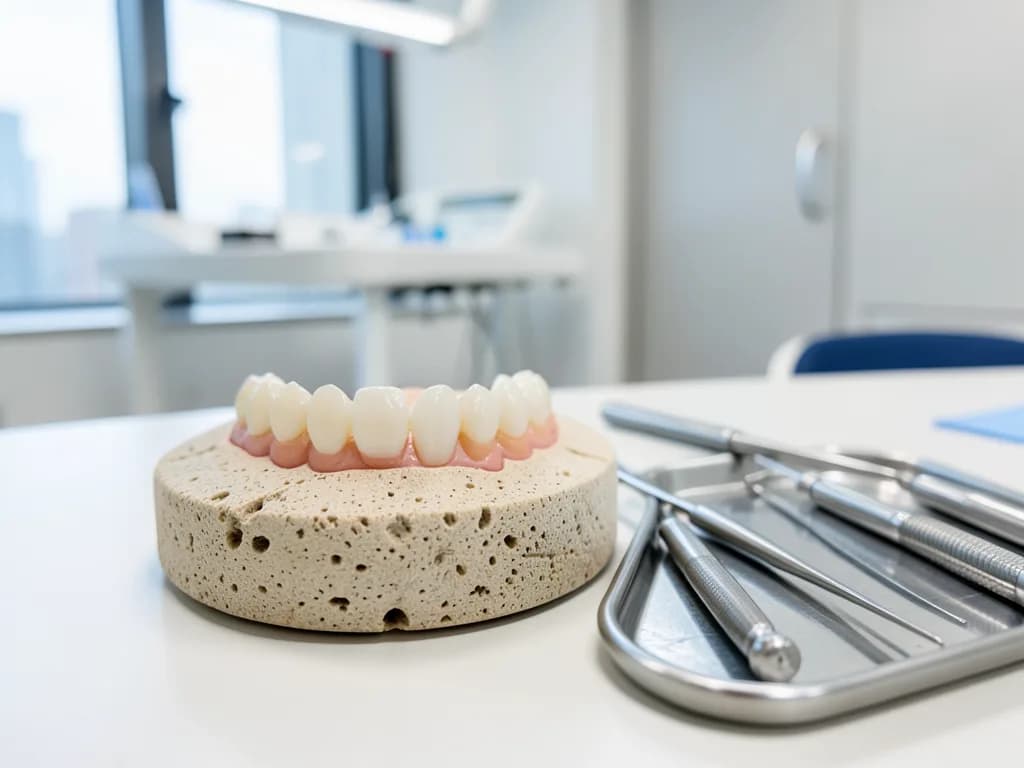
Types of Dental Bridge Available in Dubai
The right type of dental bridges depends on the location of the gap, the condition of adjacent teeth, and your long-term goals.
The most common type. Two adjacent teeth on either side of the gap (abutment teeth) are reduced and crowned, with an artificial tooth (pontic) suspended between them. All three units are fused into a single rigid structure. The most cost-effective and widely available bridge option at Dubai clinics.
Advantages
- ✓ Proven and durable — 10–15 year lifespan
- ✓ No surgery needed
- ✓ Fixed and permanent — not removable
- ✓ Completed in 2–3 appointments
Limitations
- ✗ Healthy adjacent teeth must be irreversibly reduced
- ✗ No bone preservation under the pontic
- ✗ Cleaning underneath requires a floss threader
Supported on only one side rather than two — suitable when only one adjacent tooth is available as an abutment, or when the missing tooth is at the end of the arch. Less common than traditional bridges due to higher stress concentration on the single abutment, making them less suitable for back teeth with high bite forces.
Advantages
- ✓ Requires only one abutment tooth prepared
- ✓ Useful when adjacent tooth is on one side only
- ✓ Fixed restoration — not removable
Limitations
- ✗ Higher mechanical stress on single abutment
- ✗ Not suitable for back teeth in most cases
- ✗ Risk of abutment tooth fracture under load
A conservative option where a pontic is supported by metal or ceramic wings bonded to the back surfaces of adjacent teeth — no crowning required. Ideal for front teeth in younger patients or as a temporary solution. The adjacent teeth require minimal preparation. However, the bond can debond under load, making Maryland bridges less suitable for back teeth.
Advantages
- ✓ Minimal tooth preparation — adjacent teeth not crowned
- ✓ Reversible in some cases
- ✓ Good short-to-medium term solution for front teeth
Limitations
- ✗ Can debond — not as reliable as traditional bridge
- ✗ Not suitable for back teeth with high bite force
- ✗ Potential for debonding under chewing stress
Instead of using natural teeth as abutments, the bridge is anchored on dental implants. This is the gold standard for replacing multiple consecutive missing teeth — it preserves jawbone, does not require reducing adjacent healthy teeth, and can last 20+ years. A 3-unit implant-supported bridge (replacing one tooth on two implants) is increasingly popular at Dubai specialist clinics.
Advantages
- ✓ No healthy teeth reduced
- ✓ Preserves jawbone — no bone loss under pontic
- ✓ Longest lifespan (20+ years)
- ✓ Optimal aesthetics and function
Limitations
- ✗ Higher cost and longer treatment time
- ✗ Requires surgery for implant placement
- ✗ 3–6 month healing before bridge fitted
Bridge vs Implant vs Partial Denture
Choosing the right replacement option for a missing tooth depends on budget, timeline, and long-term goals. For an in-depth analysis, see our implants vs bridge guide.
| Factor | Bridge | Implant | Partial Denture |
|---|---|---|---|
| Cost (AED) | 2,500 – 5,500 | 8,000 – 15,000 (per tooth) | 1,500 – 4,000 |
| Treatment time | 2–3 weeks | 3–6 months | 2–4 weeks |
| Adjacent teeth affected | Yes (irreversible reduction) | No | Minor (clasps on teeth) |
| Bone preservation | No | Yes | No |
| Removable | No | No | Yes |
| Lifespan | 10–15 years | 20+ years | 5–10 years |
| Best for | 1–2 missing teeth, budget, speed | Long-term investment, bone health | Multiple gaps, budget |
The Dental Bridge Procedure Step by Step
Traditional dental bridges require 2–3 appointments over 2–3 weeks. Implant-supported bridges require a longer process of 3–6 months for osseointegration.
Assessment and Treatment Planning
Your dentist examines the gap, the adjacent abutment teeth, and the surrounding bone with X-rays. Abutment teeth must have healthy roots, adequate bone support, and be free of active decay or gum disease. The dentist discusses bridge type options, materials, and cost with you. In Dubai, zirconia is increasingly recommended over PFM for its superior aesthetics and metal-free nature.
Abutment Tooth Preparation
Under local anaesthesia, the two adjacent teeth are reduced on all surfaces to create space for the bridge wall thickness. This is irreversible — the enamel removed cannot be restored. The amount of reduction depends on the bridge material: zirconia requires approximately 1.5–2 mm. A digital scan or polyvinyl siloxane impression is taken of the prepared teeth, the gap, and the opposing arch.
Shade Selection and Temporary Bridge
The shade of the bridge is selected using a shade guide in natural light. A temporary bridge is fabricated and cemented over the prepared abutment teeth to protect them, maintain the space, and allow normal eating while the permanent bridge is fabricated by the laboratory — typically 7–14 days.
Bridge Try-In and Fitting
The completed permanent bridge is tried in without cement. The fit of each crown unit, the pontic contact with the gum ridge, the contact points with neighbouring teeth, and the bite are all assessed. The shade is verified in natural light. Any adjustments are made. The bridge is then permanently cemented using resin cement (for zirconia) or glass ionomer (for PFM). The bite is rechecked.
Dental Bridge Prices in Dubai 2026
All prices in AED per bridge unit, unless noted. See the full 2026 dental cost guide for complete pricing across all treatments.
| Bridge Type | AED Range | Lifespan | Notes |
|---|---|---|---|
| Traditional 3-unit bridge (PFM) | AED 2,500 – 4,500 | 10–15 years | Budget to mid-range clinics |
| Traditional 3-unit bridge (zirconia) | AED 3,500 – 5,500 | 15–20 years | Premium aesthetics, metal-free |
| Cantilever bridge | AED 2,000 – 4,500 | 8–12 years | Single abutment, front teeth only |
| Maryland resin-bonded bridge | AED 1,500 – 3,500 | 5–10 years | Minimal prep; front teeth preferred |
| Implant-supported 3-unit bridge | AED 8,000 – 20,000 | 20+ years | Gold standard; requires surgery |
| 4-unit or longer span bridge | AED 4,000 – 10,000 | 10–15 years | 2 missing teeth, 3 abutment crowns |
Prices from Dubai clinic surveys, February 2026. Premium clinics in DIFC, JBR or Downtown Dubai may charge 20–40% above mid-range figures.
Bridge Maintenance and Aftercare
Daily care essentials
- ✓ Use a floss threader to clean under the pontic daily
- ✓ Water flosser (oral irrigator) highly recommended
- ✓ Brush the crown margins at the gumline thoroughly
- ✓ Attend six-monthly check-ups for margin assessment
- ✓ Avoid very hard foods on the bridge
Warning signs
- ! Bridge feels loose or moves — see dentist promptly
- ! Sensitivity under one of the crowns — may indicate decay
- ! Gum swelling under the pontic — bacteria accumulation
- ! Pain on biting — may indicate bite issue
- ! Visible dark line appearing at gum margin on PFM bridge
Dubai context: Dental bridges are one of the most frequently performed major restorative procedures at Dubai dental clinics. Many patients prefer bridges over implants for their faster treatment timeline and lower upfront cost. A large proportion of bridge referrals involve patients who had teeth extracted years ago and are now experiencing shifting of adjacent teeth — emphasising the importance of replacing missing teeth promptly.
For a full AED breakdown of bridge pricing by material and clinic tier, see our dental bridge cost Dubai guide. A general dentist in Dubai can place most conventional bridges, though implant-supported bridges require a specialist. If cost is a concern, explore our tips for finding an affordable dentist in Dubai who offers payment plans and transparent quotes.
Bridge Duration and Timeline at a Glance
| Bridge Type | Appointments | Total Time | Anesthesia |
|---|---|---|---|
| Traditional 3-unit bridge | 2–3 | 2–3 weeks | Local |
| Cantilever bridge | 2–3 | 2–3 weeks | Local |
| Maryland resin-bonded bridge | 2 | 1–2 weeks | Minimal or none |
| Implant-supported bridge | 6–10 | 3–6 months | Local or IV sedation |
| CAD/CAM same-day bridge | 1 | Same day | Local |
Same-day CAD/CAM bridges require an in-house milling unit — available at select premium Dubai dental clinics. Most standard bridges follow the 2–3 appointment model with 7–14 days lab fabrication between appointments.
Technology and Materials Used for Dental Bridges in Dubai
CAD/CAM Digital Design and Milling
Most Dubai specialist clinics use intraoral digital scanners (iTero, TRIOS, Cerec) to capture a 3D model of the prepared teeth. The bridge is then designed in CAD software and milled from a solid block of zirconia or e.max ceramic. This eliminates impression errors, speeds up fabrication, and produces superior marginal fit compared to conventional impression-based bridges.
Zirconia (Yttrium-Stabilised Tetragonal Zirconia)
The gold standard material for dental bridges at Dubai clinics in 2026. Zirconia is metal-free, biocompatible, fracture-resistant (flexural strength 900–1,200 MPa), and highly aesthetic. Monolithic zirconia is used for posterior bridges where maximum strength is needed; translucent zirconia (e.g. Katana STML) for anterior bridges requiring maximum aesthetics.
E.max (Lithium Disilicate)
Press-ceramic material with superior optical translucency — ideal for single front-tooth Maryland bridges or short anterior spans where matching natural tooth colour is paramount. Flexural strength of 400–500 MPa makes it less suitable for long-span posterior bridges but excellent for cosmetic front cases.
CBCT 3D Scanning for Implant Planning
For implant-supported bridges, a CBCT scan (AED 400–800) provides a 3D map of jaw bone volume, nerve canal positions, and sinus proximity. This is mandatory before implant placement and is used to plan implant position virtually using software such as Nobel Clinician or coDiagnostiX.
Digital Bite Registration (T-Scan)
T-Scan computerised occlusal analysis detects premature contacts and uneven force distribution on a new bridge. Used at specialist prosthodontic clinics to ensure ideal bite balance after cementation, reducing the risk of bridge fracture or abutment tooth overload.
Resin Cement and Adhesive Bonding
Zirconia bridges require specialised adhesive resin cements (e.g. Panavia, RelyX Unicem) with surface treatment of the fitting surface using airborne particle abrasion and MDP-based adhesive. PFM bridges use glass ionomer or resin-modified glass ionomer. Proper cementation protocol is critical — poorly cemented bridges fail prematurely.
Pain Level and Comfort During Dental Bridge Treatment
During preparation appointment
- ✓ Performed under local anaesthesia — the procedure itself is painless
- ✓ Topical anaesthetic gel applied before injection to minimise discomfort
- ✓ Sensitivity and aching in prepared teeth for 24–48 hours after anaesthetic wears off
- ✓ Ibuprofen 400 mg as needed manages post-prep sensitivity adequately
- ✓ Most patients return to work the same day
After bridge cementation
- ✓ Mild sensitivity for 1–2 weeks as gums adapt to crown margins
- ✓ Bite may feel slightly high — returns for adjustment is normal and expected
- ✓ Sharp bite pain that persists beyond 3 weeks may indicate bite issue — revisit dentist
- ✓ Gum tenderness under the pontic in the first 2 weeks — normal as tissue adapts
- ✓ Patients needing implant surgery for implant-supported bridges can use IV sedation
Before and After a Dental Bridge — What Patients Experience
Before the Bridge
- ✗ Visible gap affecting smile and confidence
- ✗ Difficulty chewing — food packing into the space
- ✗ Adjacent teeth drifting and tilting into the gap
- ✗ Opposing tooth over-erupting without contact
- ✗ Bone resorption under the missing tooth site
- ✗ Speech changes if front tooth missing
- ✗ Self-consciousness about smiling or eating
After the Bridge
- ✓ Natural-looking, colour-matched replacement tooth
- ✓ Normal chewing function restored on the treated side
- ✓ Adjacent and opposing teeth stabilised
- ✓ Improved confidence when smiling
- ✓ Gum contour under the pontic reshapes over 4–8 weeks
- ✓ Speech fully normalised for anterior bridges
- ✓ Fixed restoration — no removal required
Which Dental Specialist Places Bridges in Dubai
Prosthodontist (Specialist)
A prosthodontist has completed 3 additional years of specialty training in crown, bridge, implant, and full-mouth rehabilitation. In Dubai they hold a DHA prosthodontics specialist licence. Recommended for complex multi-unit bridges, implant-supported bridges, and cases requiring full occlusal rehabilitation.
Best for: Complex cases, implant bridges, full-mouth rehabilitation
General Dentist
Experienced general dentists routinely place conventional 3-unit dental bridges at Dubai clinics. For straightforward cases — a single missing premolar or molar with healthy adjacent abutment teeth — a skilled general dentist produces excellent results. A general dentist in Dubai is appropriate for most bridge cases.
Best for: Conventional 3-unit bridges, Maryland bridges
To browse verified specialists, see our dental specialists Dubai directory. For implant-supported bridges, you may also need an oral surgeon for implant placement — see our dental implants Dubai guide.
Age Suitability for Dental Bridges
Children and Teenagers
Conventional bridges are generally not placed until jaw growth is complete — typically 18–21 years. Before this, a removable partial denture or a Maryland bridge (minimal prep) may be used as a temporary space maintainer. Placing permanent bridges in growing patients risks abutment tooth positioning shifting as the jaw develops.
Adults (18–60)
Ideal age group for dental bridges. Bone volume is typically adequate, abutment teeth are stable, and patients have the manual dexterity for bridge cleaning. Implant-supported bridges are equally suitable. The choice between bridge and implant depends on bone volume, adjacent tooth condition, and personal preference.
Seniors (60+)
Bridges remain highly appropriate for seniors. Implant surgery may carry increased risk in patients with certain medical conditions (bisphosphonate therapy, anticoagulants, uncontrolled diabetes). A traditional bridge avoids surgery entirely and can be placed quickly with minimal medical risk under local anaesthesia.
Recovery Timeline and Long-Term Aftercare for Your Bridge
Mild sensitivity in abutment teeth and tenderness around crown margins. Normal. Avoid very hard or sticky foods. Take ibuprofen as needed. Use sensitive toothpaste on the abutment teeth.
Gum contour around the pontic begins to adapt. Bite may need a minor adjustment — contact your dentist if bite feels uneven after a few days. Begin using a floss threader to clean under the pontic daily from day 1.
Full adaptation. Sensitivity resolves. Gum tissue under the pontic matures and contours around the artificial tooth. Normal chewing fully restored. Establish daily water flosser or floss threader routine.
Six-monthly check-ups: dentist checks crown margins for secondary decay, assesses pontic gum contact, and examines the abutment teeth radiographically every 1–2 years. Address any looseness promptly — a re-cementation before decay develops extends bridge life significantly.
For comprehensive cost information across all dental treatments, see our 2026 dental cost guide. If you also need gum treatment before or after your bridge, see our gum disease treatment guide.
Does UAE Insurance Cover Dental Bridges?
Bridges are typically covered as major restorative
UAE health insurance plans typically cover dental bridges under major restorative benefits at 50–70% reimbursement after deductible. The insurance-approved material is usually PFM — if you choose an all-zirconia upgrade, you pay the difference. Pre-authorisation is required by Daman, AXA, Bupa, MetLife and NextCare before treatment. The tooth must have been missing as a result of extraction (not congenitally missing, which may be excluded on some plans). Allow 5–10 business days for pre-auth approval.
For implant-supported bridges, insurance coverage varies significantly — check your specific plan. Note that IV sedation for implant bridge surgery is billed separately and rarely covered. See our dental insurance Dubai guide.
How to Maximise Your Bridge Lifespan in Dubai
Daily Cleaning Essentials
- ✓ Floss threader under the pontic — every single day
- ✓ Water flosser on medium pressure for pontic area
- ✓ Fluoride toothpaste on crown margins twice daily
- ✓ Interdental brush if gap under pontic allows it
Foods to Avoid
- ✓ Hard foods directly on the bridge (ice, nuts, hard candy)
- ✓ Sticky and chewy foods (toffee, caramel, chewing gum)
- ✓ Biting non-food items (pens, nails, packaging)
- ✓ Biting into crusty bread from the bridge side
Regular Professional Care
- ✓ Six-monthly checkup with margin inspection
- ✓ Annual periapical X-rays of abutment teeth
- ✓ Professional cleaning around crown margins
- ✓ Night guard if you grind — prevents bridge fracture
If you grind your teeth at night, a dental crown on a bridge is vulnerable to fracture. See our night guard cost Dubai guide to protect your investment. For dental anxiety during bridge preparation, IV sedation is available at specialist Dubai clinics.
Frequently Asked Questions
How long does a dental bridge last in Dubai?
A traditional dental bridge with zirconia crowns placed at a reputable Dubai clinic typically lasts 10–15 years, with many bridges surviving 15–20 years with good care. PFM (porcelain-fused-to-metal) bridges similarly last 10–15 years. The longevity depends primarily on oral hygiene (bridges require dedicated cleaning underneath with floss threaders or water flossers), the health of the abutment teeth, bite forces, and whether you grind your teeth. The most common causes of bridge failure are secondary decay on the abutment teeth at the crown margin (resulting from inadequate cleaning) and abutment tooth fracture. Regular check-ups allow your dentist to catch problems early.
Should I choose a bridge or a dental implant for a missing tooth?
The choice between a bridge and an implant depends on several factors. Implants are the gold standard — they preserve bone, do not require reducing adjacent teeth, and last 20+ years, making them more cost-effective long-term despite higher upfront cost. Bridges are preferred when: the adjacent teeth already need crowns for other reasons (and the tooth reduction is therefore not an additional sacrifice), when treatment time is a priority (bridge takes 2–3 weeks vs 3–6 months for an implant), when budget is limited, or when the patient is not medically suitable for implant surgery. For a detailed comparison, see our implants vs bridge Dubai guide.
Is dental bridge treatment covered by UAE health insurance?
Dental bridges are generally covered by UAE health insurance under major restorative benefits, typically at 50–70% of the cost after the annual deductible. The insurance-approved rate is usually for a basic PFM bridge; if you upgrade to all-ceramic zirconia, you pay the difference. Pre-authorisation is required by most major insurers (Daman, AXA, Bupa, MetLife, NextCare) before bridge treatment begins. Implant-supported bridges may have limited or no coverage depending on your plan — check your policy. Cosmetic bridges (placed purely for aesthetic improvement on otherwise sound teeth) are excluded. See our dental insurance Dubai guide for full details.
How do I clean under a dental bridge?
Cleaning under the pontic (false tooth suspended over the gum) is the most important and often most neglected aspect of bridge care. Food and bacteria accumulate in the gap between the pontic and the gum if not cleaned daily. The most effective tools are: a floss threader (pass floss under the pontic and pull through, then clean by moving the floss back and forth), a water flosser (oral irrigator) set to medium pressure — excellent for flushing debris from under the pontic, and specifically designed bridge floss with a stiffened end. Interdental brushes can also be used if the gap is large enough. Neglecting cleaning under a bridge leads to gum inflammation under the pontic and secondary decay on the abutment teeth, both of which shorten bridge life significantly.
Can a dental bridge be replaced or removed?
A cemented bridge can be removed by a dentist using an instrument that delivers a controlled shock to break the cement seal — a procedure called bridge removal or decementing. This is done carefully to avoid damaging the prepared abutment teeth. If the bridge is intact and the abutment teeth are still healthy, the bridge can be recemented or a new bridge placed. If the abutment teeth have developed decay or become compromised, you may need root canal treatment, a post and core, and a new bridge or implants. Modern adhesive resin cements bond extremely strongly — some bridges are effectively permanent and very difficult to remove without fracturing the bridge. In those cases, the bridge is sectioned and a new one made.
What materials are dental bridges made from in Dubai?
Dubai clinics offer several bridge materials. All-ceramic zirconia bridges are the most commonly recommended today — they are metal-free, highly biocompatible, strong, and produce excellent aesthetics with no visible dark margin at the gumline. E.max (lithium disilicate) is sometimes used for front-tooth bridges where maximum translucency is needed, but is less suitable for long-span bridges due to lower fracture resistance than zirconia. PFM (porcelain-fused-to-metal) bridges remain common due to lower cost and long clinical track record, but the metal substructure can show a dark line at the gum margin as gums recede over time. Full metal (gold alloy) bridges are occasionally used for back teeth requiring maximum strength. Your dentist will recommend the most appropriate material based on the location, span length, and aesthetic requirements.
How many dental bridges can be placed in one arch?
Multiple dental bridges can be placed in the same arch if the clinical conditions are suitable. Each bridge requires healthy abutment teeth with adequate bone support. In some cases, patients have two separate bridges in the same jaw — for example, one replacing a premolar and another replacing a molar on the opposite side. For patients missing several consecutive teeth, a longer-span bridge or an implant-supported bridge may be more appropriate. Your Dubai dentist will assess the number and position of missing teeth to determine the best combination of dental bridges for your case.
Find a Bridge Specialist in Dubai
Compare verified clinics offering dental bridges and implants, check insurance acceptance, and read real patient reviews. Or find a dentist near you in Dubai to explore all treatment options.