Dental Hygienist Dubai
A dental hygienist is the preventive care specialist at the heart of every good dental clinic. Regular appointments — every 3 to 6 months depending on your gum health — remove calculus that brushing cannot reach, catch early gum disease before it causes bone loss, and significantly reduce your lifetime dental treatment costs. Here is everything you need to know about finding and visiting a dental hygienist in Dubai.
What Is a Dental Hygienist
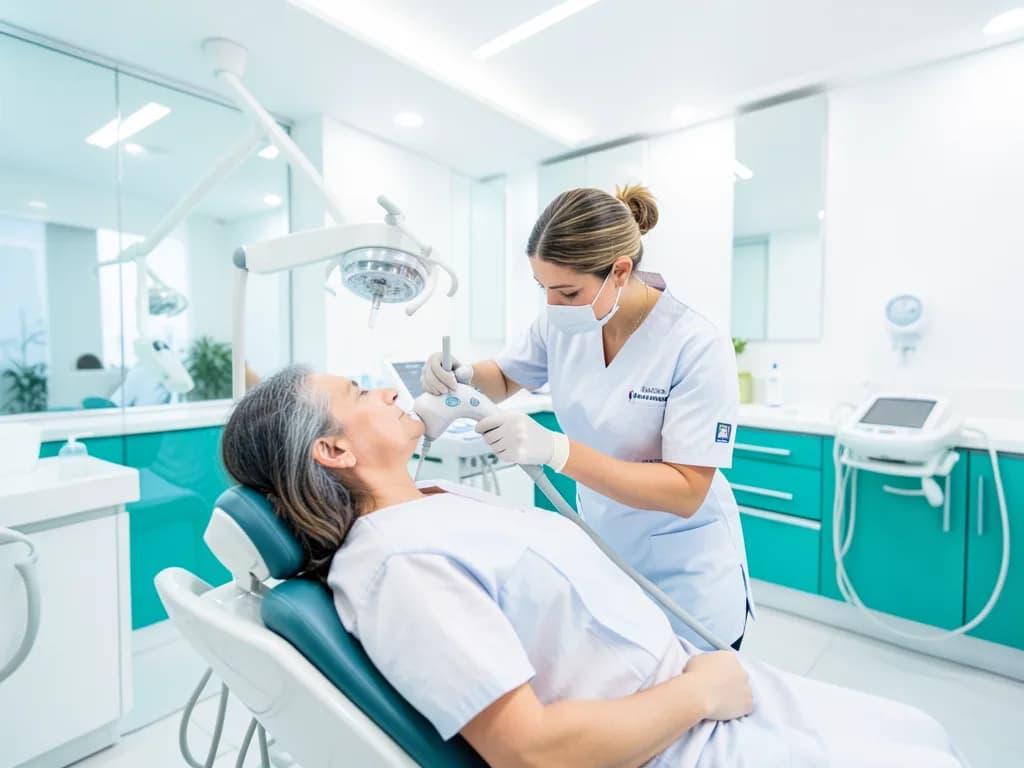
A dental hygienist is a licensed oral health professional specialising in preventive dental care. Their primary role is to professionally clean teeth, assess gum health, and educate patients on effective home care routines. Dental hygienists are not dentists — they cannot diagnose disease, prescribe treatment, or perform restorative or surgical procedures. In Dubai, they practise under the supervision of a DHA-licensed dentist.
In Dubai, dental hygienists must hold a DHA licence as a Dental Hygienist or Allied Dental Health Professional. Their training typically involves a 2–3 year diploma or bachelor's degree in dental hygiene. The DHA defines their scope of practice strictly, and any hygienist practising in Dubai without a valid DHA licence is operating outside the law. You can verify a hygienist's licence at dha.gov.ae.
Most dental clinics in Dubai employ at least one full-time hygienist. Standalone hygienist-only practices are rare in Dubai — unlike in the UK and Australia where dental hygienists increasingly practise with greater autonomy. In practice, your hygiene appointment in Dubai will typically be booked at a dental clinic where a dentist is also present and available for referral if the hygienist identifies anything requiring dental assessment.
DHA Scope of Practice for Dental Hygienists in Dubai
Understanding what a dental hygienist can and cannot do in Dubai prevents confusion at your appointment.
What a hygienist CAN do
- Professional scaling using ultrasonic and hand scalers
- Supragingival and subgingival polishing
- Stain removal and air polishing (Airflow)
- Fluoride varnish application
- Fissure sealant placement (preventive)
- Periodontal charting (probing pocket depths)
- Oral hygiene instruction and home care education
- Dietary counselling for caries prevention
- Radiograph exposure (under dentist prescription)
- Desensitising agent application
What a hygienist CANNOT do
- Diagnose disease (caries, periodontal disease, oral cancer)
- Prescribe medications or antibiotics
- Administer local anaesthesia (except where additionally licensed)
- Perform restorations (fillings, crowns, veneers)
- Extract teeth
- Perform surgical procedures
- Work independently without dentist supervision
What to Expect at a Hygiene Appointment in Dubai
A standard appointment lasts 45–60 minutes. Here is a step-by-step breakdown of what happens during a typical visit.
Medical history review
The hygienist reviews your medical history, medications, and any changes since your last visit. Medical conditions such as diabetes, heart disease, and medications including blood thinners are relevant to your gum health and how your hygiene appointment is conducted.
Periodontal assessment
Using a periodontal probe, the hygienist measures the depth of the sulcus (the groove between tooth and gum) at six points around each tooth. Depths above 3 mm may indicate early gum disease. Bleeding on probing is recorded as an indicator of active inflammation.
Ultrasonic and hand scaling
An ultrasonic scaler uses high-frequency vibration and a water spray to break up calculus deposits efficiently. Hand scalers and curettes are then used to remove calculus from root surfaces below the gumline. This is the core of the appointment.
Polishing and stain removal
A rotating rubber cup with prophylaxis paste polishes the tooth surfaces, removing surface staining from tea, coffee, or tobacco. Air polishing (Airflow) with a fine sodium bicarbonate or erythritol powder spray may be used for more extensive staining.
Fluoride varnish application
A professionally applied fluoride varnish strengthens enamel and reduces sensitivity. In Dubai, fluoride varnish is especially beneficial for patients with exposed root surfaces or early enamel erosion. The varnish sets quickly and patients can eat and drink normally after 30–60 minutes.
Oral hygiene instruction
The hygienist reviews your brushing technique, interdental cleaning (floss or interdental brushes), and provides personalised advice on areas showing plaque accumulation. This is one of the most clinically valuable parts of the appointment — personalised instruction is more effective than generalised brushing advice.
Dental Hygienist Costs in Dubai
All prices in AED. See also the full dental cleaning cost Dubai guide for a detailed comparison across clinics and areas.
| Service | Cost Range |
|---|---|
| Standard scale and polish (45–60 min) | AED 200 – 400 |
| Air polishing (Airflow stain removal) | AED 100 – 300 additional |
| Fluoride varnish application | AED 50 – 150 additional |
| Fissure sealants (per tooth) | AED 150 – 400 |
| Periodontal charting and assessment | AED 100 – 250 |
| Supportive periodontal therapy (post-treatment maintenance) | AED 400 – 900 |
How Often Should You See a Hygienist in Dubai
Every 6 months
Low risk
Healthy gums, good home care, non-smoker, no diabetes or systemic disease affecting gums, no previous gum disease history.
Every 3 – 4 months
Moderate risk
History of gingivitis, a few pockets of 4–5 mm, mild bone loss on X-ray, smoker, or diabetic patient with good glycaemic control.
Every 3 months
High risk
Active or previously treated periodontitis (Stage 3 or 4), uncontrolled diabetes, implant patients, smokers with bone loss.
Your dentist or hygienist will assess your periodontal risk at your first visit and recommend a personalised recall interval. High-risk patients should also see a periodontist in Dubai for specialist management alongside their hygiene appointments.
Check whether your plan covers hygiene visits on our dental insurance Dubai guide, or explore affordable dentists in Dubai for budget-friendly hygiene appointments.
Gum Health and Your Overall Health
The mouth is not separate from the rest of the body. Research consistently demonstrates that chronic gum disease (periodontitis) is associated with Type 2 diabetes, cardiovascular disease, stroke, and adverse pregnancy outcomes. The relationship is bidirectional — gum disease worsens blood sugar control, and poor blood sugar control worsens gum disease severity.
In the UAE, where the prevalence of Type 2 diabetes is among the highest globally, regular dental hygiene appointments carry even greater importance than in lower-risk populations. Professional removal of calculus and bacterial biofilm from the gumline reduces systemic inflammatory load — a mechanism by which periodontal treatment has been shown to modestly but measurably improve HbA1c levels in diabetic patients.
If you have noticed bleeding gums in Dubai, do not dismiss it as normal. Healthy gums do not bleed when brushed. Bleeding is a sign of active inflammation that a hygiene appointment — and possibly a referral to a periodontist — can address. If you are also noticing your gumline receding, read our gum recession treatment guide for specialist options.
DHA Licensing for Dental Hygienists in Dubai
All dental hygienists working in Dubai must hold a valid DHA licence as a Dental Hygienist or Allied Dental Health Professional. This is distinct from the specialist licences held by dentists — it confirms that the hygienist's qualifications, training duration, and competency have been reviewed and approved by the Dubai Health Authority.
Dubai's DHA licensing is separate from Abu Dhabi DOH and Northern Emirates MOH licensing. A hygienist who moves from Abu Dhabi to Dubai must obtain a separate DHA licence. Always verify your hygienist's licence at dha.gov.ae if you have any doubt about their credentials.
In Dubai, dental hygienists must practise under the supervision of a DHA-licensed dentist. They cannot own or operate an independent hygiene practice without a supervising dentist being responsible for the overall clinical environment. This is an important difference from countries such as the UK and Canada, where direct-access hygiene practice is permitted.
How to Find a Dental Hygienist in Dubai
- 1
Book through a dental clinic
Most dental clinics in Dubai have an in-house hygienist. When booking, ask specifically for a hygiene appointment — sometimes listed as 'scale and polish,' 'clean and check,' or 'prophylaxis' — and confirm the duration (look for 45–60 minutes, not a 15-minute polish only). Many clinics combine your hygiene visit with a dental check-up by the general dentist for a comprehensive assessment.
- 2
Check the hygienist's DHA licence
Ask the clinic to confirm that the hygienist is DHA-licensed. At reputable clinics, this information is readily available. You can independently verify at dha.gov.ae.
- 3
Confirm insurance network and benefit coverage
If your dental insurance covers hygiene appointments, confirm the clinic is in-network before booking. Check whether a dentist's examination on the same day is required for the hygiene benefit to be claimed.
- 4
Bring your dental records if new to a clinic
Previous X-rays and any periodontal chart records help the hygienist understand your history, identify areas of ongoing concern, and compare bone levels over time to detect any progressive disease.
When to Book Your Next Appointment
Do not wait until something hurts. Gum disease is largely painless until it is severe — bone destruction happens silently over years. The most effective dental hygiene strategy is prevention through regular professional cleaning at the interval recommended by your hygienist, combined with twice-daily brushing and daily interdental cleaning at home.
If you have not seen a hygienist in more than 12 months, now is a good time to book. If you have noticed any of the following, book promptly rather than waiting for your routine recall: bleeding on brushing, persistent bad breath, gum recession or teeth looking longer, sensitivity at the gumline, or any mobility of teeth. These may indicate active gum disease that needs assessment and treatment.
Dental Hygienist vs Dentist in Dubai
Patients often confuse the roles of a dental hygienist and a dentist. Both are licensed by the DHA and both contribute to your oral health — but their scopes of practice are very different. Understanding who does what helps you book the right appointment for your needs.
| Aspect | Dental Hygienist | Dentist |
|---|---|---|
| DHA Licence | Allied Dental Health Professional | General Dentist or Specialist |
| Training | 2–3 year diploma or bachelor's in dental hygiene | 5–6 year dental degree (BDS/DDS) + specialist residency if applicable |
| Can diagnose disease? | No — screening only; must refer to dentist | Yes — full diagnostic authority |
| Can prescribe medications? | No | Yes |
| Professional cleaning (scaling) | Yes — primary role | Yes — but typically delegates to hygienist |
| Fillings and restorations | No | Yes |
| Extractions | No | Yes |
| Periodontal charting | Yes — routine | Yes |
| Oral hygiene instruction | Yes — core competency | Yes — but less time typically allocated |
| Fluoride varnish | Yes | Yes |
| Cost of appointment | AED 200 – 500 (cleaning) | AED 200 – 800 (check-up, varies widely) |
| Works independently? | No — must be supervised by DHA-licensed dentist | Yes |
For a comprehensive guide to all dental professionals in Dubai, see our dental specialists Dubai guide.
Technology Used in Modern Dental Hygiene Appointments
The technology available at a dental clinic significantly affects the quality and comfort of your hygiene appointment. Modern oral hygiene practice has evolved well beyond a simple hand scaling session.
Ultrasonic Scaler
An ultrasonic scaler uses high-frequency vibration (25,000–30,000 Hz) transmitted through a metal tip, combined with a continuous water spray, to break up calculus deposits efficiently. The water spray also provides antibacterial lavage. Modern ultrasonic scalers are gentler and faster than hand scaling alone, and they are particularly effective for removing calculus from subgingival root surfaces — the most important area to clean for preventing progressive periodontitis. Most dental clinics in Dubai now use ultrasonic scalers as the standard cleaning tool.
EMS Airflow and Guided Biofilm Therapy
EMS Airflow devices deliver a controlled spray of fine erythritol powder, water, and air that removes dental biofilm (plaque), surface stains, and early calculus from teeth, implant surfaces, and orthodontic appliances without abrasion. The GBT (Guided Biofilm Therapy) protocol — developed by EMS — combines biofilm disclosing to map plaque location, targeted Airflow removal, and ultrasonic debridement in a structured sequence. This protocol reduces cleaning time, is more comfortable for sensitive teeth, and is particularly beneficial for patients with implants. Ask specifically whether your clinic offers GBT if you have dental implants or orthodontic appliances.
Subgingival Debridement Tools
For patients with periodontal pockets deeper than 3 mm, standard supragingival cleaning is insufficient. Subgingival debridement — cleaning below the gumline onto root surfaces — requires thin, curved ultrasonic tips or hand curettes specially designed to reach into pockets. This is the core of non-surgical periodontal therapy (scaling and root planing). A dental hygienist or periodontist performing this treatment uses tactile feedback from the curette to identify and remove calculus from root surfaces that cannot be seen directly.
Periodontal Probing and Charting
A periodontal probe is a graduated instrument used to measure the depth of the sulcus — the groove between the tooth root and the gum. Probing six sites per tooth and recording the depths creates a periodontal chart that serves as a baseline to track gum disease progression or stability over time. Electronic periodontal probes with automated charting software, such as the Florida Probe system, eliminate recording errors and allow year-on-year comparison. Plaque index scores and bleeding on probing percentages are also recorded to track the effectiveness of your home care between appointments.
Fluoride Varnish Application
Professional fluoride varnish delivers a high-concentration fluoride treatment (typically 5% sodium fluoride) directly to the tooth surface. The varnish adheres to enamel and releases fluoride over several hours, remineralising early lesions and reducing sensitivity at exposed root surfaces. Fluoride varnish is particularly beneficial for patients with root exposure following gum recession, early enamel erosion from acidic dietary habits common in the UAE (frequent juice and coffee consumption), or hypersensitivity at the gumline. It takes only a few minutes to apply and is included in most standard hygiene appointments.
Intraoral Camera and Digital X-rays
Modern hygiene appointments at well-equipped clinics include an intraoral camera review — a small wand camera that captures high-definition images of your teeth and gums. This allows the hygienist to show you problem areas in real time, improving your understanding of your own oral health and motivating better home care. Digital bitewing X-rays (prescribed by the supervising dentist) are taken periodically to detect proximal caries and monitor interproximal bone levels. Both tools contribute to a thorough preventive appointment that goes well beyond a simple scale and polish.
Benefits of Regular Dental Hygiene Appointments
Preventive dental care is the highest-return investment in your oral health. Regular visits to a DHA-licensed dental hygienist in Dubai deliver measurable benefits across multiple dimensions of health.
Remove Calculus You Cannot Brush Away
Calculus (tartar) is mineralised plaque that hardens on tooth surfaces and below the gumline. It cannot be removed by brushing or flossing — only professional ultrasonic scaling removes it. Calculus acts as a scaffold for bacteria that cause bone-destroying periodontitis.
Prevent Gum Disease Progression
Professional removal of subgingival calculus and biofilm halts the bacterial activity that drives bone and gum loss. Patients in active periodontal maintenance programmes lose significantly less bone over 10 years than those with sporadic dental attendance.
Detect Problems Early
The hygienist's periodontal assessment — probing six sites per tooth — detects early gum disease while it is still reversible. Early-stage gingivitis is completely reversible with professional cleaning and improved home care. Stage 3 or 4 periodontitis with bone loss is not reversible — only manageable.
Reduce Systemic Disease Risk
Multiple studies confirm that treating gum disease improves HbA1c levels in diabetic patients and reduces cardiovascular inflammatory markers. In the UAE, where Type 2 diabetes prevalence exceeds 15% of the adult population, professional oral hygiene has direct implications for systemic health beyond the mouth.
Lower Lifetime Dental Treatment Costs
A hygiene appointment at AED 200 to 500 every 3 to 6 months costs less than a single root canal (AED 1,200 to 3,000) or a single implant (AED 7,000 to 15,000). Preventing disease is consistently cheaper than treating it. Regular hygiene appointments are among the most cost-effective dental investments you can make.
Improve Aesthetics and Confidence
Stain removal from tea, coffee, and tobacco during a professional cleaning polishing appointment restores the natural brightness of teeth. Regular hygiene maintenance also reduces bad breath (halitosis) caused by bacterial biofilm accumulation that home brushing does not fully address.
Are There Any Risks to Professional Teeth Cleaning
Professional dental hygiene appointments are among the safest procedures in dentistry. However, patients should be aware of a small number of side effects and contraindications.
Common and Expected
- Temporary sensitivity to cold foods and drinks for 24–48 hours after scaling — particularly at exposed root surfaces. This resolves without treatment.
- Minor gum soreness after subgingival debridement in patients with active gum disease. Resolves within a few days.
- Mild bleeding during cleaning in patients with inflamed gums (gingivitis). This reduces significantly after regular hygiene appointments as gum health improves.
- Temporary loose feeling in teeth in patients with periodontitis after significant calculus removal — the calculus had been contributing to tooth support. This resolves as bone stabilises.
Who Should Tell Their Hygienist
- Patients taking anticoagulant medications (warfarin, aspirin, NOACs) — subgingival scaling may cause more bleeding; technique is modified accordingly
- Patients with pacemakers or implanted cardiac devices — older ultrasonic scalers may rarely interfere; inform the clinic in advance
- Patients with blood-borne infections (HIV, hepatitis B/C) — standard universal precautions apply; no additional risk to other patients
- Patients with joint replacements (hip, knee) — some authorities recommend antibiotic prophylaxis before dental cleaning; confirm with your orthopaedic surgeon
- Pregnant patients — routine hygiene is safe and recommended in all trimesters; X-rays are deferred unless clinically urgent
Insurance Coverage for Dental Hygiene in Dubai
Many UAE insurance plans include one or two dental hygiene appointments per year as part of their basic dental benefit. Coverage details vary significantly by plan tier and insurer.
Typically Covered
- Standard scale and polish — 1 to 2 sessions per year on most mid-tier and premium plans
- Periodontal charting as part of a dental examination
- Fluoride varnish application — often included within the basic hygiene benefit
- Scaling and root planing (deep cleaning) for periodontitis — classified as non-surgical periodontal treatment; pre-authorisation often required
- Fissure sealants for children — covered on family plans as preventive treatment
Important Coverage Notes
- •The mandatory Dubai basic insurance plan (DHS-managed) typically covers basic preventive dental care including scale and polish
- •Bupa, Daman Enhanced, and AXA SmartHealth premium plans often cover two hygiene visits per year
- •Air polishing (Airflow) and supportive periodontal therapy sessions may require pre-authorisation
- •Some plans require that hygiene appointments occur at in-network clinics to qualify for coverage
- •Co-payments of 10–20% typically apply even for covered hygiene appointments under Dubai plans
- •Periodontal specialist care (periodontist) is separate from standard hygiene benefit and usually requires referral
For a full breakdown of which UAE insurance plans cover dental hygiene and how to claim, see our dental insurance Dubai guide. You can also search for hygiene clinics that accept your insurance plan on our platform.
How Often to Visit a Dental Hygienist in Dubai
The optimal recall interval for dental hygiene appointments is not the same for everyone. It is determined by your individual periodontal risk profile — not simply by a calendar reminder every 6 months. Your DHA hygienist or dentist will assess your risk at your first appointment and recommend a personalised schedule.
| Risk Level | Recommended Frequency | |
|---|---|---|
| Low risk | Every 6 months | Healthy gums, good home care, non-smoker, no systemic conditions, no history of gum disease |
| Moderate risk | Every 3 – 4 months | Gingivitis, pockets of 4–5 mm, mild bone loss, controlled diabetic, occasional smoker |
| High risk | Every 3 months | Active or treated periodontitis, uncontrolled diabetes, heavy smoker, dental implant patients, Stage 3–4 periodontitis |
| Supportive periodontal therapy | Every 3 months | Post-treatment periodontitis maintenance — may be managed jointly by hygienist and periodontist |
Patients with dental implants should note that peri-implant maintenance — professional cleaning of the implant surface and monitoring of peri-implant bone levels — is a separate discipline from routine hygiene. Many oral hygienists in Dubai now use EMS Airflow and specialised implant-safe curettes for implant maintenance. Your recall interval for implant maintenance may differ from your hygiene recall for natural teeth. For specialist management of active gum disease around teeth or implants, a periodontist in Dubai should be involved in your care. Also see our teeth cleaning Dubai guide and the dental check-up Dubai guide for more on preventive appointments.
Frequently Asked Questions
What is the difference between a dental hygienist and a dentist in Dubai?
A dental hygienist is a licensed oral health professional who specialises in preventive care — professional cleaning, scaling, polishing, fluoride application, and patient education about home care. A dentist is trained in the full scope of oral healthcare including diagnosis, restorative treatment (fillings, crowns), extractions, and complex procedures. In Dubai, the DHA defines a strict scope of practice for dental hygienists: they must work under the supervision of a licensed dentist and cannot diagnose disease, prescribe medications, or perform restorative or surgical procedures independently. The hygienist's role is prevention — catching problems early and maintaining the gum health that makes all other dental treatment more successful.
How much does a dental hygienist appointment cost in Dubai?
A standard dental hygiene appointment in Dubai — including ultrasonic scaling, hand scaling where needed, polishing, and oral hygiene instruction — costs AED 200–500. The range reflects differences in clinic tier, the hygienist's experience level, and whether the appointment includes additional services such as fluoride varnish application or a full periodontal assessment with probing and charting. Budget-friendly polyclinics in areas such as Deira and Al Quoz tend to be at the lower end of this range. Premium dental centres in DIFC, Downtown Dubai, and JBR charge towards the upper end. Air polishing (Airflow) or stain removal using specialist equipment may be charged as an additional item at AED 100–300 above the standard cleaning fee.
How often should I see a dental hygienist in Dubai?
The recommended frequency depends on your individual risk profile. Low-risk patients with healthy gums, good home care, no smoking history, and no systemic conditions affecting gum health are typically seen every 6 months. Moderate-risk patients — those with a history of gingivitis, a few deeper pockets, or mild bone loss — benefit from 3–4 monthly hygiene visits. High-risk patients, including those with active or previously treated periodontitis, uncontrolled diabetes, smokers, or those with implants, should attend at 3-monthly intervals as part of a supportive periodontal therapy programme supervised by a periodontist. Your dentist or hygienist will recommend the appropriate recall interval after your initial assessment.
Is dental hygiene treatment covered by insurance in Dubai?
Coverage for dental hygiene appointments varies across insurance plans in Dubai. Many standard and mid-tier plans cover one or two hygiene appointments per year as part of a basic dental benefit, particularly if the treatment is classified as preventive or as a scale and polish. Some plans restrict coverage to a set number of surface units or apply a co-payment. Premium plans from Bupa, Daman Enhanced, and AXA SmartHealth often include more generous dental hygiene benefits. If your gum disease is significant enough to require multi-session scaling and root planing performed by a periodontist, this is usually classified separately and may require pre-authorisation. Always check whether your plan requires appointments to be at an in-network dental clinic for the benefit to apply.
Why is regular dental hygiene important and what happens if I skip it?
Even with excellent brushing and flossing, calculus (tartar) accumulates on teeth and below the gumline in areas that a toothbrush cannot reach. Calculus is hardened mineralised plaque that can only be removed professionally — it cannot be brushed away. When left in place, subgingival calculus acts as a scaffold for bacteria that cause progressive bone destruction (periodontitis). Multiple large-scale studies have confirmed a bidirectional relationship between gum disease and serious systemic conditions including Type 2 diabetes, cardiovascular disease, and adverse pregnancy outcomes. In Dubai, where diabetes prevalence is significantly elevated compared to global averages, regular hygiene appointments are a particularly important investment in overall health — not just oral health. Skipping hygiene visits allows calculus and bacterial biofilm to accumulate, increasing the risk that early reversible gingivitis progresses to irreversible periodontitis requiring specialist periodontal treatment.
Can I see a dental hygienist without seeing a dentist first in Dubai?
In Dubai, DHA regulations require dental hygienists to practise under the supervision of a licensed dentist. In practice, most dental clinics in Dubai will require a dentist to perform or review a baseline examination before or alongside your first hygiene appointment, or at regular intervals. This ensures that any pathology beyond routine hygiene scope — such as cavities, early-stage tumours, or orthodontic issues — is identified by a qualified diagnostician. At your first visit to any dental clinic, expect to see a dentist for an initial examination as well as the hygienist for your cleaning. Subsequent hygiene-only appointments are typically possible at the same clinic once you are an established patient, subject to the clinic's protocol.
Find a Dental Hygienist in Dubai
Browse verified dental clinics with DHA-licensed hygienists across Dubai. Book a professional cleaning today.
Use our explore dental clinics in Dubai to compare clinics, read reviews, and book appointments.
Find a Hygienist Near YouFree to browse — no registration required