Teeth Cleaning in Dubai — The Complete Guide
Professional teeth cleaning is the single most effective preventive treatment in dentistry. This guide explains every type of dental clean available in Dubai — from a basic scale and polish to full-mouth deep cleaning — with honest cost comparisons, insurance information, and what to expect at each visit. For costs across all dental treatments, see our 2026 dental cost guide.
What Is Professional Teeth Cleaning?
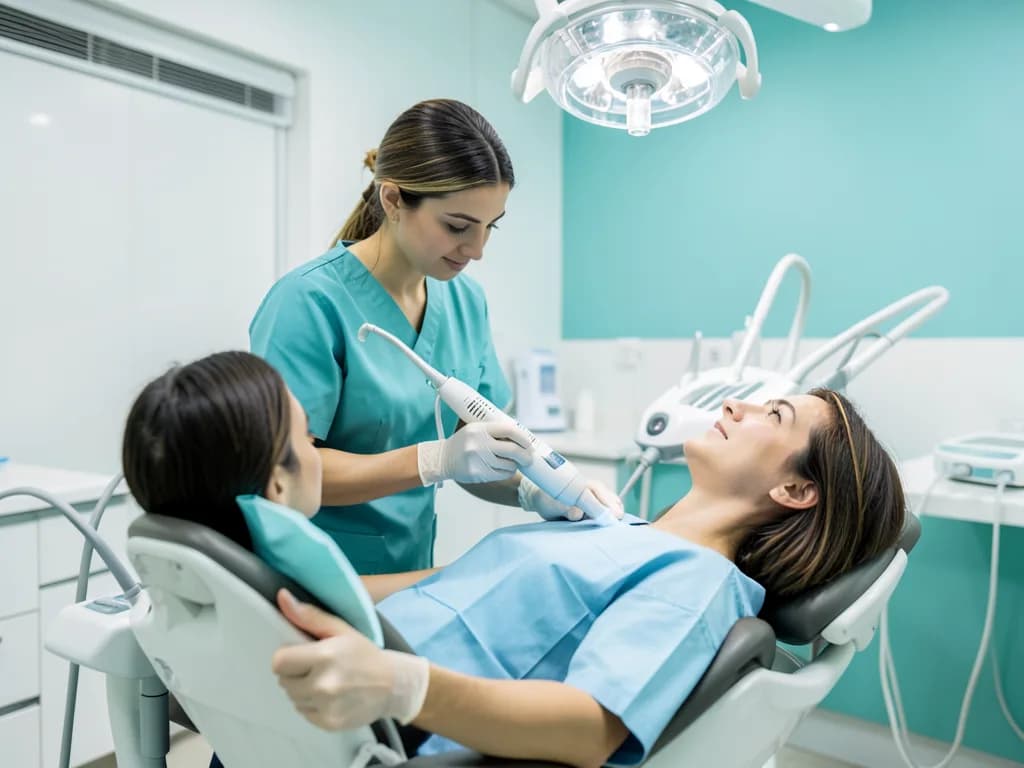
Even with diligent brushing and flossing, plaque hardens into calculus (tartar) in areas that home instruments cannot reach — particularly below the gumline and between the back teeth. Only professional instruments (ultrasonic scalers and curettes) can remove calculus once it has mineralised. Leaving calculus in place allows bacteria to thrive and releases toxins that damage the supporting bone and gum tissue, leading to periodontal (gum) disease and, eventually, tooth loss.
Professional cleaning is not a luxury — the World Health Organization and every major dental body worldwide recommends routine scaling at least twice per year for the prevention of gum disease and dental decay. In Dubai's climate, where coffee and sugary drinks are heavily consumed, calculus tends to form relatively quickly, making regular professional cleans even more important.
If you have been diagnosed with gum disease, read our dedicated bleeding gums Dubai guide for more information on periodontal treatment. Our clinic directory lets you filter by dental hygienist availability and insurance acceptance.
Plaque vs Calculus vs Stain
Soft, sticky bacterial biofilm. Removed by brushing and flossing. Reforms within 24 hours.
Hardened mineralised plaque. Cannot be removed by brushing. Requires professional instruments.
Surface discolouration from tea, coffee, wine, tobacco. Removed by polishing during a clean.
Types of Teeth Cleaning Available in Dubai
Not every patient needs the same type of clean. The right choice depends on your gum pocket depths, calculus build-up, and history of gum disease.
The standard dental prophylaxis performed by a dental hygienist or dentist. An ultrasonic scaler (such as a Cavitron or EMS Piezon) performs supragingival scaling — removing calculus and tartar deposits from above the gumline — followed by dental polishing with a rubber cup and prophylaxis paste to remove surface stains. Plaque removal is completed with hand scalers in tight interproximal areas. Suitable for patients with healthy gums who maintain good home hygiene and attend regularly.
Scaling and root planing (SRP) is a non-surgical deep cleaning procedure targeting calculus, tartar, and bacterial biofilm below the gumline through subgingival scaling. A periodontal probe measures pocket depth before and after treatment — pockets of 4 mm or more with bleeding on probing indicate active gum inflammation requiring SRP rather than routine prophylaxis. Performed under local anaesthesia, quadrant-by-quadrant. Essential for patients with early to moderate periodontitis.
Required when heavy calculus build-up is so extensive that a standard examination cannot be properly performed. The full mouth is debrided in one or two appointments using heavy-gauge ultrasonic scalers. After healing (typically 4–6 weeks), a thorough periodontal assessment is conducted and further treatment — scaling and root planing or referral to a periodontist — is planned.
Air polishing uses a pressurised stream of water, air and sodium bicarbonate powder (as used in the EMS Airflow system) to blast away superficial and sub-marginal staining, biofilm and plaque deposits — including between teeth and in periodontal pockets. Often combined with ultrasonic scaling for a comprehensive guided biofilm therapy (GBT) clean. Particularly effective for heavy tea, coffee and tobacco staining that standard rubber-cup polishing cannot fully address.
The Teeth Cleaning Procedure Step by Step
A standard cleaning appointment at a Dubai dental clinic follows these steps. Deep cleaning appointments involve additional subgingival instrumentation under local anaesthesia.
Periodontal Assessment
Before cleaning, your dental hygienist or dentist uses a periodontal probe to measure pocket depth around each tooth (normal is 1–3 mm; 4 mm or above indicates a problem). Bleeding on probing is systematically recorded as a direct sign of active gum inflammation and gingivitis. Radiographs may be taken to assess bone levels. This full periodontal charting determines whether a standard dental prophylaxis or a deep cleaning (scaling and root planing) is required.
Ultrasonic Scaling
A Cavitron or EMS Piezon ultrasonic scaler uses high-frequency vibrations to break up and dislodge calculus deposits from supragingival (above gumline) and subgingival (below gumline) surfaces. A continuous water coolant stream flushes away tartar, calculus and debris during treatment. Most patients find this comfortable; local anaesthesia is offered for sensitive patients or for deep subgingival root planing.
Hand Instrument Scaling
Curettes and scalers are used to carefully remove any remaining deposits — particularly in tight interdental spaces and subgingival areas the ultrasonic tip cannot access. Root planing smooths the root surface to discourage bacterial re-attachment. This is the most time-consuming and skilled part of a deep clean.
Polishing
A rotating rubber cup with prophylaxis paste performs dental polishing to remove surface stains from tea, coffee, wine and tobacco. Advanced clinics use an EMS Airflow sodium bicarbonate air polishing device as part of this step for a more thorough biofilm and stain removal experience. Polishing is cosmetic rather than therapeutic — it removes stain but does not prevent calculus from returning.
Fluoride Application
Many dentists apply a topical fluoride varnish at the end of the appointment. Fluoride treatment remineralises weakened enamel, reduces post-scaling sensitivity, and has a proven protective effect against cavities. Fluoride varnish sets on contact with saliva and should not be removed by eating or drinking for at least 30 minutes after application.
Oral Hygiene Instruction
Your hygienist will demonstrate correct brushing technique (Bass method is most commonly recommended), show you how to floss or use interdental brushes effectively, and advise on any specific areas at risk. This step is as important as the cleaning itself — professional cleans are only effective long-term if home care is adequate.
Teeth Cleaning Prices in Dubai 2026
All prices in AED. Costs vary by clinic tier, hygienist seniority and whether anaesthesia is included. See the full 2026 dental cost guide for comparisons across all treatments.
| Treatment Type | Price Range (AED) | Duration | Notes |
|---|---|---|---|
| Basic scale and polish | AED 200 – 400 | 30–45 min | Per visit, routine appointment |
| Scaling and root planing (per quadrant) | AED 400 – 800 | 45–60 min per quadrant | Local anaesthetic usually included |
| Full mouth debridement | AED 600 – 1,200 | 60–90 min | Heavy calculus removal, all teeth |
| Airflow stain removal | AED 350 – 700 | 30–60 min | Add-on or standalone stain treatment |
| Periodontal maintenance visit | AED 350 – 700 | 45–60 min | Ongoing 3–4 monthly maintenance after deep clean |
Price factors: Clinic tier (community clinic vs. JBR or DIFC premium practice), hygienist vs. dentist performing the clean, whether local anaesthesia is included, and Airflow or CBCT add-ons all affect the final cost. X-rays required at the assessment are usually charged separately (AED 80–200).
Who Needs a Professional Teeth Clean?
Professional cleaning is recommended for virtually every adult and most children above school age. Certain groups need more frequent or more intensive treatment.
Any adult who has not had a professional clean in 6 months or more
Patients with bleeding gums when brushing or flossing (gingivitis)
Patients with visible calculus (hard deposits) behind lower front teeth
Bad breath (halitosis) that does not improve with brushing alone
Patients with gum pockets over 4 mm on probing (early periodontitis)
Smokers — tobacco dramatically increases calculus formation rate
Diabetics — gum disease worsens blood sugar control; clean every 3–4 months
Pregnant women — pregnancy gingivitis is very common from trimester 2
Red entries indicate conditions that particularly benefit from prompt professional attention. See our dental specialists guide if you may need a periodontist referral.
Aftercare and Recovery
Routine cleans require no recovery. After deep cleaning, expect some gum soreness for a few days.
Avoid very hot or cold food and drinks if gums are sensitive. Some bleeding is normal.
Do not use mouthwash containing alcohol — use a warm salt-water rinse instead.
Brush gently using a soft-bristle brush. Do not skip areas that bleed — this will resolve as gum health improves.
Expect gum tenderness for 2–5 days. Ibuprofen is suitable unless contraindicated.
Brush twice daily with fluoride toothpaste, clean between teeth daily. Return for your next clean as advised.
Insurance Coverage for Teeth Cleaning in Dubai
Most plans cover routine cleaning
Professional cleaning is one of the few dental treatments routinely covered by UAE health insurance. Standard plans from Daman, AXA, Bupa, MetLife and NextCare typically cover one or two professional cleans per calendar year.
1–2 cleans/year, 100% at in-network clinics
1–2 cleans/year + periodontal treatment if medically necessary
Often covered with proof of diagnosed periodontitis
Usually not covered — cosmetic add-on
Always check whether your plan requires direct billing at an in-network clinic, or whether you can claim reimbursement after paying out of pocket. See our full dental insurance Dubai guide.
Need urgent care? Visit our emergency dentist guide, or see treatment costs.
Risks of Professional Teeth Cleaning
Professional teeth cleaning is one of the safest dental procedures available — virtually risk-free for patients with healthy gums. The minor reactions that can occur are well-understood and resolve quickly on their own.
Minor bleeding during or after cleaning
Patients with existing gum inflammation (gingivitis) commonly experience some bleeding during the cleaning appointment. This is not a cause for alarm — it is actually a sign that cleaning is removing the bacterial deposits causing the inflammation. Bleeding typically resolves within 24 hours. With regular dental prophylaxis appointments, gum health improves and bleeding on probing reduces significantly over time.
Temporary sensitivity to cold
Removing calculus exposes areas of the tooth surface that have been covered for some time. This can cause brief sensitivity to cold air or water for a few days after cleaning. Using a fluoride toothpaste or asking your dentist to apply a topical fluoride varnish at the end of the appointment significantly reduces this effect.
Soreness after deep cleaning (scaling and root planing)
Deep cleaning — subgingival scaling and root planing — involves instrumentation below the gumline and is more invasive than a routine scale and polish. Gum soreness, mild swelling, and sensitivity for 1–2 days after each quadrant session is normal and expected. This is managed with over-the-counter ibuprofen (if not contraindicated) and a warm salt-water rinse. Local anaesthesia is provided during the procedure itself.
In summary: For healthy patients attending regularly, a scale and polish carries virtually no risk. For patients with gum disease requiring deep cleaning, the temporary soreness is a small and manageable trade-off for the significant health benefit of treating active periodontal disease and preventing tooth loss.
How Often Should You Get Teeth Cleaned
The right frequency for professional cleaning is not the same for every patient. It depends on your gum health, calculus formation rate, medical history, and lifestyle factors. Here is a simple guide by patient type.
Most healthy adults
The standard recommendation from the World Health Organization and every major dental body. Twice-yearly dental prophylaxis prevents calculus buildup from reaching levels that cause gum damage, and gives your dentist an opportunity to detect problems early.
Patients with periodontal disease
After completing scaling and root planing for periodontitis, patients require periodontal maintenance visits every 3–4 months. Research shows that disease-causing bacteria recolonise root surfaces within 3 months of a deep clean. Quarterly maintenance prevents recurrence and maintains the gains achieved with active treatment.
Diabetics
Diabetes and gum disease have a bidirectional relationship — each worsens the other. Poorly controlled blood sugar accelerates calculus formation and makes gum inflammation harder to resolve. More frequent professional cleaning helps break this cycle. Diabetic patients benefit significantly from 3–4 monthly maintenance.
Smokers and heavy tobacco users
Tobacco dramatically increases calculus formation rate and masks the bleeding-on-probing sign of gum disease, making detection harder. More frequent appointments help monitor gum health in a group at significantly elevated risk of periodontal disease and oral cancer.
Children (from age 2–3)
Children benefit from professional cleaning alongside their dental check-up. Early visits establish good dental habits, allow early detection of developmental issues, and give parents guidance on home care for their child's specific age and dentition stage.
Regular Cleaning vs Deep Cleaning
Many patients use the terms interchangeably, but a regular scale and polish and a deep cleaning (scaling and root planing) are fundamentally different clinical procedures with different indications. Understanding the distinction helps you have a more informed conversation with your dentist.
| Feature | Regular Cleaning (Prophylaxis) | Deep Cleaning (SRP) |
|---|---|---|
| Cost (AED) | 200 – 400 | 400 – 800 per quadrant |
| Duration | 30–45 minutes | 45–60 min per quadrant |
| Cleaning area | Above the gumline (supragingival) | Below the gumline (subgingival) |
| Anaesthesia | Usually not required | Local anaesthetic standard |
| Number of sessions | Single appointment | Multiple (1 quadrant per visit) |
| Indication | Healthy gums, routine maintenance | Pockets ≥4 mm, gum disease |
| Who performs it | Dental hygienist or dentist | Dentist or periodontist |
| Insurance coverage | Typically 1–2/year fully covered | Often covered if periodontitis diagnosed |
When is each needed?
A routine scale and polish is suitable when periodontal probe measurements show all pockets at 1–3 mm, with no significant bone loss on X-ray and healthy or minimally inflamed gums. A deep cleaning (scaling and root planing) is clinically indicated when probe depths reach 4 mm or more in multiple sites — indicating that calculus has extended below the gumline into the periodontal pocket, causing bacterial-driven destruction of the supporting bone and ligament. It cannot be substituted with more frequent regular cleans; it is a different procedure targeting a different problem.
If you have been told you need a deep clean, ask your dentist to show you your pocket depth chart so you can understand exactly where the disease is active. Also ask about referral to a periodontist if the disease is moderate to severe.
Does Insurance Cover Teeth Cleaning in Dubai
Teeth cleaning is one of the few dental treatments that most UAE insurance plans actively cover as preventive care. Unlike cosmetic procedures, professional cleaning has proven medical value in preventing gum disease and reducing systemic health risks — which is why insurers include it as a standard benefit.
1–2 routine scale and polish per year at in-network clinics. Basic Thiqa plans may restrict to DHA clinics only.
1–2 cleanings per year typically covered at 100% with no co-pay. Enhanced plans may include scaling and root planing if medically necessary.
Routine cleaning usually covered annually. Premium plans include periodontal treatment. Confirm network clinic requirements before booking.
Preventive cleaning typically included at 100% in plan year. Check direct-billing vs. reimbursement options with your HR team.
Standard plans include 1–2 annual cleanings. Enhanced dental riders add scaling and root planing benefits for diagnosed periodontal cases.
Most plans administered by NextCare include routine prophylaxis at network clinics. Coverage confirmation available via the NextCare app.
Important: Always confirm that your specific plan includes dental benefits and that the cleaning will be performed at an in-network direct-billing clinic before booking. Airflow stain removal is usually classified as cosmetic and not covered — even if a standard scale and polish is. See our full dental insurance Dubai guide for a complete overview of what UAE plans cover.
Top-Rated Dental Hygienists in Dubai
Most dental clinics in Dubai employ trained dental hygienists who specialize in preventive care — scaling, polishing, fluoride application, and oral hygiene instruction. Advanced clinics now use EMS Airflow technology and ultrasonic scaling systems for a more comprehensive and comfortable cleaning experience.
What a dental hygienist does
- •Performs dental prophylaxis (routine scale and polish)
- •Measures and records periodontal pocket depths
- •Performs scaling and root planing for gum disease
- •Applies topical fluoride varnish for enamel protection
- •Delivers personalised oral hygiene instruction
- •Uses EMS Airflow or ultrasonic scaling for deep plaque removal
- •Screens for early signs of gum disease and oral cancer
What makes a high-quality cleaning appointment
- •Full periodontal probing with pocket depth charting
- •Ultrasonic scaler (Cavitron or EMS Piezon) for calculus removal
- •Hand scalers used for interproximal and subgingival areas
- •Air polishing or rubber-cup polishing for stain removal
- •Fluoride varnish application at the end of the visit
- •Tailored oral hygiene instruction — not generic advice
- •Clear explanation of findings and recall frequency
Find DHA-licensed dental hygienists and clinics offering professional cleaning across all areas of Dubai in our dentist directory. For periodontal treatment beyond routine cleaning, see our periodontist Dubai guide.
Technology and Equipment Used in Professional Cleaning
Professional teeth cleaning has advanced significantly beyond the manual scraping many patients remember from childhood. Leading Dubai dental hygiene clinics now use a combination of ultrasonic technology, air polishing systems, and digital diagnostics that deliver a more thorough, faster, and more comfortable cleaning experience than traditional hand instruments alone.
Ultrasonic Scalers (Cavitron and EMS Piezon)
Ultrasonic scalers use high-frequency vibrations — typically 25,000 to 50,000 cycles per second — to shatter and dislodge calcified plaque deposits from tooth surfaces. A continuous water coolant stream simultaneously flushes away the broken calculus, bacteria, and debris. The EMS Piezon 250 and 300 systems are among the most widely used in Dubai clinics and produce a piezoelectric vibration that is particularly gentle on root surfaces compared to older magnetostrictive units. Ultrasonic scaling is significantly faster than hand instrumentation for patients with heavy calculus accumulation.
EMS Airflow — Guided Biofilm Therapy
The EMS Airflow system uses a controlled stream of pressurised warm water, air, and erythritol powder to blast away dental plaque biofilm, soft deposits, and superficial staining — including in areas that scalers cannot easily reach, such as deep interdental spaces and around orthodontic brackets and implants. Guided Biofilm Therapy (GBT) is a structured protocol developed by EMS that uses Airflow as its central tool, combined with biofilm disclosing, Piezon ultrasonic scaling, and subgingival Airflow for a comprehensive clean. GBT is increasingly adopted by leading hygiene-focused dental clinics in Dubai as their standard cleaning protocol.
Piezoelectric Subgingival Scalers
For deep cleaning below the gumline, slim piezoelectric scaler tips access the base of periodontal pockets and perform subgingival scaling and root planing with controlled force and sensitivity. The EMS Piezon PS system includes specialised PEEK-tipped instruments for use around dental implants — removing biofilm without scratching the titanium implant surface, which is critical for preventing peri-implantitis (implant gum disease). If you have implants, always confirm your clinic has implant-safe scaling equipment.
Intraoral Cameras and Digital X-rays
High-resolution intraoral cameras allow the hygienist to show you exactly what is happening around your teeth and gums — calculus deposits, early cavities between teeth, gum recession, and areas of inflammation. Seeing your own images makes oral hygiene instruction far more motivating than verbal description alone. Digital periapical and bitewing X-rays (using 80–90% less radiation than traditional film) help assess bone levels and detect cavities that are not visible clinically — important information for determining whether a standard clean or a deep clean is appropriate.
Fluoride Varnish Application
Professional fluoride varnish — typically a 5% sodium fluoride preparation — is applied to all tooth surfaces at the end of the cleaning appointment. The varnish sets within seconds on contact with saliva and remains on the teeth for several hours, slowly releasing fluoride ions that are incorporated into the enamel surface. This remineralises early-stage decay lesions, significantly reduces post-cleaning sensitivity (particularly after deep cleaning or around exposed root surfaces), and has a clinically proven cariostatic effect. Most Dubai clinics include fluoride varnish in their standard cleaning fee.
Periodontal Probes and Charting Software
Modern periodontal probes connected to voice-activated charting software record pocket depths around all six sites of every tooth in real time. This digital record creates a baseline assessment that is compared at each subsequent visit — allowing the hygienist to track whether gum disease is improving, stable, or progressing. Clinics using Florida Probe or similar voice-activated systems produce significantly more accurate and reproducible pocket charts than manual charting. A full periodontal chart should be the starting point of any new patient examination at a Dubai dental clinic.
What to ask before booking: Does the clinic use EMS Airflow or a similar air polishing system? Do they perform full periodontal probing with charting at new patient visits? Do they apply fluoride varnish? Are they equipped for implant-safe scaling? These questions quickly distinguish a clinically thorough hygiene clinic from one offering only a basic scale and polish. Browse our clinic directory to find hygiene-focused dental practices across Dubai.
Oral Health and Your Overall Health
The relationship between periodontal (gum) disease and systemic health is one of the most important — and most under-appreciated — connections in medicine. Regular professional teeth cleaning does far more than keep your smile looking good. It is a critical component of maintaining your overall health, particularly if you have any of the conditions below.
The relationship between gum disease and diabetes is bidirectional. Poorly controlled blood sugar impairs the immune response to oral bacteria, accelerating gum destruction. Conversely, active periodontal disease causes systemic inflammation that worsens insulin resistance and makes blood sugar harder to control. Multiple randomised controlled trials have shown that successful periodontal treatment — starting with professional cleaning — results in a statistically significant reduction in HbA1c (the key marker of blood sugar control) in diabetic patients. For diabetics in Dubai, 3–4 monthly professional cleans are not optional — they are a meaningful component of diabetic management.
Periodontal bacteria — particularly gram-negative anaerobes found in infected gum pockets — can enter the bloodstream through bleeding gum tissue and trigger systemic inflammatory responses. Elevated CRP (C-reactive protein), a marker of cardiovascular risk, is consistently elevated in patients with untreated periodontal disease. Large epidemiological studies have found associations between gum disease and increased risk of heart disease, stroke, and arterial stiffness. While causality is still being studied, cardiologists worldwide now routinely recommend regular dental check-ups and professional cleaning for patients with cardiovascular risk factors.
Hormonal changes during pregnancy — particularly increased progesterone — make gum tissue more sensitive to dental plaque bacteria, causing a condition known as pregnancy gingivitis. This affects up to 70% of pregnant women and is characterised by bright red, swollen gums that bleed easily on brushing. Left untreated, pregnancy gingivitis can progress to periodontitis. Research has linked severe periodontal disease during pregnancy to an increased risk of preterm birth and low birth weight. Professional teeth cleaning is safe throughout pregnancy and is strongly recommended in the second trimester as part of routine prenatal dental care.
Aspiration of oral bacteria from infected periodontal pockets is a recognised risk factor for pneumonia, particularly in hospitalised patients and the elderly. The oral cavity is the gateway to the respiratory tract — bacteria colonising plaque biofilm and infected gum pockets can be aspirated into the lungs during sleep or in immunocompromised states. Regular professional cleaning reduces the bacterial load in the mouth, lowering this risk. For patients with COPD, asthma, or recurrent chest infections, maintaining excellent oral hygiene — including regular professional cleans — is particularly advisable.
Talk to your dentist if you have any of these conditions — they can personalise your recall interval and provide a periodontal assessment. For gum disease beyond routine cleaning, see our gum recession treatment guide or explore dental check-up options in Dubai.
Teeth Cleaning for Special Patient Groups
Some patient groups require a modified approach to professional cleaning — either in terms of technique, frequency, or the instruments used. Understanding these differences ensures you receive the safest and most effective care for your specific situation.
Children and Young Patients
Children benefit from professional dental prophylaxis from the time their first teeth erupt — typically starting around age 2 to 3. Paediatric cleanings focus on plaque removal, fluoride application, and fissure sealant assessment on newly erupted permanent molars. Oral hygiene instruction adapted to the child's age is critically important: children under 7 should be supervised when brushing, and the transition from children's to adult fluoride toothpaste depends on the child's fluoride exposure and caries risk. Children with orthodontic braces require more frequent cleaning appointments (every 3–4 months) as brackets and wires create plaque retention areas that are difficult to clean at home.
Paediatric dentist Dubai guidePatients with Dental Implants
Implants require professional maintenance just as natural teeth do — but with a critical difference: standard metal scaling instruments can scratch and damage the titanium or ceramic implant surface, creating microscopic ridges where bacteria accumulate. Implants must be cleaned with PEEK-coated instruments, carbon fibre scalers, or the EMS Airflow subgingival system that uses water and erythritol powder without metal contact. Peri-implantitis (inflammation and bone loss around implants) affects up to 20% of implants at 10 years — regular professional maintenance is the primary prevention strategy. When booking a cleaning, always inform the clinic if you have implants.
Dental implants Dubai guidePatients Undergoing Orthodontic Treatment
Fixed braces create dozens of additional plaque retention areas around brackets and under archwires. Patients with braces have a significantly elevated risk of white spot lesions (enamel demineralisation around brackets) and gingival inflammation if oral hygiene is inadequate. Professional cleaning every 3–4 months during orthodontic treatment — using air polishing to access around brackets, fluoride varnish application, and tailored home care instruction — is strongly recommended. Interproximal brushes, Waterpik oral irrigators, and fluoride mouthwash are important adjuncts. See our guide to braces in Dubai
Patients with Dry Mouth (Xerostomia)
Saliva is the mouth's natural cleansing and remineralising agent. Conditions that cause xerostomia (dry mouth) — including Sjögren's syndrome, radiation therapy to the head and neck, and over 400 medications including antihistamines, antidepressants, and blood pressure medications — dramatically increase caries and periodontal disease risk. Patients with dry mouth need more frequent professional cleaning (every 3–4 months), supplemental fluoride (varnish every visit and prescription fluoride toothpaste at home), xylitol products to stimulate saliva, and dental hygienist monitoring of early cavity development on root surfaces.
Dental check-up guideHome Care Between Professional Cleans
Professional dental prophylaxis is only effective long-term if supported by adequate home oral hygiene. The dental hygienist removes the calculus that has already formed, but calculus cannot form without plaque — and plaque control is entirely the patient's responsibility between appointments. Research shows that patients who maintain excellent home care between professional cleans accumulate calculus at a much lower rate, reduce gum inflammation more effectively, and have significantly fewer dental problems over time.
Manual or Electric Toothbrush
Brush for a minimum of 2 minutes, twice daily with fluoride toothpaste (1,450 ppm for adults). Use a soft-bristle brush and the Bass technique — angle the brush at 45° to the gumline, make short horizontal vibrating strokes to dislodge plaque from the sulcus. Electric toothbrushes (Oral-B or Philips Sonicare) consistently outperform manual brushing in clinical trials for plaque and gingivitis reduction. Do not rinse with water after brushing — spit out excess toothpaste to maintain fluoride contact time.
Interdental Cleaning
Toothbrush bristles cannot clean the contact points between teeth — these surfaces account for approximately 40% of all tooth surfaces and are the most common sites for both cavities and gum disease. Daily interdental cleaning is essential: use dental floss, TePe interdental brushes (sized to fit your specific gaps), or a Waterpik water flosser. Your dental hygienist will advise which method and what size interdental brush is appropriate for your specific anatomy. Patients who add daily interdental cleaning to brushing consistently show significantly lower gum inflammation at their next appointment.
Mouthwash and Adjuncts
A chlorhexidine mouthwash (0.2%) is the most effective antimicrobial rinse for reducing gingival inflammation and plaque biofilm in patients with active gum disease. It should be used twice daily for a limited period (2–4 weeks) rather than long-term, as chronic use can cause tooth staining and alter taste sensation. For healthy patients, a fluoride mouthwash (0.05% sodium fluoride) used daily provides additional caries protection, particularly for patients with high decay risk or dry mouth. Avoid alcohol-containing mouthwashes for patients with dry mouth.
Oral Hygiene Instruction at Your Cleaning Appointment
Every professional cleaning appointment should include personalised oral hygiene instruction tailored to your specific mouth — not generic advice. Your hygienist should show you exactly where plaque is accumulating, demonstrate the correct brushing and interdental cleaning technique for your anatomy, and explain why certain areas are higher risk. If your hygienist does not spend time on oral hygiene instruction, ask for it — it is a core component of a professional dental hygiene visit and is included in your appointment fee. See our dental check-up guide for what to expect at a comprehensive dental assessment.
Teeth Cleaning Near You in Dubai
Professional teeth cleaning is available at over 600 DHA-licensed dental clinics across Dubai. Whether you are looking for a dental hygienist near Jumeirah, a scale and polish in Business Bay, or a deep cleaning clinic in Deira, you have extensive options. Most Dubai residents can access professional cleaning within a 10–15 minute drive of their home or workplace.
When searching for teeth cleaning near you in Dubai, look for clinics that clearly advertise a dental hygienist on staff (rather than a dentist performing the cleaning as an add-on), use ultrasonic scaling equipment, and offer full periodontal probing at new patient visits. Clinics that invest in EMS Airflow or GBT technology for professional dental prophylaxis are typically the most hygiene-focused practices — a good indicator of overall care quality.
Search all areas and filter by insurance in our clinic directory, or see our full dental treatments guide for all treatments available across Dubai.
People Also Search For
Frequently Asked Questions
How often should I get my teeth professionally cleaned in Dubai?
For most adults with healthy gums, every 6 months is the standard recommendation. However, this is not universal. Patients who have been treated for gum disease (periodontitis) typically need maintenance visits every 3–4 months to prevent recurrence, since the bacteria that cause gum disease recolonise root surfaces within 3 months of a clean. Smokers, diabetics, and those with a history of heavy calculus build-up also benefit from more frequent appointments. Children generally have professional cleans with their check-up — typically every 6–12 months. Your hygienist will give you a personalised recall interval based on your gum pocket depths and calculus formation rate.
Does teeth cleaning in Dubai hurt?
A routine scale and polish should be comfortable for most patients. Mild sensitivity during scaling is normal, particularly around areas of thin gum or exposed root surfaces. For a deep clean (scaling and root planing), local anaesthesia is routinely offered and recommended, since subgingival root surfaces can be sensitive. After a deep clean, gum soreness and some bleeding are expected for 2–5 days. If you have particularly sensitive teeth, tell your hygienist before starting — desensitising agents can be applied, and the water temperature on the ultrasonic scaler can be adjusted.
Does UAE health insurance cover professional teeth cleaning?
Most standard UAE health insurance plans — including those from Daman, AXA, Bupa and MetLife — include one or two professional cleans per calendar year at 100% cover or a small co-pay. Basic plans typically mandate direct-billing clinics within the network, so you must choose an in-network dental provider. Some plans cover the hygienist fee only and not a separate periodontal assessment fee, which can result in a small out-of-pocket charge. Enhanced dental riders usually allow one to two cleans per year without co-pay and may cover scaling and root planing for diagnosed periodontitis cases. Always confirm the specific benefit with your insurer before booking.
What is the difference between a scale and polish and a deep clean?
A standard scale and polish removes calculus and stain from the visible surfaces of teeth (above the gumline). A deep clean — also called scaling and root planing — goes below the gumline into the periodontal pockets to remove calculus and bacterial biofilm from the root surface. Deep cleaning is a clinical treatment for gum disease, not simply a more thorough version of a routine clean. It typically requires local anaesthesia, takes longer, is done in sections (one quadrant at a time), and may need multiple appointments. A routine clean cannot substitute for a deep clean in patients with active gum disease.
Can professional cleaning remove stains from tea and coffee?
Yes — polishing at the end of a routine clean removes most surface staining (extrinsic stain) from tea, coffee, red wine, and tobacco. The results are immediately visible and patients often find their teeth look noticeably brighter after a clean without any whitening treatment. However, polishing does not change the intrinsic colour of the tooth itself. If teeth are naturally yellow or have internal staining (from fluorosis, tetracycline, or old restorations), whitening treatment is required rather than cleaning. For heavy smokers or tea drinkers, an Airflow stain removal treatment is particularly effective and is offered as an add-on at many Dubai dental hygiene clinics.
How do I know if I need a deep clean rather than a standard clean?
Your dentist or hygienist will measure your gum pocket depths with a probe at your assessment. Pockets of 4 mm or more, bleeding on probing, or visible bone loss on X-ray indicate gum disease that requires treatment beyond a routine clean. Other signs include gum recession, loose teeth, persistent bad breath, or a history of being told you have periodontitis. Many patients are unaware they have gum disease because it is often painless in the early stages. If you have not had a periodontal assessment in over a year, a comprehensive charting should be performed before any cleaning appointment.
What is Guided Biofilm Therapy (GBT) and is it better than a standard clean?
Guided Biofilm Therapy (GBT) is a structured 8-step protocol developed by EMS Switzerland that uses biofilm disclosing dye to visualise bacterial deposits, EMS Airflow air polishing to remove biofilm and soft deposits from all surfaces (including below the gumline), and Piezon ultrasonic scaling for calculus removal — all in a single appointment. The key advantage over a traditional scale and polish is that biofilm is removed first with Airflow before any calculus scraping, which is more efficient and more comfortable. GBT is particularly effective for patients with implants, braces, or sensitive teeth. It is available at specialist hygiene clinics in Dubai and typically costs AED 400–700 per session.
Is teeth cleaning safe during pregnancy in Dubai?
Yes — professional teeth cleaning is not only safe during pregnancy but strongly recommended. The second trimester (weeks 14–28) is the optimal time for dental treatment. Pregnancy hormones increase the gum tissue's sensitivity to plaque bacteria, causing pregnancy gingivitis in up to 70% of pregnant women. If left untreated, pregnancy gingivitis can progress to periodontitis, which has been linked in some studies to preterm birth risk. A routine scale and polish uses no medications and requires no X-rays — making it entirely safe. If X-rays are needed, the dose from digital dental X-rays is minimal and lead apron protection is used. Inform your hygienist that you are pregnant before your appointment.
How much does professional teeth cleaning cost in Dubai without insurance?
Without insurance, a routine scale and polish in Dubai costs AED 200–400 at community dental clinics and AED 350–700 at mid-range to premium practices. The variation reflects the clinic location (Deira vs DIFC), whether a dental hygienist or a dentist performs the cleaning, whether Airflow stain removal is included, and whether fluoride varnish is applied. A full-mouth debridement for heavy calculus costs AED 600–1,200. Scaling and root planing (deep cleaning) for gum disease is priced per quadrant at AED 400–800, with a full mouth treatment costing AED 1,600–3,200 at most clinics. Always ask for a written treatment plan and cost breakdown before starting.
What is the best teeth cleaning for removing heavy staining from tobacco?
EMS Airflow air polishing is the most effective treatment for heavy tobacco staining. The system uses a pressurised stream of water, air, and sodium bicarbonate powder to blast away superficial pigmentation from all tooth surfaces — including interdental areas and around the gumline that rubber-cup polishing cannot reach effectively. For extremely heavy tobacco stain, Airflow is combined with ultrasonic scaling for a comprehensive guided biofilm therapy clean. Results are immediate. For intrinsic staining that has penetrated the enamel (particularly in long-term heavy smokers), professional teeth whitening may be needed in addition to a deep clean. See our teeth whitening guide for AED pricing and treatment options.
Book a Teeth Cleaning in Dubai
Browse verified dental hygiene clinics, check insurance acceptance and read real patient reviews — free, no registration required.
Use our browse Dubai dental providers tool to compare clinics, read reviews, and book appointments.