Full Mouth Rehabilitation Dubai — The Complete 2026 Guide
Full mouth rehabilitation (FMR) is the comprehensive restoration of all teeth — combining restorative, cosmetic, periodontal, and surgical treatment to rebuild function and aesthetics for patients with severe dental problems. It differs from a Hollywood Smile in that FMR addresses structural necessity, not just aesthetics. This guide covers who needs it, treatment components, 2026 AED cost ranges, the specialist team involved, and insurance guidance. For prosthodontist referrals, see our prosthodontist Dubai page.
Who Needs Full Mouth Rehabilitation
FMR is not a cosmetic upgrade — it is required when multiple teeth have structural compromise that cannot be addressed effectively one tooth at a time.
Years of heavy grinding flattens and wears down the biting surfaces of teeth, often reducing vertical dimension (the height of the face when biting together). FMR rebuilds the worn surfaces with crowns or veneers and addresses the underlying grinding with an occlusal splint to protect the new work.
Patients with multiple missing teeth, severely decayed or fractured teeth that cannot be restored individually, or many failing old restorations benefit from a coordinated FMR plan rather than piecemeal treatment — ensuring all teeth work together as a harmonious functional unit.
Acid erosion from GERD (gastric reflux), frequent vomiting (eating disorder history), or excessive consumption of acidic foods and drinks dissolves enamel over time. Once significant enamel is lost, simple fillings are insufficient — full-coverage restorations across many teeth are needed.
After successful periodontal treatment, many patients are left with teeth that are compromised by bone loss, recession, or looseness. FMR plans what to save, what to extract and replace with implants, and how to restore the remaining teeth to a stable, cleanable condition.
Conditions such as amelogenesis imperfecta, dentinogenesis imperfecta, or major trauma affecting many teeth simultaneously require comprehensive rehabilitation rather than tooth-by-tooth treatment to achieve a functional, aesthetic, and durable result.
Treatment Components in Full Mouth Rehabilitation
A full mouth rehabilitation plan combines multiple treatment types. Not every case requires all components — the prosthodontist selects what each individual patient needs.
| Component | Purpose | Typical Usage |
|---|---|---|
| Dental implants | Replace extracted or congenitally missing teeth | 2–8 implants in a full FMR |
| Full-coverage crowns | Rebuild heavily worn, cracked, or root-treated teeth | Often the most numerous component |
| Dental bridges | Replace missing teeth where implants are not planned | Where adjacent teeth need crowns anyway |
| Porcelain veneers | Improve aesthetics on less damaged front teeth | Upper 6–8 front teeth in some plans |
| Periodontal treatment | Address gum disease before any restorative work | Always before restorations if gum disease present |
| Root canal treatment | Save teeth that would otherwise need extraction | As needed — often 2–6 teeth in complex cases |
| Bone grafting | Rebuild bone volume for implant placement | Where implants are placed after long-standing extractions |
| Occlusal splint | Protect new restorations from bruxism damage | Recommended for all bruxism-related FMR cases |
| Orthodontics (sometimes) | Align teeth before restorative phase for ideal result | In younger patients or where alignment is poor |
Full Mouth Rehabilitation Costs in Dubai 2026
All prices in AED. FMR cost depends on the number of teeth involved, whether implants and grafts are needed, and clinic tier. See the 2026 dental cost guide for individual component pricing.
| Case Type | AED Range | Timeline | Notes |
|---|---|---|---|
| Simple FMR (6–10 crowns) | AED 8,000 – 20,000 | 3–6 months | Limited to crowns on existing teeth, no implants |
| Moderate FMR (10–16 teeth) | AED 20,000 – 50,000 | 6–12 months | Mix of crowns, bridges, 1–3 implants |
| Complex FMR (full arch, 17–28 teeth) | AED 50,000 – 100,000 | 12–18 months | Multiple implants, grafts, periodontal phase |
| Comprehensive FMR (full mouth) | AED 80,000 – 150,000+ | 18–24 months | All teeth addressed, multi-specialist team |
| All-on-4 per arch (within FMR) | AED 30,000 – 55,000 | 4–6 months per arch | Full arch on 4 implants — see all-on-4 guide |
| Single crown (within FMR) | AED 2,000 – 4,500 | Per unit | Zirconia crown at mid-range clinic |
| Single implant (within FMR) | AED 4,000 – 8,500 | Per implant | Depends on brand and bone condition |
| Bone graft (within FMR) | AED 1,500 – 5,000 | Per site | Socket preservation or ridge augmentation |
Prices from Dubai prosthodontist clinics, February 2026. Costs vary significantly by clinic tier, implant brand, and individual case complexity.
FMR often includes dental implants, veneers, and crowns. Check our insurance guide to see what your plan covers.
The Full Mouth Rehabilitation Process
FMR is always phased — disease control before restorations, foundations before final work. Rushing any phase leads to treatment failure. Every plan begins with a thorough dental check-up and diagnostic assessment.
Comprehensive Assessment and Diagnosis
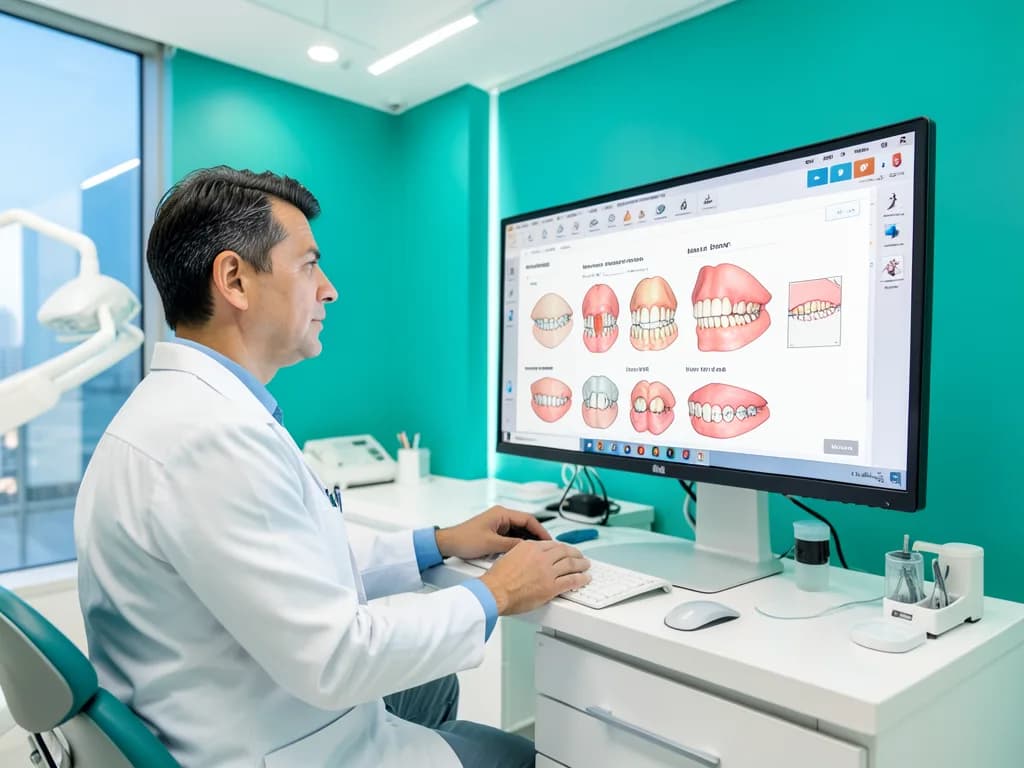
A thorough examination includes full-mouth X-rays (OPG and periapicals), CBCT scan for implant planning, photographs, and dental study models (impressions or digital scans). The prosthodontist assesses every tooth, the bite relationship, bone levels, and periodontal health. Some clinics use digital smile design software to show patients a preview of the proposed outcome.
Treatment Planning and Specialist Coordination
The prosthodontist creates a phased treatment plan indicating which specialist handles each stage, in what order, and what the estimated costs and timelines are. In complex cases, a team conference may involve the periodontist (gum specialist), endodontist (root canal specialist), oral surgeon (for extractions and implant placement), and sometimes an orthodontist. A provisional restorative plan is also agreed — many FMR cases use temporary crowns for several months to test the new bite before final restorations.
Phase 1 — Disease Control and Extractions
All active disease must be addressed first. This includes periodontal treatment (deep cleaning, surgery if needed), extraction of hopeless teeth, root canal treatment where indicated, and any bone grafting for future implant sites. Temporary restorations may be placed during this phase. This phase often takes 2–4 months to allow tissues to heal before final impressions.
Phase 2 — Implant Placement and Osseointegration
If implants are part of the plan, they are placed after Phase 1 healing is confirmed. Osseointegration (the implant fusing with the bone) takes 3–6 months. During this period, patients wear temporary prostheses. For All-on-4 cases, a full-arch temporary bridge can sometimes be loaded on the same day as implant placement.
Phase 3 — Final Restorations
With all foundations established and stable, the final crowns, bridges, veneers, and implant crowns are fabricated. The prosthodontist takes final impressions or scans, verifies shade and bite, and fits the final restorations. Multiple appointments may be needed. The occlusion (bite) is carefully balanced across all teeth. A night guard is typically provided for bruxism patients.
The Full Mouth Rehabilitation Specialist Team
Prosthodontist
Treatment plan lead, final restorations, occlusion management
Periodontist
Gum disease treatment, bone surgery, soft tissue management
Oral Surgeon
Extractions, bone grafts, sinus lifts, implant placement
Endodontist
Root canal treatment to save strategically important teeth
Orthodontist (if needed)
Pre-restorative tooth alignment for complex cases
Implantologist
Specialist implant placement for complex sites
Dubai advantage: Dubai has one of the highest concentrations of dental specialists per capita in the region. Many larger Dubai clinics and hospital-based dental departments offer all disciplines under one roof — significantly reducing treatment delays, coordination issues, and the need for patients to travel between multiple practices.
Does UAE Insurance Cover Full Mouth Rehabilitation?
Partial coverage — restorative components often 50–70% covered
UAE health insurance plans typically cover restorative dental components (crowns, bridges, root canals) at 50–70% under major restorative benefits. Implants may have separate sub-limits. However, most plans have annual dental caps of AED 3,000–15,000, which covers only a fraction of a full FMR. Pre-authorisation is commonly required by insurers such as Daman, AXA, Bupa, MetLife, and NextCare, and must be submitted component by component.
Cosmetic components (veneers placed for aesthetics, tooth whitening) are excluded. For patients who need mostly cosmetic improvements rather than full structural rehabilitation, a smile makeover may be a more cost-effective alternative. Patients with enhanced corporate dental plans may have significantly higher limits. For full details, see our dental insurance Dubai guide.
Full Mouth Rehabilitation Timeline in Dubai
A realistic timeline helps patients plan for work absences, travel, and the financial commitment involved. No two FMR cases are identical but the phases follow a consistent sequence.
| Phase | Duration | Key Activities |
|---|---|---|
| Diagnostic and Planning | 2 – 4 weeks | OPG + CBCT scan, photos, study models, specialist consultations, treatment plan sign-off |
| Phase 1 — Disease Control | 2 – 4 months | Periodontal treatment, extractions, root canals, bone grafts if needed, provisionals placed |
| Implant Osseointegration (if applicable) | 3 – 6 months | Implant healing — patient wears temporary prosthesis; no clinical visits needed weekly |
| Pre-Restorative Review | 1 – 2 weeks | Final assessment of gum health and implant stability before impressions for final restorations |
| Phase 3 — Final Restorations | 4 – 10 weeks | Crown/bridge impressions or scans, lab fabrication, try-in appointments, cementation, occlusal balance |
| Review and Night Guard | 2 – 4 weeks | Bite assessment, night guard fabrication, patient education, photos, long-term maintenance plan |
| Total simple FMR (no implants) | 3 – 6 months total | Phases 1 + 3 only; faster without implant osseointegration wait |
| Total complex FMR (with implants) | 12 – 24 months total | Full phased sequence including osseointegration; 18 months is typical for a comprehensive full-arch case |
Dental tourism consideration: Patients travelling to Dubai specifically for FMR should plan for at least 3–4 extended visits over 12+ months if implants are involved. It is not realistic to complete an implant-based FMR in a single trip. However, the diagnostic, disease-control, and implant placement phases can each be scheduled as separate visits — making Dubai a viable destination for staged FMR over 1–2 years.
Technology Used in Full Mouth Rehabilitation in Dubai
Dubai's leading prosthodontic centres use advanced diagnostic and fabrication technology that reduces appointment numbers, improves precision, and allows patients to preview their outcome before a single tooth is touched.
CBCT (Cone Beam CT) Scanning
3D X-ray of the jaws, bone volume, and sinus anatomy. Essential for implant planning — shows exact bone width and height at each implant site, identifies nerve positions, and detects pathology invisible on standard OPG X-rays. Available at most major Dubai dental centres.
Digital Smile Design (DSD)
Software-based planning tool that uses photographs and video of the patient's face and smile to design the aesthetic outcome of FMR before treatment begins. Patients can see a digital mock-up of their final result. Some clinics produce a physical mock-up (wax-up trial smile) on the teeth for a real-world preview.
Intraoral Digital Scanning (IOS)
Replaces traditional dental impression materials with a 3D digital scan of the teeth. More accurate, faster, and more comfortable than putty impressions. Essential for implant-level precision. Increasingly standard at Dubai prosthodontic clinics — reduces laboratory errors.
CAD/CAM Zirconia Crowns
Computer-aided design and manufacturing of crowns from high-strength zirconia ceramic. Allows precise colour-matching, consistent fit, and long-term durability. Many Dubai clinics use same-day or next-day CAD/CAM for single crowns; full FMR cases are still primarily laboratory-fabricated for the best aesthetic result.
Guided Implant Surgery
Surgical guide fabricated from CBCT scan data that directs implant placement to the exact planned position, depth, and angle. Reduces surgical time, improves accuracy, and lowers risk of complications — particularly important in complex FMR cases with multiple adjacent implants.
Occlusal Analysis Software
T-Scan or similar digital bite analysis records exactly how and where teeth make first contact during biting and sliding movements. Used during the final restoration phase of FMR to ensure the new bite is balanced — preventing overloading of individual implants or crowns.
When comparing Dubai clinics for FMR, ask whether they have an in-house CBCT scanner and intraoral digital scanner — two technologies that directly impact diagnostic accuracy. Our clinic search lets you filter by treatment type to find prosthodontist-led centres.
Bite Rehabilitation and Occlusal Reconstruction
The most technically demanding aspect of full mouth rehabilitation is restoring the correct bite (occlusion). In patients with severe wear, the vertical dimension of occlusion (VDO) — the distance between upper and lower jaws when the teeth are in contact — is often reduced, and reconstructing it is central to the entire treatment plan.
Vertical Dimension of Occlusion (VDO)
Severe bruxism and tooth wear can reduce VDO by several millimetres over years. Restoring VDO — opening the bite slightly — creates the space needed to place properly sized crowns and veneers. This is done incrementally using temporary restorations over several months to allow the jaw muscles and TMJ to adapt before final restorations are placed.
Centric Relation Recording
Before any restorations are fabricated, the prosthodontist records the jaw's most stable, unstrained joint position (centric relation) using wax or digital bite registration. All restorations are then planned and fabricated relative to this reference position — ensuring that when teeth come together, the joint is in its optimal position.
Provisional (Temporary) Restorations
In complex FMR cases, provisional crowns in composite or acrylic are worn for 3–6 months before final restorations. This acts as a functional and aesthetic test — patients eat and speak normally with the new bite while the prosthodontist monitors TMJ tolerance, aesthetics, and function before committing to expensive final ceramic restorations.
Implant-Supported Prosthesis Planning
When multiple implants are included in FMR, their positions, angulations, and the design of the implant-supported prosthesis must be planned relative to the final occlusal plan. Poorly positioned implants create unresolvable bite problems. CBCT-guided surgery and pre-surgical prosthodontic planning prevent this.
Related treatments often included in FMR: dental implants, All-on-6 implants, dental crowns, root canal treatment, and night guards for bruxism.
Insurance Coverage for Full Mouth Rehabilitation
Full mouth rehabilitation is one of the most expensive dental procedures, so understanding what your Dubai health insurance covers before treatment starts is essential. Coverage depends on the nature of each component procedure and how it is classified — restorative versus cosmetic.
| Procedure | Typically Covered? | Notes |
|---|---|---|
| Root canal treatment | Yes (restorative) | Usually covered at 70–100% after deductible. Pre-auth often required. |
| Dental crown (zirconia) | Partial (restorative base) | Metal-fused porcelain base may be covered; premium zirconia upgrade is patient cost. |
| Dental implant (fixture) | Rarely | Most UAE plans exclude implants as elective. Some premium plans cover 50%. |
| Bone grafting | Sometimes | Covered if clinically required for implant or after tooth loss trauma. Needs documentation. |
| Veneers | No | Classified as cosmetic. Not covered by any standard UAE plan. |
| Gum surgery (periodontal) | Yes (medical) | Periodontal disease treatment is medical, usually covered under major dental. |
| Teeth whitening | No | Cosmetic only. Patient pays AED 800–2,500 out of pocket. |
| Night guard for bruxism | Sometimes | AXA and Bupa enhanced plans may cover with bruxism diagnosis. Standard plans exclude. |
Pre-authorisation is essential for FMR
Because FMR involves multiple high-cost procedures, always obtain written pre-authorisation from your insurer before starting treatment. Submit a full treatment plan from your prosthodontist, itemised by procedure code. Insurers will approve restorative components and deny cosmetic ones — knowing this split before treatment lets you budget accurately.
For full insurer-by-insurer comparison see our Dubai dental insurance guide. Check whether Daman, AXA, or Bupa Dubai cover your planned procedures before committing to a treatment plan.
Your Full Mouth Rehabilitation Journey
A typical FMR case in Dubai spans 6–18 months. Here is what to expect at each stage from your first consultation through to your final restorations and long-term maintenance.
Initial Consultation and Diagnosis
Week 1Your prosthodontist takes a full dental history, performs a clinical examination of all 32 teeth, gums, bite, and jaw joints (TMJ). CBCT scans provide a 3D view of bone volume and tooth roots. Intraoral scanning captures digital impressions. A comprehensive treatment plan is drafted and presented in writing — including all procedure costs, phasing, and timeline.
Periodontal Preparation Phase
Weeks 2–8If any gum disease or bone loss is present, it must be fully resolved before restorations are placed. This phase includes deep cleaning (scaling and root planing), periodontal surgery where needed, and antibiotic therapy. No crowns or veneers are placed until gum health is stable. This phase can take 6–8 weeks with a re-evaluation appointment before moving forward.
Endodontic and Surgical Phase
Weeks 4–12Root canal treatments, tooth extractions, and implant placements are performed in this phase. If bone grafts are needed, they are placed at the time of extraction and require 3–4 months of healing before implants can be placed. This is the most clinically intensive phase — multiple appointments and some post-procedure discomfort (managed with pain relief) are normal.
Provisional Restoration Phase
Months 3–6Temporary composite or acrylic crowns are placed on all teeth being restored. These serve two purposes: they protect the prepared teeth and allow you to test the new bite, aesthetics, and speech in daily life. Your prosthodontist monitors TMJ tolerance and requests adjustments. Most patients need 2–4 adjustment appointments during this phase. Do not rush this phase — it determines the success of your final restorations.
Final Restoration Delivery
Months 6–18Once the provisional phase confirms everything functions correctly, final ceramic or zirconia restorations are fabricated by the dental laboratory (usually 2–3 weeks per batch). They are tried in for aesthetics and bite before final cementation. Implant crowns are placed after confirmed osseointegration. Final adjustments are made at a review appointment 2–4 weeks post-delivery.
Maintenance and Long-Term Care
OngoingAfter FMR, you will attend a professional clean and examination every 3–4 months for the first year, then every 6 months. If bruxism contributed to your original tooth wear, a custom night guard is fabricated to protect your new restorations — this is non-negotiable. Digital bite records and photographs are taken at baseline for comparison. With proper maintenance, high-quality FMR restorations last 15–25 years.
After FMR, consider protecting your investment with a custom night guard and regular dental hygienist visits in Dubai. Learn more about implant recovery and dental packages in Dubai.
How to Choose a Clinic for Full Mouth Rehabilitation
FMR is a complex, multi-specialty treatment. The quality of planning, materials, and long-term follow-up varies significantly between Dubai clinics. Use this checklist when evaluating providers.
Prosthodontist-led team
Full mouth rehabilitation should be planned and supervised by a DHA-licensed prosthodontist, not a general dentist. Prosthodontists complete 3 years of additional specialist training in complex restorations and occlusal rehabilitation.
In-house CBCT scanner
A Cone Beam CT scanner enables 3D bone volume assessment — essential for implant planning in FMR. Clinics that outsource CBCT scanning add delays and cost, and lose the real-time collaboration between radiologist and prosthodontist.
Digital smile design software
DSD or similar digital planning software lets you preview your final smile before any tooth is touched. This is now standard at quality FMR centres and is a clear indicator of a clinic's investment in modern workflow.
In-house or partner dental laboratory
A close relationship between the prosthodontist and the ceramist is critical for aesthetic outcomes in FMR. Ask whether the lab is in-house or local — overseas labs with 4-week turnaround add significant total treatment time.
Documented treatment plan with cost breakdown
A quality FMR clinic provides a written treatment plan itemised by procedure, with realistic cost ranges at the outset. Be cautious of clinics that will not provide written cost estimates until after you have started treatment.
Second opinion policy
For a treatment costing AED 20,000–150,000, a second opinion from another prosthodontist is prudent and professionally appropriate. Reputable clinics welcome this — less reputable ones discourage it.
Read our guide on choosing a dentist in Dubai and explore dental second opinion options. The Dubai Healthcare City zone has a high concentration of specialist FMR clinics.
Full Mouth Rehabilitation for Specific Patient Groups
FMR is not a one-size-fits-all treatment. The clinical approach, material choices, and phasing differ significantly depending on the underlying cause of the tooth damage and the patient's systemic health.
Bruxism (Teeth Grinding) Patients
Patients with severe wear from bruxism present the most complex FMR cases because the grinding force that destroyed the original teeth will — without intervention — destroy new restorations too. The management sequence is: (1) control the bruxism first with Botox or an occlusal splint, (2) restore the lost vertical dimension with provisionals worn for 3–6 months, (3) place final restorations only after confirmed muscle adaptation. Night guard wear after FMR is non-negotiable.
Teeth grinding treatment Dubai →Diabetic Patients
Diabetes significantly affects periodontal healing and implant osseointegration. Dubai prosthodontists managing FMR in diabetic patients require HbA1c levels to be below 8% before any surgical phase begins. Healing is monitored more closely, antibiotic cover for implant surgeries is more common, and the periodontal maintenance interval is shortened to 3 months rather than 6.
Dental care for diabetics Dubai →Dental Phobia and Anxious Patients
Full mouth rehabilitation typically requires 8–20 or more appointments — a significant challenge for patients with dental anxiety. Dubai clinics offering IV sedation can perform multiple procedures in fewer, longer appointments under conscious sedation, reducing the total number of visits. This can also reduce the overall treatment timeline. Pre-treatment psychological assessment and clear communication protocols are essential.
Sedation dentistry Dubai →Older Adults (60+)
Age-related considerations include reduced bone density affecting implant integration, higher medication burden (anticoagulants, bisphosphonates, and blood pressure medications all have oral implications), and changes in saliva production. Prosthodontists treating older adults in Dubai coordinate with the patient's physician regarding medication management around surgical procedures. Removable prostheses may be a more appropriate FMR outcome for patients with significant systemic disease.
Senior dental care Dubai →Long-Term Aftercare After Full Mouth Rehabilitation
The longevity of an AED 30,000–150,000 FMR investment depends almost entirely on maintenance. Here is what your prosthodontist expects you to do — and what to watch for in the years following treatment.
Wear Your Night Guard Every Night
If bruxism contributed to your original tooth wear, a custom hard acrylic night guard must be worn every night indefinitely. The guard costs AED 800–2,000 and protects tens of thousands of dirhams in restorations from premature failure.
3-Month Hygienist Visits (Year 1)
For the first year after FMR completion, a professional clean every 3 months allows early detection of any gum inflammation, loose margins, or bite issues before they become expensive problems.
Annual Baseline Records
Request that your prosthodontist photographs your restorations at every annual review. Serial photographs allow comparison over time to detect subtle wear or fracture at margins before clinical failure.
Book regular dental hygienist visits at a Dubai dental hygienist clinic and read our guide on implant recovery and aftercare.
Frequently Asked Questions
What is the difference between full mouth rehabilitation and a Hollywood Smile?
A Hollywood Smile is primarily a cosmetic procedure — it involves placing veneers or crowns on the upper and sometimes lower front teeth to create a bright, uniform, aesthetic result. It is largely elective and addresses aesthetics on teeth that may otherwise be structurally sound. Full mouth rehabilitation (FMR), by contrast, is driven by functional and structural necessity — it addresses teeth that are severely worn, missing, decayed, or damaged, with the goal of restoring proper function (chewing, speaking) as well as aesthetics. FMR typically involves many more teeth, more specialist disciplines, and a much longer treatment timeline. That said, the two can overlap — some FMR cases include cosmetic components, and the final result can be a dramatic smile transformation.
How long does full mouth rehabilitation take in Dubai?
The timeline for full mouth rehabilitation in Dubai ranges from 3–6 months for simpler cases (mainly crowns on existing teeth, no implants) to 18–24 months for highly complex cases involving multiple implants, bone grafting, periodontal surgery, and a full team of specialists. The longest phase is usually implant osseointegration, which requires 3–6 months of healing after implant placement before final crowns can be fitted. Dubai has a significant advantage in that all required specialists (prosthodontists, periodontists, oral surgeons, endodontists) are available locally, and many larger clinics offer all disciplines under one roof — reducing coordination delays.
Does UAE insurance cover full mouth rehabilitation?
Insurance coverage for FMR is complex and highly plan-specific. Restorative components — crowns, bridges, root canal treatments, and sometimes implants — are often covered at 50–70% under major restorative benefits, subject to annual limits. However, most UAE insurance plans have annual dental limits of AED 3,000–15,000, which is typically insufficient for a full FMR costing AED 20,000–150,000. Pre-authorisation is essential and must be submitted for each component separately. Cosmetic components (elective veneers, shade improvements) are not covered. For patients with comprehensive corporate insurance plans that include enhanced dental riders, coverage can be more substantial. Our dental insurance Dubai guide covers the major insurers in detail.
Which specialists are involved in full mouth rehabilitation in Dubai?
Full mouth rehabilitation is led by a prosthodontist — a dentist with advanced training in complex restorations, occlusion, and aesthetics. Supporting specialists include: a periodontist (gum and bone specialist) for any periodontal disease treatment and soft tissue management; an endodontist for root canal treatment where needed; an oral and maxillofacial surgeon for extractions, bone grafts, and implant placement; and sometimes an orthodontist if teeth need alignment before restorative work. In Dubai, some larger clinics and dental centres house all these specialists under one roof, which significantly streamlines communication and coordination.
Can full mouth rehabilitation be done in stages to spread the cost?
Yes — in fact, most FMR plans are inherently phased, and patients often spread the treatment across 12–24 months as a natural consequence of the healing times involved (particularly for implants). This also allows costs to be spread over time. It is entirely reasonable to discuss a phased payment arrangement with your prosthodontist at the outset. Many Dubai clinics offer internal financing or accept medical financing platforms. Prioritising the disease-control and function phases first (extractions, root canals, essential restorations) before the aesthetic phase is a medically sound and financially manageable approach.
What happens if I do not get full mouth rehabilitation when I need it?
Delaying full mouth rehabilitation when it is genuinely indicated leads to progressive deterioration. Severely worn teeth continue to wear, further reducing the vertical dimension of the bite and placing increasing stress on the jaw joints and muscles. Missing teeth cause adjacent teeth to drift and tilt into the gap, further complicating future restoration. Active decay spreads to adjacent teeth. Bone loss continues under missing tooth sites, making future implant placement more complex and costly. Patients with severe bruxism who do not wear a night guard and do not have their bite rehabilitated often grind through any new individual restorations within months. The longer treatment is delayed, the more complex and expensive the eventual FMR becomes.
Find a Prosthodontist in Dubai
Browse verified Dubai clinics with prosthodontists experienced in full mouth rehabilitation. Check specialist credentials and patient reviews.
Use our dentist locator for Dubai to compare clinics, read reviews, and book appointments.