Dental Fillings in Dubai — The Complete Guide
Dental fillings restore teeth damaged by decay, returning them to normal function and preventing the spread of infection. This guide covers every filling type available in Dubai — composite, amalgam, ceramic inlays and glass ionomer — with honest cost comparisons, lifespan expectations, and everything you need to know before choosing a material. For a full dental cost breakdown, see our 2026 dental cost guide.
What Is a Dental Filling?
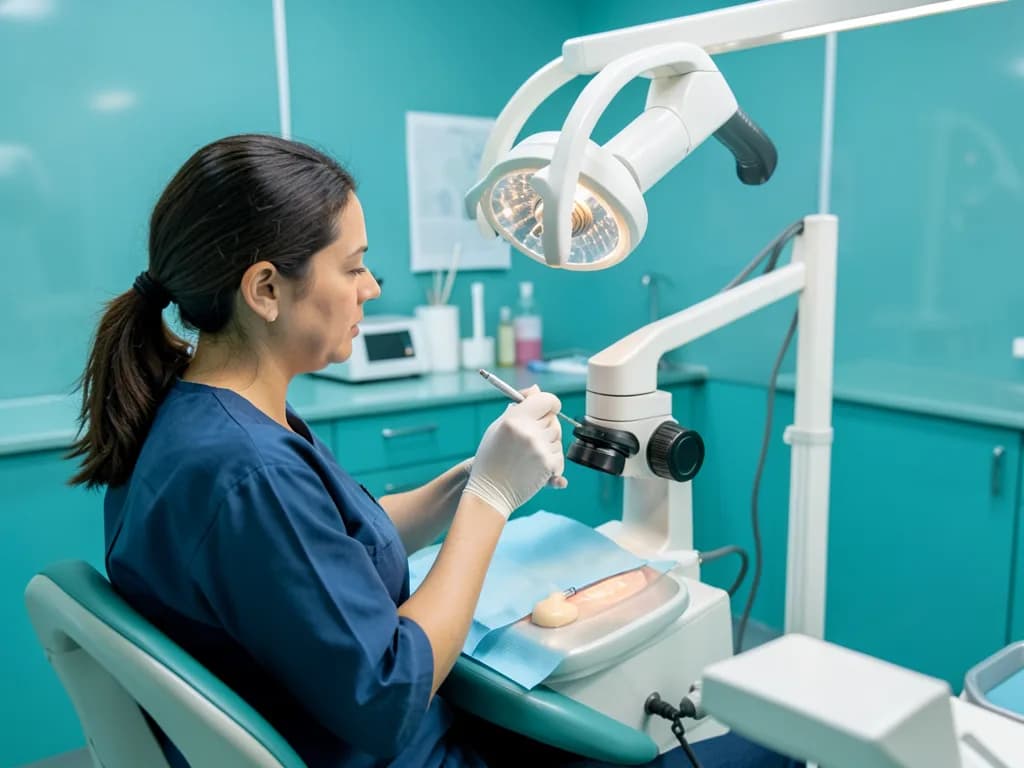
A dental filling is a restorative material placed into a prepared cavity — the space left after your dentist has removed decayed tooth tissue. The filling restores the tooth's original shape and function, seals the cavity to prevent further bacterial ingress, and distributes bite forces safely across the restored tooth surface.
Tooth decay (dental caries) begins when bacteria in the mouth metabolise dietary sugars and produce acid as a byproduct. This acid dissolves the mineral structure of enamel and dentine over time, creating a cavity. Early-stage cavities confined to enamel can sometimes be remineralised with fluoride and dietary changes — but once decay reaches the dentine layer, a filling is always required to stop progression. If decay is left untreated, it will eventually reach the dental pulp, requiring either root canal treatment or tooth extraction.
For a guide to choosing the right dental practice, see our how to choose a dentist in Dubai guide. All dental treatment costs are compared in our 2026 dental cost guide.
Types of Dental Fillings Available in Dubai
Dubai clinics offer all major filling materials. The best choice depends on the cavity size, tooth position, aesthetics, budget and longevity requirements.
The most commonly placed filling material in Dubai private clinics. Composite resin is a mixture of plastic resin and finely ground ceramic particles that is applied in layers and cured with a blue light. It bonds chemically to the tooth structure, allowing a more conservative preparation (less tooth removal than amalgam). Available in dozens of shades to match the natural tooth colour exactly. Suitable for front and back teeth.
Advantages
- ✓ Tooth-coloured — aesthetically invisible
- ✓ Bonds to tooth structure chemically
- ✓ Less tooth removal required
- ✓ Mercury-free
- ✓ Repairable if chipped
Limitations
- ✗ Slightly less durable than amalgam in high-load areas
- ✗ Can stain over time with coffee, tea and red wine
- ✗ Technique-sensitive — requires dry field and careful placement
- ✗ Higher cost than amalgam
Dental amalgam has been used for over 150 years and remains one of the most durable filling materials available. It is an alloy of mercury (around 50%), silver, tin, copper and zinc. The mercury is chemically bonded within the alloy and the amount released during normal function is far below levels considered hazardous by the WHO. Amalgam is strong, self-sealing, and extremely long-lasting in high-stress posterior areas. Use is declining in Dubai but still offered at many clinics, particularly for budget patients and for large posterior restorations.
Advantages
- ✓ Extremely durable — especially in high-load molar areas
- ✓ Self-sealing over time
- ✓ Less technique-sensitive than composite
- ✓ Lowest cost filling material
Limitations
- ✗ Silver-grey colour — not aesthetic
- ✗ Requires more tooth removal (no chemical bond)
- ✗ Contains mercury (though at safe levels per WHO)
- ✗ Can crack teeth over decades due to thermal expansion
- ✗ Being phased out globally under Minamata Convention
When a cavity is too large for a direct filling but a crown is not yet needed, a ceramic inlay (fits within the cusps) or onlay (covers one or more cusps) is an excellent intermediate restoration. These are fabricated in the dental laboratory from IPS e.max or zirconia ceramic, then adhesively bonded to the tooth. The result is both strong and highly aesthetic. Inlays and onlays are considered indirect restorations and represent a significant upgrade in durability and longevity over direct composite fillings for large cavities.
Advantages
- ✓ Most durable tooth-coloured restoration for large cavities
- ✓ Preserves more tooth structure than a crown
- ✓ Highly aesthetic and stain-resistant ceramic
- ✓ Long lifespan
Limitations
- ✗ Two appointments (or CEREC same-day)
- ✗ Higher cost
- ✗ Requires adequate remaining tooth structure
- ✗ Cannot be placed in very small cavities — cost-inefficient
Glass ionomer cement releases fluoride continuously, which has a protective anticariogenic effect on the surrounding tooth. It bonds to dentine without requiring acid etching, making it ideal for root-surface cavities (where enamel is absent), difficult-to-access areas in children, and as a base or liner under composite fillings. It is less hard-wearing than composite or amalgam and is not recommended for load-bearing posterior surfaces in adults. Resin-modified GIC has improved strength over conventional GIC.
Advantages
- ✓ Continuous fluoride release — anticariogenic
- ✓ Bonds to dentine without etching
- ✓ Good for root-surface decay and paediatric patients
- ✓ Lower technique sensitivity
Limitations
- ✗ Less durable than composite or amalgam
- ✗ More opaque — less natural appearance
- ✗ Susceptible to moisture contamination during placement
- ✗ Not suitable for high-load occlusal surfaces in adults
Filling Materials at a Glance
Side-by-side comparison of all filling types available in Dubai.
| Factor | Composite ★ | Amalgam | Ceramic Inlay | GIC |
|---|---|---|---|---|
| Cost per cavity | AED 150 – 400 | AED 100 – 250 | AED 800 – 2,000 | AED 150 – 300 |
| Lifespan | 7–10 years | 10–15 years | 15–20 years | 5–8 years |
| Tooth-coloured | Yes | No (silver/grey) | Yes | Partially |
| Mercury-free | Yes | No (50% mercury) | Yes | Yes |
| Bonds chemically | Yes | No (mechanical only) | Yes (bonded) | Yes (dentine bond) |
| Tooth removal | Minimal (conservative) | More (undercuts needed) | Minimal | Minimal |
| Appointments | 1 | 1 | 2 (or CEREC 1) | 1 |
| Best for | Front and back teeth; aesthetics | Budget; high-load posterior | Large posterior cavities; longevity | Root decay; children; liner |
★ Most commonly chosen material at Dubai private clinics.
The Dental Filling Procedure Step by Step
A composite filling appointment typically takes 30–60 minutes per tooth. Ceramic inlay appointments require two visits (or one extended CEREC visit).
Examination and Cavity Detection
Your dentist examines all teeth visually with a dental mirror and probe, and takes bitewing X-rays to detect cavities forming between teeth (interproximal decay) that are invisible to the naked eye. Modern clinics may use a DIAGNOdent laser caries detection device or transillumination (DIFOTI) for early-stage decay. Cavities detected early — when still confined to enamel — can often be remineralised with fluoride alone and monitored rather than immediately drilled.
Anaesthesia
Local anaesthesia is administered before drilling — typically a buccal infiltration for upper teeth and an inferior alveolar nerve block for lower back teeth. Topical anaesthetic gel is applied to the gum before the injection to minimise discomfort. Small, shallow composite fillings on front teeth are sometimes completed without anaesthetic in cooperative patients, but your dentist should always offer it.
Decay Removal and Cavity Preparation
A high-speed handpiece removes the decayed tooth material. Slow-speed round burs are used in the final stages to carefully remove any remaining soft decay without removing sound tooth structure. Caries indicator dye may be applied to stain residual decay red, helping the dentist confirm all infected tissue has been removed. Minimal intervention dentistry principles encourage removing only decay — not excessive sound tooth structure.
Bonding Agent Application (Composite Only)
The cavity walls are etched with 37% phosphoric acid gel for 15–20 seconds to open the dentinal tubules, then rinsed and gently dried. A bonding agent (adhesive) is applied and cured with a blue light. This creates a hybrid layer between the composite and the tooth that provides strong chemical bonding. Skipping or rushing this step is a leading cause of premature composite filling failure.
Filling Placement and Light Curing
Composite resin is placed in incremental layers — typically 2 mm or less per layer — to minimise polymerisation shrinkage stress and ensure adequate light penetration for full curing. Each layer is cured for 20–40 seconds with a high-intensity LED curing light. The final layer is shaped to match the natural tooth anatomy, including cusp shape and marginal ridges that are essential for distributing bite forces correctly.
Finishing, Polishing and Bite Check
Fine diamond burs and polishing strips are used to refine the filling shape and surface texture. Articulating paper checks the bite — even a slight high point on a filling causes sensitivity and accelerated wear. The finished composite is polished to a smooth, stain-resistant surface using polishing cups and paste. Fluoride varnish may be applied over the restored area. The patient is advised to avoid eating or drinking for 30 minutes.
Dental Filling Prices in Dubai 2026
All prices in AED per filling. Multiple fillings completed in the same appointment may be discounted at some clinics.
| Filling Type | Price Range (AED) | Lifespan | Notes |
|---|---|---|---|
| Composite resin filling | AED 150 – 400 | 7–10 years | Per cavity; most common choice |
| Amalgam filling | AED 100 – 250 | 10–15 years | Per cavity; declining use |
| Ceramic inlay (lab-made) | AED 800 – 2,000 | 15–20 years | 2 visits or CEREC same-day |
| Glass ionomer cement | AED 150 – 300 | 5–8 years | Fluoride-releasing; children/root surfaces |
| Fissure sealant (per tooth) | AED 100 – 200 | 5–10 years | Preventive; no cavity required |
Prices from Dubai clinic surveys, February 2026. X-rays, consultation and anaesthesia may be charged separately at some clinics.
For a detailed cost breakdown by material, see our dental filling cost guide. Compare all treatment prices in our complete 2026 pricing guide.
Signs a Filling Needs Replacing
No filling lasts forever. Your dentist checks filling margins at every recall appointment, but you should also know the warning signs between visits.
Sensitivity to cold or sweet foods that was not present before
Visible crack or fracture line in the filling material
Filling has partially or fully fallen out
Dark discolouration at the margin of an old white filling (secondary decay)
The filling feels rough or raised when you run your tongue over it
Old silver amalgam fillings with cracks extending into the tooth
Recurrent decay detected on X-ray beneath an existing filling
Preventive Option — Fissure Sealants
The best filling is one that is never needed. Fissure sealants are a proven preventive treatment that dramatically reduces the risk of decay in the deep grooves of permanent molar teeth — the most common site of cavities in children and teenagers.
What fissure sealants do
- ✓ Fill and seal the deep grooves (fissures) in molar teeth
- ✓ Physically block food and bacteria from accumulating
- ✓ Placed without drilling or anaesthetic — completely painless
- ✓ Most effective when applied within 2 years of tooth eruption
- ✓ Cost AED 100–200 per tooth; last 5–10 years
Who should have sealants
- → Children at age 6–7 (first permanent molars erupt)
- → Children at age 12–13 (second permanent molars erupt)
- → Adults with deep fissures who have never had decay in those teeth
- → High-caries-risk patients of any age
- → Children with physical or cognitive difficulties affecting brushing
UAE Insurance Coverage for Dental Fillings
Fillings are routinely covered by UAE insurance
Restorative fillings for decay are covered by standard UAE health insurance plans from Daman, AXA, Bupa, MetLife and NextCare, subject to annual dental sublimits and co-pay. Most plans cover composite fillings in full or with a small co-pay at in-network clinics. Ceramic inlays may require a co-payment if your plan's approved rate covers only a basic composite equivalent. Fissure sealants for children are covered under many family plans.
See our dental insurance Dubai guide for plan-by-plan information.
Tip: If you have multiple fillings needed, ask your dentist whether completing them across two calendar-year appointments could allow you to use two years of dental sublimit instead of one — particularly useful for patients with higher out-of-pocket costs or limited annual dental benefits.
Risks and Complications of Dental Fillings
Dental fillings are among the safest and most predictable restorative procedures in dentistry. Complications are uncommon and, when they occur, are almost always manageable. Understanding the potential issues helps you recognise when to contact your dentist and what normal post-filling sensations to expect.
Normal Post-Filling Sensations
- •Sensitivity to cold and sweet foods lasting 2–4 weeks (composite bonding effect)
- •Mild aching when biting — usually from high bite, resolved by a quick bite adjustment
- •Numbness of lip/cheek for 2–4 hours after local anaesthesia
- •Slight gum tenderness where rubber dam clamp was placed
Less Common Complications
- •Persistent sensitivity beyond 4 weeks — may indicate pulpitis; review needed
- •Filling fracture in large restorations — more likely in back teeth under heavy biting forces
- •Secondary decay forming under an old filling margin — caught at regular checkups
- •Allergic reaction to amalgam (rare — affects 1 in 1,000 patients)
When to Call Your Dentist
- •Severe spontaneous throbbing pain — possible pulpitis or developing abscess
- •Filling feels very high on biting and does not settle in 48 hours
- •Visible crack in the tooth after a large filling
- •Filling falls out — exposed dentine is vulnerable to bacteria; rebook within 24–48 hrs
- •Pain on biting that has worsened since the filling was placed
Ceramic Inlay Specific Risks
- •Porcelain fracture if bitten on hard food before cementation is fully set (24 hrs)
- •Sensitivity during the 1–2 week period while wearing the temporary restoration
- •Marginal gap if the inlay does not seat fully — requires remake or re-cementation
- •Wear of opposing natural teeth if porcelain surface is left rough
Advanced Technology for Dental Fillings in Dubai
Leading Dubai dental clinics use advanced diagnostic and restorative technology that improves cavity detection accuracy, reduces chair time, and delivers more precisely fitted fillings compared to traditional methods.
Digital Caries Detection (DIAGNOdent)
Laser fluorescence technology detects hidden decay in fissures and between teeth at a much earlier stage than traditional probing or X-ray alone. The device scores cavity severity on a numerical scale — allowing the dentist to distinguish between a cavity that needs filling now and one that can be remineralised with fluoride. Early detection means smaller, more conservative fillings.
CEREC Same-Day Ceramic Inlays
CEREC (Chairside Economical Restoration of Esthetic Ceramics) mills a ceramic inlay or onlay from a solid block of feldspathic porcelain or lithium disilicate in a single appointment. An intraoral scanner takes a digital impression, CAD software designs the restoration, and a chairside milling unit fabricates it in 15–20 minutes — eliminating the traditional two-appointment laboratory process. Available at select Dubai clinics.
Laser Cavity Preparation
Er:YAG dental lasers can remove decay from soft carious dentine without a drill in many cases. The laser selectively ablates infected tissue while leaving healthy tooth structure intact — often avoiding the need for local anaesthesia for small and medium cavities. Laser preparation is bactericidal, reducing secondary decay risk. Currently available at a small number of specialist Dubai clinics.
Rubber Dam Isolation
A rubber dam creates a completely dry, contamination-free operating field during composite placement and ceramic inlay cementation. Moisture contamination is the leading cause of premature composite failure — a properly placed rubber dam isolates the tooth from saliva, blood, and breath moisture, ensuring the composite bonds reliably to tooth structure. Ask your dentist whether they use rubber dam as standard.
When choosing a clinic for ceramic inlays or complex restorations, ask whether they have intraoral scanning, CEREC, or a laser cavity system. Find clinics offering these technologies in our DHA clinic directory. For more complex restorations, see our dental crowns Dubai guide.
Before and After Dental Fillings
What patients notice before and after their filling appointment — and what realistic outcomes to expect from each material type.
Before Treatment
- ✗ Visible dark spot or hole in the tooth surface
- ✗ Sensitivity to sweet foods and cold drinks
- ✗ Food catches repeatedly in the same area
- ✗ Pain or aching on biting in the affected tooth
- ✗ Rough texture felt with tongue on tooth surface
- ✗ Bad taste from decayed tooth structure
After Treatment
- ✓ Decay removed, tooth fully sealed against further bacterial entry
- ✓ Composite filling matched to natural tooth shade — invisible at normal speaking distance
- ✓ Restored biting function — eat normally after anaesthesia wears off
- ✓ Sensitivity resolves within 2–4 weeks in most cases
- ✓ Smooth surface restores normal tongue feel
- ✓ Ceramic inlay: natural translucency and colour-stable result lasting 10–15 years
Duration and Longevity
Composite resin fillings placed with proper technique and rubber dam isolation last 7–12 years on average. Ceramic inlays and onlays last 10–20 years. The main factors affecting longevity are cavity size at the time of placement (smaller cavities have stronger remaining tooth walls), clenching and grinding habits, dietary acid exposure, and the quality of technique used at placement.
Patients with bruxism who have large composite restorations should consider a night guard — the occlusal forces from grinding can shorten filling life significantly. See our night guard Dubai guide.
When Should a Filling Be Replaced?
Not every old filling needs immediate replacement. Dentists assess filling margins and integrity at every recall examination. The decision to replace is based on clinical and radiographic evidence — not solely on age of the filling.
| Clinical Finding | Urgency | What It Means |
|---|---|---|
| Secondary decay under filling margin | Urgent | Bacteria penetrating marginal gap — cavity will enlarge rapidly without treatment |
| Cracked filling with exposed dentine | Urgent | Open to bacteria; sensitivity likely; replace or crown depending on size |
| Marginal gap without active decay | Monitor | Staining at margin is not always decay — monitor with bitewing X-rays annually |
| Old amalgam with minor marginal breakdown | Monitor | Amalgam self-seals its margins; replace only if X-ray shows secondary caries |
| Composite discolouration (staining) | Elective | Cosmetic only — polish or replace if appearance is important to patient |
| High bite (premature contact) | Prompt | Simple adjustment at next visit — do not delay as it stresses the periodontal ligament |
Annual bitewing X-rays are the most reliable way to detect secondary decay under existing fillings before it becomes clinically symptomatic. If you have multiple older restorations, a full mouth series every 2–3 years is recommended. Book a dental checkup in Dubai to have your existing fillings assessed. View our dental crowns Dubai guide for when a large failing filling needs a full-coverage restoration instead.
Frequently Asked Questions
How long do dental fillings last in Dubai?
Lifespan depends on the material and the patient's habits. Composite resin fillings typically last 7–10 years in back teeth with normal wear; many last considerably longer in front teeth or in patients with good hygiene and low sugar diets. Amalgam fillings can survive 10–15 years or more in high-load molar areas. Ceramic inlays and onlays are the most durable option at 15–20 years. Glass ionomer cement lasts 5–8 years and is considered a semi-permanent restoration in adult molars. The biggest predictors of filling longevity are the size of the cavity (larger = shorter lifespan), the patient's bite force, diet (frequent high-sugar or acidic foods accelerate recurrent decay), and oral hygiene (flossing around filled teeth prevents interproximal decay at the margins).
Is composite or amalgam filling better in Dubai?
For the vast majority of patients in Dubai private clinics, composite resin is the preferred choice. It is tooth-coloured, mercury-free, bonds chemically to the tooth (requiring less tooth removal), and is repairable. Amalgam has superior durability in very large posterior cavities under heavy bite loading, and costs less — but its grey colour, the slightly higher tooth removal required, and growing global concern about environmental mercury mean that many Dubai clinics now prefer composite or ceramic restorations in all cavity sizes. If you have existing amalgam fillings that are in good condition, there is no clinical reason to replace them prophylactically — only replace when they fail or show signs of marginal decay.
Do dental fillings hurt in Dubai?
The procedure should be entirely comfortable with adequate local anaesthesia. The injection itself may cause brief discomfort, but topical numbing gel applied beforehand minimises this. Once anaesthetic takes effect — typically within 5 minutes — you will feel pressure and movement but no pain. Some mild tooth sensitivity after a filling is normal for 1–2 weeks, particularly with composite resin, as the bonding agent and composite material create some initial thermal and pressure sensitivity. Persistent sensitivity beyond 3 weeks, or sensitivity that is worsening rather than improving, may indicate that the pulp has been irritated by deep decay close to the nerve — contact your dentist for review.
Does UAE health insurance cover dental fillings in Dubai?
Yes — dental fillings for decay are covered by the vast majority of UAE health insurance plans from Daman, AXA, Bupa, MetLife and NextCare, subject to the annual dental sublimit and any co-pay on your policy. Most standard plans cover basic composite or amalgam fillings. Some plans specify coverage for composite only on front teeth (incisors and canines), with amalgam-equivalent reimbursement rates for back teeth, meaning you may pay an upgrade fee for white composite in molars. Ceramic inlays are sometimes covered under enhanced dental plans but are often classified as a restorative upgrade requiring patient co-payment. Always verify your specific benefit before treatment.
What are fissure sealants and who should have them?
Fissure sealants are thin resin coatings applied to the grooves (fissures) on the biting surfaces of back teeth — particularly the first and second permanent molars. These deep grooves are the most common site of dental decay in children and teenagers because they are difficult to clean with a toothbrush. Sealants physically block the groove, preventing bacteria and food from accumulating. They are placed in a single, painless appointment with no drilling or anaesthetic. In Dubai, sealants are typically applied to children's first permanent molars at around age 6–7 and second permanent molars at around age 12–13. Adults with deep fissures who have never had decay in those teeth may also benefit. Sealants cost AED 100–200 per tooth and last 5–10 years with regular monitoring at check-ups.
Can an old filling be repaired or does it need to be fully replaced?
It depends on the nature of the problem. A small chip or marginal defect in a composite filling can often be repaired with additional composite in a single short appointment without removing the entire filling. This is a cost-effective approach when the bulk of the restoration is still sound. However, if the filling has secondary decay beneath it (bacteria have infiltrated at the margin), the entire filling must be removed and the cavity re-prepared to ensure all decay is eliminated before re-filling. Amalgam fillings generally cannot be repaired — amalgam does not bond to composite or fresh amalgam. Your dentist will assess whether a repair or full replacement is appropriate based on clinical probing and X-ray findings.
Book a Dental Checkup in Dubai
Find verified dental clinics near you, check insurance acceptance and read real patient reviews. Catching decay early means smaller fillings — and lower costs.
Use our find a dental clinic near you to compare clinics, read reviews, and book appointments.