Root Canal Treatment in Dubai — The Complete Guide
Root canal treatment (endodontic treatment) saves infected or severely damaged teeth by removing the diseased pulp and sealing the canal system. This guide covers every stage of the procedure, myth-busting common fears, single vs. multi-visit options, and when to seek a specialist endodontist. For cost information, see our dedicated root canal cost Dubai guide.
What Is Root Canal Treatment?
Root canal treatment (also called endodontic treatment) involves removing the dental pulp from the inside of a tooth. The pulp is the soft tissue at the centre of each tooth, containing blood vessels, nerves and connective tissue that help form the tooth during development. Once a tooth is fully grown, the pulp is no longer essential — the tooth can survive without it, nourished by surrounding bone and gum tissue.
When the pulp develops pulpitis (inflammation) or full pulp infection, bacteria colonise the pulp chamber and root canal system. A necrotic pulp that is left untreated will lead to a periapical abscess — a collection of infection at the root tip that can spread to jaw bone and soft tissue. Root canal treatment by a skilled endodontist or root canal specialist removes this source of infection, disinfects the canal system, and seals it permanently with gutta-percha during obturation — preserving your natural tooth and avoiding costly extraction and implant replacement.
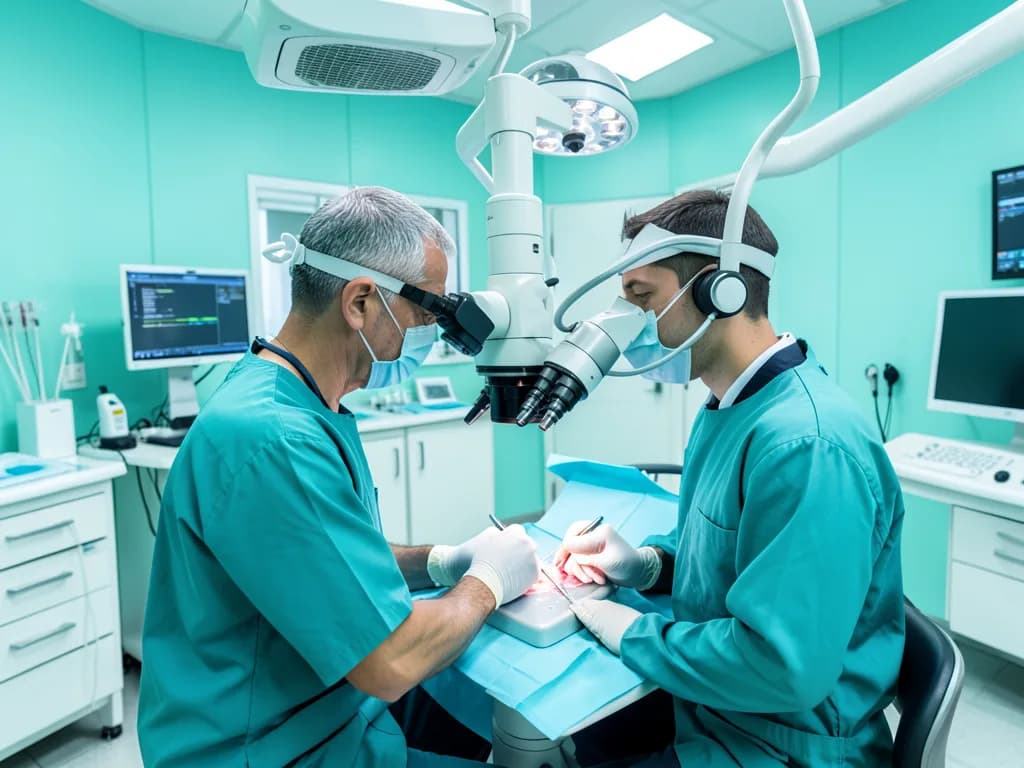
The pulp becomes infected or dies when bacteria reach it through deep decay, a crack in the tooth, or trauma. Once infected, the pulp cannot heal on its own. Without treatment, the infection spreads to the bone around the root tip, causing severe pain, swelling, and potentially spreading to other spaces in the jaw or neck. Modern endodontic treatment uses NiTi rotary files (ProTaper and similar systems), an electronic apex locator for precise working length, and a dental microscope for magnification — making the procedure efficient, thorough, and comfortable.
For specialist referrals, explore our dental specialists in Dubai directory. If you need a crown after treatment, see our dental crowns Dubai guide.
Root Canal Myths Debunked
Root canal treatment has an undeserved reputation for being painful. Here is what the evidence and modern clinical practice actually shows.
Root canals are extremely painful
Modern local anaesthesia makes root canal treatment no more painful than having a filling. Most patients are surprised by how comfortable it is. Any pain experienced was from the toothache before treatment — not the procedure itself.
It is better to just extract the tooth
Keeping your natural tooth is almost always the better long-term choice. Extraction leads to adjacent teeth shifting, bone loss, and the need for an implant or bridge — all of which are more expensive and involve more procedures than a root canal and crown.
Root canals cause illness or cancer
This claim originates from debunked century-old research. Every major dental and medical body worldwide — including the WHO — has reviewed the evidence and confirmed that root canal treatment does not cause systemic disease. The bacteria inside an untreated infected tooth, however, can spread to surrounding bone and pose real health risks.
A root canal kills the tooth
The pulp (nerve and blood vessels) is removed, but the tooth remains alive via its periodontal ligament and surrounding bone. The tooth can function normally for decades after root canal treatment when properly crowned.
Signs You May Need Root Canal Treatment
The following symptoms suggest the dental pulp may be infected or dying. Only a dentist can make a definitive diagnosis using clinical tests and X-ray — but these signs warrant prompt attention.
Deep decay reaching the pulp chamber
Severe, spontaneous toothache — especially at night
Prolonged sensitivity to heat that lingers after the stimulus is removed
Swelling or a pimple on the gum near a tooth (abscess)
Darkening or discolouration of a tooth
Cracked tooth with pulp exposure
Trauma to a tooth causing nerve damage
Existing large filling where decay has extended below into the pulp
Do not wait: A dental abscess (facial swelling, high fever, difficulty swallowing or breathing) is a medical emergency. Attend a dental clinic or emergency department immediately. See our emergency dentist Dubai guide.
The Root Canal Procedure Step by Step
From the initial X-ray to crown placement — every stage of root canal treatment explained in clinical detail.
Diagnosis and Radiograph
A periapical radiograph (digital X-ray) and sometimes a CBCT scan for complex cases is taken to assess the number and shape of root canals, the extent of infection, the bone level around the root apex, and the overall restorability of the tooth. Your dentist evaluates sensitivity tests (cold, percussion) and probes around the tooth. A definitive diagnosis of irreversible pulpitis or pulp necrosis — including necrotic pulp with periapical abscess — is made before treatment begins.
Local Anaesthesia
Profound local anaesthesia is administered — typically an inferior alveolar nerve block for lower back teeth and buccal infiltrations for upper teeth. The dentist tests anaesthesia before proceeding. For acutely infected teeth, achieving full anaesthesia can be more challenging (acidic infected tissue reduces anaesthetic efficacy); supplemental injections including intraligamentary and intrapulpal techniques may be used. You should feel no pain during the procedure.
Rubber Dam Isolation
Rubber dam isolation using a latex or non-latex sheet is placed around the tooth and held with a clamp. This aseptic technique is essential: it isolates the tooth from saliva (which contains bacteria), prevents irrigant solutions from being swallowed, improves visibility, and is a clinical standard that every competent endodontist and root canal specialist performing endodontic treatment uses. Do not accept root canal treatment without rubber dam isolation.
Access Cavity Preparation
A small opening is made in the top (crown) of the tooth through the enamel and dentine into the pulp chamber. The shape of this access cavity is critical — it must give straight-line access to all root canals while conserving as much tooth structure as possible. Under magnification (microscope or loupes), the canal orifices (openings) are identified using a DG16 probe and illumination.
Canal Shaping and Irrigation
Nickel-titanium (NiTi) rotary files — including ProTaper Universal or similar systems — are used to shape each root canal, removing infected pulp tissue, bacteria and debris while creating a tapered shape suitable for obturation. Working length is confirmed with an electronic apex locator and verified radiographically. Between instrument files, the canals are irrigated with sodium hypochlorite (NaOCl) — a powerful antimicrobial — and EDTA solution to remove the smear layer. Advanced clinics use a dental operating microscope for magnification and illumination, enabling the endodontist to locate calcified canals and verify canal cleanliness. This step takes the most time, particularly in molar teeth with 3–4 canals.
Canal Drying and Medicament (Multi-visit only)
In cases with active infection, significant discharge or a failed previous root canal, calcium hydroxide medicament is placed in the canals between visits. This alkaline paste kills residual bacteria over 1–4 weeks. A temporary filling seals the access cavity. The patient returns for the final obturation appointment once symptoms resolve and the canal environment is clean.
Obturation with Gutta-Percha
The clean, dry canals are filled in the obturation phase with gutta-percha — a rubber-like biocompatible material — and a root canal sealer. Modern clinics use bioceramics (calcium silicate-based sealers such as MTA or BC Sealer) for superior apical seal and biocompatibility. The master gutta-percha cone is fitted to the working length confirmed on X-ray, then warm vertical or lateral condensation techniques fill the canal space three-dimensionally, sealing all lateral canals and the apex. A post-obturation periapical radiograph confirms complete, dense root canal filling to the working length.
Restoration and Crown Placement
A temporary or immediate composite build-up restores the access cavity. The most important step after root canal is prompt crown placement — typically within 4 weeks for molar teeth. The crown protects the now-brittle tooth from fracture, which is the most common cause of root canal failure. See our guide to{' '}dental crowns in Dubai for material choices and costs.
Root Canal Treatment Costs in Dubai
Prices vary by clinic tier, tooth anatomy, and whether treatment is by a general dentist or specialist endodontist.
| Treatment | Cost (AED) |
|---|---|
| Single-rooted tooth (incisors, canines) | 600–1,200 |
| Double-rooted tooth (premolars) | 800–1,500 |
| Multi-rooted tooth (molars) | 1,200–2,500 |
| Molar root canal by endodontist | 1,800–3,500 |
| Root canal retreatment | 1,000–3,500 |
| Consultation + digital X-ray | 150–350 |
| Crown after root canal (required) | 1,200–3,500 |
| Total (root canal + crown, molar) | 2,400–6,000 |
For a full breakdown by tooth type and clinic tier, see our root canal cost Dubai guide.
Single Visit vs Multi Visit Root Canal
Single visit root canal suitable for
- → Vital (living) pulp cases — irreversible pulpitis with no infection
- → Simple, straight single-rooted teeth (front teeth, some premolars)
- → No pre-operative abscess or acute swelling
- → Patient preference and operator experience
Multi visit root canal recommended for
- → Teeth with acute abscess, significant discharge or necrotic pulp
- → Complex molar teeth with curved or calcified canals
- → Re-treatment of failed previous root canals
- → Cases where full canal length cannot be confirmed in one session
- → Immunocompromised patients where thorough disinfection is critical
Both single-visit and multi-visit root canals have equivalent long-term success rates in the literature for comparable case types. The choice should be driven by clinical findings, not speed or cost alone.
See our full 2026 dental cost guide or check your insurance coverage.
General Dentist vs Endodontist in Dubai
General Dentist — appropriate for
- ✓ Straightforward single or two-canal teeth
- ✓ Vital pulp cases in healthy patients
- ✓ Front teeth and premolars without calcification
- ✓ Dentist with postgraduate endodontic training
Endodontist — seek specialist for
- → Molar teeth with curved, calcified or extra canals
- → Re-treatment of a previously failed root canal
- → Broken instrument in the canal
- → Surgical root-end resection (apicoectomy)
- → Teeth with large periapical lesions or cysts
Browse our dental specialists directory to find a DHA-licensed endodontist in Dubai.
What Happens After Root Canal Treatment
The root canal procedure itself is just one part of saving the tooth. Equally important is what happens next. For most back teeth, a dental crown must be placed promptly after root canal treatment. An uncrowned molar is at very high risk of fracturing — studies consistently show that molar teeth without crowns have failure rates many times higher than crowned teeth at the 5 and 10 year mark.
Immediately after treatment
- ✓ Some soreness in the jaw or injection site is normal for 24–72 hours
- ✓ Take ibuprofen and paracetamol as prescribed
- ✓ Avoid chewing hard food on the treated side until crowned
- ✓ A temporary filling or crown protects the tooth
Within 2–4 weeks
- ✓ Book your crown preparation appointment promptly
- ✓ Attend a post-treatment review X-ray at 6 months to check healing
- ✓ Maintain good oral hygiene — root-filled teeth can still decay at the margin
- ✓ Report any persistent pain or swelling immediately
Crown after root canal — why it is essential
Removing the pulp cuts off the internal moisture supply to the dentinal tubules, making the tooth structurally more brittle. Back teeth (premolars and molars) absorb up to 800 N of biting force. Without a crown distributing these forces, the root-filled tooth is highly likely to split vertically — a fracture that usually cannot be restored, resulting in extraction. A crown placed within 4 weeks protects your investment in root canal treatment. Read our dental crowns Dubai guide for full material and cost details.
Insurance Coverage for Root Canal Treatment in Dubai
Generally covered when medically necessary
Root canal treatment to save a natural tooth is covered by most UAE health insurance plans — including Daman, AXA, Bupa, MetLife and NextCare — when it is medically necessary. Pre-authorisation is required. The tooth type, number of canals, and whether a specialist is used may affect your co-pay or covered amount.
For full details on what each plan covers, see our dental insurance Dubai guide.
Is Root Canal Treatment Painful?
The short answer is no — modern root canal treatment is not painful. Under profoundly effective local anaesthesia, the procedure is typically no more uncomfortable than having a filling placed. In fact, surveys of patients who have undergone root canal treatment consistently show that the experience was far less painful than anticipated. Many patients describe their greatest relief as coming from the end of the pre-treatment toothache — the throbbing, heat-sensitive, sleepless-night pain caused by the infected pulp. That pain stops within hours of treatment.
During the procedure
- ✓ Full local anaesthesia — you feel pressure, not pain
- ✓ "Less painful than a filling" — reported by most patients
- ✓ Supplemental injections available for acutely infected teeth
- ✓ IV sedation available for highly anxious patients
- ✓ The painful part is the TOOTHACHE before treatment
After the procedure
- → Mild jaw soreness and sensitivity for 2–3 days
- → OTC painkillers (ibuprofen, paracetamol) are sufficient
- → Avoid chewing on treated side for 24–48 hours
- → Swelling or worsening pain after 3 days — contact your dentist
- → Most patients return to normal activities next day
Dental anxiety? Many Dubai clinics offer conscious sedation or IV sedation for anxious patients. Ask your endodontist about sedation options at your consultation. See our IV sedation dentistry guide for more information.
Root Canal vs Tooth Extraction
Saving your natural tooth is almost always the preferred clinical outcome. Dental professionals worldwide — and every major dental association — recommend exhausting endodontic options before resorting to extraction. Your natural tooth root maintains the integrity of the jawbone, preserves bite alignment, and functions better than any artificial replacement.
| Factor | Root Canal + Crown | Extraction + Implant |
|---|---|---|
| Cost (AED) | 2,000 – 4,500 total | 5,000 – 15,000 total |
| Preserves natural tooth | Yes | No |
| Prevents bone loss | Yes — natural root maintained | Partial — implant mimics root |
| Bite alignment | Unchanged | Risk of shifting during healing |
| Healing time | Days | 3–6 months for osseointegration |
| Number of procedures | 1–2 visits | 3+ visits over months |
| Long-term outcome | Excellent when crowned promptly | Excellent but more complex |
When is extraction necessary instead? If the tooth is vertically fractured through the root, has severe bone loss from advanced gum disease, has a root that cannot be accessed due to extreme calcification, or is simply unrestorable due to insufficient remaining tooth structure — extraction may be the only option. Your endodontist or general dentist will advise based on clinical and radiographic assessment.
Compare options in detail at our root canal vs extraction Dubai guide or explore dental implant costs if extraction is unavoidable.
Does Insurance Cover Root Canal in Dubai?
Most UAE dental insurance plans classify root canal treatment as an essential or restorative procedure and cover it subject to your plan terms. Standard coverage is typically 70–80% of the allowable fee after your annual deductible is met, up to your plan's annual dental maximum. Pre-authorisation is required by most major insurers before treatment begins.
What is typically covered
- ✓ Root canal on any tooth (front, premolar, molar)
- ✓ 70–80% coverage after deductible — Daman, AXA, Bupa, MetLife, NextCare
- ✓ General dentist rate covered in full; specialist endodontist may need higher co-pay
- ✓ Post-treatment crown also covered as restorative (upgrade fee may apply)
Important notes
- ! Pre-authorisation required before treatment — submit X-rays and treatment plan
- ! Annual dental sublimit applies — check your remaining balance
- ! Re-treatment of a failed root canal may require special approval
- ! Some plans exclude root canal retreatment — check your policy
For plan-specific coverage details, see our dental insurance Dubai guide, or check specific insurer guides for Daman, AXA and Bupa.
Top Rated Endodontists in Dubai
Dubai has a strong pool of trained endodontic specialists who have completed postgraduate programmes in endodontics — typically a two to three year MDS or MSc degree in Endodontics beyond general dentistry training. These root canal specialists are DHA-licensed and work in specialist dental centres and multi-specialty clinics across the city.
When looking for a top-rated endodontist in Dubai, look for dentists with an MDS in Endodontics, a Board Certification from a recognised body (such as the American Board of Endodontics), or Fellowship of the Royal College of Surgeons (FDSRCS) with an endodontic special interest. Advanced clinics use dental operating microscopes for up to 25x magnification and CBCT imaging for three-dimensional root canal anatomy assessment on complex cases.
What sets a top endodontist apart
- ✓ MDS in Endodontics or equivalent postgraduate qualification
- ✓ Uses dental operating microscope for all procedures
- ✓ CBCT scanning for complex multi-rooted cases
- ✓ Bioceramic (MTA) sealers for superior obturation
- ✓ Microsurgery capability for apicoectomy
- ✓ Single-visit root canal for suitable cases
When to specifically seek an endodontist
- → Retreatment of a failed previous root canal
- → Calcified or severely curved root canals
- → Broken instrument file inside the canal
- → Apicoectomy (microsurgical root-end resection)
- → Molar with 4+ canals or complex anatomy
- → Large periapical cyst requiring specialist management
Browse our Dubai dentist directory to find DHA-licensed endodontists and root canal specialists near you. For specialist treatment, see our dental specialists Dubai guide.
Root Canal Recovery and Aftercare
Recovery from root canal treatment is typically rapid. Most patients feel significantly better within 24–48 hours as the infection clears. Understanding proper aftercare helps protect your investment and ensures the treated tooth lasts a lifetime with correct follow-through.
First 24–48 hours
- ✓ Avoid chewing on the treated side
- ✓ Take ibuprofen 400 mg every 6 hours if needed
- ✓ Soft diet — soup, yoghurt, mashed foods
- ✓ No rinsing forcefully
Within 2–4 weeks
- ✓ Book crown preparation promptly
- ✓ Crown placement is essential for back teeth
- ✓ Attend post-treatment review as scheduled
- ✓ Maintain normal brushing and flossing
Long term
- ✓ Treated tooth can last a lifetime when crowned
- ✓ Six-monthly check-ups to monitor healing
- ✓ Periapical radiograph at 6–12 months
- ✓ Report any recurrence of symptoms immediately
The most important aftercare step: Crown placement within 2–4 weeks of root canal completion — especially for molar and premolar teeth. The root-filled tooth is structurally more brittle without its pulp. Without a crown distributing bite forces, the risk of vertical root fracture is very high. Read our dental crowns Dubai guide for crown material options and costs (AED 900–3,500).
Technology Used in Modern Root Canal Treatment
Root canal treatment has been transformed by technology over the past two decades. The best endodontists in Dubai now use a combination of magnification, digital imaging, and precision instrumentation that makes treatment faster, more predictable, and more comfortable than ever before. When choosing a clinic, asking about their technology can give you a meaningful indication of care quality.
Dental Operating Microscope
A dental operating microscope provides up to 25x magnification and co-axial illumination — lighting the canal exactly where the lens is focused. Under the microscope, an endodontist can locate calcified or missed canals invisible to the naked eye, identify microcracks in the root, verify that every millimetre of canal is clean and free of infected tissue, and precisely place obturation material. Top endodontic specialists in Dubai use the microscope for every root canal procedure, not just complex cases.
Electronic Apex Locator
The electronic apex locator (EAL) uses electrical impedance to precisely determine the working length of each root canal — the distance from the opening of the canal to the apex (tip) of the root. Accurate working length is critical: instruments that go too short leave infected tissue behind; instruments that go past the apex cause unnecessary post-operative pain and tissue damage. Modern apex locators are accurate to within 0.5 mm and are used alongside confirming periapical radiographs.
NiTi Rotary File Systems
Nickel-titanium (NiTi) rotary files — including systems such as ProTaper Gold, WaveOne Gold, Reciproc, and HyFlex — are flexible, super-elastic instruments driven by an electric motor at controlled speed and torque. Unlike older stainless-steel hand files, NiTi files can safely negotiate curved root canals without straightening them or creating procedural errors such as ledges and zips. They also shape canals faster and more consistently, reducing appointment time significantly. Most leading Dubai endodontists use single-file or multi-sequence NiTi systems.
CBCT 3D Imaging
Cone Beam CT (CBCT) scanning produces three-dimensional images of the tooth and surrounding bone, revealing canal anatomy that two-dimensional periapical radiographs cannot show. CBCT is used in Dubai for complex cases: teeth with unusual root anatomy (extra canals, C-shaped roots), cases where the cause of failure of a previous root canal is unclear, suspected root fractures, and large periapical lesions where the extent of bone destruction needs to be assessed. Not every root canal requires CBCT — your endodontist will advise if it is needed for your specific case.
Ultrasonic Irrigation Activation
Simply flooding the canal with sodium hypochlorite (NaOCl) irrigation solution is not sufficient for complex root canal systems with lateral canals, isthmuses, and fins. Ultrasonic or sonic activation of the irrigant — using devices such as the EDDY tip or ultrasonic PUI (Passive Ultrasonic Irrigation) — creates acoustic streaming and cavitation that drives the antimicrobial solution into inaccessible areas of the canal anatomy, dramatically improving disinfection. This step is particularly important in previously infected teeth and re-treatment cases.
Bioceramic Sealers and MTA
Calcium silicate-based bioceramic sealers — including BC Sealer, TotalFill, and mineral trioxide aggregate (MTA) — represent a significant advance over older zinc oxide-eugenol sealers. Bioceramics are biocompatible, set in the presence of moisture, expand slightly on setting (improving the seal), and release calcium hydroxide ions that are antimicrobial and promote periapical healing. Vital pulp therapy procedures — pulp capping and pulpotomy — now routinely use MTA for outstanding success rates when managing reversible pulp disease.
Questions to ask your endodontist: Do you use a dental operating microscope for all root canals? Which NiTi file system do you use? Do you offer CBCT scanning for complex cases? Do you use bioceramic sealers? These questions will quickly reveal the level of clinical sophistication at any Dubai dental practice. Browse our dental specialists directory to find microscope-equipped endodontists in Dubai.
Root Canal Retreatment and Failed Root Canals
When a previously treated tooth does not heal as expected — or when pain and infection return months or years after the original root canal — root canal retreatment may be the solution. Retreatment involves removing the original gutta-percha filling material, re-cleaning and re-shaping the canals, and resealing the tooth. This is a technically demanding procedure best performed by a specialist endodontist.
Common causes of a failed root canal include: a missed canal (particularly in molar teeth with complex anatomy), incomplete cleaning due to an extreme canal curve or calcification, a coronal microleakage (bacteria re-entering through a defective crown or filling), and a root fracture that makes the tooth unrestorable. A CBCT scan is invaluable in diagnosing the cause of failure before retreatment begins.
Signs a root canal has failed
- •Pain that persists or returns after original treatment
- •Swelling or a pimple on the gum (sinus tract)
- •Periapical lesion visible on X-ray that is not healing
- •Darkening of the tooth crown
- •Sensitivity to biting pressure months after treatment
Retreatment procedure
- •Removal of existing crown and post (if present)
- •Dissolving gutta-percha with solvents and rotary instruments
- •Re-cleaning and re-shaping all canals under microscope
- •Calcium hydroxide medicament for 1–4 weeks
- •Re-obturation with new gutta-percha and bioceramic sealer
When surgery is needed
- •Canal too calcified to retreat conventionally
- •Broken instrument that cannot be bypassed
- •Persistent infection despite adequate root canal
- •Apicoectomy — removing root tip and sealing retrograde
- •MTA retrograde filling placed under microsurgical technique
| Factor | Initial Root Canal | Retreatment |
|---|---|---|
| Cost (AED) | 600 – 2,500 | 1,000 – 3,500 |
| Complexity | Standard | Higher — existing material to remove |
| Success rate | 86 – 98% | 74 – 86% |
| Specialist needed | Often general dentist | Endodontist recommended |
| Number of visits | 1–2 visits | Usually 2–3 visits |
| Insurance coverage | Usually covered | May require special pre-auth |
If your root canal treatment has failed, seek a DHA-licensed endodontist for retreatment assessment. Browse our dental specialists Dubai guide or explore retreatment costs.
Risks and Potential Complications of Root Canal Treatment
Root canal treatment is a very safe procedure with a high success rate — 95% or above when performed by a skilled clinician using modern techniques. Complications are uncommon but patients should be informed about what can occur, both during and after treatment.
Incomplete canal cleaning
UncommonIn teeth with complex canal anatomy — extra canals, severe curvature, isthmus connections — it is possible to miss a portion of infected tissue. This is the most common cause of persistent symptoms after treatment. The use of a dental operating microscope and CBCT imaging significantly reduces this risk by revealing canal anatomy that is invisible on standard X-rays.
Instrument separation (broken file in canal)
Rare (1–3%)NiTi rotary files are subject to metal fatigue and can occasionally fracture inside the root canal — particularly in severely curved canals or when instruments are overused. A separated file fragment does not automatically doom the tooth: if it is located beyond the curved portion of a well-cleaned canal, the tooth can often still be treated successfully. If it is blocking an uncleaned portion of the canal, retrieval attempts or surgical resolution may be needed. This risk is minimised by using instruments within their recommended use limits and by working under magnification.
Root perforation
Very rareA perforation is an unintended communication between the root canal and the surrounding periodontal tissues, created by a rotary instrument or drill. The risk is highest in calcified canals where the original canal orifice has been displaced by secondary dentine. Small perforations can often be sealed with MTA — a bioceramic material with excellent biocompatibility and sealing properties. Large perforations close to the bone crest carry a less favourable prognosis.
Post-treatment infection
UncommonSome inflammation and post-operative soreness is expected for 2–3 days after root canal — this is normal and does not indicate failure. A true post-treatment infection (presenting with swelling, worsening pain, and fever) is uncommon and usually indicates residual infection that requires re-evaluation, additional antibiotic therapy, or retreatment. Antibiotics alone without root canal treatment do not resolve pulp infection.
Tooth fracture if not crowned promptly
Common if crown delayedThis is not a complication of root canal treatment itself — it is a complication of not completing the treatment with a crown. Removing the pulp reduces the tooth's moisture content and makes it more brittle. Molar teeth exposed to high biting forces without a protective crown have a significant risk of vertical root fracture — often an unrestorable situation. Prompt crown placement (within 2–4 weeks for molars) is the most important single action a patient can take after root canal treatment.
Overall success rate: Root canal treatment performed by a skilled clinician using modern rotary instrumentation, apex locator, and bioceramic obturation achieves a 95%+ success rate for teeth without pre-existing periapical lesions. Even for infected teeth with visible bone destruction on X-ray, success rates of 85–90% are routinely achieved. Choosing a specialist endodontist for complex cases significantly reduces the risk of complications. See our dental specialists guide to find a DHA-licensed endodontist near you.
Vital Pulp Therapy — An Alternative to Full Root Canal
Not every tooth with pulp involvement needs a full root canal. In cases where the pulp is still vital (alive) and the infection or inflammation is limited to the outermost portion of the pulp, vital pulp therapy techniques can preserve living pulp tissue — avoiding full root canal treatment and maintaining the natural vitality of the tooth.
Direct Pulp Capping
When decay removal inadvertently exposes a small, pinpoint area of healthy pulp in a tooth with no symptoms of irreversible pulpitis, pulp capping with MTA or Biodentine can seal the exposure and allow the pulp to form a reparative dentinal bridge — preserving pulp vitality. Success rates with MTA exceed 85% over 5 years when performed on correctly selected cases. The tooth is subsequently restored with a high-quality composite or crown.
Pulpotomy (Partial Pulp Removal)
A pulpotomy removes only the inflamed coronal pulp (the portion inside the crown of the tooth) while preserving healthy radicular pulp tissue in the root canals. MTA is placed over the remaining pulp as a biocompatible capping material. This procedure is well-established in paediatric dentistry for primary teeth, but is increasingly used in permanent teeth with deep decay and symptomatic reversible pulpitis — avoiding a full root canal when the radicular pulp remains healthy.
Key distinction: Vital pulp therapy is only appropriate when the pulp is still alive and the inflammation is reversible. Once the pulp has become necrotic (dead) or a periapical abscess has formed, full endodontic treatment is required. Your dentist determines pulp status through clinical tests (cold test, electric pulp test) and radiographic assessment before recommending the most conservative appropriate treatment. For complex cases, ask for a referral to a specialist endodontist in Dubai.
Root Canal Treatment Across Dubai Areas
Dubai has a high density of DHA-licensed dental clinics offering root canal treatment across every neighbourhood. Whether you need an endodontist in Jumeirah, a root canal near Dubai Marina, or urgent treatment in Deira, you can find qualified practitioners within a short drive of your home or office. Below are the key Dubai areas with strong dental clinic coverage for endodontic treatment.
Search by area in our clinic directory or explore specific area guides such as dentist in Karama, Motor City, and Tecom.
Frequently Asked Questions
Is root canal treatment painful in Dubai?
How many visits does a root canal take at a Dubai dental clinic?
Do I need an endodontist or can a general dentist do my root canal in Dubai?
What is the success rate of root canal treatment in Dubai?
How much does root canal treatment cost in Dubai?
Does UAE health insurance cover root canal treatment in Dubai?
How do I find root canal treatment near me in Dubai?
Who is the best root canal specialist near me in Dubai?
What is root canal Dubai pricing for different tooth types?
Can I get same day root canal treatment in Dubai?
Root Canal Treatment Near You in Dubai
Finding root canal treatment near you in Dubai is straightforward thanks to the high density of DHA-licensed dental clinics across the city. Whether you live in Deira, Bur Dubai, Jumeirah, Al Barsha, Dubai Marina, JLT, Business Bay, Downtown, Silicon Oasis, or Mirdif, there are qualified dental professionals offering root canal treatment near your home or office. Most Dubai residents can find a clinic offering root canal treatment within a 10-minute drive of their location.
When searching for root canal treatment near you, prioritise clinics that offer digital X-rays (for accurate diagnosis), rubber dam isolation (the clinical standard for root canal treatment), and nickel-titanium rotary instrumentation (for efficient and safe canal preparation). These three elements are non-negotiable quality indicators for any clinic providing root canal treatment in Dubai. Additionally, look for clinics that offer flexible scheduling — many Dubai dental clinics now open evenings and weekends to accommodate working professionals who need root canal treatment near their workplace or residence.
If you are experiencing a dental emergency — severe toothache, facial swelling, or a broken tooth — several clinics in Dubai offer emergency root canal treatment near you with same-day appointments. Our emergency dentist guide lists clinics with extended hours and weekend availability. For non-urgent cases, most clinics can schedule your root canal treatment within 1–3 days of your initial consultation.
Root Canal Treatment Available Across Dubai
Best Root Canal Specialist Near Me
Searching for the best root canal specialist near you in Dubai? The quality of root canal treatment depends significantly on the skill and experience of the treating dentist. While any DHA-licensed dentist can legally perform root canals, the best root canal specialist near you will have specific endodontic training, a track record of successful cases, and access to modern equipment including dental operating microscopes and CBCT scanning.
The best root canal specialists in Dubai typically work with a dental operating microscope, which provides up to 25x magnification — allowing them to locate hidden canals, identify cracks, and achieve more thorough cleaning than is possible with the naked eye or loupes alone. When looking for the best root canal specialist near you, ask whether they use a microscope for endodontic treatment. This single factor can significantly impact the success rate of your root canal, particularly for complex cases involving molar teeth.
Signs of a Quality Root Canal Specialist
- ✓ Uses dental operating microscope for all root canals
- ✓ Performs rubber dam isolation without exception
- ✓ Uses electronic apex locator for working length
- ✓ Takes post-obturation verification X-ray
- ✓ Has a documented high success rate
- ✓ Provides written aftercare instructions
Red Flags to Avoid
- ✗ Does not use rubber dam (infection control risk)
- ✗ Rushes through the procedure in under 30 minutes
- ✗ No post-treatment X-ray to verify canal filling
- ✗ Recommends extraction instead without trying root canal
- ✗ No clear pricing or written treatment plan
- ✗ Unwilling to refer complex cases to a specialist
Find the best root canal specialist near you by browsing our clinic directory or read our dental specialists guide to learn more about endodontist qualifications in Dubai.
People Also Search For
Find a Root Canal Specialist in Dubai
Use our locate a dental clinic nearby to compare clinics, read reviews, and book appointments.
Browse verified endodontists and dental clinics, check insurance acceptance and compare real patient reviews.
Ready to take the next step? dental care search Dubai and book your appointment today.