Dental Implant Recovery in Dubai
Your complete week by week recovery timeline. Learn what to expect at every stage, how to manage pain, what to eat, and when to call your dentist.
Updated March 2026 | Based on DHA clinical guidelines
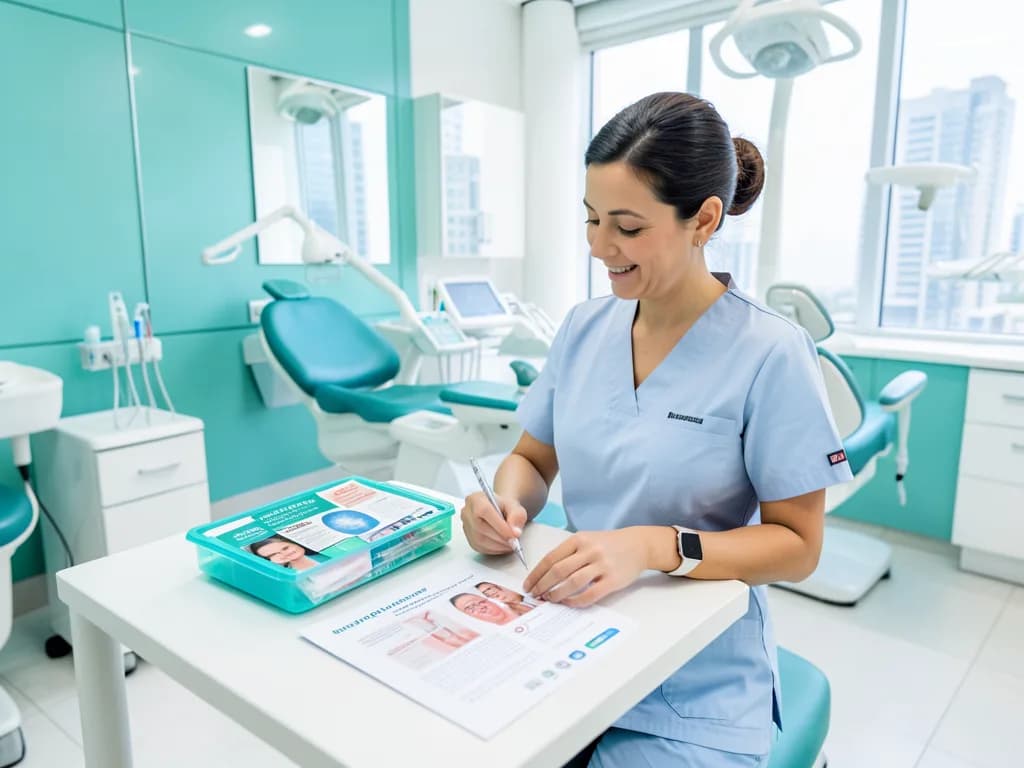
What to Expect After Dental Implant Surgery
Dental implant surgery in Dubai is performed under local anaesthesia and most patients describe the procedure as more comfortable than a tooth extraction. The recovery period, however, requires patience and discipline. Understanding what happens at each stage helps you prepare properly and avoid the mistakes that lead to complications.
Total recovery from implant placement to permanent crown fitting takes 4 to 6 months. The longest phase — osseointegration — happens silently beneath the gum line as your jawbone fuses with the titanium implant. During this time, most patients feel no pain and carry on with their normal routine. The active recovery period where you need to modify your diet and activities is typically just 2 to 3 weeks.
This guide is based on standard protocols used by DHA-licensed oral surgeons in Dubai and covers single-tooth implants. Recovery for All-on-4 full arch implants or All-on-6 dental implants follows a similar timeline but may involve additional dietary restrictions during the first month.
2 to 3 weeks
Active Recovery
Diet and activity restrictions
3 to 6 months
Osseointegration
Bone fuses with implant
4 to 6 months
Total Timeline
Placement to final crown
Week by Week Recovery Timeline
Every patient heals at a slightly different rate, but this timeline represents the standard recovery path for a single dental implant placed in healthy bone by a DHA-licensed specialist in Dubai.
Day 1 to Day 3
Immediate Post Surgery Recovery
What to expect
- Peak swelling typically occurs 48 to 72 hours after placement
- Mild to moderate pain managed with prescribed medication
- Light bleeding or oozing from the surgical site is normal
- Apply ice packs externally for 15 minutes on, 15 minutes off
- Keep your head elevated when sleeping to reduce swelling
Diet
Cold liquids only — smoothies, yoghurt, cold soups. Avoid hot beverages, straws, and spitting.
Medication
Prescribed antibiotics (typically Amoxicillin AED 30 to AED 60), ibuprofen or paracetamol for pain (AED 15 to AED 40), and chlorhexidine mouth rinse (AED 25 to AED 50).
Restrictions
No smoking, no exercise, no touching the surgical site with your tongue or fingers. Cancel any social plans for at least 48 hours.
Day 4 to Day 7
Early Healing Phase
What to expect
- Swelling begins to subside noticeably from day 4
- Bruising may appear on the cheek or jawline and is normal
- Pain levels decrease significantly by day 5 to 6
- Sutures (if non-dissolvable) remain in place
- Gum tissue starts closing around the implant site
Diet
Soft foods — scrambled eggs, mashed potatoes, soft pasta, steamed vegetables, fish without bones. Continue avoiding crunchy or hard foods.
Medication
Continue antibiotics if prescribed for the full course. Switch to over-the-counter paracetamol (AED 15 to AED 25) as needed. Continue gentle salt water rinses.
Restrictions
Light walking is acceptable. Avoid gym workouts, swimming, and bending over. Do not chew on the implant side.
Week 2 to Week 3
Soft Tissue Healing
What to expect
- Most patients return to work within 3 to 5 days after surgery
- Sutures are removed at the 10 to 14 day follow-up appointment
- Suture removal is a quick, painless procedure (5 minutes)
- Gums appear pink and healthy around the healing cap
- Sensitivity to hot and cold foods decreases
Diet
Gradually introduce firmer foods — cooked chicken, rice, bread. Still avoid nuts, popcorn, hard candy, and raw carrots on the implant side.
Medication
Medication is typically no longer needed. Continue chlorhexidine rinse if prescribed. Resume normal brushing with a soft-bristle toothbrush, avoiding direct contact with the implant.
Restrictions
Light exercise can resume. Avoid contact sports for 4 to 6 weeks. Do not use an electric toothbrush near the implant site.
Month 2 to Month 3
Osseointegration Begins
What to expect
- The implant begins fusing with the jawbone (osseointegration)
- This biological process cannot be rushed or accelerated
- The implant site should feel comfortable and pain-free
- A temporary crown or healing cap protects the implant
- Follow-up X-ray at 8 to 12 weeks confirms bone integration
Diet
Most normal foods are safe. Avoid extremely hard foods like ice, hard candy, or bone-in meat directly on the implant site.
Medication
No medication required unless your dentist identifies a concern at follow-up.
Restrictions
All normal activities can resume. Continue gentle cleaning around the implant. Attend your scheduled follow-up appointment without fail.
Month 4 to Month 6
Abutment Placement and Crown Fitting
What to expect
- Your dentist confirms full osseointegration via X-ray or torque test
- The abutment (connector piece) is attached to the implant
- Abutment placement is a minor procedure under local anaesthesia
- Impressions are taken for your permanent crown
- The final crown is placed 2 to 4 weeks after the abutment
- Once the crown is fitted, the implant restoration is complete
Diet
No dietary restrictions after the permanent crown is placed. You can eat normally on both sides.
Medication
Mild pain relief may be needed for 1 to 2 days after abutment placement (AED 15 to AED 25 for paracetamol).
Restrictions
None. The implant functions like a natural tooth. Begin your long-term maintenance routine.
Pain Management After Dental Implant Surgery
Pain after dental implant surgery is typically mild to moderate and peaks within the first 48 hours. Most patients rate their post-operative pain as 3 to 4 out of 10 — significantly less intense than a tooth extraction or root canal. With the right medication and aftercare, discomfort is well-controlled throughout the healing period.
Prescribed Medication
Your Dubai dentist will prescribe a short course of antibiotics (AED 30 to AED 80) and pain relief (AED 15 to AED 40). Take the full antibiotic course even if you feel well. Never exceed the prescribed paracetamol or ibuprofen dosage.
Ice Pack Application
Apply an ice pack wrapped in a cloth to the outside of your cheek for 15 minutes on, 15 minutes off during the first 48 hours. This is the single most effective way to control swelling. Do not apply ice directly to the skin.
Dietary Adjustments
Stick to cold, soft foods for the first 3 days. Avoid hot liquids, spicy food, and alcohol for at least 72 hours. Room-temperature water is fine. Do not use a straw — the suction can dislodge the blood clot.
Oral Hygiene Protocol
Do not brush the surgical area for the first 24 hours. From day 2, use a chlorhexidine mouth rinse (AED 25 to AED 50) twice daily. After 48 hours, gently brush surrounding teeth with a soft-bristle brush. Avoid commercial mouthwash containing alcohol.
If you are anxious about pain, discuss sedation options with your dental implant specialist in Dubai. IV sedation (AED 500 to AED 1,500) or oral sedation can make the procedure entirely stress-free. Learn more about IV sedation dentistry in Dubai.
Post Implant Medication Costs in Dubai
The total medication cost after dental implant surgery in Dubai ranges from AED 50 to AED 200, depending on what your dentist prescribes and whether the clinic includes the first course of medication in their package price. Here is a breakdown of typical costs at Dubai pharmacies.
| Item | Typical Cost |
|---|---|
| Prescribed antibiotics (Amoxicillin 500mg, 7 days) | AED 30 to AED 80 |
| Ibuprofen 400mg (pain and inflammation) | AED 15 to AED 35 |
| Paracetamol 500mg (pain relief) | AED 10 to AED 25 |
| Chlorhexidine mouthwash 0.2% | AED 25 to AED 50 |
| Gauze pads (pharmacy pack) | AED 10 to AED 20 |
| Soft-bristle toothbrush (post-surgical) | AED 15 to AED 30 |
| Follow-up consultation (suture removal) | AED 0 to AED 200 (often included) |
| Follow-up X-ray (8 to 12 weeks) | AED 100 to AED 300 |
Many clinics in Dubai include antibiotics and the first follow-up visit in their implant package. Always ask what is included before comparing dental implant costs in Dubai. Insurance coverage for post-operative medication varies — check with your provider or browse Daman insurance dental clinics for details.
What to Eat After Dental Implant Surgery
Proper nutrition speeds healing and reduces infection risk. Your diet should evolve gradually over the first 3 months. Jumping straight to hard foods too early is one of the most common reasons for implant complications in Dubai.
Day 1 to Day 3 (Cold Liquids Only)
Safe to eat
- Cold smoothies (no seeds or chunks)
- Plain yoghurt
- Cold soup (blended, not chunky)
- Protein shakes
- Room-temperature water
- Applesauce
Avoid
- Hot coffee or tea
- Carbonated drinks
- Alcohol
- Anything requiring chewing
- Straws (suction disrupts healing)
- Spicy or acidic liquids
Day 4 to Day 14 (Soft Foods)
Safe to eat
- Scrambled eggs
- Mashed potatoes
- Soft pasta (well-cooked)
- Steamed fish (boneless)
- Cooked lentils
- Ripe banana
- Avocado
- Soft cheese
Avoid
- Nuts and seeds
- Raw vegetables
- Crusty bread
- Chips or crackers
- Tough meat
- Popcorn
Week 3 to Month 3 (Gradual Return)
Safe to eat
- Cooked chicken (shredded)
- Rice and grains
- Soft bread
- Cooked vegetables
- Pasta with soft sauce
- Most cooked meals
Avoid
- Hard candy or ice
- Whole apples (cut into slices instead)
- Sticky caramel or toffee
- Corn on the cob
- Chewing on the implant side until cleared
Warning Signs After Dental Implant Surgery
While most dental implant recoveries in Dubai are uneventful, you should know when something requires urgent attention. Contact your treating clinic immediately if you experience any of the following symptoms.
Increasing pain after day 3 instead of decreasing
Could indicate dry socket, infection, or implant mobility. Call your clinic immediately.
Persistent heavy bleeding beyond 24 hours
Light oozing is normal for 12 to 24 hours. Continuous heavy bleeding requires urgent evaluation.
Fever above 38.5 degrees Celsius lasting more than 24 hours
A mild temperature (37.5 to 38) on day 1 is normal. Persistent high fever may signal infection.
Numbness or tingling in the lip, chin, or tongue after 48 hours
May indicate nerve involvement during placement. Contact your oral surgeon for assessment.
Implant feels loose or the healing cap falls off
Do not attempt to tighten it yourself. See your dentist the same day. Early implant mobility may require removal and re-placement after healing.
Pus or foul taste coming from the implant site
Indicates possible peri-implantitis or abscess. Requires antibiotic treatment and professional cleaning.
Swelling that returns after initially subsiding
New swelling after the first week may indicate a delayed infection. Schedule an appointment within 24 hours.
If you experience a dental emergency outside clinic hours, visit an emergency dentist in Dubai. Most hospitals with dental departments accept walk-ins 24 hours a day.
Understanding Osseointegration
Osseointegration is the reason dental implants are considered the gold standard for tooth replacement. Unlike dental bridges or dentures, implants integrate with your natural bone and prevent the jawbone loss that occurs when a tooth root is missing.
What happens during osseointegration
Osseointegration is the biological process where your jawbone grows directly onto the titanium implant surface. New bone cells (osteoblasts) deposit minerals around the implant threads, creating a bond that is actually stronger than the root of a natural tooth. This process typically takes 3 to 6 months in the lower jaw and 4 to 6 months in the upper jaw.
Why the upper jaw takes longer
The upper jaw (maxilla) has softer, more porous bone compared to the lower jaw (mandible). Softer bone requires more time for the implant to achieve primary stability. If a sinus lift was performed alongside implant placement, healing may take an additional 2 to 3 months.
Factors that affect osseointegration success
Smoking reduces blood flow to the surgical site and is the single biggest risk factor for implant failure. Uncontrolled diabetes impairs bone healing. Poor oral hygiene allows bacteria to colonise the implant surface. Bone density at the implant site also plays a critical role — patients who required bone grafting may need extended healing time.
Osseointegration success rates in Dubai
Modern titanium implants from brands like Nobel Biocare, Straumann, and Osstem have osseointegration success rates above 95% when placed by a DHA-licensed specialist. Success rates decrease to 85 to 90% in smokers and patients with uncontrolled systemic conditions.
If your dentist determines that you have insufficient bone density for immediate implant placement, a bone graft procedure in Dubai (AED 1,500 to AED 4,000) can build up the jawbone before or during implant surgery. This adds 3 to 6 months to the overall treatment timeline but significantly improves long-term implant success.
Long Term Implant Care and Maintenance
Once your permanent crown is placed, your dental implant requires the same care as a natural tooth — with a few important additions. Proper long-term maintenance is the difference between an implant that lasts 25 years and one that fails within a decade.
Daily Cleaning Routine
Brush twice daily with a soft-bristle toothbrush. Use an interdental brush or water flosser around the implant crown where it meets the gum. Standard floss works, but a water flosser reaches areas that string floss cannot. Avoid abrasive whitening toothpaste on implant crowns.
Professional Check-Ups
Visit your dentist every 6 months for professional cleaning and implant assessment. Your hygienist will use special plastic or titanium scalers (never metal curettes) to clean around the implant without scratching the surface. An annual X-ray monitors bone levels around the implant.
Peri-Implantitis Prevention
Peri-implantitis (infection around the implant) is the leading cause of late implant failure. Symptoms include red, swollen gums, bleeding when probing, and bone loss visible on X-ray. Caught early, it is treatable. Left untreated, it leads to implant removal. Smokers are at highest risk.
What to Avoid Long Term
Do not use your implant crown to open bottles, crack nuts, or chew ice. Avoid habitual pen-chewing or nail-biting. If you grind your teeth at night (bruxism), ask your dentist about a night guard (AED 500 to AED 1,500) to protect the crown from fracture.
Need to find a dentist for regular implant maintenance? Browse all dentists in Dubai or use our clinic finder to search by location, insurance, and patient reviews.
Recovery Tips Specific to Dubai
Dubai's climate and lifestyle create unique considerations for dental implant recovery that you will not find in generic aftercare guides.
Heat and Dehydration
Dubai temperatures regularly exceed 40 degrees Celsius from May to September. Dehydration slows wound healing and thickens blood, increasing the risk of dry socket. Drink at least 2.5 litres of room-temperature water daily during recovery. Avoid iced water for the first 3 days as extreme cold can cause discomfort at the surgical site.
Air-Conditioned Environments
Indoor air conditioning dries out the mouth, which can irritate the surgical site and slow healing. Keep a water bottle nearby and consider using a room humidifier while sleeping during the first week of recovery.
Ramadan Fasting
If your implant surgery coincides with Ramadan, discuss timing with your dentist. Fasting for 14 to 15 hours without water is not ideal during the first week of recovery. Most Dubai dentists recommend scheduling implant placement after Eid or adjusting the surgery date to allow adequate hydration during healing.
Swimming and Beach Activities
Avoid swimming pools, the sea, and water parks for at least 2 weeks after implant surgery. Pool chlorine and seawater bacteria can infect the surgical site. Many Dubai residents schedule their implant surgery before a planned trip abroad and return to activities when cleared by their dentist.
Insurance Considerations
Post-operative medication is usually covered by Dubai health insurance plans that include dental benefits. Check with your provider or browse clinics that accept your insurance. Popular options include Daman, Cigna, MetLife, and Bupa.
Implant Technology Used by Dubai Specialists
The equipment your implant clinic uses directly impacts osseointegration success rates and recovery quality. Premium clinics in Dubai now use the same digital workflows as leading implant centres in Europe and North America.
CBCT 3D Scanning
Cone Beam Computed Tomography provides a 3D map of your jawbone, showing exact bone width, height, and density before surgery. This eliminates guesswork, allows pre-surgical virtual implant placement, and reduces the risk of hitting nerves or sinuses. Available at all premium Dubai implant clinics.
Digital Implant Planning Software
Software such as coDiagnostiX, Simplant, or Nobel Clinician overlays the CBCT scan with digital implant models to plan the exact position, angle, and depth before any drilling begins. The planned position is then transferred to a surgical guide for precise freehand-free placement.
Surgical Stents and Guided Surgery
3D-printed surgical guides are fabricated from the digital plan and fit precisely over the patient's remaining teeth or gums during surgery. These stents ensure the implant is placed exactly where planned, which reduces surgery time, trauma to surrounding tissue, and recovery period — particularly important in Dubai's heat.
Healing Abutment and Provisional Crowns
After the implant body integrates, a healing abutment (collar-shaped piece) is attached to shape the gum tissue around the implant site. In aesthetically critical areas, a provisional crown may be placed during osseointegration to maintain appearance while the bone fuses — common in Dubai's image-conscious professional community.
Titanium and Zirconia Implant Systems
The most used implant brands in Dubai include Nobel Biocare, Straumann, Zimmer Biomet, and Osstem. Titanium is the gold standard for osseointegration. Zirconia implants are a metal-free option available at select clinics for patients with metal sensitivities, particularly popular among Dubai's health-conscious expat population.
PRP and Bone Regeneration
Platelet-Rich Plasma (PRP) therapy uses concentrated growth factors from the patient's own blood to accelerate healing at the implant site. Combined with bone graft materials (xenograft or synthetic), PRP is used in cases with insufficient bone to improve osseointegration speed and success rates.
Implant Recovery by Age Group
Age is one of the most significant factors in dental implant healing. Younger patients generally heal faster, but implants are not suitable for patients whose jaws are still growing. Here is what to expect at each life stage.
Young Adults Ages 18 to 35
Recovery Outlook
Fastest osseointegration — typically 3 to 4 months for single implants in healthy bone. Bone density is at its peak, blood supply is excellent, and healing response is robust. The main risk in this group is inadequate post-operative care due to an active lifestyle. Patients in Dubai's expat community at this age often try to resume gym workouts or sports too early — physical exertion raises blood pressure and increases bleeding risk during the first 72 hours.
Candidacy Notes
Excellent. No age restrictions above 18 as long as jaw growth is complete. DHA guidelines require jawbone maturity before implant placement. Women under 20 and men under 22 should have growth assessed by a specialist first.
Middle-Aged Adults Ages 36 to 55
Recovery Outlook
Very good osseointegration outcomes. This is the demographic with the highest implant success rates globally — patients are old enough to have lost teeth and young enough for excellent healing. Osseointegration typically completes in 3 to 5 months. Any underlying conditions such as controlled hypertension or type 2 diabetes should be disclosed before surgery and are manageable with appropriate protocol modifications.
Candidacy Notes
Excellent. Diabetic patients with HbA1c under 7.5% are suitable candidates with standard protocol. Well-controlled blood pressure does not affect candidacy. Female patients approaching menopause should be aware that estrogen changes can affect bone density.
Seniors Ages 56 and Above
Recovery Outlook
Osseointegration takes longer — typically 4 to 6 months — because bone metabolism slows with age. Success rates remain high (over 95% at 10 years in non-smokers) when patients are in good general health. Particular attention is paid to dry mouth (common with many medications), which increases infection risk. Anti-resorptive medications (bisphosphonates for osteoporosis) require special protocols and may be a contraindication in some cases.
Candidacy Notes
Good for most healthy seniors. Absolute contraindications include uncontrolled diabetes, active cancer treatment, severe osteoporosis requiring IV bisphosphonates, and severe cardiovascular disease. Discuss all medications with your implant specialist before proceeding.
What Implant Patients in Dubai Say About Recovery
These representative experiences from Dubai implant patients reflect the most consistent themes across patient feedback gathered from verified dental clinic reviews.
“The first 48 hours were the worst — it was very manageable”
The majority of single implant patients in Dubai describe the pain level as a 3 to 4 out of 10 on day one and day two, dropping to 1 to 2 by day three. The prescribed pain medication (typically ibuprofen and paracetamol) controlled discomfort well. Most patients were surprised the procedure itself was easier than having a tooth extracted.
“I underestimated how careful I needed to be with eating”
Soft food restrictions surprise many Dubai patients, particularly those who enjoy a varied food culture. The first two weeks on pureed foods, yoghurt, and soups can feel restrictive. Patients who planned ahead and stocked up on appropriate soft foods found recovery much easier. Dubai supermarkets and meal delivery services make this manageable.
“Smoking seriously delayed my healing”
Smokers consistently report longer recovery periods, more swelling, and greater pain. Nicotine constricts blood vessels and starves the healing implant site of oxygen. Several patients who continued smoking reported their implant did not integrate and required replacement. Dubai implant specialists strongly advise stopping smoking at least two weeks before and two months after surgery.
“The osseointegration wait was easier than expected”
Most patients report that the 3 to 6 month osseointegration period passes quickly. There is no discomfort during this phase — patients simply attend a check-up appointment at 6 weeks and again at 3 months. Many patients say they completely forget about the implant during this phase and are pleasantly surprised when the time comes for crown placement.
“My provisional crown let me smile during the wait”
For front tooth implants, having a provisional (temporary) crown placed while the implant integrates made a major quality-of-life difference. Patients with front tooth implants who received provisional crowns maintained confidence during the osseointegration period, particularly important in Dubai's professional environment.
Ready to start your implant journey? Read our full dental implants Dubai guide or explore implant costs in Dubai.
Frequently Asked Questions
How long does dental implant recovery take in Dubai
Total recovery from implant placement to final crown takes 4 to 6 months. Most patients return to work within 3 to 5 days. Initial swelling and pain resolve within the first week. The longest phase is osseointegration (bone fusion), which takes 3 to 6 months and happens silently without any discomfort.
Is dental implant surgery painful
The surgery itself is painless because it is performed under local anaesthesia. Post-operative pain is typically mild to moderate for the first 2 to 3 days and is well-controlled with prescribed ibuprofen (AED 15 to AED 35) or paracetamol. Most patients report that the procedure was less painful than they expected. If you are anxious, your Dubai dentist can offer sedation options for an additional AED 500 to AED 1,500.
What can I eat after dental implant surgery
For the first 3 days, stick to cold liquids and soft foods like yoghurt, smoothies, and cold soup. From day 4 to day 14, you can eat soft foods such as scrambled eggs, mashed potatoes, and steamed fish. After 2 to 3 weeks, gradually return to normal foods while avoiding hard or crunchy items on the implant side until your dentist confirms healing is complete.
How much does post-implant medication cost in Dubai
The total cost for post-operative medication in Dubai ranges from AED 50 to AED 200. This typically includes antibiotics (AED 30 to AED 80), pain relief (AED 15 to AED 40), and chlorhexidine mouthwash (AED 25 to AED 50). Many clinics include the first course of medication in their implant package price.
When can I exercise after dental implant surgery
Avoid all exercise for the first 3 to 5 days. Light walking is safe from day 4. You can return to moderate gym workouts after 7 to 10 days. Contact sports should be avoided for 4 to 6 weeks. Swimming pools are off-limits for 2 weeks due to infection risk. Always confirm with your treating dentist before resuming intense physical activity.
What is the success rate of dental implants in Dubai
Dental implants placed by DHA-licensed specialists in Dubai have a success rate above 95%. The primary risk factors for failure are smoking (reduces success to 85 to 90%), uncontrolled diabetes, and poor oral hygiene during the healing period. Choosing a reputable implant brand (Nobel Biocare, Straumann, Osstem) and following aftercare instructions are the two most important factors in successful recovery.
Can I smoke after dental implant surgery
Smoking is strongly discouraged for at least 2 weeks after implant surgery, and ideally for the full osseointegration period (3 to 6 months). Smoking reduces blood supply to the surgical site, impairs bone healing, and doubles the risk of implant failure. If you cannot quit entirely, reduce consumption as much as possible and inform your dentist so they can monitor healing more closely.
How do I know if my dental implant is failing
Warning signs include increasing pain after day 3, implant mobility, persistent swelling that returns after initially subsiding, pus discharge, and a foul taste in the mouth. If you experience any of these symptoms, contact your Dubai dental clinic immediately. Early intervention can sometimes save a failing implant. Regular follow-up appointments at 2 weeks, 8 weeks, and 6 months are essential for monitoring.
Find a Dental Implant Specialist in Dubai
Browse DHA-licensed implant specialists, compare prices, read verified patient reviews, and check insurance coverage — free, no registration needed.
Use our dental clinic finder to compare clinics and book your consultation.