Endodontist Dubai
An endodontist is the specialist you need when a root canal is complex, when a previous root canal has failed, or when dental trauma may have compromised your tooth's pulp. DHA-licensed endodontists in Dubai use surgical microscopes and advanced imaging to save teeth that would otherwise require extraction.
What Is an Endodontist
An endodontist has completed an additional 2–3 year postgraduate residency in endodontics after graduating from dental school. Their training focuses exclusively on diagnosing and treating diseases of the dental pulp (the nerve and blood-vessel tissue inside a tooth) and the periapical tissues surrounding the root tip.
In Dubai, the DHA recognises Endodontics as a distinct dental specialty. A practitioner must hold a DHA Specialist licence in Endodontics to perform specialist-level endodontic care. This credential is verifiable at dha.gov.ae and confirms the clinician has postgraduate qualification and examination credentials beyond a general dental licence.
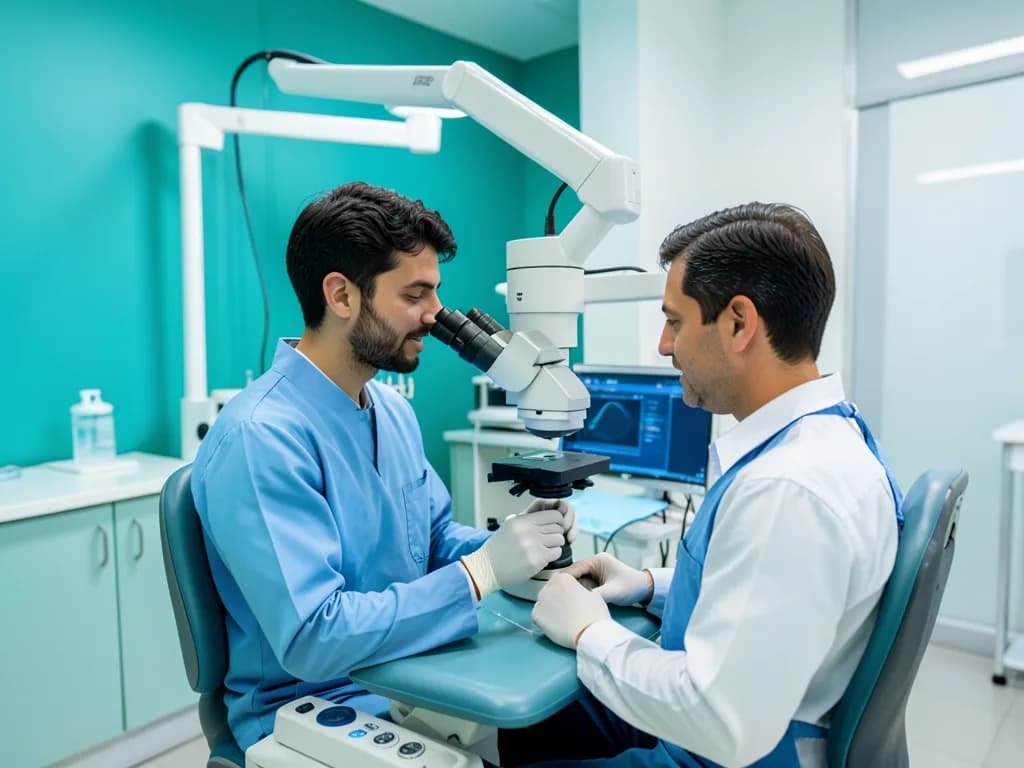
The defining tool of the endodontist is the dental operating microscope — typically used at 10–20x magnification. Under the microscope, endodontists can locate calcified canals invisible to the naked eye, identify cracks, detect instrument separation, and perform microsurgical procedures with precision impossible in unaided dentistry. Most specialist endodontic clinics in Dubai also use cone beam CT (CBCT) imaging for three-dimensional assessment of root canal anatomy before complex cases.
Why the Microscope Matters
An endodontist working at 20x magnification can see structures 20 times larger than the naked eye allows. This makes it possible to find the fourth canal in an upper molar that a general dentist's unaided eye would miss, detect incomplete root fractures before committing to treatment, safely navigate extremely curved root canals using nickel-titanium rotary files, and perform periapical surgery with cut margins just millimetres from vital anatomy. At specialist endodontic clinics in Dubai, microscope use is standard practice — not an optional upgrade.
Conditions Treated by an Endodontist
Irreversible pulpitis
Inflammation of the dental pulp that cannot resolve on its own. Caused by deep decay, trauma, or repeated dental procedures. Presents as spontaneous, lingering pain to heat or cold. Root canal treatment is required to save the tooth.
Necrotic (dead) pulp
The pulp tissue has died, usually due to untreated pulpitis or trauma. May be symptom-free or present with pressure sensitivity. Bacteria colonise the dead pulp and can cause periapical abscess if untreated.
Periapical abscess
Acute or chronic bacterial infection at the root tip, visible as a dark shadow (periapical radiolucency) on X-ray. Can cause severe pain, swelling, and sinus formation. Requires root canal treatment or extraction.
Dental trauma
Traumatic injuries (luxation, avulsion, root fracture) can damage the pulp. Endodontists manage pulp capping, splinting, and root canal treatment following trauma. Timely treatment after tooth avulsion is critical for replantation success.
Cracked tooth syndrome
An incomplete fracture within the tooth causing sharp, unpredictable pain on biting. Requires specialist microscope-assisted examination to identify crack depth and direction, which determines whether root canal treatment and crown, or extraction, is needed.
Failed root canal (retreatment)
A previously root-filled tooth that develops or retains symptoms, or shows persistent periapical pathology on X-ray. An endodontist removes the existing filling material, re-cleans the canal system, and re-fills with orthograde retreatment or surgical apicoectomy.
Severe toothache is often the first sign of pulp involvement. Read the toothache Dubai guide to understand when you need urgent care.
Endodontic Treatments and Costs in Dubai
All prices in AED at specialist endodontic clinics. A crown is always required after root canal treatment and is priced separately.
| Procedure | Cost Range |
|---|---|
| Root canal treatment — anterior tooth (1–2 canals) | AED 1,500 – 3,000 |
| Root canal treatment — premolar (2–3 canals) | AED 1,800 – 3,500 |
| Root canal treatment — molar (3–4 canals) | AED 2,000 – 4,500 |
| Root canal retreatment | AED 1,500 – 4,500 |
| Apicoectomy (surgical endodontics) | AED 1,800 – 4,500 |
| Direct pulp capping | AED 400 – 1,200 |
| Dental trauma management | AED 500 – 2,500 |
| Crown (required post-root canal) | AED 1,200 – 4,000 |
For a full breakdown of root canal costs across general dentists and specialists, see the root canal cost Dubai guide.
After a root canal, you will need a dental crown. Check our insurance guide to see if your plan covers endodontic treatment. For all treatment costs, see the 2026 pricing guide.
Root Canal Success Rates
90 – 95%
Primary root canal treatment
Performed in a tooth with no prior root canal treatment; success measured over 8–10 years
75 – 85%
Root canal retreatment
Re-treating a previously failed case; lower success reflects added complexity
85 – 95%
Apicoectomy (surgical)
Microsurgical approach when orthograde retreatment is not feasible
Success rates depend on correct case selection, operator skill, quality of obturation (root filling), and — critically — the quality of the final crown restoration. A technically excellent root canal will fail if the crown leaks. For full information, see the root canal treatment Dubai guide.
General Dentist vs. Endodontist
When your regular dentist can treat you, and when you need a specialist. For patients with dental anxiety requiring root canal treatment, IV sedation dentistry allows complex endodontic work to be completed comfortably in a single session.
| Situation | Who to See |
|---|---|
| Straightforward anterior root canal (single canal) | General dentist or endodontist |
| Molar root canal with 3 or more canals | Endodontist preferred |
| Calcified canals | Endodontist |
| Curved or dilacerated roots | Endodontist |
| Root canal retreatment | Endodontist |
| Cracked tooth diagnosis | Endodontist |
| Apicoectomy | Endodontist |
| Dental trauma with possible pulp involvement | Endodontist |
DHA Licensing for Endodontists in Dubai
All endodontists practising in Dubai must hold a DHA Specialist licence in Endodontics. This is different from a general dental licence and requires submission of postgraduate qualifications, proof of specialist training duration, and passing the DHA credentialing assessment.
The DHA licensing system in Dubai is independent of the Abu Dhabi DOH and the Northern Emirates MOH. A DHA-licensed endodontist can only practise in Dubai — not in Abu Dhabi or Sharjah — without additional licensing from the relevant authority.
Verify any endodontist's DHA licence at dha.gov.ae under "Health Regulation — Check Licence." Ensure their licence category reads "Specialist" in Endodontics, not just a general dental registration. If you cannot find the practitioner listed, do not proceed with specialist treatment at that clinic without clarification.
Endodontist Consultation Fees in Dubai
Community or polyclinic
AED 150 – 300
Neighbourhood or polyclinic setting; DHA licensed but equipment may vary
Specialist endodontic clinic
AED 300 – 500
Dedicated microscope-equipped endodontic practice
Premium or hospital-based
AED 500 – 800
Private hospital dental centres; CBCT and full digital workflow
How to Find an Endodontist in Dubai
- 1
Get a referral from your general dentist
Your dentist should provide the tooth's clinical and radiographic history, including existing X-rays and any treatment notes. A referral letter helps the endodontist understand the case context immediately and ensures appropriate insurance authorisation.
- 2
Confirm DHA Specialist licence in Endodontics
Do not rely solely on a clinic's self-description. Use dha.gov.ae to verify the specialist licence category is specifically Endodontics.
- 3
Ask about microscope and CBCT availability
Any reputable endodontic specialist clinic in Dubai should have a dental operating microscope. CBCT availability is a further indicator of a well-equipped practice, especially for retreatment and surgical cases.
- 4
Check your insurance network and pre-authorise
Contact your insurer before booking. Specialist root canal treatment at a private endodontic clinic will cost more than the standard GP fee schedule. Pre-authorisation ensures you know your out-of-pocket liability before treatment begins.
- 5
Search our directory for verified specialists
Use DentistNearMeDubai to find endodontists by area, insurance acceptance, and specialisation, with verified patient reviews.
Insurance Coverage for Endodontic Treatment in Dubai
Root canal treatment is generally classified as a medically necessary procedure and covered by most mid-tier and premium dental insurance plans in Dubai. See the full dental insurance Dubai guide to compare Daman, Bupa, AXA, Nextcare and MetLife dental benefits.
Typically covered
- Primary root canal treatment (medically necessary)
- Root canal retreatment (with pre-auth)
- Emergency dental treatment including pulp emergency
Variable or excluded
- Apicoectomy (check plan; may need pre-auth)
- Crown after root canal (separate claim)
- Specialist upcharge above insurer fee schedule
Who Needs an Endodontist in Dubai
Not every root canal requires a specialist — a competent general dentist can manage straightforward anterior teeth with single canals and normal anatomy. However, the following situations benefit significantly from the advanced training, dental operating microscope, and CBCT 3D imaging of a DHA-licensed endodontic specialist.
Complex molar anatomy
Upper first molars frequently have four canals — a missed MB2 canal is a leading cause of root canal failure. An endodontist using a microscope finds and treats canals invisible to the naked eye.
Previously failed root canal
If a root-treated tooth develops or retains symptoms, retreatment by an endodontist removes the original gutta percha obturation material and re-cleans using NiTi rotary files and ultrasonic irrigation.
Calcified canals
Pulp stones and canal calcification make standard root canal instruments fail. An endodontist uses CBCT imaging to locate canal orifices and negotiates calcified canals safely under microscope guidance.
Severely curved (dilacerated) roots
Curved roots increase instrument separation risk. An endodontist uses flexible NiTi rotary files (e.g. ProTaper or similar) designed to navigate curvatures up to 90 degrees without straightening the canal.
Cracked tooth syndrome diagnosis
Incomplete fractures require transillumination, selective bite tests, and microscope examination to characterise — all specialist tools unavailable in a general dental setting.
Apicoectomy requirement
When retreatment is not feasible (post, core, and crown already placed), surgical apicoectomy under microscope removes the root apex and seals the canal with MTA or bioceramic material.
Dental trauma assessment
Luxated, avulsed, or crown-fractured teeth require specialist assessment of pulp vitality using apex locator, CBCT, and EPT. Vital pulp therapy preserves a young tooth's pulp in selected trauma cases.
Rubber dam isolation required
All endodontic treatment should be performed under rubber dam isolation to prevent contamination of the root canal system and protect against ingestion of small instruments. Endodontists use this as standard practice.
For a full comparison of when to see a general dentist versus a specialist for root canal treatment, see the comparison table below, or browse all dental specialists in Dubai.
Root Canal Treatment Step by Step
Understanding exactly what happens during a root canal by an endodontist demystifies the procedure and reduces anxiety. Modern endodontic treatment performed under rubber dam isolation with NiTi rotary files and an electronic apex locator is highly predictable and far less uncomfortable than most patients expect.
- 1
Pre-treatment assessment and CBCT imaging
The endodontist takes a periapical X-ray and, for complex cases, a CBCT 3D scan to map the root canal anatomy — number of canals, curvatures, canal length, and proximity to anatomical structures. An electronic apex locator will confirm working length during the procedure. Local anaesthetic (typically articaine or lidocaine with epinephrine) is administered to achieve complete pulpal anaesthesia.
- 2
Rubber dam isolation
A rubber dam sheet is stretched over the tooth and held in place with a metal clamp. Rubber dam isolation is mandatory in specialist endodontic practice — it prevents saliva contamination of the canal, reduces cross-infection risk, protects the patient from ingesting sodium hypochlorite irrigant, and provides a clean operating field. Without rubber dam, the procedure does not meet specialist standards.
- 3
Access cavity preparation
The endodontist drills through the crown of the tooth (or existing crown or restoration) to create an access cavity that provides a straight-line path to the root canals. Under the microscope, the endodontist removes the pulp chamber roof and locates all canal orifices. In upper molars, the MB2 canal is a frequent additional canal found with microscope assistance.
- 4
Canal shaping with NiTi rotary files
Nickel-titanium (NiTi) rotary file systems (ProTaper, Reciproc, WaveOne, or similar) are used to progressively enlarge and taper the root canals from the access cavity to the apex. These files are far more flexible than stainless steel and can safely negotiate curved canals. An electronic apex locator confirms working length in real time, preventing under-preparation (leaving infected tissue) or over-preparation (perforating the apex).
- 5
Irrigation and disinfection
Between each file, the canals are irrigated copiously with sodium hypochlorite (NaOCl) solution, which dissolves organic tissue and kills bacteria. EDTA solution is used to remove the smear layer and expose dentinal tubules to allow antimicrobial irrigant penetration. Ultrasonic irrigation activates the NaOCl solution inside the canal to dramatically improve disinfection in lateral canals and isthmuses that files cannot reach. The irrigant is confined within the tooth using a rubber dam.
- 6
Obturation with gutta percha or bioceramic sealer
Once the canals are cleaned, shaped, and dried, they are filled (obturated) from apex to orifice with gutta percha points and a sealer. Modern bioceramic sealers (e.g. Biodentine, TotalFill BC Sealer) form a biocompatible hermetic seal with excellent antimicrobial properties. MTA (mineral trioxide aggregate) is used at the apex in specific situations including open apices in young teeth and root perforations. A post-treatment periapical X-ray confirms complete obturation to the working length.
- 7
Temporary or final coronal restoration
A temporary filling seals the access cavity until the patient sees their general dentist for a permanent crown. In most cases, a crown is placed within 2 to 4 weeks — delaying the crown significantly increases the risk of tooth fracture and recontamination via coronal leakage. The long-term success of root canal treatment depends as much on the quality of the crown as on the root filling itself.
For full pricing across all stages including the crown, see our root canal cost guide. After root canal, most patients need a dental crown in Dubai to protect the tooth from fracture.
Risks and Complications of Root Canal Treatment
Root canal treatment by a DHA-licensed endodontist carries a very low complication rate, but informed consent requires understanding what can go wrong and how specialist training and equipment minimise these risks compared to general dental practice.
Instrument separation
NiTi rotary files can rarely fracture inside a canal if overused or used in extremely calcified canals. An endodontist assesses file condition before each case, discards files after a set number of uses, and uses CBCT-guided access to straighten canal angles before instrumentation. If a separated file occurs, the endodontist can often bypass or retrieve it under microscope guidance.
Root perforation
Over-aggressive drilling can create a perforation through the root wall into the surrounding bone. Endodontists prevent this with CBCT planning, electronic apex locators, and microscope guidance. If a perforation occurs, MTA (mineral trioxide aggregate) or bioceramic materials seal it with a high success rate.
Post-operative flare-up
Approximately 3 to 5% of patients experience a significant pain and swelling episode 24 to 48 hours after treatment. This occurs due to extrusion of irrigant or debris beyond the apex, triggering an acute inflammatory response. Flare-ups typically resolve within 3 to 5 days with anti-inflammatory medication and occasionally a course of antibiotics.
Persistent periapical infection
If the canal system is not fully debrided — particularly in teeth with lateral canals, anastomoses, or isthmus connections — residual bacteria can perpetuate a periapical lesion despite treatment. This is the most common reason a root canal appears to have failed on follow-up X-ray. Retreatment or apicoectomy addresses this.
Vertical root fracture
Teeth that have been root-canal-treated are more brittle than vital teeth and are at risk of vertical root fracture — a catastrophic crack that cannot be treated and requires extraction. This is the main reason a crown after root canal treatment is mandatory, not optional. Excessive canal enlargement also increases fracture risk, which is why modern endodontic protocols use conservative minimum shaping.
Sodium hypochlorite incident
Sodium hypochlorite (bleach) is the most effective endodontic irrigant but is highly caustic if extruded beyond the apex or inadvertently injected subgingivally. Specialist endodontists use controlled delivery needles with side vents, rubber dam isolation, and low injection pressure to prevent this rare but serious complication. This is another reason to choose a specialist clinic over a general dental practice for complex cases.
Technology and Equipment at Endodontic Specialist Clinics in Dubai
The difference between a general dental practice and a specialist endodontic clinic is largely defined by equipment. The following technologies are the baseline standard at reputable endodontic specialist clinics in Dubai — ask about them before booking.
Dental Operating Microscope (DOM)
Used at 10 to 20x magnification, the surgical microscope allows the endodontist to see structures invisible to the naked eye — calcified canals, MB2 canals in upper molars, incomplete fractures, perforations, and separated instruments. Microscope use has been shown to increase detection of additional canals in upper molars from 50% (unaided) to over 90%. At specialist endodontic clinics in Dubai, microscope use is standard practice, not an optional upgrade.
Cone Beam CT (CBCT 3D Imaging)
Conventional periapical X-rays show root canal anatomy in two dimensions only. CBCT provides volumetric imaging showing the exact number, shape, and curvature of canals; periapical lesion size and extent; proximity to the maxillary sinus and inferior dental nerve; and root fracture detection. CBCT-guided treatment planning is now considered the standard of care for complex and retreatment cases at specialist endodontic clinics.
Electronic Apex Locator
An apex locator determines the working length of each canal by measuring electrical resistance between the file tip and the periodontal ligament. Accurate working length determination is essential for complete debridement (too short = infected tissue remaining) and avoiding apex perforation (too long = extrusion of irrigant and debris). Modern multifrequency apex locators are accurate to within 0.5 mm and work reliably even in canals with residual moisture.
NiTi Rotary File Systems
Nickel-titanium rotary file systems (ProTaper, Reciproc, WaveOne Gold, TruNatomy) produce a consistently tapered, smooth canal preparation far more efficiently and safely than manual stainless steel files. NiTi files are significantly more flexible, allowing safe preparation of curved canals that would risk transportation or perforation with hand files. Endodontists use single-use files for each patient to eliminate cross-infection risk and ensure consistent file performance.
Ultrasonic Irrigation Activation
Passive ultrasonic irrigation (PUI) and sonic activation (e.g. EndoActivator) dramatically improve the penetration and efficacy of sodium hypochlorite irrigant into lateral canals, isthmuses, and fins that files cannot reach. Studies show that ultrasonic activation reduces residual bacteria in root canal systems by 30 to 50% compared to needle irrigation alone. All reputable endodontic clinics in Dubai include ultrasonic irrigation as a standard step.
Bioceramic Sealers and MTA
Bioceramic root canal sealers (TotalFill BC Sealer, Biodentine) are calcium silicate-based materials that set in the presence of moisture, bond chemically to dentine, and have excellent biocompatibility with periapical tissues. MTA (mineral trioxide aggregate) is used for root end filling in apicoectomy, vital pulp therapy, perforation repair, and apexification in open-apex teeth. These materials have superior long-term sealing and biological properties compared to older zinc oxide eugenol-based sealers.
Compare these standards against what is offered at clinics you are considering. A clinic without a dental operating microscope cannot deliver specialist-level endodontic care regardless of the clinician's qualifications. See our dental specialists directory and dental treatments guide for more information.
Pain and Comfort During Root Canal Treatment
The perception that root canal treatment is extremely painful is one of the most persistent myths in dentistry — and it is outdated. Modern root canal treatment performed under adequate local anaesthesia by a DHA-licensed endodontist is no more painful than having a filling. The reputation for pain comes from two sources: the toothache that precedes treatment (which is caused by infection, not the treatment itself) and treatments performed decades ago without modern anaesthetic protocols.
During the procedure
The tooth is made completely numb before any instruments enter the canal. Endodontists often use buffered, warmed local anaesthetic and supplemental techniques — including intraligamentary injection and intrapulpal injection for acutely infected teeth that are more resistant to anaesthesia — to ensure complete pulpal anaesthesia. Most patients report feeling vibration, pressure, and movement but no pain during the actual instrumentation. The entire procedure is performed under rubber dam isolation, which adds to patient comfort by preventing irrigant contact with the mouth.
After the procedure
Post-operative sensitivity is normal and expected for 2 to 5 days. The periapical tissues around the root tip are inflamed from the infection that necessitated treatment, and this inflammation resolves over several days. The tooth may feel bruised when biting — this is called proprioceptive sensitivity and resolves as the periodontal ligament heals. Ibuprofen 400 mg three times daily with food is the most effective analgesic for post-endodontic discomfort. Paracetamol can be alternated for additional relief. Avoid biting hard food on the treated tooth until the permanent crown is placed.
Patients with dental anxiety
For patients with significant dental anxiety, IV sedation dentistry allows complex root canal treatment to be completed in a single session while the patient is fully relaxed and has no memory of the procedure. Some endodontic clinics in Dubai offer oral sedation (midazolam or triazolam) as a lower-cost alternative for moderate anxiety. Discuss your anxiety level honestly with the endodontist — specialist clinics in Dubai routinely accommodate anxious patients and will not judge you for needing additional support.
Duration and Recovery After Root Canal Treatment
Treatment time varies considerably by tooth type, case complexity, and whether this is a primary treatment, retreatment, or surgical procedure. Understanding realistic time commitments helps you plan work and family schedules around your treatment.
| Procedure | Chair Time | Appointments |
|---|---|---|
| Anterior tooth RCT (1-2 canals) | 45 – 60 min | 1 |
| Premolar RCT (2-3 canals) | 60 – 90 min | 1 to 2 |
| Molar RCT (3-4 canals) | 90 – 120 min | 1 to 2 |
| Root canal retreatment | 90 – 150 min | 1 to 3 |
| Apicoectomy (surgical) | 60 – 90 min | 1 (+ review) |
| Vital pulp therapy (cap) | 30 – 45 min | 1 |
After the root canal is complete, you must return to your general dentist within 2 to 4 weeks for a permanent crown. Delaying the crown risks tooth fracture and recontamination. A root-canal-treated tooth without a crown is not a completed treatment. See our dental treatments guide and browse all clinics to find an endodontist near you.
Best Endodontist Treatment in Dubai
Finding the best endodontist treatment in Dubai means looking beyond marketing claims and focusing on verifiable clinical credentials. The best endodontist in Dubai will hold a DHA Specialist licence specifically in Endodontics, operate with a dental microscope at 10 to 20x magnification, and have access to cone beam CT imaging for three-dimensional root canal assessment. These are not optional extras but the baseline equipment that defines specialist-level endodontic care.
Patients searching for the best endodontist near me should start by asking their general dentist for a referral, then cross-check the specialist's credentials on dha.gov.ae. Read recent patient reviews focusing on outcomes, not just bedside manner. The best endodontist in Dubai for your case depends on the specific tooth involved, the complexity of the root canal anatomy, and whether you need primary treatment, retreatment, or surgical intervention. Use our directory to compare DHA-licensed endodontists by area, insurance acceptance, and patient ratings across Dubai.
Frequently Asked Questions
When do I need an endodontist instead of a regular dentist for a root canal?
A general dentist can competently perform root canal treatment on straightforward anterior teeth (incisors, canines) with single or two canals and normal anatomy. Referral to a DHA-licensed endodontist is appropriate when the tooth has complex anatomy such as curved, calcified, or extra canals; when the case is a retreatment of a previously failed root canal; when the patient requires periapical surgery (apicoectomy); or when canal finding is difficult due to severe calcification. Endodontists use surgical operating microscopes at 10–20x magnification, allowing them to locate calcified canals and detect cracks invisible to the naked eye. In Dubai, most specialist endodontic clinics invest in cone beam CT (CBCT) imaging and operating microscopes as standard.
How much does root canal treatment cost at an endodontist in Dubai?
The cost of root canal treatment in Dubai depends on the tooth (number of canals) and whether you see a general dentist or a specialist endodontist. At an endodontic specialist clinic, primary root canal treatment costs AED 1,500–3,500 for anterior teeth and AED 2,000–4,500 for posterior molars with multiple canals. Root canal retreatment — removing existing filling material and re-treating — costs AED 1,500–4,500 due to the additional complexity. Apicoectomy (surgical root tip removal) costs AED 1,800–4,500 per tooth. A crown is always required after root canal treatment and costs an additional AED 1,200–4,000. Check the full root canal cost guide for a detailed breakdown.
What is the success rate of root canal treatment?
Primary root canal treatment performed under appropriate conditions has a published success rate of 90–95% over 8–10 years. Success is defined as the absence of symptoms and radiographic evidence of periapical healing. Root canal retreatment (re-treating a failed case) has a somewhat lower success rate of 75–85%, reflecting the added complexity of removing existing filling materials and disinfecting previously treated canals. Apicoectomy (surgical endodontics) achieves success rates of 85–95% in experienced hands. The prognosis of any root-canal-treated tooth also depends on the quality of the final crown restoration — a poor crown after a technically excellent root canal can still lead to re-infection via coronal leakage.
Does dental insurance in Dubai cover root canal treatment by a specialist?
Most standard and mid-tier dental insurance plans in Dubai cover root canal treatment as a medically necessary procedure, subject to annual dental limits and co-payments. When treatment is performed by a specialist endodontist rather than a general dentist, the claim amount is higher — some insurers will reimburse only up to a set fee schedule regardless of the specialist's actual charge, leaving you to pay the difference. Pre-authorisation is generally required for specialist root canal treatment and is strongly recommended before attending an endodontic clinic. Insurers such as Daman, Bupa, AXA, Nextcare and MetLife each have their own fee schedules — contact your insurer directly to confirm your exact benefit before booking.
What is cracked tooth syndrome and does it need an endodontist?
Cracked tooth syndrome (CTS) is a condition where an incomplete fracture within a vital tooth causes sharp pain triggered by biting — classically described as pain on release rather than on application of pressure. It is notoriously difficult to diagnose because cracks are often invisible on standard X-rays and may not be detectable even on clinical examination without specialist equipment. Endodontists use operating microscopes, transillumination (shining light through the tooth), and selective bite tests to locate and grade cracks. Treatment depends on the depth and direction of the crack — a superficial crack may need only a crown, while a crack extending into the pulp requires root canal treatment followed by a crown. Cracks reaching the root cannot be saved and require extraction.
Is a root canal painful and how long does it take?
Modern root canal treatment performed under adequate local anaesthesia is not significantly more painful than having a routine filling. The procedure itself is performed with the tooth completely numb — most patients report feeling pressure and vibration but not pain during the appointment. Some post-operative sensitivity for 2–5 days is normal, particularly in teeth that were acutely infected or abscessed before treatment. Over-the-counter analgesics (ibuprofen, paracetamol) are sufficient for most patients. Treatment time varies by tooth complexity: a single-canal anterior tooth may take 45–60 minutes; a molar with 3–4 canals typically requires 90–120 minutes, sometimes across two appointments. An endodontist working with a microscope may complete complex cases more efficiently than a general dentist due to faster canal negotiation.
Who is the best endodontist in Dubai?
The best endodontist in Dubai is one who holds a DHA Specialist licence in Endodontics, uses a dental operating microscope and CBCT imaging as standard, and has a proven track record with complex cases such as retreatments and apicoectomies. Rather than relying on a single recommendation, compare multiple specialists by checking their DHA credentials at dha.gov.ae, reading verified patient reviews, and confirming they have microscope-equipped facilities. The best endodontist for your case depends on the specific tooth and complexity involved. Use DentistNearMeDubai to compare DHA-licensed endodontists across Dubai by area, insurance acceptance, and patient ratings.
How do I find the best endodontist near me in Dubai?
To find the best endodontist near me in Dubai, start with a referral from your general dentist, who can recommend a specialist based on your specific case. Then verify the endodontist's DHA Specialist licence in Endodontics at dha.gov.ae and confirm that the clinic has a dental operating microscope and CBCT scanner. Check Google reviews and patient feedback for the last 12 months. Use DentistNearMeDubai to search by your area and insurance provider — the directory shows verified specialists with real patient ratings, making it easy to compare the best endodontist options near your location.
Find an Endodontist in Dubai
Browse verified DHA-licensed endodontists across Dubai. Compare credentials, insurance networks and patient reviews.
Use our find your dentist today to compare clinics, read reviews, and book appointments.
Browse Endodontists Near YouFree to browse — no registration required
Before and After Root Canal Treatment
Understanding the before and after of root canal treatment sets realistic expectations and helps you prepare for each stage. Most patients are surprised by how straightforward the experience is at a specialist endodontic clinic in Dubai.
Before your appointment
- Take over-the-counter pain relief if the tooth is acutely painful
- Eat a light meal — the procedure can take 60 to 120 minutes
- Bring any previous X-rays or dental records
- Confirm your insurance pre-authorisation has been obtained
- Arrange not to drive if you are having sedation
- Avoid hot or cold drinks immediately before if the tooth is sensitive
After your appointment
- Do not eat until the anaesthetic has fully worn off (1 to 3 hours)
- Take ibuprofen 400 mg before the anaesthetic wears off if needed
- Avoid biting hard on the treated tooth until the crown is placed
- Some bite sensitivity for 2 to 5 days is normal and expected
- Contact the endodontist if pain intensifies after day 3 (possible flare-up)
- Book your crown appointment with your general dentist within 2 to 4 weeks
Long-term outcome: A root canal treated tooth with a well-fitting crown has a 90 to 95% survival rate over 10 years — comparable to any other dental restoration. The treated tooth remains in function, prevents the bone loss that follows extraction, and avoids the cost of implant replacement (AED 4,500 to 8,000). Root canal treatment is almost always more cost-effective than extraction and implant in the long run. For a cost comparison, see our dental implants Dubai guide.
Endodontist Qualifications and Training in Dubai
An endodontic specialist in Dubai must hold a DHA Specialist licence in Endodontics — a credential that requires completion of a recognised postgraduate endodontic programme of at least two to three years after the primary dental degree. Common postgraduate qualifications held by endodontists practising in Dubai include the MDS Endodontics (Master of Dental Surgery, common in India, UK, and Middle Eastern dental schools), fellowship from the Royal College of Surgeons (MFDS RCS, MJDF RCS), and specialist recognition from the American Board of Endodontology (ABE) for those trained in North American programmes.
The DHA credentialing assessment verifies that postgraduate training was completed at an institution accredited by a recognised authority. Practitioners must also demonstrate clinical case logs covering root canal treatment, retreatment, apicoectomy, and trauma management before the specialist licence is issued. This is a substantially higher bar than obtaining a general dental licence, which requires only the primary dental degree.
When evaluating an endodontist in Dubai, look for evidence of continuing professional development — attendance at international endodontic conferences (AAE, ESE), membership in the American Association of Endodontists (AAE) or European Society of Endodontology (ESE), and advanced training in specific techniques such as microscope-assisted surgery or regenerative endodontics. These signals indicate an endodontist who stays current with rapidly evolving materials science — particularly bioceramic sealers, MTA, and advances in vital pulp therapy that are changing the way endodontists approach borderline cases. Verify any endodontist's DHA licence at dha.gov.ae before your first appointment, and ask their clinic receptionist to confirm the specialist licence category is specifically Endodontics rather than a general dental registration.
MDS Endodontics
India, UK, Middle East
Master of Dental Surgery specialisation in endodontics. 2 to 3 year programme with thesis component.
American Board of Endodontology (ABE)
USA / Canada
Board certification requiring case submission and oral examination after completing an accredited residency programme.
European Society of Endodontology (ESE)
Europe
Specialist title recognition by national dental associations. ESE guidelines are the clinical standard used at Dubai's leading endodontic clinics.
Finding the Right Root Canal Specialist in Dubai
Searching for the best endodontist in Dubai or the best root canal specialist in Dubai requires looking beyond marketing claims to verifiable clinical credentials. The difference in outcome between a root canal performed by a general dentist without a microscope and one performed by a DHA-licensed root canal specialist with a surgical microscope, electronic apex locator, and CBCT imaging is significant — particularly for complex molars, retreatment cases, and teeth with calcified canals.
Your first step should always be a referral from your general dentist. A good general dentist knows their limitations and will refer appropriately — they should provide a referral letter with existing X-rays, clinical notes, and any treatment history. This information allows the endodontist to assess the case before your appointment and ensures any insurance pre-authorisation is processed correctly. If your general dentist does not offer a referral, you can book a direct consultation at any specialist endodontic clinic in Dubai — most accept self-referrals.
Use our clinic directory to find DHA-licensed endodontists by area, insurance network, and patient reviews. Compare at least two specialist clinics before committing to treatment — ask each clinic whether they have a dental operating microscope, CBCT scanner, and what their standard protocol includes for your specific tooth type. For a complete overview of all specialist dental care available in Dubai, see our dental specialists directory, the dental treatments guide, and the full 2026 dental cost guide.
Top Endodontists in Dubai
DHA-licensed professionals from verified dental clinics across Dubai