Implant Specialist Dubai — How to Find an Expert in 2026
Dental implants are one of the most technique-sensitive procedures in dentistry. Choosing a qualified implant specialist in Dubai — rather than a general dentist with minimal implant training — significantly affects long-term success rates, especially for complex cases requiring bone grafts, sinus lifts, or full-arch rehabilitation. This guide explains what makes a specialist, how to verify credentials, which implant brands are used in Dubai, and the full 2026 AED price table. For detailed implant costs, see our dental implant cost Dubai guide.
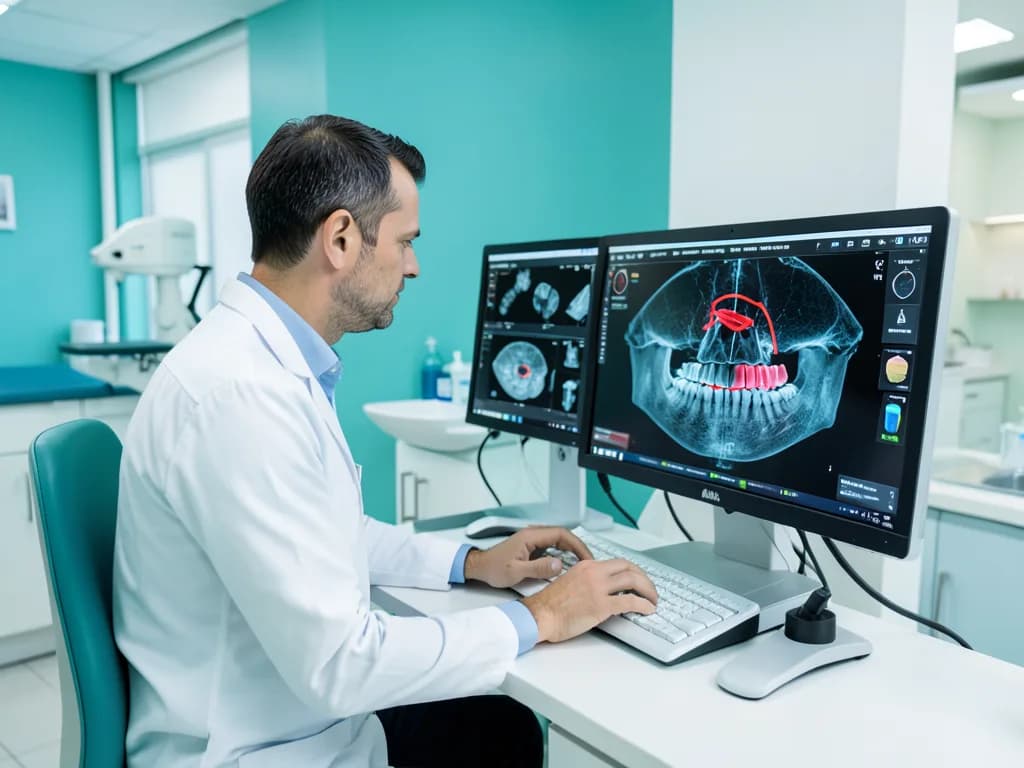
What Makes a Qualified Implant Specialist
Implantology is not a formal DHA specialty — understanding what credentials actually matter helps you choose confidently.
ITI Fellowship
The International Team for Implantology (ITI) fellowship is one of the most rigorous implant education credentials. ITI Fellows complete a structured programme of education and clinical assessment. ITI is headquartered in Switzerland and is associated with Straumann implant research.
ICOI Membership
The International Congress of Oral Implantologists (ICOI) awards Fellowship (FICOI) and Diplomate status to dentists who complete implant-specific training, pass written exams, and submit clinical case documentation. A widely recognised credential.
Postgraduate Specialty Training
Oral surgeons, periodontists, and prosthodontists all receive formal postgraduate surgical or prosthetic training that directly applies to implants. These are the most qualified practitioners for complex implant cases. DHA specialty registration verifiable online.
Manufacturer Certified Training
Straumann, Nobel Biocare, and Osstem run their own certified education programmes. Completion of these hands-on courses — especially advanced courses on bone augmentation and full-arch rehabilitation — indicates meaningful clinical training in the relevant implant system.
Dental Implant Brands Available in Dubai
The implant brand matters — premium documented systems have decades of clinical data supporting their long-term success. Always ask your dentist which system they use.
The global gold standard for implants with 60+ years of clinical research behind it. Widely regarded as the most documented implant system in the world. Straumann implants have a SLActive surface that promotes faster osseointegration. Preferred by specialist implantologists in Dubai for complex cases, All-on-4, and medically complex patients. Long-term success rates above 98% documented in peer-reviewed literature.
The inventor of the modern dental implant system and the system used in the original clinical research on osseointegration by Professor Brånemark in the 1960s. Nobel Biocare's All-on-4 protocol is widely used in Dubai for full-arch immediate loading. A highly documented, premium-tier system with comprehensive prosthetic component range. Widely available at specialist Dubai implant clinics.
The most widely placed implant brand in the world by volume, with strong clinical documentation across 30+ years. Osstem offers an excellent cost-to-quality ratio and is popular at mid-range Dubai clinics looking to offer implants at accessible price points without compromising on quality. A well-regarded choice for straightforward single-implant cases.
A major global implant company with a diverse product range including the widely used Tapered Screw-Vent and Trabecular Metal implants. Zimmer Biomet implants are commonly found at hospital-affiliated dental departments and large group practices in Dubai. The Trabecular Metal technology claims superior initial stability in compromised bone — a consideration for patients with lower bone density.
Implant Procedure Prices in Dubai 2026
All prices in AED. For full implant cost detail, see our dental implant cost Dubai guide.
| Procedure | AED Range | Notes |
|---|---|---|
| Single tooth implant (including crown) | AED 5,000 – 9,000 | Straumann/Nobel: upper end; Osstem: lower end |
| Two implants (adjacent teeth) | AED 9,000 – 17,000 | Does not include bridge or individual crowns |
| All-on-4 per arch (4 implants + bridge) | AED 30,000 – 55,000 | Full arch on 4 implants — premium acrylic bridge |
| All-on-4 per arch (zirconia bridge) | AED 45,000 – 80,000 | Full arch — final zirconia prosthesis |
| Bone graft (socket preservation) | AED 1,500 – 3,000 | Per site — at time of extraction |
| Sinus lift (external approach) | AED 4,000 – 8,000 | Upper back teeth — adds 4–6 months healing |
| Bone augmentation (ridge augmentation) | AED 3,000 – 8,000 | For severely resorbed ridges |
| Implant consultation and CBCT scan | AED 300 – 800 | 3D scan required for treatment planning |
Prices from Dubai specialist clinic surveys, February 2026. Prices exclude consultation fee. CBCT scan may be bundled with consultation at many clinics.
For a full implant pricing breakdown by brand, see our dental implant cost guide. Many UAE plans partially cover implants — check our insurance guide for details.
When to See a Specialist vs General Dentist
Not all implant cases require a specialist. Understanding when specialist care is essential protects both your health and your investment.
See an Implant Specialist
- • Bone grafting or sinus lift required before implant placement
- • Multiple implants or full arch (All-on-4) cases
- • Failed implants requiring assessment and re-implantation
- • Medically complex patients (diabetes, anticoagulant therapy, bisphosphonate history, osteoporosis)
- • Significant bone resorption after long-standing tooth loss
- • Patients requiring IV sedation or general anaesthesia
General Dentist May Be Suitable
- • Single straightforward implant with adequate bone volume
- • Tooth extracted recently with good bone preservation
- • No systemic health complications
- • Non-smoking patient with good oral hygiene
- • Standard implant site with normal anatomy (no sinus proximity)
For routine single-tooth replacements in healthy bone, a well-trained general dentist in Dubai with implant experience can deliver excellent outcomes at a lower consultation fee. Starting with a thorough dental check-up helps determine whether your case requires specialist-level intervention or can be managed by a general practitioner.
The Dental Implant Process at a Specialist Clinic
From first consultation to final crown, a standard single implant takes 3–6 months. Complex cases with bone grafting can take 9–18 months.
- 1
Consultation and CBCT Scan
A thorough consultation includes a review of your medical history, oral examination, and 3D cone beam computed tomography (CBCT) scan. The CBCT provides a detailed 3D image of your jawbone, showing bone volume, density, sinus position, and proximity to nerves — all critical for safe implant placement. Using specialist software, the implantologist virtually plans implant position and angulation before surgery. This planning stage is what separates specialist-level implant surgery from a general approach.
- 2
Pre-surgical Phase (if needed)
If bone grafting or a sinus lift is required, this is performed first and requires 4–6 months of healing before implant placement. If the tooth to be replaced is still present, extraction and simultaneous socket preservation graft can be performed together. Patients should also complete any periodontal treatment before implant placement — active gum disease significantly increases implant failure risk.
- 3
Implant Placement Surgery
Under local anaesthesia (or sedation if preferred), the implantologist makes a small incision in the gum, prepares the implant site using a series of drills following the virtual plan, and places the titanium implant into the bone. The gum is closed with sutures. A healing cap or temporary crown may be placed. For immediate-load cases (same-day teeth), a temporary prosthesis is fitted at the same appointment.
- 4
Osseointegration Healing Period
The implant fuses with the surrounding bone over 3–6 months — a process called osseointegration. During this period, patients wear a temporary restoration. Regular check-ups monitor healing. The implant should not be loaded with heavy bite forces during this phase. After confirmed osseointegration (verified by X-ray and clinical stability tests), the final crown, bridge, or prosthesis is fitted.
- 5
Final Restoration and Review
The prosthodontist takes impressions or scans for the final crown or bridge. For single implants, an individual zirconia or PFM crown is fabricated. For All-on-4 cases, the final full-arch prosthesis (acrylic or zirconia) is fitted, adjusted for bite, and polished. Long-term success depends on excellent oral hygiene around the implant and annual professional maintenance.
How to Verify an Implant Specialist in Dubai
| What to Check | Importance |
|---|---|
| Valid DHA (Dubai Health Authority) practitioner licence | Mandatory |
| ITI Fellowship or Active membership (International Team for Implantology) | Gold standard |
| ICOI membership (International Congress of Oral Implantologists) | Good indicator |
| Straumann or Nobel Biocare certified training courses | Useful for complex cases |
| Postgraduate training in Oral Surgery, Periodontology, or Prosthodontics | Strongest foundation |
| Before-and-after photos of own implant cases | Request directly |
| States which implant brand and system used | Important — ask specifically |
DHA licence check: All dentists practising in Dubai must hold a current DHA licence. You can verify any dentist's DHA licence status at the official DHA website (dha.gov.ae). Search by name to confirm their specialty registration and licence validity. This takes less than two minutes and should be a routine step before any major dental treatment.
Finding an Implantologist in Dubai
What to look for, where to search, and how to shortlist the right implantologist for your case.
Finding a qualified implantologist in Dubai can be challenging because implantology is not a formally recognised dental specialty under DHA regulations. Any licensed dentist may legally advertise implant services, which means the range in skill level between practitioners is enormous. A dedicated implantologist in Dubai will typically have placed hundreds or thousands of implants, hold credentials from bodies such as the ITI or ICOI, and work at a clinic equipped with in-house CBCT scanning and guided surgery capability. When searching for an implantologist in Dubai, start by checking DHA licence verification, then look for peer-reviewed credentials rather than relying solely on marketing claims or social media presence.
The best approach to finding an implantologist in Dubai is to shortlist two or three practitioners and attend consultations at each before committing. A reputable implantologist will provide a written treatment plan with an itemised AED cost breakdown, explain which implant brand and system they recommend and why, and discuss the risks specific to your case. They will not pressure you into immediate treatment. Compare these consultations on the basis of the practitioner's experience (number of cases per year), the implant system offered, the clinic's facilities (especially CBCT and sterilisation standards), and the transparency of pricing. You can browse and compare implant dental clinics across Dubai on our platform, filtering by area, insurance acceptance, and patient reviews.
Dubai is home to implantologists who have trained across Europe, the Middle East, South Asia, and North America, bringing diverse surgical philosophies and implant system preferences. European-trained implantologists tend to favour Straumann or Nobel Biocare systems, while practitioners trained in South Korea or with Korean manufacturer affiliations may prefer Osstem or Dentium. The training background of the implantologist does not automatically determine quality — what matters is the volume of cases they handle, the complexity they are comfortable managing, and the long-term outcomes they can demonstrate. Ask to see before-and-after photos of actual cases and enquire about their protocol for managing complications such as peri-implantitis or implant failure. For complex jaw reconstruction cases, a maxillofacial surgeon in Dubai may be better suited than a general implantologist.
Implantologist Checklist for Patients
- • Confirm DHA licence status at dha.gov.ae before your consultation
- • Ask how many implants the practitioner places per month or year
- • Request the exact implant brand and model that will be used
- • Confirm CBCT scanning is done on-site (not at an external radiology centre)
- • Ask whether guided surgery or freehand placement is used
- • Request a written treatment plan with full AED itemisation
- • Ask about the warranty or guarantee policy on the implant and crown
What Is an Implantologist
An implantologist is a dental professional who specialises in the surgical placement and prosthetic restoration of dental implants. Unlike formally recognised dental specialties such as orthodontics or oral surgery, implantology is a practice-based focus area rather than a registered specialty in most countries, including the UAE. An implantologist may hold a primary qualification in general dentistry, oral surgery, periodontology, or prosthodontics, and then pursue additional training specifically in implant surgery through programmes offered by organisations like the International Team for Implantology (ITI) or the International Congress of Oral Implantologists (ICOI).
The scope of work for an implantologist covers single-tooth implant placement, multiple implant cases, full-arch rehabilitation (such as All-on-4), bone augmentation procedures including sinus lifts and ridge grafts, immediate loading protocols (same-day teeth), and the management of failed or ailing implants. An implantologist in Dubai will work closely with prosthodontists and dental technicians to plan and deliver the final crown, bridge, or full-arch prosthesis. The collaborative nature of modern implant dentistry means that the best outcomes often come from multi-disciplinary teams rather than a single practitioner working in isolation.
If you are comparing an implantologist to other dental professionals, the key distinction is volume and focus. A general dentist may place 10 to 20 implants per year as part of a broader practice, while a dedicated implantologist may place 200 or more. This volume translates directly into experience managing variations in anatomy, bone quality, and complications. For straightforward single-implant cases with good bone, a skilled general dentist may be perfectly adequate. For anything involving bone grafting, sinus proximity, full-arch reconstruction, or medical complexity, an implantologist is strongly recommended. Learn more about different dental professionals in our dental specialists Dubai guide.
Comparing Implant Dental Clinics in Dubai
Not all implant dental clinics in Dubai offer the same level of care. This comparison helps you evaluate clinics on the factors that matter most.
| Feature | Premium Specialist Clinic | Standard General Practice |
|---|---|---|
| Implantologist credentials | ITI Fellow, ICOI Diplomate, or postgrad specialist | Weekend course certificate or manufacturer training |
| In-house CBCT scanner | Yes — included in consultation | May refer externally for 3D scan |
| Guided surgery | Digital surgical guides standard | Freehand placement typical |
| Implant brands offered | Straumann, Nobel Biocare (documented systems) | Osstem, generic or unbranded systems |
| Single implant price | AED 6,500 – 9,000 | AED 4,000 – 6,000 |
| Bone grafting capability | In-house by same implantologist | May refer to oral surgeon |
| All-on-4 capability | Routine — immediate loading protocol | Limited or not offered |
| Follow-up protocol | Structured reviews at 1 week, 1 month, 3 months, 6 months | Single post-op review |
When evaluating an implant dental clinic, the price should not be the primary deciding factor. A failed implant costs significantly more to manage than the difference between a premium and budget clinic — both financially and in terms of additional surgery, healing time, and potential bone loss. The best dental implant clinics in Dubai combine experienced implantologists, documented implant systems, in-house diagnostic imaging, and transparent pricing.
You can compare implant dental clinics in your area using our top-rated dental clinics directory. For area-specific searches, try JLT dentists, Dubai Marina dentists, or Downtown Dubai dentists.
Technology and Equipment Used by Implant Specialists
The technology available at an implant dental clinic is a reliable proxy for the quality of care. Modern implantology depends on precise digital planning tools that reduce surgical error and improve long-term outcomes.
CBCT (Cone Beam CT) Scanning
A cone beam CT provides a three-dimensional map of your jaw, revealing bone density, the exact position of nerves, the sinus floor, and any pathology. In-house CBCT is essential for guided implant surgery planning and for cases involving bone augmentation or sinus lifts. Ask whether your clinic has CBCT on-site — referral to an external radiology centre adds delay and cost.
Guided Implant Surgery
Guided surgery uses a digitally milled or 3D-printed surgical stent based on your CBCT data and virtual treatment plan. The guide directs the drill to the exact planned position, angle, and depth. This dramatically reduces the risk of nerve damage and sinus perforation while enabling flapless placement in straightforward cases. Fellowship-trained implantologists routinely use guided protocols as standard of care.
Nobel Biocare and Straumann Systems
The implant brand is not merely a marketing claim — premium documented systems such as Nobel Biocare and Straumann have 30 to 40 years of peer-reviewed clinical data supporting their survival rates. These systems also carry comprehensive warranty programmes. Ask your implantologist which system they use and why, and whether that system is supported by local Nobel Biocare or Straumann representation in the UAE.
Digital Impressions and Prosthetic Planning
Intraoral scanning replaces traditional impression material with a precise digital record of your remaining teeth and gums. Combined with CBCT data, this allows the prosthetic team to design the final crown, bridge, or full-arch prosthesis in software before surgery begins — ensuring the implant is placed in a prosthetically driven position. Same-day provisional restorations (immediate loading) are only possible with this digital workflow.
Peri-implant Monitoring
Established specialist clinics track implant health over time using standardised probing protocols, digital X-rays, and peri-implant maintenance programmes. Peri-implantitis — inflammation of the tissues around an implant — affects approximately 10 to 20 per cent of implants over ten years if not actively managed. Ask your implantologist about their peri-implant maintenance protocol before committing to treatment.
IV Sedation Capability
Patients with dental anxiety, complex multi-implant cases, or bone augmentation procedures benefit from IV conscious sedation during surgery. Not all implant dental clinics in Dubai are licensed to administer IV sedation — confirm this capability before booking if sedation is important to you. Sedation costs an additional AED 1,500 to 4,000 per session at specialist clinics.
Risks and Complications of Dental Implant Surgery
Dental implants have a published 10-year survival rate of 95 to 98 per cent when placed by experienced practitioners using documented implant systems. However, complications do occur and every patient should be informed before consenting to surgery.
Surgical Complications
- •Nerve damage causing temporary or permanent numbness (inferior alveolar nerve proximity) — mitigated by CBCT-guided planning
- •Sinus perforation during upper jaw implant placement — risk reduced by proper sinus lift technique
- •Implant failure to osseointegrate (fuse with bone) — incidence 1–5% with documented systems
- •Infection at the surgical site — managed with prophylactic antibiotics and sterile technique
- •Excessive bleeding — rare; anticoagulant medication must be disclosed pre-operatively
Long-term Complications
- •Peri-implantitis (gum and bone inflammation around the implant) — the most common long-term risk, affecting 10–20% of implants over 10 years
- •Crown or abutment fracture — particularly in heavy grinders (bruxism); a night guard is typically recommended
- •Screw loosening — correctable in clinic with re-torquing; not an implant failure
- •Bone loss around the implant — early detection requires annual X-ray monitoring
- •Aesthetic complications — gum recession at the implant site affecting the visible crown margin
The most effective way to minimise risk is to select a fellowship-trained implantologist using a premium documented system, ensure a CBCT scan is performed before surgery, disclose all medications and medical conditions, follow post-operative instructions carefully, and attend all scheduled follow-up appointments. Patients with uncontrolled diabetes, heavy smoking habits, active periodontitis, or low bone density are at higher risk and require specialist assessment before treatment begins. Read more about long-term implant care in our dental implants Dubai guide and explore all dental specialists in Dubai for comprehensive specialist care options.
Implant Specialist vs General Dentist
Understanding the difference between an implantologist, a prosthodontist, an oral surgeon, and a general dentist helps you choose the right practitioner for your specific case.
| Practitioner | Training | Best for | DHA Licence |
|---|---|---|---|
| Implantologist | Dentist + ITI/ICOI fellowship or postgrad implant programme | Single implants, All-on-4, immediate loading, complex bone cases | General or specialist (oral surgery/prosth) |
| Prosthodontist | Dentist + 3-yr specialist residency in prosthetics | Crown and bridge restoration over implants, full-arch prosthesis design | Specialist — Prosthodontics |
| Oral Surgeon (OMFS) | Dentist + 4–6 yr surgical residency, often medical degree | Complex bone grafting, zygomatic implants, jaw reconstruction, sedation | Specialist — OMFS |
| Periodontist | Dentist + 3-yr specialist residency in gum disease | Implants in gum-disease patients, bone augmentation, peri-implantitis | Specialist — Periodontology |
| General Dentist | 5–6 yr dental degree + manufacturer implant course | Routine single implants in healthy bone with straightforward anatomy | General Dental Practitioner |
For complex cases — particularly those involving bone augmentation, sinus lifts, or zygomatic implants for severe bone loss — the collaboration of an oral surgeon and a prosthodontist or implantologist produces the best outcomes. Browse all dental specialists in Dubai and compare credentials on our platform.
Before and After Dental Implants
Understanding what the implant journey looks like — from your first consultation through to the final restored crown — helps set realistic expectations and prepares you for each stage of treatment.
Assessment and Planning
Before any implant surgery, a fellowship-trained implantologist or oral surgeon will take a CBCT scan and a full dental examination. This establishes your bone volume, bone density, proximity to anatomical structures (nerves, sinuses), and the health of your remaining teeth and gums. Active gum disease must be treated and resolved before implant surgery is safe. If bone augmentation is required — such as a socket preservation graft or sinus lift — this is planned and explained at the consultation stage. A written treatment plan with itemised AED costs is provided before you commit.
Surgery and Osseointegration
Implant placement itself takes 30 to 90 minutes per implant under local anaesthetic or conscious sedation. In straightforward immediate loading cases using Nobel Biocare or Straumann systems, a temporary crown may be placed the same day. In most cases, osseointegration — the biological process by which the titanium implant fuses with the jawbone — takes 2 to 4 months in the lower jaw and 4 to 6 months in the upper jaw. During this period, a temporary restoration maintains aesthetics and function. You will have a post-surgical review at 1 week and 1 month to monitor healing.
Final Restoration and Maintenance
Once osseointegration is confirmed by X-ray, the final abutment and crown are placed. The final crown is custom-fabricated by a dental technician to match your natural teeth in colour and shape. After final restoration, you enter the peri-implant maintenance phase: professional cleaning appointments every 3 to 6 months, annual X-ray monitoring of bone levels around the implant, and home care with interdental brushes around the implant. A properly maintained implant from a documented system can last a lifetime. See our full aftercare guidance in the dental check-up Dubai guide. dental check-up Dubai guide
How Long Does Implant Treatment Take
Treatment duration varies significantly by case complexity. Here is a realistic guide to timelines at a specialist implant dental clinic in Dubai.
| Scenario | Total Timeline | |
|---|---|---|
| Single implant — ideal bone, no graft | 3 – 5 months | Consultation → placement → osseointegration (8–12 weeks) → crown |
| Single implant with socket preservation graft | 6 – 9 months | Extraction + graft → 3 months healing → placement → osseointegration → crown |
| Immediate loading (same-day provisional) | 1 day + 4–6 months | Surgery + provisional crown day 1 → final crown after osseointegration |
| Sinus lift + upper jaw implant | 9 – 18 months | Sinus lift → 4–6 months bone maturation → implant placement → crown |
| All-on-4 full arch rehabilitation | 1 day + 6 months | Extractions + 4 implants + provisional arch day 1 → final prosthesis at 6 months |
| Full arch with extensive bone augmentation | 12 – 24 months | Bone grafting → maturation → multiple implants → osseointegration → final prosthesis |
Timelines are estimates. Individual healing rates vary. Your implantologist will give you a personalised timeline after CBCT assessment.
Pain and Comfort During Implant Surgery
During Surgery
Implant placement is performed under local anaesthetic and is not painful during the procedure itself. Patients typically feel pressure and vibration but no sharp pain. For anxious patients or complex multi-implant cases, IV conscious sedation is available at specialist clinics — you remain conscious but deeply relaxed and have little memory of the procedure. General anaesthesia in a hospital setting is reserved for very extensive jaw reconstruction cases.
After Surgery
Post-operative discomfort typically peaks on day 2 or 3 and resolves within 5 to 7 days for a single implant. Swelling, mild bruising, and aching at the surgical site are normal. Standard pain management involves over-the-counter ibuprofen and paracetamol; stronger prescription medication is rarely needed for straightforward cases. Cases involving bone grafting, sinus lifts, or multiple simultaneous implants involve more significant post-operative swelling and may require 3 to 5 days away from work.
Comfort Tips for Dubai Residents
- •Stay well hydrated — Dubai's dry climate can dehydrate you faster during recovery, slowing healing
- •Avoid air conditioning blowing directly onto the face in the immediate post-operative period
- •Eat soft, cool foods (yoghurt, smoothies, soup) for the first 48 hours; avoid hot foods initially
- •Smoking significantly impairs blood supply to the healing site and is the single largest lifestyle risk factor for implant failure
- •Book your surgery for a Thursday or Friday to allow the weekend for initial recovery before returning to work
For complex or anxious patients, explore our IV sedation dentistry Dubai guide to understand sedation options available at specialist clinics.
Insurance Coverage for Dental Implants in Dubai
Dental implants are classified as elective restorative treatment under most UAE insurance policies. Standard health insurance — including the mandatory Dubai basic plan — does not cover implant surgery. However, a small number of premium plans offer partial implant coverage under specific conditions.
What Is Typically Not Covered
- •Implant fixture placement (surgical procedure)
- •Bone grafting and socket preservation for implant preparation
- •Sinus lift procedures
- •Implant abutment and crown (prosthetic restoration)
- •All-on-4 or full-arch implant rehabilitation
- •IV sedation for elective implant surgery
What May Be Covered
- CBCT scan prescribed for diagnostic purposes (varies by plan)
- Extraction of the failing tooth prior to implant placement (medically necessary)
- Treatment of infection at the implant site (peri-implantitis management)
- Implant placement under premium Bupa, Daman Enhanced, or AXA plans — confirm with insurer
- Pre-surgical orthodontic treatment to create space — if orthodontic benefit exists
If you are considering implants and have dental insurance, contact your insurer before booking a consultation and ask specifically whether implant surgery and bone grafting are included in your policy. Many clinics offer flexible payment plans for implant treatment. For a full guide to dental insurance in the UAE, see our dental insurance Dubai guide.
Frequently Asked Questions
What qualifications should an implant specialist in Dubai have?
Implantology is not a formally recognised dental specialty in the UAE (unlike orthodontics or oral surgery), which means any licensed dentist can legally place implants. However, the best implant practitioners in Dubai have significant additional training. Look for: ITI Fellowship (awarded after a structured programme from the International Team for Implantology — one of the most rigorous implant education bodies in the world), ICOI membership, postgraduate training in oral surgery, periodontology, or prosthodontics (all of which include surgical training relevant to implants), and completion of certified hands-on training programmes from premium implant manufacturers such as Straumann or Nobel Biocare. Always verify DHA licence status on the DHA online portal before choosing an implant provider.
How much does a dental implant cost in Dubai in 2026?
A single dental implant including the implant fixture, abutment, and final crown typically costs AED 5,000–9,000 at Dubai clinics in 2026. Premium implant brands (Straumann, Nobel Biocare) at specialist clinics tend toward the upper end of this range. Mid-range Korean systems (Osstem) at well-equipped general practices start from around AED 4,000–6,500 including the crown. Additional costs include the consultation (AED 300–800), CBCT scan (often included in consultation or AED 300–500 separately), bone graft if needed (AED 1,500–8,000 depending on type), and sinus lift if required (AED 4,000–8,000). For a full breakdown, see our dental implant cost Dubai guide.
Does UAE health insurance cover dental implants?
Dental implant coverage by UAE health insurance is plan-specific and often limited. Many basic and standard plans explicitly exclude implants as they are considered elective. Some comprehensive and enhanced corporate plans include partial implant coverage — typically 50% of the approved rate for the implant fixture only, subject to the annual dental limit. Implant-supported crowns and bridges may have separate coverage sub-limits. Pre-authorisation is required before treatment for any insured claim. Patients should call their insurer directly and request written confirmation of what is covered before committing to an implant plan. For insurer-by-insurer detail, see our dental insurance Dubai guide.
What is the difference between an oral surgeon and an implant specialist in Dubai?
An oral and maxillofacial surgeon (OMFS) is a DHA-registered specialist with a formal postgraduate specialty qualification in surgical dentistry — covering complex extractions, jaw surgery, facial trauma, and implants as part of a broader surgical skill set. An implantologist is not a formal specialty title but refers to a dentist (often an oral surgeon, periodontist, or prosthodontist with advanced implant training) who focuses primarily or exclusively on implant procedures. In practice, many of Dubai's best implant practitioners are oral surgeons or periodontists. The key is to look for extensive implant-specific training and experience rather than focusing solely on the specialty title.
How long do dental implants last in Dubai?
Dental implants from reputable systems (Straumann, Nobel, Osstem, Zimmer Biomet) placed by a qualified practitioner have documented 20+ year survival rates above 95% in clinical literature. In practice, the implant fixture (the titanium root) can last a lifetime if the bone is healthy and oral hygiene is maintained. The crown on top of the implant typically lasts 10–15 years before the porcelain may chip or the crown needs replacement — this is a far less significant intervention than losing the implant itself. The main causes of implant failure are: peri-implantitis (infection around the implant due to poor oral hygiene — the equivalent of gum disease for implants), uncontrolled diabetes, smoking, and mechanical overload from grinding. Annual implant maintenance visits are essential.
Can I have a dental implant placed on the same day as extraction in Dubai?
Yes — immediate implant placement (placing the implant into the extraction socket at the same appointment as tooth removal) is increasingly common at specialist Dubai implant clinics. It requires adequate bone volume and the absence of active infection at the site. When conditions are ideal, same-day placement reduces total treatment time by several months. For immediate loading (placing a temporary crown on the implant at the same visit as placement), even stricter criteria apply — bone density, implant stability, and bite forces must all be favourable. All-on-4 cases are specifically designed around immediate loading of a full arch on the same day as implant surgery. Not every patient or every site is suitable for immediate placement — your implantologist will assess this with the CBCT scan.
How much does an implantologist charge in Dubai?
An implantologist in Dubai typically charges AED 5,000 to AED 9,000 for a single dental implant including the titanium fixture, abutment, and final crown. The consultation fee with a specialist implantologist ranges from AED 300 to AED 800 and usually includes a CBCT 3D scan for treatment planning. Premium implant brands such as Straumann and Nobel Biocare are at the upper end of the range, while mid-range systems like Osstem start from around AED 4,000. Full-arch All-on-4 procedures at a specialist implant dental clinic range from AED 30,000 to AED 80,000 per arch depending on the prosthesis material. When comparing what an implantologist charges, always confirm whether the quoted price includes the crown, abutment, and any bone grafting that may be needed — some clinics quote the fixture price alone, which can be misleading.
What is the difference between an implantologist and a general dentist who places implants?
An implantologist is a dentist who has completed extensive postgraduate training specifically in dental implant surgery and prosthetics, often holding credentials such as ITI Fellowship or ICOI Diplomate status. A general dentist who places implants may have completed a weekend course or short certification programme. The key differences become apparent in complex cases: an implantologist in Dubai will routinely handle bone grafting, sinus lifts, full-arch All-on-4 rehabilitation, immediate loading, and cases involving compromised bone quality or systemic health issues. General dentists are typically best suited for straightforward single-implant cases with adequate bone. When choosing between the two, ask about the number of implants the practitioner places per year, their complication management protocol, and whether they use guided surgical planning.
How do I find the best dental implant clinic in Dubai?
Finding the best dental implant clinic in Dubai requires evaluating several factors beyond marketing claims. First, check that the implant dental clinic employs practitioners with verifiable implant credentials — ITI Fellowship, ICOI membership, or postgraduate training in oral surgery, periodontology, or prosthodontics. Second, ask which implant brand the clinic uses and verify that it is a well-documented system with published long-term clinical data (Straumann, Nobel Biocare, Osstem, or Zimmer Biomet). Third, confirm the clinic has an in-house CBCT scanner for 3D planning — clinics without one may be placing implants with inadequate imaging. Fourth, request before-and-after photos of actual cases completed at that clinic. Fifth, read Google and verified patient reviews focusing on implant-specific feedback. The best dental implant clinics in Dubai will be transparent about all of these points without hesitation.
Is an implantologist in Dubai covered by insurance?
Treatment by an implantologist in Dubai may be partially covered by comprehensive UAE health insurance plans, but coverage varies significantly between providers and plan levels. Most basic and standard plans explicitly exclude dental implants as they are classified as elective procedures. Enhanced corporate plans from providers like Daman, AXA, and Bupa may cover 50 percent of the approved implant fixture cost, subject to the annual dental sublimit. The implantologist consultation fee is more commonly covered as a specialist dental consultation. Pre-authorisation is always required before commencing implant treatment if you intend to claim. Contact your insurer directly for written confirmation of coverage before committing to treatment at any implant dental clinic.
What should I expect at my first visit to an implantologist in Dubai?
Your first visit to an implantologist in Dubai typically lasts 30 to 60 minutes and includes a comprehensive oral examination, a review of your medical and dental history, and a CBCT (cone beam computed tomography) 3D scan of your jaw. The implantologist will assess your bone volume, bone density, sinus position (for upper teeth), nerve proximity (for lower teeth), and the condition of adjacent teeth. Based on this assessment, the implantologist will present a detailed treatment plan outlining the recommended implant system, whether bone grafting or a sinus lift is needed, the estimated timeline from surgery to final crown, and a full AED cost breakdown. You should receive this plan in writing. Expect to ask about the implant brand, the practitioner's annual implant case volume, and their approach to managing complications.
Find an Implant Specialist in Dubai
Browse verified Dubai clinics with experienced implant specialists, check credentials, and compare implant brands offered at each clinic.
Use our explore dental options near you to compare clinics, read reviews, and book appointments.
Free to browse — no registration required