Orthodontics Dubai — All Treatment Options and Prices 2026
Dubai has hundreds of DHA-qualified orthodontists offering every major treatment from traditional metal braces to Invisalign clear aligners and hidden lingual braces. Adult orthodontics is very common — not just for teenagers. This hub page covers every option, current AED prices, and links to specialist guides on each treatment.
Guide updated March 2026 · Based on 620+ dental clinics in Dubai
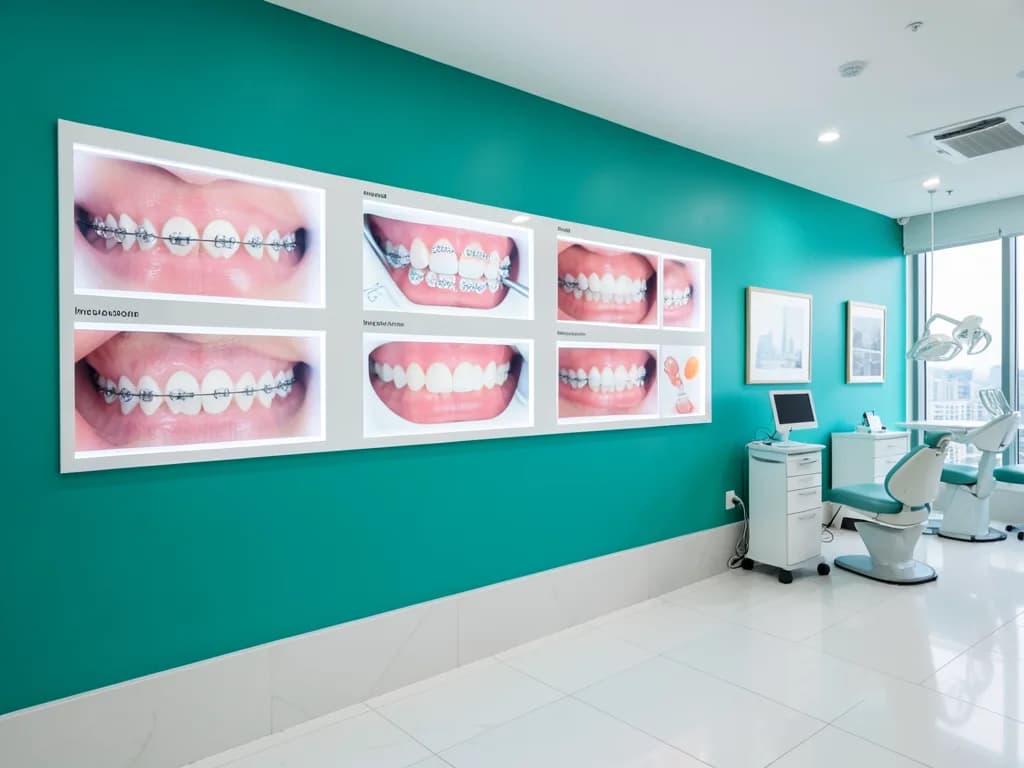
What Is Orthodontic Treatment?
Orthodontic treatment corrects misaligned teeth and jaw irregularities using braces, clear aligners, or retainers. Treatment typically takes 12 to 24 months depending on the case complexity.
Who Needs Orthodontic Treatment
Orthodontic treatment corrects malocclusion — misaligned teeth and jaw irregularities. Problems addressed include crowded teeth, gaps between teeth, overbite, underbite, crossbite, and open bite. These are classified by orthodontists as Class I, Class II, or Class III malocclusion depending on the jaw relationship. Beyond aesthetics, untreated malocclusion can cause abnormal tooth wear, jaw pain, difficulty chewing, and increased risk of decay in overlapping teeth.
Adult orthodontics is increasingly popular in Dubai and equally effective as treatment in younger patients. Many adults who missed treatment as teenagers — or whose teeth have shifted over time — now choose Invisalign clear aligners or discreet brace options such as lingual brackets. Diagnosis typically involves a cephalometric analysis and panoramic X-ray (OPG) to assess bone structure and root positions before treatment planning begins. There is no upper age limit for orthodontic treatment.
To find an orthodontist in Dubai, use our directory of DHA-licensed specialist orthodontists and experienced general dentists offering orthodontic treatment across all areas of the city.
Common conditions treated
- Crowded teeth (overlapping or displaced teeth)
- Gaps and spaces between teeth
- Overbite (upper front teeth too far forward)
- Underbite (lower teeth in front of upper teeth)
- Crossbite (upper teeth biting inside lower teeth)
- Open bite (front teeth not meeting when back teeth bite)
- Midline discrepancy (centre of upper and lower teeth not aligned)
- Relapse after previous orthodontic treatment
All Orthodontic Options in Dubai
Full comparison of every major orthodontic treatment available in Dubai, with 2026 AED price ranges. Prices include all treatment visits but retainers are quoted separately.
| Treatment | Best For | Treatment Time | Cost (AED) | Visibility |
|---|---|---|---|---|
| Metal braces | Complex cases, teens | 18–36 months | AED 8,000–18,000 | High |
| Ceramic braces | Less visible, any age | 18–30 months | AED 12,000–22,000 | Medium |
| Lingual braces | Hidden, professional adults | 18–30 months | AED 20,000–40,000 | None |
| Invisalign Full | Moderate to complex, adults | 12–24 months | AED 18,000–35,000 | Very low |
| Invisalign Lite | Mild cases | 6–12 months | AED 12,000–18,000 | Very low |
| Retainers (post-treatment) | All patients | Ongoing | AED 500–1,500 | Low / none |
Looking for pricing? See our braces cost guide and Invisalign pricing, or compare Invisalign vs braces.
Explore specific treatment types: ceramic braces, lingual braces, Damon self-ligating braces, or clear aligners beyond Invisalign.
Braces vs Invisalign in Dubai
Five key factors to help you decide. Neither option is universally better — the right choice depends on your specific case. A consultation with an orthodontist is the only reliable way to determine the best treatment for you.
Visibility preference
If discretion is your top priority, Invisalign or lingual braces are nearly invisible. Metal braces are the most visible option. Ceramic braces offer a middle ground — tooth-coloured brackets that blend with natural enamel.
Complexity of your case
Severe crowding, large overbites, underbites, and skeletal jaw discrepancies are better treated with braces. Invisalign has improved significantly and now handles complex cases — but braces give the orthodontist finer three-dimensional control.
Lifestyle factors
Athletes who play contact sports find Invisalign convenient — aligners are removed for training. Musicians who play wind instruments may find braces interfere with embouchure. Professionals in client-facing roles often prefer Invisalign's discreet appearance.
Compliance and self-discipline
Invisalign aligners must be worn 22 hours per day. Patients who remove them more than 2 hours daily risk treatment running over schedule. Braces are fixed — they work whether you think about them or not. For teenagers or less disciplined patients, braces are more reliable.
Budget
Metal braces are the most cost-effective option from AED 8,000. Invisalign Full and lingual braces sit at the higher end. For mild cases, Invisalign Lite and ceramic braces are similarly priced. Get a full written quote including retainers before committing.
For an in-depth side-by-side analysis covering clinical evidence and case suitability, read our Invisalign vs braces comparison. For everything you need to know about Invisalign specifically, see the Invisalign Dubai complete guide. The right treatment for your case requires professional assessment — book a consultation with a DHA-licensed orthodontist to get a personalised recommendation.
The Orthodontic Treatment Process
From first consultation to permanent retention — what every patient should expect at each stage.
Initial consultation and records
Your orthodontist takes X-rays (OPG panoramic and lateral cephalometric), clinical photographs, and an intraoral scan or dental impressions. This diagnostic record set allows accurate diagnosis and treatment planning. Cost: AED 300–600.
Treatment planning
For Invisalign, the ClinCheck software creates a 3D digital simulation of your tooth movement from start to finish — you can see the expected result before starting. For braces, the bracket system and archwire sequence are selected based on your diagnosis. A written treatment plan with total cost is provided.
Fitting
Braces are bonded to your teeth in a single appointment (1–2 hours). Invisalign: your first set of aligners is delivered along with instructions. Attachments (small tooth-coloured bumps) may be placed on teeth to help with certain movements.
Adjustment visits
Braces require adjustments every 4–8 weeks. Invisalign check-ups are every 6–10 weeks — you change aligners yourself at home every 1–2 weeks. Each visit monitors progress and makes any needed changes to the plan.
Retention phase
After active treatment ends, retainers are fitted. Fixed (bonded) retainers are placed behind the front teeth. Removable retainers are worn every night. This phase is permanent — teeth will shift without retention. The retainer is the final and most important part of the treatment.
Orthodontics for Children vs Adults in Dubai
Children and teenagers
- First orthodontic assessment recommended at age 7 — while jaw is still growing
- Interceptive treatment (expanders, space maintainers) can reduce complexity of later treatment
- Full braces or aligners typically start at age 11–14 when adult teeth are established
- Growing jaws may allow some jaw-based corrections that are not possible in adults
- Braces generally preferred for teens due to compliance advantages
Adults
- No upper age limit — adults in their 40s, 50s, and 60s successfully complete treatment
- Treatment time is similar to teenagers — the biological process is the same
- Invisalign and lingual braces are particularly popular among adult professionals in Dubai
- Active gum disease must be treated and stabilised before orthodontic treatment can begin
- Bone density is higher in adults — some movements may take marginally longer
Does UAE Insurance Cover Orthodontics
Short answer — rarely covered
Standard UAE health insurance plans do not cover orthodontic treatment. Orthodontics is classified as elective in most UAE plan schedules. This applies to Daman basic plans, AXA standard plans, Nextcare plans, and most employer-sponsored group insurance. The majority of orthodontic patients in Dubai pay out of pocket.
Plans that may offer partial orthodontic coverage
- Bupa premium corporate plans — some include AED 5,000–10,000 lifetime orthodontic benefit
- Daman Enhanced Plus — selected plans include limited orthodontic cover
- Some Cigna international health plans for expatriates
- Premium group employer plans negotiated with large corporations
- Abu Dhabi government plans (Thiqa) — typically more generous than Dubai plans
Always request a pre-authorisation from your insurer before beginning treatment. Even where orthodontic benefits exist, they typically have a lifetime maximum, a waiting period, and apply only at in-network clinics. Read our guides to Bupa insurance dentists and Daman insurance dentists for network clinic details.
Managing the Out of Pocket Cost
- Most Dubai orthodontic clinics offer monthly instalment plans over 12–24 months
- Some clinics offer 0% interest plans via Tabby or Tamara
- International patients from the UK or Europe can save significantly at Dubai prices
- Get written quotes from at least two clinics before committing
Specialist Orthodontic Guides
Compare Orthodontic Clinics in Dubai by Area
Orthodontic prices in Dubai vary significantly by location. Clinics in premium areas like DIFC and Dubai Marina charge higher fees due to rent and overhead, while clinics in Deira and Al Qusais offer the same DHA-licensed treatment at lower price points.
| Area | Braces From | Invisalign From | Typical Rating |
|---|---|---|---|
| Dubai Marina | AED 10,000 | AED 15,000 | 4.5–4.8 |
| Downtown Dubai | AED 12,000 | AED 18,000 | 4.6–4.9 |
| Jumeirah | AED 9,000 | AED 14,000 | 4.4–4.8 |
| Deira | AED 6,000 | AED 10,000 | 4.2–4.6 |
| Al Barsha | AED 7,000 | AED 11,000 | 4.3–4.7 |
| JLT | AED 8,000 | AED 13,000 | 4.4–4.7 |
| Al Qusais | AED 5,000 | AED 9,000 | 4.1–4.5 |
| Business Bay | AED 10,000 | AED 15,000 | 4.5–4.8 |
* Price ranges based on 2026 market data across multiple DHA-licensed clinics. Actual pricing depends on case complexity and orthodontist qualifications.
Use our clinic search tool to find and compare orthodontic clinics in your preferred area. For detailed pricing, see our braces cost guide and Invisalign cost guide.
Types of Orthodontic Treatment Available in Dubai
Each orthodontic system has distinct advantages. The table below compares cost, treatment time, visibility and suitability to help you narrow down your options before consulting an orthodontist.
| Type | Cost Range (AED) | Duration | Visibility | Best For |
|---|---|---|---|---|
| Metal Braces | AED 8,000–18,000 | 18–36 months | Visible | Complex cases, teens, budget-conscious patients |
| Ceramic Braces | AED 12,000–22,000 | 18–30 months | Semi-discreet | Adults wanting less visible fixed braces |
| Lingual Braces | AED 20,000–40,000 | 18–30 months | Invisible | Professionals needing complete discretion |
| Invisalign | AED 12,000–35,000 | 6–24 months | Nearly invisible | Adults and teens with mild to complex cases |
Fastest Treatment Options
For patients wanting the shortest treatment time, Invisalign Lite (6 to 12 months for mild cases) and self-ligating braces (15 to 20 months) offer the quickest routes to straight teeth. Accelerated orthodontics using Propel or AcceleDent devices can further reduce treatment duration by up to 50 percent for an additional AED 2,000 to AED 5,000.
Most Discreet Options
Lingual braces and Invisalign are the most discreet orthodontic treatments available in Dubai. Lingual braces are completely invisible as they sit behind the teeth — ideal for professionals who need total invisibility at all times. Invisalign aligners are nearly invisible but must be removed for eating. Ceramic braces offer a middle ground with tooth-coloured brackets visible only on close inspection.
Dealing with crooked teeth? Our dedicated guide covers all treatment paths. Want to find a specialist orthodontist in Dubai? Browse verified profiles with patient reviews and pricing.
Dental Orthodontics in Dubai
Dental orthodontics encompasses all treatments designed to correct misaligned teeth, crowded dental arches, and abnormal jaw relationships. In Dubai, dental orthodontics is delivered by both specialist orthodontists and general dentists with orthodontic training, though the DHA distinguishes between the two by issuing a Specialist licence in Orthodontics only to those who have completed the additional post-graduate residency. Choosing an orthodontic dental clinic in Dubai with a verified specialist ensures access to the full range of treatment options including lingual braces, surgical orthodontics, and complex multi-disciplinary cases.
An orthodontic dental clinic in Dubai typically offers metal braces, ceramic braces, self-ligating bracket systems (including the Damon system and its passive bracket technology), lingual bracket systems including Incognito system custom lingual braces, and Invisalign clear aligners and removable aligners across multiple provider tiers. Modern orthodontic dental clinics use iTero scanner digital impressions, CBCT imaging, and ClinCheck computer-aided 3D treatment plan software to improve accuracy. Many cases also require interproximal reduction (IPR) and orthodontic elastics or rubber bands to achieve optimal bite relationships. After treatment, all patients need either a Vivera retainer, a fixed retainer, or a Hawley retainer to prevent relapse. For patients deciding between an orthodontic dental clinic and a general practice, the key question is case complexity — complex cases involving severe Class II or Class III malocclusion are best managed at a dedicated dental orthodontics specialist clinic. Use our orthodontist Dubai guide to compare specialists by area, insurance, and patient reviews.
Braces Comparison Table With 2026 AED Prices
Side-by-side comparison of every braces type available in Dubai, including Damon self-ligating braces. Prices are based on 2026 market data from DHA-licensed orthodontic clinics.
| Braces Type | Cost (AED) | Duration | Adjustment Freq. | Visibility | Diet Restrictions |
|---|---|---|---|---|---|
| Metal Braces | AED 4,000–25,000 | 18–36 months | Every 4–6 weeks | Visible (silver brackets) | Yes — avoid hard, sticky foods |
| Ceramic Braces | AED 8,000–25,000 | 18–30 months | Every 4–6 weeks | Semi-discreet (tooth-coloured brackets) | Yes — plus avoid staining foods (curry, coffee) |
| Lingual Braces | AED 11,000–32,000 | 18–30 months | Every 4–8 weeks | Invisible (placed behind teeth) | Yes — same as metal braces |
| Invisalign | AED 12,000–25,000 | 6–24 months | Every 6–10 weeks | Nearly invisible (clear plastic trays) | None — aligners removed for eating |
| Damon Braces | AED 8,000–20,000 | 15–28 months | Every 8–10 weeks | Visible (metal) or semi-discreet (clear) | Yes — avoid hard, sticky foods |
Metal Braces
Ceramic Braces
Lingual Braces
Invisalign
Damon Braces
Lowest Cost Option
Metal braces starting from AED 4,000 are the most affordable orthodontic treatment in Dubai. Clinics in Deira, Al Qusais, and Bur Dubai offer the lowest starting prices. The quoted cost typically includes all adjustment visits over the full treatment period. Retainers are usually quoted separately at AED 500 to AED 1,500. For a full price breakdown, see our braces cost Dubai guide.
Premium Treatment Options
Lingual braces (AED 11,000 to AED 32,000) and Invisalign Full (AED 12,000 to AED 25,000) are the premium options. Lingual braces require custom lab fabrication for each tooth, which drives the higher cost. Invisalign uses proprietary SmartTrack material and ClinCheck digital planning. Both are virtually invisible during treatment. Compare them in our Invisalign vs braces cost comparison.
* Prices are 2026 estimates based on multiple Dubai clinics. Actual cost depends on case complexity, orthodontist experience, and clinic location. Always request a written treatment plan before starting.
Treatment Timeline Month by Month
What to expect at each stage of your orthodontic treatment. Timelines vary by case complexity — mild cases may finish in 6 to 12 months, while complex cases can take up to 36 months.
Braces
Brackets bonded, first archwire placed. Teeth feel sore for 3–5 days. Soft diet recommended for the first week. Learn to use orthodontic wax for any bracket irritation.
Clear Aligners
First set of aligners delivered. Attachments (small tooth-coloured bumps) placed on teeth. Mild pressure for 2–3 days. Change to tray 2 at end of week 1 or 2.
Braces
Initial alignment phase begins. Teeth start visibly moving. Wire changes at each adjustment visit. Some patients see noticeable improvement by month 3.
Clear Aligners
Changing trays every 1–2 weeks. Teeth begin to shift visibly. Routine check-up at 6–8 weeks confirms tracking is on schedule.
Braces
Crowding resolves and gaps close. Thicker archwires are used to control root positions. Elastics (rubber bands) may be added to correct bite alignment.
Clear Aligners
Mid-treatment progress scan. ClinCheck is updated if refinements are needed. Most mild cases approach completion by month 8.
Braces
Fine-tuning phase. Bends in the wire address individual tooth positions. Bite settling begins — upper and lower teeth are trained to interlock correctly.
Clear Aligners
Refinement aligners ordered for any remaining discrepancies. Attachments may be repositioned. Complex cases continue with new sets of trays.
Braces
Final detailing and bite perfection. Braces are removed once the orthodontist confirms all treatment goals are met. Retainers are fitted the same day.
Clear Aligners
Final trays worn. Attachments removed. Retainers fitted — either fixed bonded retainers or clear removable retainers, or both.
Braces
Retention phase. Fixed retainer bonded behind front teeth. Removable retainer worn every night indefinitely. Check-up at 3, 6, and 12 months post-treatment.
Clear Aligners
Same retention protocol as braces patients. Night-time retainer wear is permanent. Annual orthodontic check recommended.
Factors that affect treatment duration
- Case severity — mild crowding resolves in 6 to 12 months, severe cases with extractions take 24 to 36 months
- Patient compliance — Invisalign must be worn 22 hours daily; non-compliance adds months to treatment
- Bone density and age — adults may take slightly longer than teenagers for the same tooth movements
- Treatment type — self-ligating braces (Damon) can reduce total time by 2 to 6 months
- Appointment attendance — missed appointments delay progress and extend treatment
- Oral hygiene — gum disease during treatment can force temporary suspension
For faster treatment options, see our guide to Damon braces in Dubai or explore clear aligners beyond Invisalign.
Orthodontic Treatment by Age Group
Orthodontic needs and treatment approaches differ significantly between children, teenagers, and adults. Here is what to expect at each stage of life.
Children (Ages 7 to 11)
The American Association of Orthodontists and the British Orthodontic Society both recommend a first orthodontic evaluation at age 7. At this age, the orthodontist can identify developing problems in jaw growth, tooth eruption patterns, and bite alignment while the jaw is still growing.
Interceptive treatment (also called Phase 1 treatment) may be recommended between ages 7 and 10. This includes palatal expanders to widen a narrow upper jaw, space maintainers to prevent premature closure of gaps from early tooth loss, and partial braces on the front teeth to correct crossbites. Interceptive treatment costs AED 3,000 to AED 8,000 and typically lasts 6 to 12 months.
Not every child needs interceptive treatment. Many orthodontists will monitor the child annually and recommend full treatment only once the permanent teeth are established — usually around age 11 to 13. Early evaluation does not always mean early treatment, but it ensures that the optimal treatment window is not missed.
Teenagers (Ages 12 to 17)
The teenage years are the most common time for orthodontic treatment. Most or all permanent teeth have erupted, the jaw is still growing (which allows certain corrections that are not possible in adults), and treatment tends to progress quickly due to active bone metabolism.
Metal braces remain the most popular choice for teenagers in Dubai, primarily because they require no patient compliance — unlike Invisalign, which must be worn 22 hours daily and can be lost or forgotten. Teens who demonstrate good responsibility and motivation may be offered Invisalign Teen, which includes compliance indicators (blue dots that fade with wear time) and free replacement aligners for lost trays.
Treatment duration for teenagers averages 18 to 24 months for moderate cases. The cost for teenage orthodontics in Dubai ranges from AED 4,000 (metal braces, mild case) to AED 25,000 (Invisalign Full, complex case). Insurance coverage for orthodontics under 18 is more common than for adults — check your family plan for details.
Adults (Ages 18 and Above)
Adult orthodontics is one of the fastest-growing dental specialties in Dubai. Many adults who missed treatment as teenagers, or whose teeth shifted after previous treatment, now choose to pursue orthodontic care. There is no upper age limit — patients in their 50s, 60s, and even 70s have been successfully treated.
Invisalign, lingual braces, and ceramic braces are the most popular choices for adults, as they offer minimal visibility during treatment. Working professionals in Dubai often prioritize discreet options, particularly in client-facing roles. Lingual braces are completely invisible as they sit behind the teeth, while Invisalign aligners are removable and nearly undetectable.
Adults require careful assessment before starting orthodontics. Active gum disease (periodontitis) must be treated and stabilised before any orthodontic forces are applied — moving teeth through inflamed bone accelerates bone loss. Adults with significant bone loss may still be treated, but with lighter forces and longer timelines. Restorations such as crowns, bridges, and implants can complicate treatment planning and may limit certain tooth movements. For more on adult treatment, see our braces for adults in Dubai guide.
Insurance Coverage for Orthodontics in Dubai
Detailed breakdown of which UAE insurers offer orthodontic benefits, annual limits, waiting periods, and pre-authorization requirements as of 2026.
| Insurer | Orthodontic Benefit | Waiting Period | Age Limit | Pre-Auth |
|---|---|---|---|---|
| Bupa (Premium Plans) | AED 5,000–10,000 lifetime max | 12 months from policy start | Adults and children | Required before starting |
| Daman Enhanced Plus | AED 3,000–7,500 lifetime max | 12 months | Under 18 primarily | Required |
| Cigna International | AED 5,000–15,000 lifetime max | 6–12 months | Adults and children | Required |
| MetLife (Select Plans) | AED 3,000–8,000 annual max | 12 months | Under 19 primarily | Required |
| Thiqa (Abu Dhabi Govt) | AED 5,000–10,000 | None for eligible members | Under 18 | Required |
Bupa (Premium Plans)
Only at Bupa network clinics. Corporate premium plans only — not individual.
Daman Enhanced Plus
Adult coverage limited to specific enhanced tiers. Basic Daman plans exclude orthodontics entirely.
Cigna International
Expatriate international plans only. Check policy schedule for exact orthodontic clause.
MetLife (Select Plans)
Coverage varies widely by employer group. Always verify with HR before starting treatment.
Thiqa (Abu Dhabi Govt)
Most generous government plan. Valid at Thiqa network clinics across UAE.
Pre Authorization Process
- Request a treatment plan from your orthodontist with diagnosis and estimated cost
- Submit the plan to your insurer before starting treatment
- Wait for written approval — this typically takes 5 to 15 working days
- Starting treatment without pre-authorization may void your orthodontic benefit
- Keep all pre-authorization documents — you will need them for claim submissions
Common Exclusions to Watch For
- Cosmetic-only orthodontics (treatment must have functional justification)
- Treatment started before the waiting period has elapsed
- Out-of-network clinics (even if your plan has orthodontic benefits)
- Replacement retainers after the initial set is provided
- Accelerated treatment add-ons (Propel, AcceleDent) are almost never covered
For detailed insurer guides, see Bupa dental coverage, Daman dental coverage, Cigna dental coverage, and our full dental insurance guide. If your insurance does not cover orthodontics, most Dubai clinics offer interest-free payment plans over 12 to 24 months.
Retainers After Orthodontic Treatment
Retainers are the most important part of orthodontic treatment — and the part most patients underestimate. Without consistent retainer wear, teeth will shift back toward their original positions. This process, called relapse, begins within weeks of removing braces or finishing aligners and can undo months or years of treatment.
In Dubai, most orthodontists fit both a fixed and removable retainer. The fixed retainer is a thin wire bonded behind the upper and lower front teeth — it stays in place permanently and requires no patient effort. The removable retainer (either a clear Essix retainer or a Hawley-type retainer with a wire and acrylic) is worn every night for the first 12 months and then at least 3 to 4 nights per week indefinitely.
Retainer costs in Dubai range from AED 500 to AED 1,500 per arch. Some orthodontists include retainers in the overall treatment cost, while others quote them separately — always clarify this before starting treatment. Replacement retainers cost the same as the original and are needed if the retainer breaks, is lost, or stops fitting due to teeth shifting. For a full guide, see our dental retainer Dubai guide.
Fixed (Bonded) Retainer
Thin wire behind front teeth. Permanent. Requires floss threaders or Superfloss for cleaning. Can last 5 to 10 years.
AED 500 to 800 per arch
Clear Essix Retainer
Transparent plastic tray, similar to an aligner. Removable. Worn every night. Replace every 6 to 12 months as it wears thin.
AED 500 to 1,000 per arch
Hawley Retainer
Acrylic base with metal wire. More durable than Essix retainers. Adjustable if minor tooth movement occurs. Lasts several years.
AED 800 to 1,500 per arch
Top Areas for Orthodontics in Dubai
Orthodontic clinics are available across Dubai. Each area has its own pricing range and specialist availability. Browse dentists in your preferred area to find orthodontists near you.
Cannot find your area? Use our clinic search tool to find orthodontists in any Dubai neighbourhood. You can also browse all Dubai dentists and filter by orthodontic services offered.
How to Choose the Right Orthodontist in Dubai
Choosing the right orthodontist is as important as choosing the right treatment type. Orthodontic treatment typically lasts 18 to 24 months, and you will be visiting the same clinic every 4 to 10 weeks during that period. Here are the key factors to evaluate before committing.
Verify DHA Specialist Licence
Check the DHA website (dha.gov.ae) to confirm the orthodontist holds a Specialist licence in Orthodontics — not just a general dental licence. Specialists have completed an additional 2 to 3 year residency focused entirely on orthodontics.
Ask About Case Experience
Ask how many cases similar to yours the orthodontist has treated. Request before-and-after photos. An orthodontist who regularly treats your specific condition (e.g., open bite, severe crowding) will deliver more predictable results.
Compare Written Treatment Plans
Get written treatment plans from at least two orthodontists. The plan should include the diagnosis, treatment type, total cost (including retainers), estimated duration, number of included visits, and what happens if the treatment runs over schedule.
Check Payment and Insurance Options
Confirm whether the clinic accepts your insurance, offers in-house payment plans, and works with buy-now-pay-later services (Tabby, Tamara). A transparent payment structure with no hidden fees is essential.
Location and Appointment Flexibility
Choose a clinic close to your home or workplace — you will visit frequently. Check whether the clinic offers evening or weekend appointments. Orthodontic emergencies (broken brackets, poking wires) need same-day or next-day access.
Read Patient Reviews
Google reviews and verified patient testimonials provide insight into the actual patient experience — waiting times, staff friendliness, treatment outcomes, and how the clinic handles problems. Look for consistent patterns rather than individual reviews.
For a detailed step-by-step guide, read how to choose a dentist in Dubai.
Risks and Potential Complications
Orthodontic treatment is safe and evidence-based, with decades of published outcome data. Serious complications are uncommon when treatment is carried out by a qualified DHA-licensed provider. Patients should nonetheless be informed of the following possibilities before starting.
Root resorption
Rare shortening of tooth roots during prolonged orthodontic movement. Monitored with periodic X-rays. Clinically significant cases are uncommon and typically associated with very long treatment durations or specific genetic predisposition.
Tooth decay during braces
Plaque accumulation around brackets and under wires increases enamel demineralisation risk. Diligent brushing, interdental brush use, fluoride mouthwash, and regular dental cleanings during treatment prevent this effectively.
Relapse without retainer wear
Teeth will shift back toward original positions without consistent retainer wear — a process called relapse. Wearing a fixed retainer or removable Vivera retainer or Hawley retainer every night indefinitely after treatment prevents this entirely.
Temporary speech changes with aligners
A mild lisp is common in the first 1 to 2 weeks of wearing clear aligners as the tongue adapts to the transparent tray thickness. It resolves naturally with regular wear — most patients notice no speech issue after the first week.
Gum inflammation with brackets
Plaque around fixed bracket systems can cause gingivitis if oral hygiene deteriorates during treatment. This is entirely preventable with consistent brushing and professional cleanings every 3 months during orthodontic treatment.
Non-tracking with aligners
If removable aligners are worn fewer than 20 to 22 hours daily, teeth may not move as planned and later trays may not fit. Attachments and aligner buttons are designed to improve grip and predictability, but they cannot compensate for non-compliance.
Reassurance: Complications are rare with proper compliance and a qualified orthodontist. Choose a DHA-licensed specialist, attend all appointments, and follow hygiene instructions — and your treatment is very likely to proceed without any of the above issues. Use our dentist directory to find verified DHA-licensed orthodontists in Dubai.
Does Insurance Cover Orthodontic Treatment in Dubai
Most standard UAE health insurance plans classify orthodontics as elective and exclude it from coverage. However, certain premium plans include a partial orthodontic benefit — particularly for children under 18.
Children under 18
Some UAE insurance plans — particularly employer-sponsored family plans from Bupa, Daman Enhanced, and Cigna International — include an orthodontic benefit for dependants under 18. Coverage typically provides AED 5,000 to AED 10,000 as a lifetime maximum. Pre-authorisation and a waiting period of 12 months from policy start usually apply.
Abu Dhabi Thiqa government plans are typically the most generous, with orthodontic benefits available to eligible members under 18 with no waiting period.
Adults
Adult orthodontics is rarely covered. Only select Cigna international plans and certain Bupa Platinum corporate plans include adult orthodontic benefits. Even when covered, the benefit offsets only a portion of total treatment cost — Invisalign Full at AED 15,000 to 25,000 far exceeds typical lifetime limits.
Most adult orthodontic patients in Dubai pay out of pocket, using flexible payment plans to spread the cost over 12 to 24 months.
Flexible payment plans
Most Dubai orthodontic clinics offer interest-free monthly instalment plans — splitting AED 8,000 to AED 25,000 over 12 to 24 months via Tabby, Tamara, or in-house payment agreements. Always ask about payment options at your first consultation. For a full guide to coverage options, read our dental insurance Dubai guide.
How Painful Are Braces and Invisalign
Traditional braces
- Initial discomfort 3 to 5 days after bracket placement and each adjustment visit
- Teeth feel tender and sore when biting — soft foods strongly recommended for the first week
- Orthodontic wax applied over bracket edges prevents cheek and lip irritation
- Self-ligating passive bracket systems like the Damon system cause less friction and generally less soreness than conventional brackets
- Discomfort resolves completely between adjustments for most patients by day 5 to 7
- OTC pain relief such as paracetamol or ibuprofen manages discomfort effectively
Invisalign clear aligners
- Mild pressure for 2 to 3 days when switching to a new transparent tray — less intense than braces
- No metal wires, brackets, or rubber bands against cheeks — smooth plastic only
- No emergency appointments for broken brackets or poking wires
- Discomfort at each aligner change is typically mild and manageable without medication
- First week of wearing aligners is the most uncomfortable — most patients adapt quickly
- Temporary mild lisp resolves after 1 to 2 weeks of regular aligner wear
Overall: Most orthodontic patients rate the discomfort as mild and manageable. Invisalign is consistently rated less painful than traditional braces in patient surveys. Pain peaks in the first 24 to 48 hours after each new aligner or adjustment and typically resolves by day 5 to 7. If pain is severe or persistent beyond one week, contact your orthodontist.
Top Rated Orthodontists in Dubai
Dubai has a large pool of specialist orthodontists with credentials from the US, UK, Europe, Australia, and the Middle East. Many hold dual qualifications — a DHA Specialist licence in Orthodontics plus a postgraduate degree such as MSc Orthodontics or MOrth from their home country. The DHA specialist register is publicly searchable at dha.gov.ae.
What makes a top orthodontist
- DHA Specialist Licence in Orthodontics — not just a general dental licence
- Postgraduate orthodontic residency (2 to 3 years) at an accredited institution
- Experience with your specific condition (crowding, bite correction, lingual braces)
- Transparent written treatment plans with full cost and timeline
Invisalign provider tiers to look for
- Invisalign Diamond Provider — 150+ cases annually, highest experience level
- Platinum Provider — high volume, suitable for all complexity levels
- Gold Provider — mid-tier, appropriate for straightforward cases
- Tier is verified annually — ask to see current provider status at consultation
Browse and compare DHA-licensed orthodontists and Invisalign-certified providers in our dentist directory. Filter by specialty, insurance acceptance, Invisalign certification, and location across Dubai.
Orthodontic Treatment Before and After
Orthodontic treatment produces some of the most visually striking before-and-after results in all of dentistry. For Invisalign patients, the treatment simulation and before-and-after prediction are visible from day one — the ClinCheck 3D animation shows the full treatment journey before any aligner is manufactured.
Straightened teeth
Crowding, spacing, rotations, and midline discrepancies are corrected. Even moderate crowding cases produce results patients describe as transformative. Typical Invisalign treatment time for this outcome: 6 to 18 months.
Corrected bite alignment
Overbite, underbite, crossbite, and open bite corrections improve both aesthetics and function. Class II and Class III malocclusion cases show the most dramatic functional improvements. Typical treatment time: 18 to 30 months.
Improved facial profile
Correcting severely protruding or retruded front teeth improves the side profile visibly. Proper bite alignment also reduces jaw muscle strain, which can improve the appearance of the lower face over time.
Treatment duration by complexity
- Invisalign Lite for mild crowding: 6 to 12 months
- Traditional braces for moderate cases: 12 to 24 months
- Complex cases with extractions or jaw correction: up to 36 months
- Retention phase (retainer wear) is lifelong — teeth will relapse without it
Braces vs Invisalign vs Lingual Braces
Comprehensive comparison of all four major orthodontic systems available in Dubai. Prices are 2026 AED estimates from DHA-licensed clinics.
| Feature | Metal Braces | Ceramic Braces | Invisalign | Lingual Braces |
|---|---|---|---|---|
| Visibility | High — silver brackets | Medium — tooth-coloured | Very low — clear removable aligner | None — behind teeth |
| Cost AED | AED 5,000–18,000 | AED 8,000–22,000 | AED 8,000–25,000 | AED 20,000–40,000 |
| Treatment time | 18–36 months | 18–30 months | 6–24 months | 18–30 months |
| Comfort | Wax for bracket irritation | Similar to metal | Smooth transparent tray, mild pressure | Tongue irritation 2–3 weeks initially |
| Maintenance | Interdental brushes, avoid hard/sticky food | Same as metal, avoid staining foods | Remove to eat, brush before reinserting | Same as metal, harder to access |
| Best for | Complex cases, teens, budget patients | Adults wanting less visible fixed braces | Adults and teens with mild to complex cases | Professionals needing total invisibility |
Explore dedicated guides for each option: ceramic braces Dubai, lingual braces Dubai (including the Incognito system and other lingual bracket systems), Damon braces Dubai (self-ligating passive bracket system), and clear aligners Dubai for alternatives to Invisalign.
Who Is a Good Candidate for Orthodontic Treatment
Orthodontic treatment addresses a wide range of malocclusion types — from Class I crowding and spacing to Class II overbite, Class III underbite, crossbite, and open bite. Understanding which conditions benefit most from treatment helps patients identify when to seek a specialist assessment.
Children (Early and Interceptive Orthodontics)
The American and British associations of orthodontists recommend a first orthodontic evaluation at age 7. At this age, an orthodontist can identify developing skeletal discrepancies while the jaw is still growing. Interceptive orthodontics — including palatal expanders, space maintainers, and functional appliances — can guide jaw development, reduce the severity of later treatment, and sometimes eliminate the need for extractions or orthognathic surgery altogether.
Common childhood conditions benefiting from early intervention: narrow palate (treated with palatal expander), protruding upper front teeth at high risk of trauma, crossbite causing jaw shifting, severe crowding with high extraction risk, and Class III underbite in growing patients.
Teenagers (Comprehensive Orthodontics)
Ages 11–16 represent the optimal window for comprehensive orthodontic treatment. Most or all permanent teeth have erupted, the jaw is still growing (making some corrections easier), and patients typically have good compliance with treatment protocols. Metal, ceramic, and Damon braces are all well suited to teenage patients.
Invisalign Teen is specifically designed for teenage patients, with compliance indicators built into each aligner to confirm wearing time. Many Dubai families begin Invisalign treatment for teenagers between ages 13 and 16 with excellent results.
Adults (Adult Orthodontics at Any Age)
There is no upper age limit for adult orthodontics. Adults in their 30s, 40s, 50s, and beyond undergo orthodontic treatment in Dubai every year, with outcomes equivalent to teenage treatment for most conditions. Clear adult braces — both ceramic fixed braces and Invisalign clear aligners — are particularly popular among adult professionals who need a discreet treatment option.
The primary difference in adult treatment is that jaw growth modification is not possible — severe skeletal discrepancies in adults may require orthognathic surgery (jaw surgery) combined with orthodontics, whereas growing children can sometimes be treated with functional appliances alone. Active gum disease must also be treated and stable before adult orthodontics can begin.
Conditions That Benefit Most from Orthodontics
- Crowding — teeth overlapping or unable to fit in the arch without rotation or displacement
- Spacing — gaps between teeth, including midline diastema between upper front teeth
- Overbite correction — upper teeth excessively overlapping the lower teeth vertically
- Underbite — lower teeth protrude in front of upper teeth (Class III malocclusion)
- Crossbite — upper teeth sitting inside lower teeth on one or both sides
- Open bite — upper and lower front teeth do not meet when biting
- Midline deviation — dental or facial midlines do not align
Orthodontic treatment planning: Every orthodontic treatment plan in Dubai begins with a thorough cephalometric analysis — including lateral cephalometric X-ray, dental panoramic X-ray, study models, and intra-oral and extra-oral photographs. This diagnostic process maps the skeletal and dental relationships and informs the orthodontic treatment plan, including extraction decisions, appliance selection, and whether orthognathic surgery or other specialist referral is needed. Browse DHA-licensed certified orthodontists at our dentist directory or explore our Invisalign Dubai guide for clear aligner options.
The Orthodontic Treatment Plan and Digital Simulation
Modern orthodontics in Dubai begins with a comprehensive digital treatment simulation that allows patients to see their predicted results before committing to treatment. This transparency is a major advance over traditional orthodontics, where outcomes were difficult to predict visually.
Diagnostic Records
The orthodontist gathers lateral ceph X-ray, panoramic X-ray (OPG), intra-oral scans or dental impressions, and clinical photographs. Cephalometric analysis measures skeletal jaw relationships, tooth angulations, and facial proportions to identify the type and severity of malocclusion.
Digital Simulation
For Invisalign patients, the ClinCheck 3D software generates a complete digital simulation of every tooth movement from start to finish, with an animated video showing the predicted result. For braces patients, digital bracket placement software allows the orthodontist to plan exact bracket positions before any hardware is placed.
Treatment Plan Presentation
A qualified certified orthodontist presents the full written orthodontic treatment plan including proposed appliance, estimated treatment duration (typically 12–24 months for average adult cases), total cost in AED, appointment frequency, and the retention protocol. This plan forms the basis for informed consent.
For complex cases involving significant jaw discrepancy, the orthodontist may work alongside an oral and maxillofacial surgeon to plan combined orthodontic and surgical correction. Explore options at clear aligners Dubai, ceramic braces Dubai, and lingual braces Dubai.
The Retention Phase and Retainer Protocol
The retention phase is the stage of orthodontic treatment that begins the moment active tooth movement ends. It is arguably the most important phase — because without correct retainer wear, teeth will relapse toward their original positions over months to years. This phase is permanent.
Types of retainers
- Fixed (bonded) retainer — thin wire bonded to the back surface of lower front teeth, invisible and always in place
- Removable Hawley retainer — acrylic and wire design worn at night, adjustable and durable
- Removable clear retainer (Essix) — similar to an Invisalign tray, worn nightly, virtually invisible
- Combination — fixed retainer on lowers, clear removable on uppers — the most common protocol in Dubai
Retainer compliance and relapse prevention
Relapse without retainer wear is not a treatment failure — it is the predictable biological response to releasing orthodontic forces. The periodontal ligament fibres that hold teeth in bone have a "memory" and will return teeth toward their original positions if not constrained. This is fastest in the first 6–12 months post-treatment.
Most orthodontists in Dubai recommend full-time retainer wear for 3–6 months after active treatment, then nightly for life. If a removable retainer is lost or damaged, contact your orthodontist within days — not weeks — to have it replaced before significant movement occurs. Retainer replacement in Dubai costs AED 500–1,500.
Read our dedicated dental retainer Dubai guide for types, costs, and care. Explore all orthodontic options at Invisalign Dubai, Damon braces Dubai, and all dental treatments Dubai.
Frequently Asked Questions
What age is best to start orthodontic treatment in Dubai?
The British and American orthodontic societies recommend a first orthodontic check at age 7. At this age, an orthodontist can assess jaw development, tooth eruption, and identify problems while the jaw is still growing — allowing for interceptive treatment that reduces complexity later. For full orthodontic treatment with braces or aligners, most patients start between 11 and 14 when the adult teeth are in. Adults can start at any age — there is no upper limit. Many adults in Dubai begin treatment in their 30s and 40s with excellent results.
Can I eat normally with braces in Dubai?
With metal or ceramic braces, some foods need to be avoided: hard foods (raw carrots, whole apples, hard bread crusts, nuts), sticky foods (toffee, chewing gum, caramel), and anything that requires biting into with front teeth. Soft foods — rice, pasta, fish, cooked vegetables, dairy — are all fine. Invisalign aligners are removed for all meals, so there are no dietary restrictions during treatment. You simply clean your teeth and replace the aligner after eating.
How often do I visit the orthodontist during treatment in Dubai?
For traditional braces, you typically visit every 4–8 weeks for adjustment appointments. Each appointment takes 15–30 minutes. For Invisalign, appointments are every 6–10 weeks and are shorter — the orthodontist checks your progress and gives you your next batch of aligners. If you have a bracket come loose or a wire break with braces, you should call the clinic for an urgent appointment. Most Dubai clinics accommodate these within 24–48 hours.
What happens if I do not wear my retainer after orthodontic treatment?
Teeth will shift back toward their original position if retainers are not worn consistently. This is called relapse. The periodontal ligaments — fibres that hold teeth in the jawbone — have a memory and will pull teeth back if not restrained. In the first 6–12 months after treatment, relapse is fastest. Most orthodontists recommend wearing retainers every night indefinitely. If you lose or damage your retainer and do not replace it promptly, movement can occur within weeks. Retreatment costs as much as original treatment.
Are Dubai orthodontists internationally qualified?
Yes. The DHA (Dubai Health Authority) requires all orthodontists practising in Dubai to hold a specialist licence in Orthodontics. This means they must have completed a post-graduate orthodontic residency (typically 2–3 years) at an accredited institution. Many Dubai orthodontists trained in the UK, USA, Canada, Australia, or Europe and hold dual qualifications. The DHA specialist register is publicly searchable at dha.gov.ae so you can verify any orthodontist's qualifications before booking.
How much do braces cost in Dubai?
Braces cost in Dubai varies significantly by type and case complexity. Metal braces start from AED 8,000 and can reach AED 18,000 for complex cases. Ceramic braces range from AED 12,000 to AED 22,000. Lingual braces, which are completely hidden behind the teeth, are the most expensive at AED 20,000 to AED 40,000 due to custom lab fabrication. The quoted price usually includes all adjustment visits over the treatment period but may not include retainers, which cost an additional AED 500 to AED 1,500. Always request a written treatment plan with a full cost breakdown before starting, and compare quotes from at least two DHA-licensed orthodontists. Clinics in Deira and Al Qusais tend to be more affordable than those in DIFC or Dubai Marina.
Is Invisalign better than braces?
Neither is universally better — each has advantages depending on the clinical situation. Invisalign is preferred when aesthetics and convenience are priorities, as the aligners are nearly invisible and removable for eating and cleaning. Braces are better for complex cases involving severe crowding, large overbites, underbites requiring significant jaw correction, and situations where the patient may not comply with wearing aligners 22 hours daily. For mild to moderate crowding, clinical outcomes with Invisalign and braces are equivalent according to published research. Invisalign offers the advantage of a digital simulation (ClinCheck) showing predicted results before treatment starts. Braces offer continuous force application without relying on patient compliance. Your orthodontist will recommend the best option after a thorough examination including X-rays and clinical assessment.
How long does orthodontic treatment take?
Orthodontic treatment duration in Dubai ranges from 6 months to 36 months depending on the complexity of the case and the treatment type chosen. Invisalign Lite for mild crowding can be completed in 6 to 12 months. Full braces for moderate crowding typically take 18 to 24 months. Complex cases involving jaw discrepancies, severe crowding requiring extractions, or surgical orthodontics can take 24 to 36 months. Self-ligating braces may reduce treatment time by up to 20 percent compared with traditional braces. The retention phase after active treatment is permanent — retainers must be worn indefinitely to prevent teeth from shifting back to their original position.
Does insurance cover orthodontics in Dubai?
Most standard UAE health insurance plans do not cover orthodontic treatment for adults, as it is classified as elective. Some premium plans from Bupa, Daman Enhanced, and Cigna include an orthodontic benefit — typically AED 5,000 to AED 10,000 as a lifetime maximum — which only partially offsets the total cost. Children under 18 are more likely to have orthodontic coverage on enhanced family plans, with benefits ranging from AED 3,000 to AED 15,000. Pre-authorisation is required before starting treatment, and coverage usually applies only at in-network clinics. If your insurance does not cover orthodontics, most Dubai clinics offer interest-free payment plans over 12 to 24 months, and buy-now-pay-later services like Tabby and Tamara are increasingly accepted.
What age is best for braces?
The American Association of Orthodontists recommends a first orthodontic evaluation at age 7. At this age, the orthodontist can identify developing problems while the jaw is still growing and may recommend interceptive treatment such as palatal expanders or space maintainers. Full orthodontic treatment with braces or aligners typically begins between ages 11 and 14, when most or all permanent teeth have erupted. However, there is no upper age limit for orthodontic treatment. Adults in their 30s, 40s, 50s, and even 60s regularly start and complete orthodontic treatment with excellent results. The main difference is that adult treatment cannot use growth modification to correct jaw discrepancies, which is sometimes possible in growing children. Active gum disease must be treated before starting orthodontics at any age.
What is the difference between dental orthodontics and general dentistry?
Dental orthodontics is a specialist branch of dentistry focused exclusively on the diagnosis, prevention, and correction of misaligned teeth and jaw relationships. While a general dentist handles fillings, crowns, extractions, and routine check-ups, dental orthodontics deals specifically with tooth movement using braces, clear aligners, and other appliances. An orthodontic dental clinic in Dubai will have a DHA-licensed specialist orthodontist who completed an additional 2 to 3 year residency dedicated to orthodontic treatment. This specialist training covers biomechanics of tooth movement, jaw growth modification in children, and surgical orthodontics for severe skeletal cases. Some general dental clinics in Dubai offer basic orthodontic services such as Invisalign, but complex cases are best managed at a dedicated orthodontic dental clinic with specialist credentials.
Are ceramic braces better than metal braces?
Ceramic braces are less visible than metal but cost AED 8,000 to AED 22,000 compared to AED 4,000 to AED 15,000 for metal. Both achieve similar results. Ceramic braces can stain and are slightly more fragile. Metal braces work faster for complex cases.
Can I get braces while pregnant in Dubai?
Starting braces during pregnancy is generally not recommended because the diagnostic X-rays required at the beginning of treatment pose a small radiation risk. If you already have braces and become pregnant, treatment can continue safely — adjustment appointments do not involve X-rays. Hormonal changes during pregnancy can cause gum inflammation (pregnancy gingivitis), so your orthodontist and dentist should monitor your gum health closely. Avoid elective dental X-rays during the first trimester. Most Dubai orthodontists will schedule a post-pregnancy start date if you are planning treatment.
Do braces hurt and how do I manage the pain?
Braces cause mild to moderate discomfort for 3 to 5 days after each fitting and adjustment appointment. The teeth feel pressure and tenderness when biting. Over-the-counter painkillers such as paracetamol or ibuprofen manage the discomfort effectively. Orthodontic wax applied to brackets prevents them from rubbing against the inner cheeks. Cold drinks and soft foods help during the first few days. By day 5 to 7, the discomfort typically resolves completely until the next adjustment. Invisalign causes similar pressure when switching to a new aligner tray, usually lasting 2 to 3 days per tray change.
What is the difference between Damon braces and traditional braces?
Damon braces are a self-ligating system that uses a sliding mechanism instead of elastic ties to hold the archwire. This means lower friction, which can reduce treatment time by 2 to 6 months in some cases. Damon braces also require fewer adjustment visits — typically every 8 to 10 weeks instead of every 4 to 6 weeks with traditional braces. The cost in Dubai ranges from AED 8,000 to AED 20,000, which is slightly higher than traditional metal braces but lower than lingual braces. Damon braces are available in both metal and clear (ceramic) versions.
Can orthodontics fix my TMJ or jaw pain?
Orthodontic treatment can help with TMJ (temporomandibular joint) pain if the underlying cause is a bite misalignment. When teeth do not meet properly, the jaw muscles compensate, which can lead to pain, clicking, headaches, and ear discomfort. By correcting the bite, orthodontics removes the strain on the jaw joint. However, not all TMJ problems are caused by bite issues — stress, grinding habits, and joint degeneration can also contribute. A thorough examination including X-rays and bite analysis by an orthodontist will determine whether orthodontic treatment is appropriate for your TMJ symptoms.
How do I clean my teeth with braces?
Oral hygiene with braces requires extra effort. Use a soft-bristled toothbrush angled at 45 degrees to the gumline, brushing above and below each bracket. Interdental brushes (Christmas-tree shaped) clean between brackets and under the archwire — more effective than floss for braces patients. A water flosser (Waterpik) is highly recommended for flushing food debris from around brackets. Brush after every meal, not just morning and evening. Fluoride mouthwash at bedtime provides additional protection. Your orthodontist in Dubai will show you the correct technique at your fitting appointment. Poor hygiene during braces can cause white spot lesions (decalcification) on the enamel that are permanent.
What happens during an orthodontic emergency in Dubai?
Common orthodontic emergencies include a broken bracket, a poking wire, a lost aligner, or a loose band. A poking wire can be temporarily pushed back with a pencil eraser or covered with orthodontic wax. A broken bracket that is still on the wire can wait until your next scheduled appointment — it does not require same-day treatment. A loose wire that causes significant pain should be seen within 24 to 48 hours. Most Dubai orthodontic clinics reserve emergency slots and can see patients the same day or the next morning. If you lose an Invisalign aligner, move to the next tray or go back to the previous one and call your clinic the next working day.
Are clear aligners as effective as braces for adults?
For mild to moderate crowding, spacing, and bite corrections, clear aligners such as Invisalign deliver results that are clinically equivalent to traditional braces. Published research shows no significant difference in final alignment quality for these cases. However, for severe crowding requiring extractions, significant vertical tooth movement, complex bite corrections, and skeletal jaw discrepancies, braces remain more predictable. Adults choosing clear aligners must commit to wearing them 20 to 22 hours per day — removing them only for eating and brushing. Non-compliance is the most common reason for unsatisfactory aligner results.
How much do Damon braces cost in Dubai compared to Invisalign?
Damon braces in Dubai cost between AED 8,000 and AED 20,000, while Invisalign Full ranges from AED 12,000 to AED 25,000. Damon braces tend to be less expensive for moderate cases and may finish treatment faster due to lower friction mechanics. Invisalign offers the advantage of being removable and nearly invisible. For mild cases, Invisalign Lite (AED 5,000 to AED 12,000) can be more cost-effective than either option. The best value depends on your specific case — get written quotes for both options from your orthodontist before deciding.
Find an Orthodontist in Dubai
Use our find the right dental clinic to compare clinics, read reviews, and book appointments.
Browse DHA-licensed orthodontists and Invisalign providers across Dubai. Compare clinics, read verified patient reviews, and book a consultation.
Ready to take the next step? find a trusted dentist nearby and book your appointment today.
Explore orthodontic treatment guides: