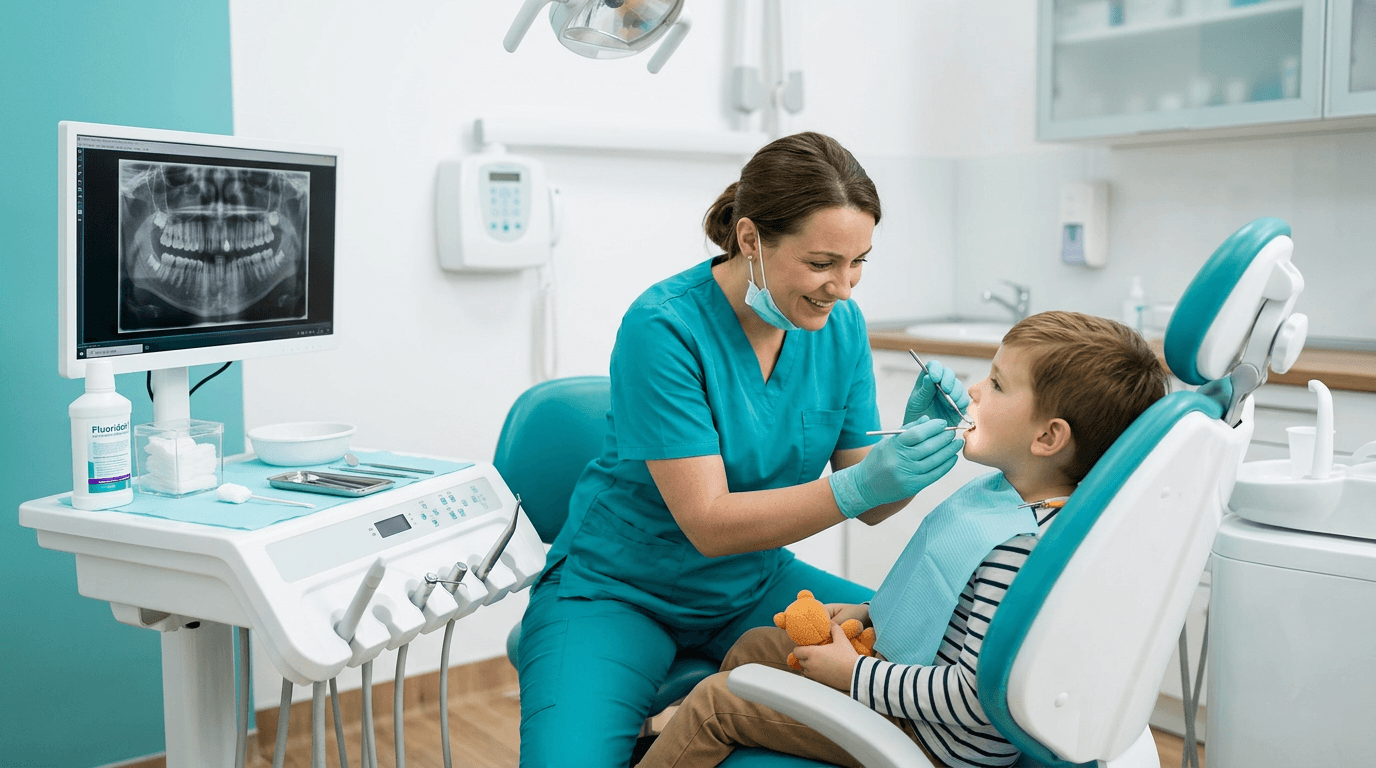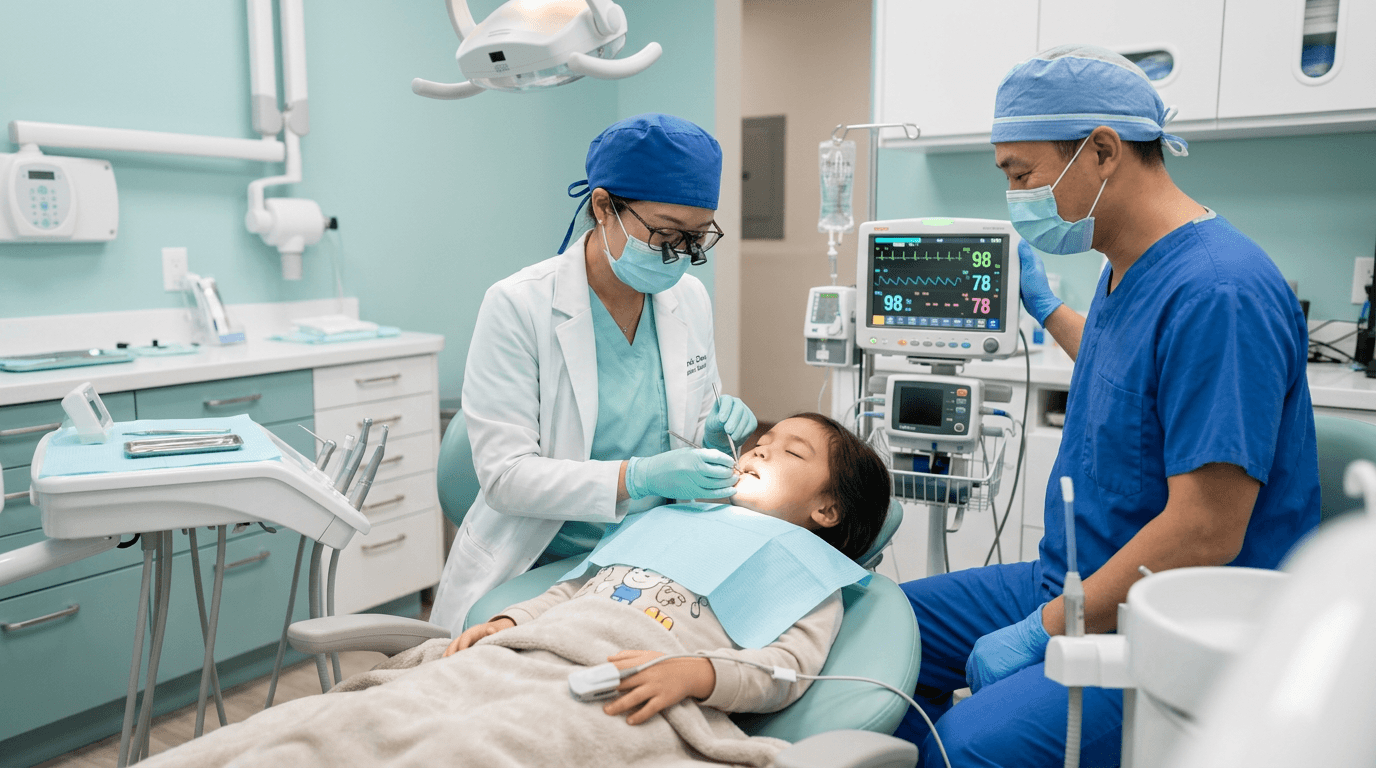
Dental sedation for kids is one of the most important tools in modern pediatric dentistry, helping anxious or uncooperative children receive the dental care they need safely and comfortably. If your child dreads the dentist, struggles to sit still, or requires extensive dental work, understanding the sedation options available at Dubai clinics can transform a stressful experience into a calm, pain-free visit. In this comprehensive guide, we cover every type of pediatric sedation dentistry available in Dubai, from mild nitrous oxide to general anesthesia, along with verified AED costs, safety protocols mandated by the Dubai Health Authority (DHA), insurance coverage details, and practical preparation tips for parents. All prices are in AED and verified for Dubai clinics as of March 2026.
What Is Dental Sedation for Kids?
Dental sedation for kids refers to the use of medications to help children relax, reduce anxiety, and remain calm during dental procedures. Unlike general anesthesia, most sedation methods allow children to stay conscious or semi-conscious while feeling little to no discomfort. Pediatric sedation dentistry is not about putting your child to sleep — it is about creating a safe, controlled environment where necessary dental treatment can be completed without trauma or distress.
The American Academy of Pediatric Dentistry (AAPD) recognises sedation as a safe and effective approach for managing dental anxiety in children when administered by trained professionals. In Dubai, the DHA and Dubai Healthcare City (DHCC) have established strict regulatory frameworks governing who can administer sedation, what monitoring equipment must be present, and which facility classifications are required for each sedation level.
Sedation is particularly valuable in pediatric dentistry because children often lack the emotional maturity to cope with unfamiliar sounds, sensations, and the clinical environment. A single traumatic dental visit can create lifelong dental phobia, making early positive experiences critical for long-term oral health. If you are searching for a pediatric dentist in Dubai who offers sedation services, understanding your options is the essential first step.
When Is Dental Sedation Recommended for Children in Dubai?
Not every child requires sedation for dental treatment. Your pediatric dentist will recommend sedation based on a thorough assessment of your child's needs. Here are the most common scenarios where dental sedation for kids becomes the recommended approach:
- Severe dental anxiety or phobia — Children who cry, scream, or refuse to open their mouth despite behavioural management techniques may benefit from sedation. A dentist specialising in dental anxiety can evaluate whether sedation is appropriate.
- Very young children (under age 5) — Toddlers and preschoolers often cannot understand instructions or sit still for the 30 to 60 minutes needed for treatment.
- Extensive dental work required — If your child needs multiple fillings, extractions, or root canal treatment in one visit, sedation allows the dentist to complete all work efficiently.
- Children with special healthcare needs — Kids with autism spectrum disorder, ADHD, cerebral palsy, Down syndrome, or sensory processing disorders may require sedation for safe treatment. See our guide to dentists for special needs patients in Dubai.
- Strong gag reflex — Some children have an overactive gag reflex that makes dental treatment physically difficult without sedation.
- Previous traumatic dental experience — Children who have had a painful or frightening dental visit may develop avoidance behaviour that sedation can help overcome.
- Complex surgical procedures — Procedures like wisdom teeth removal or surgical extractions often warrant deeper sedation levels.
Your dentist will always attempt non-pharmacological behaviour management techniques first, including tell-show-do, distraction, and positive reinforcement, before recommending sedation. This is mandated by DHCC guidelines, which require that non-drug techniques be tried before progressing to pharmacological sedation.
Types of Dental Sedation for Kids in Dubai
Dubai dental clinics offer four distinct levels of pediatric sedation dentistry, each suited to different situations. Understanding the differences helps you make an informed decision alongside your child's dentist.
Nitrous Oxide (Laughing Gas) for Children
Nitrous oxide, commonly called laughing gas, is the mildest and most widely used form of dental sedation for kids in Dubai. It is delivered through a small mask placed over your child's nose, allowing them to inhale a carefully controlled mixture of nitrous oxide and oxygen.
Your child remains fully awake and responsive throughout the procedure. They can hear the dentist, follow instructions, and communicate. The gas creates a pleasant feeling of relaxation and mild euphoria, reducing anxiety without eliminating consciousness. One of the greatest advantages of nitrous oxide is its rapid onset — effects begin within 2 to 3 minutes — and equally rapid recovery. Once the mask is removed and your child breathes pure oxygen for a few minutes, the effects dissipate almost immediately.
Nitrous oxide is endorsed by both the AAPD and the American Dental Association as a safe sedation method for pediatric patients. In Dubai, nitrous oxide administration is permitted in Class B dental clinics for ASA I and ASA II children (those who are healthy or have mild systemic conditions).
Best for: Mild to moderate anxiety, short procedures (fillings, cleanings, sealants), children aged 3 and older who can breathe through their nose and follow basic instructions.
Oral Sedation for Children
Oral sedation involves giving your child a liquid or pill medication before the dental appointment, typically a benzodiazepine such as midazolam or a combination sedative. The medication is administered 20 to 30 minutes before the procedure begins, producing a state of moderate drowsiness and relaxation.
Unlike nitrous oxide, oral sedation creates a deeper level of relaxation. Your child will likely feel very drowsy and may have limited or no memory of the procedure afterward (amnesia effect). However, they remain conscious and can respond to verbal commands and physical stimulation. The sedation level can range from minimal to moderate depending on the dosage prescribed by the sedation dentist.
Oral sedation takes longer to wear off than nitrous oxide — typically 2 to 4 hours for full recovery. Your child will need supervision for the rest of the day and should not participate in physical activities or attend school after the appointment.
Best for: Moderate anxiety, longer procedures, children who need more relaxation than nitrous oxide provides but do not require IV sedation.
IV Sedation for Children
IV sedation delivers medication directly into your child's bloodstream through an intravenous line, allowing for precise control over the sedation depth. This method is administered by a licensed anesthesiologist and provides deep relaxation where children enter a sleep-like state while still maintaining protective reflexes.
IV sedation is significantly deeper than oral sedation. Most children have no memory of the procedure. The anesthesiologist can adjust medication levels in real time, making IV sedation both highly effective and controllable. Continuous monitoring of heart rate, blood pressure, oxygen saturation, and breathing is mandatory throughout the procedure.
Recovery from IV sedation takes longer — typically 1 to 2 hours in the clinic with additional drowsiness lasting up to 24 hours. Your child will need to be monitored at home and should fast before the appointment as directed. Research shows IV sedation achieves a 98.9% success rate in pediatric dental procedures.
Best for: Severe anxiety, lengthy or complex procedures (multiple extractions, pulpotomies), children with special needs, those who have failed oral sedation. Learn more about IV sedation dentistry in Dubai.
General Anesthesia for Children
General anesthesia is the deepest form of sedation, rendering your child completely unconscious. It is administered by a specialist anesthesiologist in a hospital setting or a Class C day-surgery facility in Dubai. General anesthesia is reserved for cases where other sedation methods are insufficient or impractical.
Under general anesthesia, your child will not feel, hear, or remember anything from the procedure. The anesthesiologist manages the airway, breathing, and circulation throughout. This allows the pediatric dentist to complete extensive treatment — sometimes multiple hours of work — in a single session without any patient movement or distress.
General anesthesia requires the most extensive preparation, including pre-operative blood work, fasting for 6 to 8 hours, and a medical clearance assessment. Recovery involves a post-anesthesia care unit (PACU) stay of 1 to 2 hours, and your child may experience grogginess, nausea, or irritability for 24 to 48 hours after the procedure.
Best for: Very young children (under 3) needing extensive work, children with severe behavioural challenges, special needs patients, cases requiring multiple complex procedures in one visit.
Dental Sedation for Kids Cost in Dubai (2026 Prices)
Understanding the cost of pediatric sedation dentistry in Dubai helps parents plan and budget appropriately. Sedation fees are typically charged separately from the dental procedure itself. Here are verified prices from Dubai clinics as of March 2026:
| Sedation Type | Average Cost (AED) | Price Range (AED) | Duration and Notes |
|---|---|---|---|
| Nitrous Oxide (Laughing Gas) | 500 – 700 | 450 – 950 | Per 30 to 60 minute session |
| Oral Sedation | 600 – 1,200 | 500 – 1,500 | Consultation-based pricing |
| IV Sedation | 1,500 – 3,000 | 1,200 – 4,000 | Varies by duration; anesthesiologist fee included |
| General Anesthesia | 3,000 – 5,000 | 2,000 – 5,000+ | Excludes dental procedure fees; hospital facility fee may apply |
Prices verified March 2026 via Dubai dental clinic surveys. Source clinics include DentalDate Clinic (AED 450 per 30 min nitrous), Polar Bear Dental Clinic (AED 550 to 950 nitrous), and Dr. Fatemeh Mobaraki (AED 2,000 to 5,000 general anesthesia). All prices exclude 5% VAT and dental procedure fees.
For a broader view of sedation pricing for adults and children, visit our detailed sedation dentistry cost guide. To compare costs across different dental treatments, see the complete cost of dental treatments in Dubai for 2026.
Factors That Affect Pediatric Sedation Cost
Several variables influence the final price you pay for your child's dental sedation in Dubai:
- Type of sedation selected — Nitrous oxide is the most affordable option, while general anesthesia is the most expensive due to hospital facility fees and anesthesiologist charges.
- Duration of the procedure — Longer treatments require extended sedation time, increasing costs. A simple filling under nitrous oxide costs less than multiple extractions under IV sedation.
- Child's age and weight — Dosage calculations for oral and IV sedation depend on body weight, which can affect medication costs.
- Clinic location and reputation — Clinics in premium areas like Dubai Marina or Downtown Dubai may charge more than clinics in other areas.
- Anesthesiologist fees — IV sedation and general anesthesia require a separate licensed anesthesiologist, adding AED 1,000 to AED 3,000 to the total cost.
- Hospital or facility fees — General anesthesia performed in a hospital setting incurs additional facility charges for the operating room, recovery room, and nursing care.
- Pre-sedation assessment — Some clinics include the consultation in the sedation fee, while others charge separately (AED 200 to AED 500).
Comparing Sedation Options: Which Is Right for Your Child?
Choosing the right sedation level depends on your child's anxiety level, the complexity of the dental work needed, and your child's medical history. Here is a detailed comparison to help you and your pediatric dentist in Dubai make the best decision:
| Factor | Nitrous Oxide | Oral Sedation | IV Sedation | General Anesthesia |
|---|---|---|---|---|
| Consciousness Level | Fully awake | Drowsy but responsive | Sleep-like state | Completely unconscious |
| Anxiety Relief | Mild to moderate | Moderate | Deep | Complete |
| Memory of Procedure | Full recall | Partial or no recall | Usually no recall | No recall |
| Onset Time | 2 to 3 minutes | 20 to 30 minutes | Immediate | Immediate |
| Recovery Time | 5 to 10 minutes | 2 to 4 hours | 1 to 2 hours (clinic) plus 24 hrs monitoring | 2 to 4 hours (hospital) plus 24 to 48 hrs |
| Fasting Required | No | Usually 4 to 6 hours | Yes, 6 to 8 hours | Yes, 6 to 8 hours |
| Administered By | Pediatric dentist | Pediatric dentist | Licensed anesthesiologist | Specialist anesthesiologist |
| Facility Required | Class B dental clinic | Class B dental clinic | Class B or C clinic | Class C day-surgery or hospital |
| Cost Range (AED) | 450 to 950 | 500 to 1,500 | 1,200 to 4,000 | 2,000 to 5,000+ |
| Success Rate | High for mild anxiety | Approximately 80% (20% may need escalation) | 98.9% | 99.6% |
| Ideal Age Group | 3+ years | 2+ years | 3+ years | Any age including infants |
If your child has mild anxiety and needs a routine filling or cleaning, nitrous oxide is typically the first choice. For moderate anxiety or longer procedures, oral sedation provides a step up. IV sedation is recommended for severe anxiety or complex dental work, while general anesthesia is reserved for the most extensive cases or very young children. For more information about sedation options for adults and children, visit our sedation dentist guide.
Safety Protocols for Pediatric Dental Sedation in Dubai
Safety is every parent's top concern when considering dental sedation for kids. Dubai has some of the strictest healthcare regulations in the Middle East, and pediatric dental sedation is no exception. Here is what you need to know about the safety framework protecting your child.
DHA and DHCC Regulatory Requirements
The Dubai Health Authority (DHA) and Dubai Healthcare City (DHCC) enforce detailed regulations for pediatric sedation in dental settings:
- Non-pharmacological first — Clinics must attempt behavioural management techniques before recommending sedation.
- ASA classification — Only ASA I (healthy) and ASA II (mild systemic disease) children may receive sedation in dental clinic settings. Children with ASA III or higher must be treated in hospital facilities.
- Facility classification — Nitrous oxide is permitted in Class B clinics. Moderate sedation requires a licensed anesthesiologist. Deep sedation and general anesthesia require Class C day-surgery centres or hospitals.
- Staff qualifications — The dentist must hold formal nitrous oxide training and privileges for minimal sedation. A licensed anesthesiologist with current privileges is mandatory for moderate-to-deep sedation. At least one PALS-certified (Pediatric Advanced Life Support) team member must be present.
- Equipment requirements — Nitrous oxide delivery systems must have scavenging systems, fail-safe mechanisms, and daily operational checks. Emergency resuscitation equipment, including oxygen, suction, emergency drugs, and defibrillator access, must be immediately available.
- Informed consent — Written parental consent is mandatory before any sedation procedure, detailing the type of sedation, risks, benefits, and alternatives.
- Discharge criteria — Children must meet specific recovery benchmarks before being discharged, including stable vital signs, adequate consciousness, and ability to retain fluids.
These regulations are aligned with international standards from the AAPD and the American Society of Anesthesiologists (ASA). Clinics must maintain DHA licensing and undergo regular inspections to retain their sedation privileges.
Monitoring During Sedation
During any level of sedation beyond nitrous oxide, continuous monitoring is mandatory. This includes:
- Pulse oximetry — Oxygen saturation levels monitored every 5 minutes minimum, displayed on a visible monitor with audible alarms.
- Heart rate monitoring — Continuous electrocardiogram (ECG) for IV sedation and general anesthesia.
- Blood pressure — Checked at regular intervals throughout the procedure and during recovery.
- Respiratory rate — Visual or electronic monitoring of breathing patterns to detect any signs of respiratory depression.
- Consciousness level — Periodic assessment of the child's responsiveness to verbal and physical stimulation.
- Temperature — Monitored for general anesthesia cases to detect any signs of malignant hyperthermia or other complications.
Adverse Event Rates
Research data shows that serious complications from pediatric dental sedation are rare when proper protocols are followed:
- Respiratory complications: 0.7% of cases in outpatient settings
- Cardiovascular events: 0.6% of cases
- Nausea and vomiting: Up to 2.9% of cases (most common minor side effect)
- Post-sedation agitation: Up to 47.5% of cases (temporary, resolves quickly, not considered a serious adverse event)
- Overall success rate: Deep sedation 99.6%, IV sedation 98.9%
Children under age 6 and those with complex medical conditions (heart disease, obstructive sleep apnea, obesity) have slightly elevated risk profiles. Your pediatric dentist will conduct a thorough pre-sedation assessment to identify any risk factors before proceeding.
Risks and Side Effects of Dental Sedation for Children
While dental sedation for kids is generally safe, parents should be aware of potential side effects. Honest disclosure builds trust and helps you prepare for what to expect after your child's appointment.
Common Side Effects (Mild and Temporary)
- Drowsiness and grogginess — Especially after oral and IV sedation. Your child may want to sleep for several hours after the procedure.
- Nausea and vomiting — Occurs in up to 2.9% of sedation cases. Fasting before the appointment reduces this risk.
- Dizziness — Common with nitrous oxide and usually resolves within minutes of removing the mask.
- Irritability or emotional behaviour — Some children become unusually emotional or clingy as sedation wears off. This is normal and temporary.
- Shivering or sweating — Mild autonomic responses that resolve on their own.
- Uncontrollable giggling — Specific to nitrous oxide (hence the name laughing gas). Harmless and temporary.
Rare but Serious Risks
- Respiratory depression — Slowed or shallow breathing. This is why continuous oxygen monitoring is mandatory. Occurs in approximately 0.7% of cases.
- Allergic reaction — Extremely rare but possible with any medication. The pre-sedation assessment screens for known allergies.
- Paradoxical reaction — Some children may become more agitated rather than relaxed with certain sedative medications. The dentist can adjust the approach if this occurs.
- Aspiration risk — If a child vomits while sedated, there is a small risk of inhaling stomach contents. Fasting protocols minimise this risk.
Most adverse events occur within the first 8 hours after sedation, though some may manifest up to 24 hours later. This is why parents are instructed to monitor their child closely for the full 24-hour period after moderate or deep sedation.
How to Prepare Your Child for Dental Sedation
Proper preparation helps ensure the safest possible experience and reduces the chance of complications. Follow these guidelines recommended by Dubai pediatric dentists:
Before the Appointment
- Schedule the pre-sedation assessment — Your dental consultation should include a review of your child's medical history, current medications, allergies, and previous sedation experiences.
- Follow fasting instructions precisely — For oral sedation, IV sedation, and general anesthesia, your child must typically fast for 6 to 8 hours before the procedure. Clear fluids may be allowed up to 2 hours before. Nitrous oxide usually does not require fasting, though a light meal 2 hours before is recommended.
- Dress your child comfortably — Loose-fitting clothing with short sleeves allows easy access for IV placement and pulse oximetry monitoring.
- Explain what will happen in age-appropriate language — Tell your child they will breathe through a special mask (nitrous) or take medicine that will make them feel sleepy and relaxed. Avoid using words like needle, pain, or hurt.
- Arrange transportation — Your child cannot travel alone after any sedation beyond nitrous oxide. Plan to have a responsible adult available for the entire day.
- Complete consent forms in advance — DHA regulations require written informed consent. Many clinics send these forms digitally before the appointment so you can review them at home.
On the Day of the Procedure
- Arrive 15 to 30 minutes early for check-in and vital signs baseline recording.
- Bring your child's insurance card, Emirates ID, and any relevant medical records.
- Inform the dentist of any changes in your child's health since the pre-assessment, including recent colds, fever, or medication changes.
- Bring a comfort item (favourite toy, blanket) — most clinics encourage this for younger children.
- Stay calm and positive. Children absorb parental anxiety, so your composure directly impacts their experience.
Recovery and Aftercare Following Dental Sedation
Post-sedation care varies by sedation type. Here is what to expect and how to manage your child's recovery:
Nitrous Oxide Recovery
Recovery is almost immediate. After breathing pure oxygen for 3 to 5 minutes, your child should feel completely normal. They can eat, drink, and return to school or play the same day. No special aftercare is needed beyond standard post-dental procedure instructions.
Oral Sedation Recovery
Your child will remain drowsy for 2 to 4 hours. Keep them in a supervised, quiet environment. Offer clear fluids first, then bland food once they are alert. Do not allow physical activities, stair climbing without assistance, or bath time without supervision for the remainder of the day.
IV Sedation and General Anesthesia Recovery
Your child will be monitored in the recovery room for 1 to 2 hours before discharge. Expect grogginess lasting 4 to 8 hours and possible nausea. Follow these recovery guidelines:
- Supervision — A responsible adult must monitor the child for 24 hours after the procedure.
- Diet — Start with clear fluids, progress to soft foods as tolerated. Avoid hot foods for the first 4 hours.
- Activity — No school, sports, swimming, or playground activities for 24 hours.
- Sleep position — Keep the child on their side or with head slightly elevated to protect the airway if vomiting occurs.
- Pain management — Paracetamol or ibuprofen as recommended by the dentist. Do not give aspirin to children.
- When to call the clinic — Contact your dentist immediately if your child experiences persistent vomiting, difficulty breathing, fever above 38.5 degrees Celsius, or excessive bleeding from the dental site.
Does Insurance Cover Dental Sedation for Kids in Dubai?
Insurance coverage for pediatric sedation dentistry in Dubai is limited and varies significantly by plan. Here is what parents need to know:
General Coverage Landscape
Most standard UAE health insurance plans do not automatically cover dental sedation as a standalone service. However, coverage may be available under specific circumstances, particularly when sedation is deemed medically necessary. Coverage is more likely when:
- Your child has a documented medical condition (autism, ADHD, severe anxiety disorder, special needs) that makes dental treatment impossible without sedation.
- Sedation reduces overall treatment costs by allowing extensive work to be completed in fewer appointments.
- The treating dentist provides a detailed medical necessity letter.
Coverage by Sedation Type
- Nitrous oxide — Most commonly covered when included as part of a covered dental procedure rather than billed separately.
- Oral sedation — Coverage varies significantly. Often excluded unless medical necessity is documented.
- IV sedation — Least commonly covered in standard dental plans. May be approved for specific diagnoses.
- General anesthesia — More likely to be covered when performed in a hospital setting and medically justified.
Tips for Maximising Insurance Coverage
- Request pre-authorisation — Always submit a pre-approval request before the procedure. This prevents unexpected out-of-pocket costs.
- Get a medical necessity letter — Ask your pediatric dentist to document why sedation is required for your child specifically.
- Check your plan details — Contact your insurer with your policy number and ask specifically about pediatric dental sedation coverage.
- Consider enhanced plans — Some insurers offer dental rider policies or premium plans that include sedation coverage.
For a comprehensive overview of dental insurance in Dubai, read our dental insurance guide. Compare plans from major UAE insurers in our dental insurance comparison page. You can also check coverage details for specific insurers like Daman, Cigna, or MetLife.
How to Choose a Clinic for Pediatric Dental Sedation in Dubai
Selecting the right clinic for your child's sedation is one of the most important decisions you will make as a parent. Not all dental clinics in Dubai are equipped or licensed to offer sedation services. Here is what to look for:
Essential Qualifications and Credentials
- DHA or DHCC licensing — Verify the clinic holds a valid licence with sedation privileges. Ask to see their classification (Class B for nitrous oxide, Class C for deep sedation or general anesthesia). Check credentials through our DHA-licensed dentist directory.
- Board-certified pediatric dentist — A specialist in pediatric dentistry has 2 to 3 years of additional training beyond general dentistry, including specific sedation training.
- Licensed anesthesiologist — For IV sedation and general anesthesia, confirm that a licensed anesthesiologist (not just a nurse anesthetist) will be present throughout the procedure.
- PALS certification — At least one team member must hold current Pediatric Advanced Life Support certification.
- Emergency equipment — The clinic should have a fully stocked emergency cart, oxygen supply, suction, pulse oximetry, and defibrillator access.
Questions to Ask Before Booking
- How many pediatric sedation cases does your clinic perform per month?
- What sedation options do you offer, and which do you recommend for my child's situation?
- Who will administer the sedation, and what are their qualifications?
- What monitoring equipment will be used during the procedure?
- What is the total cost including sedation, dental procedure, and any facility fees?
- What are the fasting and preparation requirements?
- What is the emergency protocol if complications arise?
- Can I stay with my child during the sedation induction?
Browse verified pediatric dental clinics in Dubai: find a dentist near you or explore clinics by area such as Jumeirah, Al Barsha, or Business Bay.
Dental Sedation for Kids with Special Healthcare Needs
Children with special healthcare needs often require a tailored sedation approach. Conditions that may necessitate specialised sedation planning include:
- Autism Spectrum Disorder (ASD) — Sensory sensitivities may make the dental environment overwhelming. Sedation can help bypass sensory triggers that cause meltdowns.
- ADHD — Difficulty staying still for extended periods makes sedation particularly beneficial for longer procedures.
- Cerebral palsy — Involuntary movements can interfere with precise dental work, making deeper sedation necessary for safety.
- Down syndrome — May present with airway management challenges that require experienced anesthesiologists.
- Severe dental phobia — Some children develop clinical-level phobia that does not respond to behavioural techniques alone.
- Developmental delays — Children who cannot understand or follow instructions may require deeper sedation levels.
Dubai has several clinics specialising in dental care for children with special needs. The key is finding a team experienced in both pediatric sedation and the specific condition your child has. Visit our guide to dentists for special needs patients in Dubai for clinic recommendations.
Alternatives to Dental Sedation for Anxious Children
Sedation is not always necessary. Many children's dental anxiety can be managed through non-pharmacological techniques that your pediatric dentist may try first:
- Tell-show-do — The dentist explains each step, shows the child the instruments, and then performs the procedure. This builds familiarity and reduces fear of the unknown.
- Distraction techniques — Ceiling-mounted TVs, virtual reality headsets, music, and interactive toys during treatment.
- Positive reinforcement — Reward systems, sticker charts, and praise for cooperative behaviour.
- Desensitisation visits — Gradual exposure to the dental environment through multiple short, non-treatment visits before the actual procedure.
- Cognitive behavioural techniques — Age-appropriate breathing exercises, guided imagery, and counting games to manage anxiety.
- Parental presence — Some clinics allow parents in the treatment room for younger children, while others find that parental absence reduces anxiety (the dentist will advise based on your child's personality).
If non-pharmacological methods prove insufficient, sedation remains a safe and effective option. The goal is always to provide the best possible dental experience while minimising risk. Read more about managing dental fear in our dental anxiety guide.
Long-Term Benefits of Pediatric Sedation Dentistry
The benefits of dental sedation for kids extend far beyond the immediate procedure. Research consistently shows that positive early dental experiences shape a child's attitude toward dental care for life:
- Prevents dental phobia — Children who have traumatic dental experiences are significantly more likely to avoid dental care as adults, leading to worse oral health outcomes. Sedation prevents that traumatic imprint.
- Enables complete treatment — Without sedation, anxious children may only tolerate partial treatment, leading to incomplete care and recurring problems.
- Reduces total treatment time — A cooperative (sedated) child allows the dentist to work efficiently. What might require 4 to 5 visits with a struggling child can often be completed in 1 to 2 visits under sedation.
- Fewer missed school days — Consolidated treatment means fewer appointments and less disruption to your child's education.
- Better treatment outcomes — When a child is calm and still, the dentist can perform more precise, higher-quality work.
- Builds trust with the dental team — Over time, as children associate the dentist with comfortable experiences, many graduate from requiring sedation to cooperating without it.
Investing in a positive dental foundation now pays dividends throughout your child's life. Regular dental checkups become easier as children build confidence from successful sedation experiences. For guidance on establishing good dental habits early, explore our children's dental care guide.
Frequently Asked Questions About Dental Sedation for Kids in Dubai
Is dental sedation safe for toddlers and very young children?
Yes, dental sedation for kids is safe for toddlers when administered by qualified professionals in appropriately equipped facilities. Children under age 6 do have a slightly higher risk profile, which is why DHA regulations require enhanced monitoring and experienced staff for younger patients. General anesthesia is often the preferred option for children under 3 who need extensive dental work, as it provides complete control over the airway and eliminates all movement during treatment.
Will my child feel any pain during the sedated dental procedure?
No. Sedation controls anxiety and consciousness, while local anesthesia (numbing injection) eliminates pain at the treatment site. Your dentist will administer local anesthesia after the sedation has taken effect, so your child will not feel the injection either. The combination of sedation plus local anesthesia ensures a completely pain-free experience.
How long does dental sedation last for children?
This depends on the sedation type. Nitrous oxide wears off within 5 minutes of removing the mask. Oral sedation effects last 2 to 4 hours. IV sedation recovery takes 1 to 2 hours in the clinic with drowsiness lasting up to 24 hours. General anesthesia requires 2 to 4 hours of in-facility recovery plus 24 to 48 hours of home rest.
Can my child eat before dental sedation?
For nitrous oxide, a light meal 2 hours before is acceptable. For oral sedation, IV sedation, and general anesthesia, your child must fast for 6 to 8 hours before the procedure. Clear fluids (water, apple juice without pulp) are usually allowed up to 2 hours before. Your dental clinic will provide specific fasting instructions based on the sedation type selected.
What if my child has had a bad reaction to sedation before?
Inform your pediatric dentist about any previous adverse reactions during the pre-sedation assessment. The anesthesiologist may choose a different medication, adjust the dosage, or recommend a different sedation level. Previous reactions do not necessarily mean sedation cannot be used again — they simply require a modified approach.
How much does dental sedation cost for kids in Dubai?
Costs range from AED 450 to AED 950 for nitrous oxide per session, AED 500 to AED 1,500 for oral sedation, AED 1,200 to AED 4,000 for IV sedation, and AED 2,000 to AED 5,000 or more for general anesthesia (excluding dental procedure fees and 5% VAT). Visit our sedation dentistry cost page for detailed pricing breakdowns.
Does my child need sedation for every dental visit?
Not necessarily. Many children who start with sedation gradually become more comfortable with dental visits and can transition to treatment without sedation over time. Routine teeth cleanings and simple checkups may not require sedation even for anxious children, especially after they have built positive associations with the dental clinic.
What is the difference between sedation and general anesthesia for kids?
Sedation (nitrous oxide, oral, or IV) keeps your child in varying states of consciousness — from fully awake to deeply relaxed. General anesthesia renders the child completely unconscious with no awareness. Sedation allows natural breathing, while general anesthesia may require airway management. The choice depends on the complexity of the dental treatment and your child's cooperation level.
Key Takeaways
- Dental sedation for kids in Dubai ranges from mild nitrous oxide (AED 450 to 950) to general anesthesia (AED 2,000 to 5,000+), with each level suited to different anxiety levels and treatment complexities.
- DHA and DHCC regulations ensure strict safety standards, including mandatory PALS-certified staff, continuous vital sign monitoring, and facility classification requirements for each sedation level.
- Success rates are excellent — IV sedation achieves 98.9% and deep sedation 99.6% success — with serious complications occurring in less than 1% of cases when proper protocols are followed.
- Insurance coverage for pediatric sedation dentistry is limited but possible with pre-authorisation and documented medical necessity. Compare plans at our insurance comparison page.
- Preparation is key — follow fasting instructions, complete pre-sedation assessments, and choose a DHA-licensed clinic with pediatric sedation experience.
- Positive early dental experiences through sedation can prevent lifelong dental phobia. Find a qualified pediatric dentist in Dubai today through our clinic directory.