Braces for kids are one of the most effective ways to correct misaligned teeth, bite issues, and jaw problems during childhood — when the jaw is still growing and orthodontic treatment delivers the best long-term results. If you are a parent in Dubai considering pediatric orthodontics for your child, this comprehensive guide covers everything you need to know: the ideal age for a first orthodontic evaluation, types of braces available for children, the difference between early interceptive treatment (ages 7-11) and full comprehensive braces (ages 12-17), costs in AED at Dubai clinics, insurance coverage, and how to choose the right orthodontist. All prices are in AED and verified for Dubai clinics as of March 2026.
What Are Braces for Kids and Why Do Children Need Them?
Braces for kids are orthodontic appliances designed specifically for children and teenagers to straighten crooked teeth, correct bite problems such as overbites, underbites, and crossbites, and guide proper jaw development during critical growth years. Unlike adult orthodontic treatment, pediatric orthodontics takes advantage of the fact that a child's jawbone is still developing, making it easier and faster to correct alignment issues before they become permanent. According to the American Association of Orthodontists (AAO), approximately 7.4% of children ages 8-17 are currently receiving orthodontic treatment, with the highest uptake among children aged 11-13. In Dubai, the demand for kids' braces has surged as expat families seek world-class orthodontic treatment in Dubai for their children, supported by DHA-licensed specialists and state-of-the-art clinics.
Common conditions that require braces for kids in Dubai include crowded teeth (the most prevalent issue, occurring when insufficient space exists for permanent teeth), excessive overjet where upper front teeth protrude over lower teeth, crossbite where upper teeth fit inside lower teeth, underbite where the lower jaw protrudes too far forward, and open bite where a vertical gap exists between upper and lower teeth. Left untreated, these conditions can lead to difficulty chewing, speech impediments, jaw pain, uneven tooth wear, and self-esteem issues during formative years.
Best Age for Braces — When Should Your Child See an Orthodontist in Dubai?
The AAO recommends that every child have their first orthodontic evaluation by age 7, even though most children will not need treatment at that early stage. This early check-up allows an orthodontist in Dubai to identify developing problems — such as crowding, crossbites, or jaw growth discrepancies — before they worsen. At age 7, children typically have a mix of baby teeth and permanent teeth (called mixed dentition), which gives the orthodontist a clear picture of how the adult teeth will come in.
Early Treatment (Ages 7-11) — Interceptive Orthodontics
If your orthodontist identifies a problem during the age-7 evaluation, they may recommend interceptive orthodontics — also called Phase 1 treatment. This early intervention phase typically starts between ages 7 and 10, during mixed dentition, and lasts 6-18 months (typically 9-12 months). The goal of Phase 1 is not to perfectly align every tooth, but rather to guide jaw growth, create space for incoming permanent teeth, and correct bite issues that would become significantly more difficult — and expensive — to fix later. Common Phase 1 appliances include palatal expanders, space maintainers, functional appliances, headgear, and limited braces on certain teeth. Research shows that interceptive orthodontic treatment produces statistically significant improvements in both dental and skeletal development, and can reduce or even eliminate the need for extractions or jaw surgery in the future.
Full Braces (Ages 12-17) — Comprehensive Treatment
Most children receive full braces for kids between ages 11 and 14, once most or all permanent teeth have erupted. This is called Phase 2 or comprehensive treatment, and it typically involves full upper and lower braces (metal, ceramic, or lingual) or clear aligners such as Invisalign Teen. Comprehensive treatment usually lasts 12-20 months and focuses on aligning all permanent teeth, correcting the bite relationship between upper and lower jaws, and achieving a stable, functional result. Girls tend to start slightly earlier than boys because their jaw growth often peaks sooner — by age 16 for females versus 18-21 for males.
Two-Phase Treatment — Phase 1 + Phase 2 Combined
Some children benefit from a two-phase approach: Phase 1 (interceptive) at ages 7-10 followed by a resting period, then Phase 2 (comprehensive braces) at ages 11-14. Not every child needs two phases — a skilled pediatric dentist in Dubai will recommend this approach only when a specific problem will worsen without early intervention. Between phases, the child typically wears a retainer to maintain progress while waiting for the remaining permanent teeth to erupt.
Types of Braces for Kids in Dubai
Dubai clinics offer a wide range of orthodontic options for children and teenagers. The right choice depends on your child's age, the complexity of their orthodontic issue, aesthetic preferences, and budget. Here is a detailed breakdown of every type of braces for kids available in Dubai.
Traditional Metal Braces
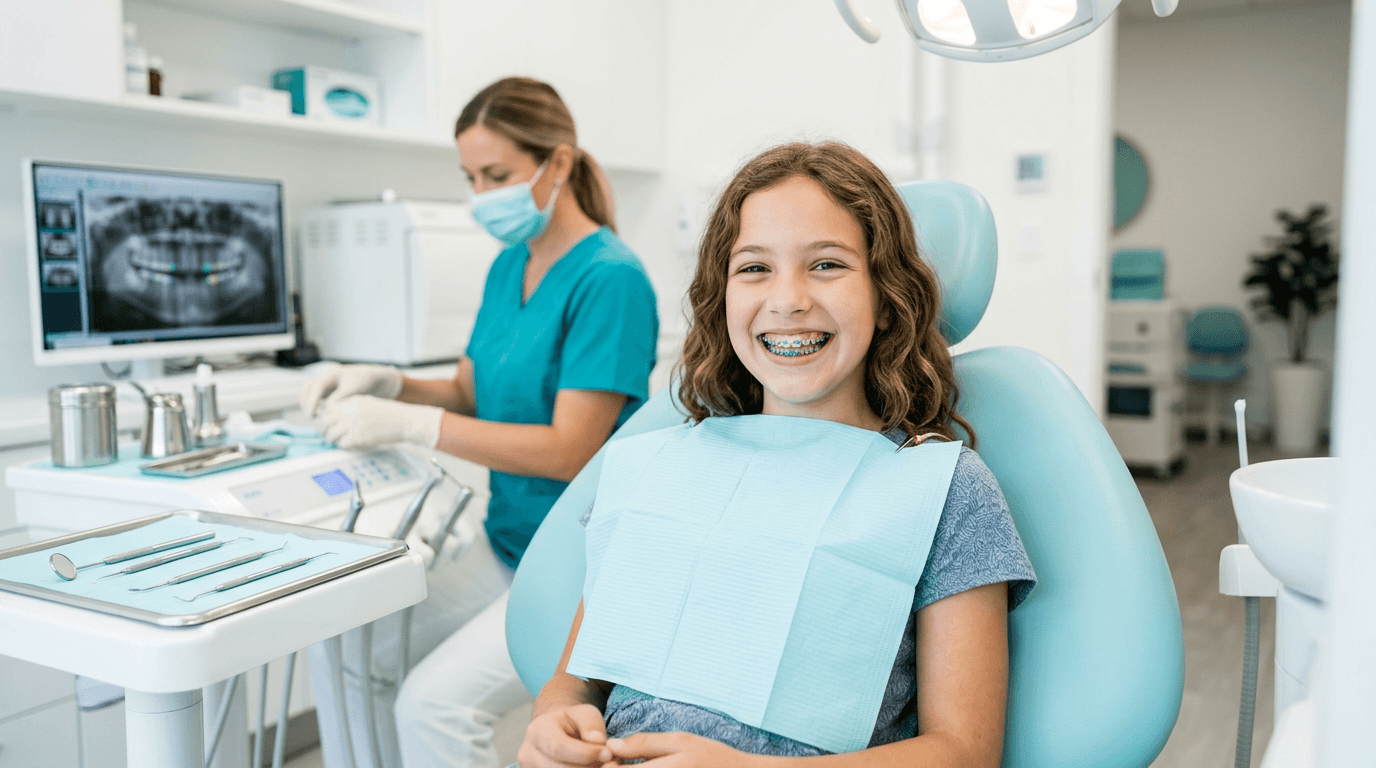
Metal braces remain the most popular and cost-effective option for pediatric orthodontics in Dubai. They consist of stainless steel brackets bonded to each tooth, connected by a metal archwire that applies gentle, continuous pressure to move teeth into alignment. Modern metal braces are significantly smaller and more comfortable than older designs. Children and teens can personalize their braces with colourful elastic bands (ligatures) at each adjustment appointment — making the experience fun rather than intimidating. Metal braces are suitable for all types of alignment issues, from mild crowding to complex bite corrections, and work reliably for children as young as 7 (in limited Phase 1 cases) through age 17. Treatment duration averages 12-24 months.
Ceramic (Clear) Braces
Ceramic braces function identically to metal braces but use tooth-coloured or clear ceramic brackets that blend with the natural tooth colour. They are a popular choice for image-conscious teenagers who want effective treatment without the metallic look. Ceramic braces in Dubai are slightly larger and more brittle than metal brackets, requiring more careful eating habits. They are best suited for children aged 12 and older who can maintain good oral hygiene and avoid hard or sticky foods. Treatment duration is comparable to metal braces at 12-24 months.
Lingual Braces
Lingual braces are placed on the back (tongue-side) of the teeth, making them completely invisible from the front. They are highly customized for each patient and require a specialist orthodontist with specific training in lingual techniques. Due to their complexity and the precision required for placement, lingual braces are the most expensive orthodontic option. They are typically recommended for older teenagers (ages 14-17) who prioritize aesthetics and have the maturity to manage the initial tongue discomfort and meticulous cleaning required.
Clear Aligners — Invisalign First and Invisalign Teen
Clear aligners offer a removable, nearly invisible alternative to traditional braces. For younger children (ages 6-10), Invisalign First is specifically designed to address early orthodontic issues — guiding teeth into place, creating space for growing permanent teeth, and correcting bite problems during mixed dentition. For teenagers (ages 12-17), Invisalign Teen provides comprehensive treatment with a series of custom-made clear plastic trays that are changed every 1-2 weeks. Aligners must be worn 20-22 hours daily and removed only for eating and brushing. Success depends heavily on patient compliance, so clear aligners work best for responsible, motivated teenagers. Browse clear aligner options in Dubai to compare providers.
Self-Ligating Braces (Damon System)
Damon braces use a specialized clip mechanism instead of elastic ties to hold the archwire, allowing teeth to move more freely with less friction. These self-ligating braces often mean fewer adjustment appointments (every 8-10 weeks instead of 4-6 weeks) and potentially shorter treatment times. They are available in both metal and clear versions and are suitable for children aged 10 and older. Many Dubai orthodontists favour Damon braces for growing children because the reduced friction can be gentler on developing teeth and gums.
Removable Appliances and Space Maintainers
For younger children (ages 5-10) with minor alignment issues, removable orthodontic appliances may be sufficient. These include expansion plates, twin-block appliances for jaw positioning, and space maintainers that preserve gaps left by premature loss of baby teeth. Removable appliances are typically used in Phase 1 interceptive treatment and are less expensive than full braces. They require consistent wear (usually 12-16 hours daily) and parental supervision to ensure compliance.
Braces for Kids Cost in Dubai (2026 Prices)
The cost of braces for kids in Dubai varies significantly depending on the type of braces, complexity of the orthodontic issue, treatment duration, and the clinic you choose. Below is a comprehensive cost comparison based on current Dubai clinic pricing verified in March 2026.
| Type of Braces | Age Group | Cost Range (AED) | Average Cost (AED) |
|---|---|---|---|
| Traditional Metal Braces | 7-17 | 6,000 - 15,000 | 8,000 - 10,000 |
| Ceramic (Clear) Braces | 12-17 | 8,000 - 18,000 | 12,000 - 15,000 |
| Lingual Braces | 14-17 | 15,000 - 30,000 | 25,000 |
| Invisalign First (Phase 1) | 6-10 | 5,000 - 12,000 | 7,000 - 9,000 |
| Invisalign Teen (Comprehensive) | 12-17 | 12,000 - 28,000 | 15,000 - 18,000 |
| Self-Ligating (Damon) Braces | 10-17 | 8,000 - 16,000 | 10,000 - 12,000 |
| Interceptive Appliances (Phase 1) | 7-11 | 2,500 - 8,000 | 5,000 - 6,000 |
| Retainers (post-treatment) | All ages | 400 - 3,500 | 800 - 1,500 |
Prices verified March 2026 via Dubai dental clinic surveys. Costs vary by clinic location, orthodontist experience, and case complexity. Most clinics offer monthly instalment plans starting from AED 300-500/month.
For a full breakdown of braces pricing in the UAE, see our detailed guide on braces cost in Dubai. You can also compare the cost of dental treatments in Dubai for 2026 across all categories.
What Affects the Cost of Kids' Braces in Dubai?
Several factors influence the final price your family will pay for pediatric orthodontics in Dubai:
- Case complexity — Simple crowding costs less than complex bite corrections requiring jaw modification
- Type of braces — Metal braces are the most affordable; lingual and Invisalign are premium options
- Treatment duration — Longer treatments require more appointments and materials
- Orthodontist credentials — Board-certified specialists with advanced training may charge higher fees
- Clinic location — Clinics in DIFC, Downtown, or Jumeirah typically charge more than those in Deira or Sharjah
- Two-phase vs single-phase — A two-phase treatment (Phase 1 + Phase 2) costs more total than a single comprehensive phase, but may save money long-term by preventing the need for surgery
- Retainer cost — Some clinics include retainers in the package; others charge AED 400-3,500 separately
Early Treatment vs Full Braces — Which Is Right for Your Child?
One of the biggest questions parents face is whether their child needs early interceptive treatment or should wait for full braces. Here is a side-by-side comparison to help you understand the differences between Phase 1 and Phase 2 pediatric orthodontics in Dubai.
| Factor | Early Treatment (Phase 1, Ages 7-11) | Full Braces (Phase 2, Ages 12-17) |
|---|---|---|
| Timing | During mixed dentition (baby + permanent teeth) | After most/all permanent teeth have erupted |
| Duration | 6-18 months (typically 9-12) | 12-24 months (average 18) |
| Goals | Guide jaw growth, create space, correct severe bite issues | Align all teeth, perfect bite, final aesthetics |
| Appliances Used | Expanders, space maintainers, limited braces, functional appliances | Full metal/ceramic/lingual braces or clear aligners |
| Cost (AED) | 2,500 - 12,000 | 6,000 - 30,000 |
| Who Needs It | Children with crossbite, severe crowding, protruding teeth at risk of trauma | Most children with alignment or bite issues |
| Compliance Required | Moderate (parental supervision needed) | Higher (especially with aligners) |
| Reduces Future Treatment? | Yes — can shorten or simplify Phase 2 | Usually the final treatment phase |
Not every child needs Phase 1 treatment. A responsible orthodontist will only recommend interceptive treatment when a specific problem will worsen without early intervention. If your child's issues are primarily cosmetic and the jaw is developing normally, waiting for comprehensive braces at age 12-13 may be perfectly appropriate. For expert guidance, consult an experienced orthodontist in Dubai who specializes in children's cases.
Signs Your Child May Need Braces
As a parent, you should watch for these warning signs that may indicate your child needs an orthodontic evaluation. Catching problems early — ideally by age 7 — gives your child the best chance of simpler, shorter, and more affordable braces for kids treatment.
- Crowded or overlapping teeth — Permanent teeth coming in crooked or with no room
- Early or late loss of baby teeth — Losing baby teeth before age 5 or after age 13 can signal alignment issues
- Difficulty chewing or biting — Misaligned teeth affect how your child eats
- Mouth breathing — Habitual mouth breathing can cause "adenoid face" and narrow dental arches
- Thumb sucking past age 5 — Prolonged thumb sucking pushes upper teeth forward and narrows the palate
- Protruding front teeth — Upper teeth that stick out significantly are prone to trauma during sports and play
- Jaw clicking or pain — May indicate TMJ problems linked to bite misalignment
- Speech difficulties — Lisping or difficulty pronouncing certain sounds can be caused by tooth position
- Asymmetrical face or jaw — One side of the face appearing different from the other
- Teeth that do not meet properly — Overbite, underbite, or crossbite visible when your child closes their mouth
If you notice any of these signs, book a consultation with a pediatric dentist in Dubai or an orthodontist. Early detection is key to effective pediatric orthodontics treatment.
The Braces Process for Children in Dubai — Step by Step
Understanding the orthodontic process helps parents and children feel prepared and confident. Here is what to expect when getting braces for kids in Dubai, from the initial consultation through to the final retainer.
- Step 1: Initial Consultation and Assessment (AED 200-500) — The orthodontist examines your child's teeth, jaw, and bite. This includes a visual examination, discussion of concerns, and initial recommendations. Many Dubai clinics offer free or discounted first consultations for children.
- Step 2: Diagnostic Records (AED 500-1,500) — If treatment is recommended, the orthodontist takes panoramic and cephalometric X-rays, digital 3D scans or impressions of the teeth, and photographs. These records allow the orthodontist to create a detailed treatment plan.
- Step 3: Treatment Planning — The orthodontist designs a customized treatment plan showing the projected tooth movements, estimated duration, and recommended appliance type. For Invisalign, this includes a ClinCheck digital simulation showing the expected result.
- Step 4: Braces Placement (1-2 hours) — For traditional braces, brackets are bonded to each tooth and connected with an archwire. The process is painless, though your child may feel pressure. For aligners, the first set of trays is fitted and instructions are given.
- Step 5: Regular Adjustments (every 4-8 weeks) — Your child visits the orthodontist for archwire changes, elastic band adjustments, or new aligner trays. Each appointment takes 15-30 minutes. Adjustments may cause mild soreness for 1-2 days.
- Step 6: Braces Removal and Retainer Fitting — Once the treatment goals are achieved, braces are removed (painless, takes 30-60 minutes) and a retainer is fitted. Most orthodontists recommend wearing a retainer full-time for 3-6 months, then nightly for 1-2 years or longer to prevent relapse.
The entire process from consultation to completion typically takes 12-24 months for comprehensive treatment. Browse dental treatments available in Dubai to learn about other procedures your child may need alongside orthodontics, such as a routine dental check-up.
Does Insurance Cover Braces for Kids in Dubai?
One of the most common questions parents ask is whether their dental insurance covers braces in Dubai. The answer depends on your specific insurance plan, but here is what verified research shows for 2026.
General Insurance Coverage for Pediatric Orthodontics
Most dental insurance plans in Dubai do cover braces and orthodontic treatment for children under 18, but only on premium or enhanced plan tiers. Basic mandatory health insurance plans (DHA Essential Benefits Plan) typically exclude orthodontics entirely. Coverage details to check with your insurer include:
- Co-insurance — Typically 50% of orthodontic treatment costs (you pay half, insurance covers half)
- Annual limits — Range from AED 5,000 to AED 11,010 per policy year depending on the plan
- Lifetime maximums — Some plans cap orthodontic coverage at AED 5,000-10,000 over the entire policy
- Waiting period — A 12-month waiting period applies to orthodontic treatment in most plans, meaning you cannot claim until 12 months after your coverage starts
- Age restriction — Orthodontic coverage is often limited to children under 18 only
- Pre-authorization — Most insurers require pre-approval before starting orthodontic treatment
Coverage by Major Dubai Insurers
Top providers for pediatric orthodontic coverage in Dubai include Daman, AXA, Cigna, and MetLife. However, orthodontic coverage is typically an optional add-on rather than included in standard plans. Only high-end insurance plans or premium modules tend to offer meaningful orthodontic benefits. As of June 2025, the DHA mandated that all health insurance plans offer minimum dental benefits with coverage up to AED 500 (subject to 30% co-insurance per visit) for basic dental treatment, but this basic benefit does not extend to orthodontics.
Compare your options using our comprehensive guides: dental insurance in Dubai and insurance plan comparison. If you have a specific insurer, check their orthodontic coverage details on pages like Daman insurance dental coverage or Cigna insurance dental coverage.
Tips to Maximise Insurance Benefits for Kids' Braces
- Enrol early — If you know your child will need braces, switch to a premium dental plan at least 12 months before treatment to clear the waiting period
- Get pre-authorization — Submit the treatment plan to your insurer before starting to confirm coverage and avoid claim rejections
- Split treatment across policy years — If your plan has annual limits, start treatment near the end of one policy year and continue into the next to access two years of benefits
- Ask about instalment plans — Most Dubai orthodontists offer 0% interest payment plans from AED 300-500 per month, reducing the upfront financial burden
- Check employer enhanced plans — Some employers in Dubai offer enhanced dental coverage that includes orthodontics as a standard benefit
How to Choose the Right Orthodontist for Your Child in Dubai
Selecting the right orthodontist is one of the most important decisions you will make for your child's dental health. Here are the key factors to evaluate when choosing a provider for braces for kids in Dubai.
Credentials and DHA Licensing
Every orthodontist practising in Dubai must hold a valid DHA (Dubai Health Authority) licence. Verify your orthodontist's credentials on the DHA website. Look for specialists who have completed a postgraduate orthodontic residency (typically 2-3 years beyond dental school) and hold board certification from recognized institutions. DHA guidelines (Code: DHA/HRS/HPSD/CG-07) establish specific standards for pediatric dental treatment, and all clinics are subject to periodic unannounced inspections of infection control protocols and equipment standards. Choose a DHA-licensed dentist in Dubai for guaranteed regulatory compliance.
Experience with Children
Treating children requires different skills than treating adults. Look for an orthodontist who regularly treats paediatric patients, has experience with interceptive orthodontics and two-phase treatment, and creates a child-friendly clinic environment. A welcoming, colourful office with entertainment options can make a significant difference in your child's comfort and cooperation during the 12-24 months of treatment. Consider specialists listed on our pediatric dentist directory for Dubai.
Technology and Treatment Options
Modern orthodontic clinics in Dubai should offer digital X-rays (lower radiation), 3D intraoral scanning (no messy impressions), multiple braces options (metal, ceramic, lingual, aligners), and computer-aided treatment planning. Clinics that invest in technology typically deliver more precise results and a more comfortable patient experience.
Questions to Ask Before Starting Treatment
- What is the total cost, and does it include retainers?
- Do you offer interest-free payment plans?
- How many paediatric orthodontic cases do you treat per year?
- What type of braces do you recommend for my child's specific case, and why?
- What happens if a bracket breaks or an aligner is lost?
- How often will my child need adjustment appointments?
- What is your emergency protocol if a wire pokes or a bracket comes loose?
- Can I see before-and-after photos of children with similar cases?
Start your search at browse dental clinics near you to find orthodontists in your neighbourhood.
Caring for Your Child's Braces — Aftercare and Oral Hygiene
Proper oral hygiene is critical during orthodontic treatment. Braces create additional surfaces where food particles and plaque can accumulate, increasing the risk of cavities, gum disease, and white spot lesions (decalcification marks). Here is how to keep your child's teeth healthy throughout their braces for kids treatment.
Daily Oral Hygiene with Braces
- Brush after every meal — Use a soft-bristled toothbrush or an orthodontic brush with a V-shaped head. Angle the brush at 45 degrees to clean above and below the brackets. Spend at least 2-3 minutes brushing.
- Use an interdental brush — Small proxy brushes clean between brackets and under the archwire where a regular toothbrush cannot reach.
- Floss daily with a floss threader or orthodontic flosser — Threading floss under the archwire takes extra time, but preventing cavities between teeth is essential.
- Use fluoride mouthwash — A daily fluoride rinse strengthens enamel and helps prevent decalcification around brackets.
- Attend regular dental cleanings — Professional teeth cleaning in Dubai every 3-4 months (rather than the standard 6 months) is recommended during orthodontic treatment.
Foods to Avoid with Braces
Certain foods can damage brackets and wires, extending treatment time and adding repair costs. Teach your child to avoid:
- Hard foods — Ice, hard candy, popcorn kernels, nuts, raw carrots (cut into small pieces instead)
- Sticky foods — Caramel, toffee, chewing gum, gummy sweets
- Crunchy foods — Corn on the cob (cut off the cob), whole apples (slice them), hard crusts
- Biting with front teeth — Cut food into small pieces and chew with back teeth
Handling Orthodontic Emergencies
Common issues during treatment include loose brackets, poking wires, and sore spots. For a loose bracket, apply orthodontic wax over it and call your orthodontist. For a poking wire, use the eraser end of a pencil to push it flat or cover it with wax. Sore spots after adjustments are normal — over-the-counter pain relief and soft foods for 1-2 days usually resolve the discomfort. For more serious dental emergencies, see our guide to emergency dental care in Dubai.
Risks and Side Effects of Braces for Children
While braces for kids are safe and well-established, parents should be aware of potential risks and side effects to make informed decisions about their child's treatment.
- Mild discomfort — Soreness after adjustments typically lasts 1-3 days. Over-the-counter pain relief and soft foods help. This is normal and not cause for concern.
- White spot lesions (decalcification) — If oral hygiene is poor during treatment, mineral loss around brackets can leave permanent white marks on teeth. Consistent brushing and fluoride use prevents this.
- Root resorption — In rare cases, prolonged orthodontic force can cause slight shortening of tooth roots. Regular X-rays during treatment monitor for this, and it rarely causes long-term problems.
- Soft tissue irritation — Brackets and wires can irritate the cheeks and lips, especially in the first few weeks. Orthodontic wax provides relief, and the mouth adapts over time.
- Relapse — Without consistent retainer wear after braces removal, teeth can shift back toward their original positions. Retainer compliance is essential for lasting results.
- Allergic reactions — Rare allergies to nickel (in metal braces) or latex (in elastics) may occur. Nickel-free and latex-free alternatives are available.
These risks are manageable with proper care and regular monitoring. The long-term benefits of correcting alignment and bite issues during childhood far outweigh the temporary discomfort and minor risks. Discuss any concerns with your orthodontist before starting treatment.
Benefits of Getting Braces Early — Why Childhood Is the Best Time
Investing in braces for kids during childhood offers advantages that simply are not available to adults:
- Jaw growth modification — Phase 1 interceptive treatment can modify jaw growth until it stops (by age 16 for females, 18-21 for males), potentially preventing the need for jaw surgery later
- Faster treatment — Children's bones are more responsive to orthodontic forces, meaning teeth move faster and treatment times are shorter compared to adults
- Better long-term stability — Teeth moved during growth tend to be more stable in their new positions
- Prevent secondary problems — Correcting bite issues early prevents uneven wear, TMJ disorders, speech impediments, and breathing difficulties
- Self-esteem boost — Straight teeth during formative teenage years can significantly improve social confidence and self-image
- Cost savings — Early intervention can reduce the complexity and cost of future comprehensive treatment by preventing problems from worsening
- Avoid extractions — Creating space with expanders during growth can eliminate the need for tooth extractions that might be required if treatment is delayed
Read more about children's dental care in Dubai and why establishing good oral habits early sets your child up for a lifetime of healthy teeth.
Braces for Kids with Special Considerations
Children with Dental Anxiety
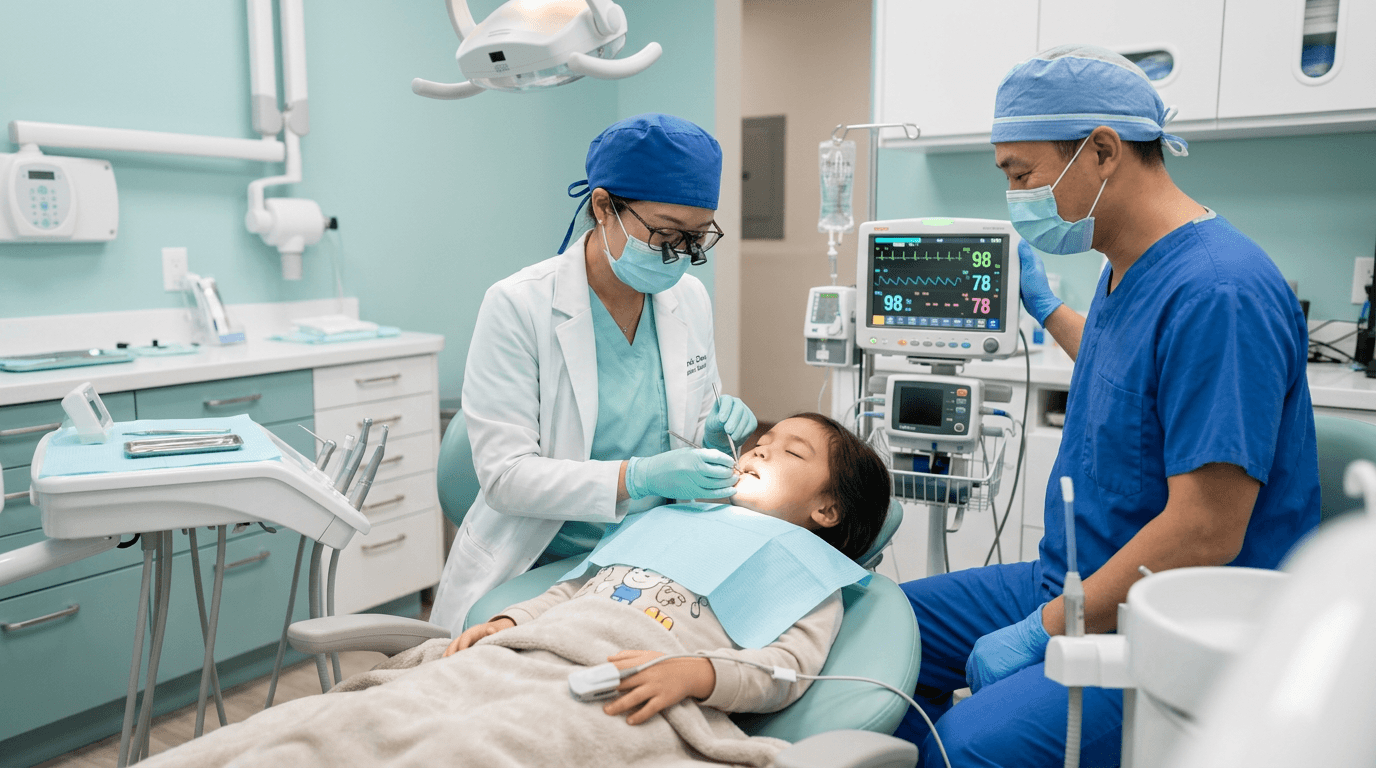
Many children feel nervous about getting braces. A good pediatric orthodontist will use age-appropriate explanations, allow the child to hold and touch the tools before use, and create a welcoming clinic environment. For children with severe dental anxiety, sedation dentistry options in Dubai may be available for certain procedures. DHA-licensed pediatric dentists may administer nitrous oxide (laughing gas) inhalation sedation under strict protocols with appropriate monitoring and informed parental consent. Also explore our guide to finding a dentist for dental anxiety in Dubai.
Children with Special Needs
Children with autism spectrum disorder, Down syndrome, or other developmental conditions can benefit from orthodontic treatment. Research shows that children with autism receiving clear aligner therapy showed excellent to substantial improvement in 89.2% of cases. A special needs dentist in Dubai can recommend approaches tailored to your child's individual needs, including simplified appliance designs and modified appointment schedules.
Young Athletes and Active Children
If your child plays contact sports, a custom orthodontic mouthguard is essential during braces treatment. Standard mouthguards do not fit over brackets properly. Your orthodontist can provide a mouthguard designed specifically for braces for kids that protects both the teeth and the soft tissue of the lips and cheeks. Children with protruding upper teeth are at particular risk of dental trauma during sports, which is actually one of the reasons orthodontists recommend early correction of crooked teeth.
Braces for Kids in Dubai — Area Guide
Dubai has excellent orthodontic clinics across all major areas. Here are some of the most popular locations for pediatric orthodontics:
- Orthodontists in Dubai Marina — Popular with expat families in the Marina and JBR area
- Pediatric dentists in Jumeirah — Premium clinics along Jumeirah Beach Road and City Walk
- Dental clinics in Downtown Dubai — Convenient for families near Burj Khalifa and Business Bay
- Dentists in Mirdif — Family-friendly neighbourhood with several paediatric dental practices
- Dental clinics in Dubai Hills — Growing community with newer orthodontic practices
- Dentists in Deira — Affordable options with experienced orthodontists
Find the closest clinic to your home with our clinic finder tool and compare top-rated dental clinics across the UAE.
Frequently Asked Questions About Braces for Kids in Dubai
What is the best age for kids to get braces in Dubai?
The American Association of Orthodontists recommends a first orthodontic evaluation by age 7. However, most children receive full braces for kids between ages 11 and 14, once most permanent teeth have erupted. If your child has a severe bite issue such as a crossbite or protruding teeth at risk of trauma, early interceptive treatment may start as young as age 7. A DHA-licensed orthodontist in Dubai can assess your child's specific needs and recommend the ideal timing.
How much do braces for kids cost in Dubai?
In 2026, braces for kids in Dubai typically cost AED 6,000 to AED 15,000 for traditional metal braces, AED 8,000 to AED 18,000 for ceramic braces, AED 5,000 to AED 12,000 for Invisalign First (early treatment), AED 12,000 to AED 28,000 for Invisalign Teen, and AED 15,000 to AED 30,000 for lingual braces. Most Dubai clinics offer interest-free payment plans from AED 300 per month. See our complete braces cost guide for Dubai for detailed pricing.
Does dental insurance cover braces for children in Dubai?
Most premium dental insurance plans in Dubai cover pediatric orthodontics for children under 18, typically at 50% co-insurance with annual limits of AED 5,000 to AED 11,010. However, basic DHA plans usually exclude orthodontics, and most plans impose a 12-month waiting period before coverage kicks in. Check with your insurer or review our insurance coverage for braces guide for specific insurer details.
How long do kids wear braces in Dubai?
Treatment duration depends on the type and complexity of the orthodontic issue. Phase 1 interceptive treatment typically lasts 6-18 months (average 9-12 months). Full comprehensive braces (Phase 2) typically take 12-24 months, with an average of 18 months. After braces removal, children wear retainers full-time for 3-6 months and then nightly for 1-2 years to maintain results.
Are braces painful for children?
Getting braces for kids placed is not painful — your child may feel mild pressure during the bonding process. After placement and each adjustment appointment, expect 1-3 days of soreness that responds well to over-the-counter pain relief and soft foods. Modern braces technology, including self-ligating systems and heat-activated wires, has significantly reduced discomfort compared to older designs. Most children adapt quickly within the first week.
What is the difference between Phase 1 and Phase 2 orthodontic treatment?
Phase 1 (interceptive orthodontics) targets children ages 7-10 with mixed dentition, focusing on jaw growth modification and creating space for permanent teeth. It uses expanders, functional appliances, and limited braces for 6-18 months. Phase 2 (comprehensive treatment) treats children ages 11-14+ with full braces or aligners for 12-24 months, aligning all permanent teeth and perfecting the bite. Not every child needs both phases — your orthodontist will recommend the appropriate approach based on your child's specific pediatric orthodontics needs.
Can my child get Invisalign instead of metal braces?
Yes. Invisalign First is designed for children ages 6-10 for early interceptive treatment, and Invisalign Teen serves ages 12-17 for comprehensive correction. However, clear aligners require excellent compliance (wearing 20-22 hours daily), so they work best for responsible, motivated children. For complex cases or very young children, traditional braces for kids may be more reliable because they cannot be removed. Learn more about Invisalign treatment in Dubai.
Key Takeaways
- Braces for kids in Dubai start from AED 2,500 for interceptive appliances and AED 6,000-15,000 for comprehensive metal braces — with payment plans available from AED 300/month
- The AAO recommends a first orthodontic evaluation by age 7, even though most children start full treatment between ages 11-14
- Early interceptive treatment (Phase 1) can modify jaw growth and prevent more expensive, complex treatment later — potentially saving thousands of AED
- Premium insurance plans may cover 50% of pediatric orthodontics costs with annual limits of AED 5,000-11,010, but check for 12-month waiting periods
- Always choose a DHA-licensed orthodontist with paediatric experience — verify credentials on the DHA website before starting
- Explore orthodontic treatment options in Dubai and browse verified clinics near you to find the best orthodontist for your child